What you're solving for
What a career change resume is solving for
The recruiter reading your resume has a stack of applicants who already hold the job title you want. You won’t out-credential them, so the resume has to do something different: make the reader finish the summary thinking “this person has done this work, just under a different name.” Every choice below — format, summary, bullet translation — serves that single impression.
Which format to use
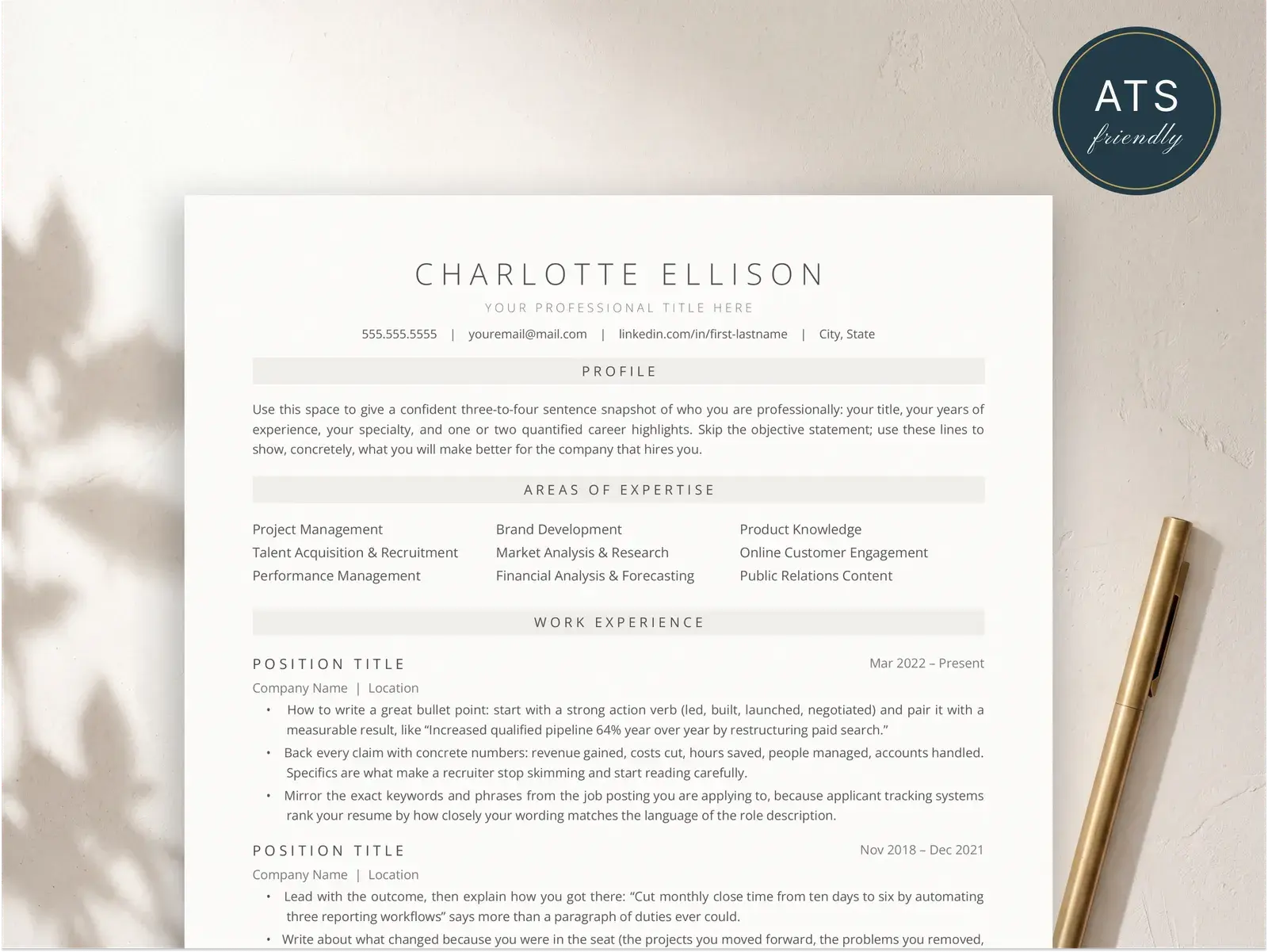
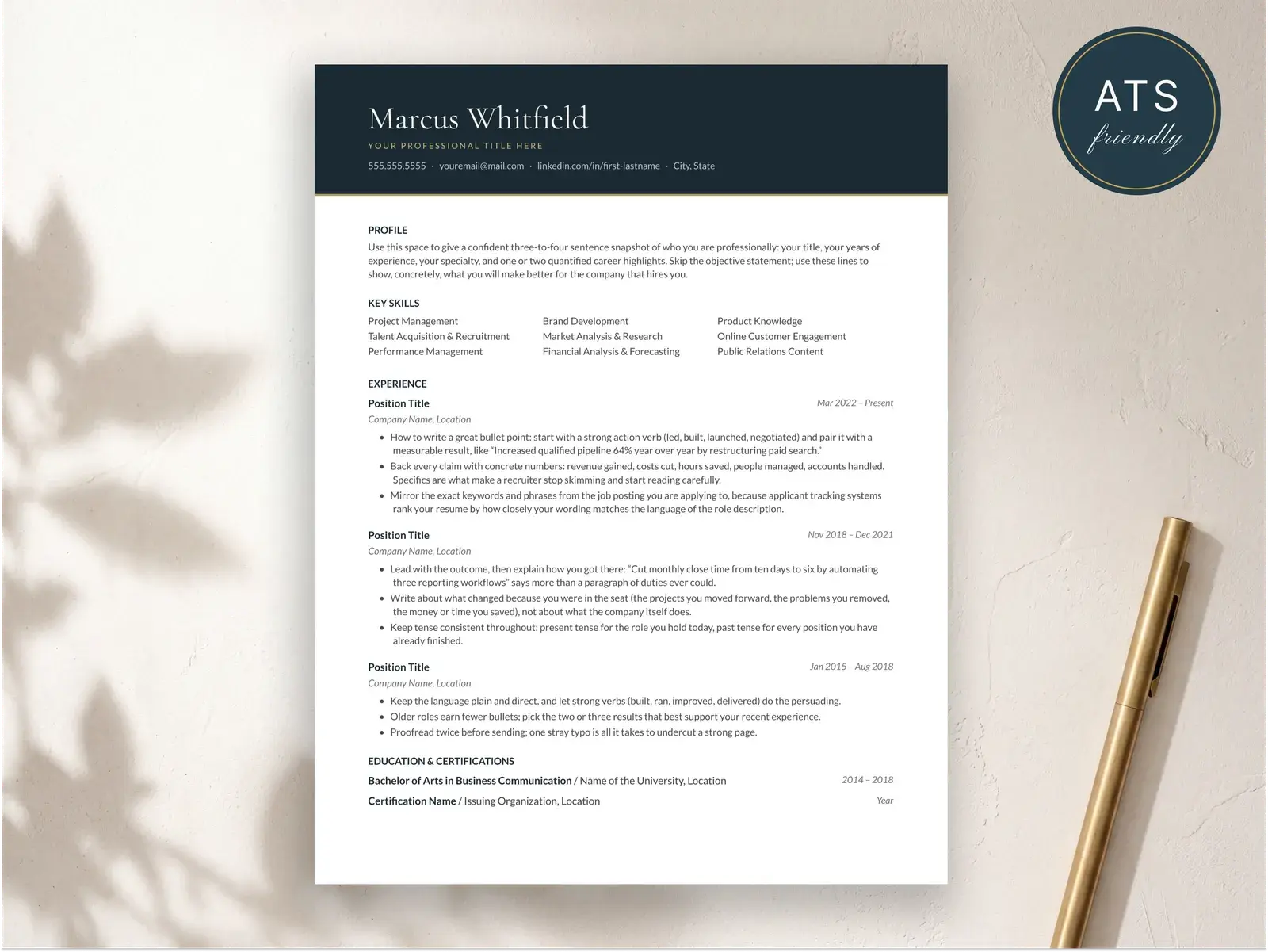
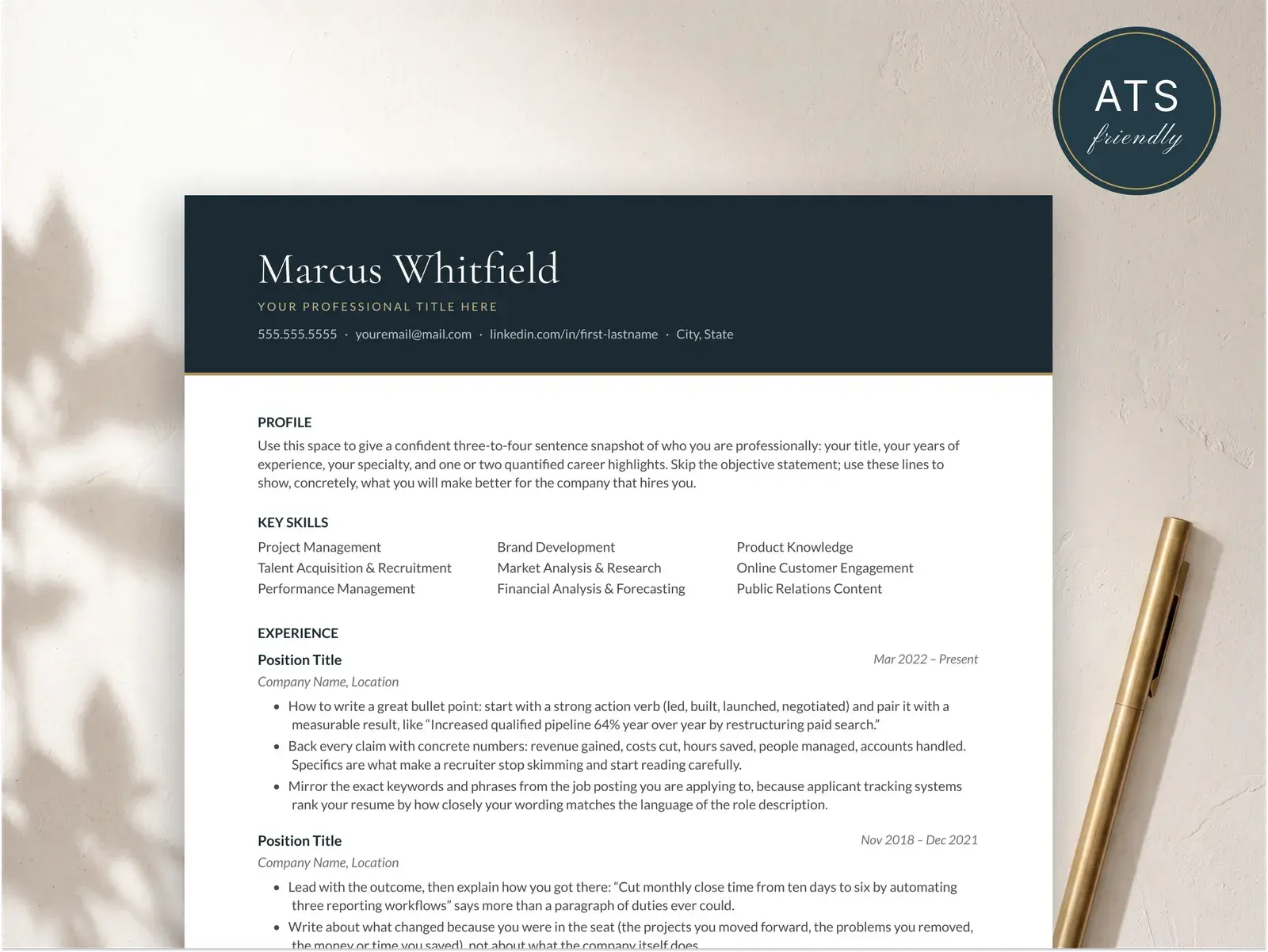
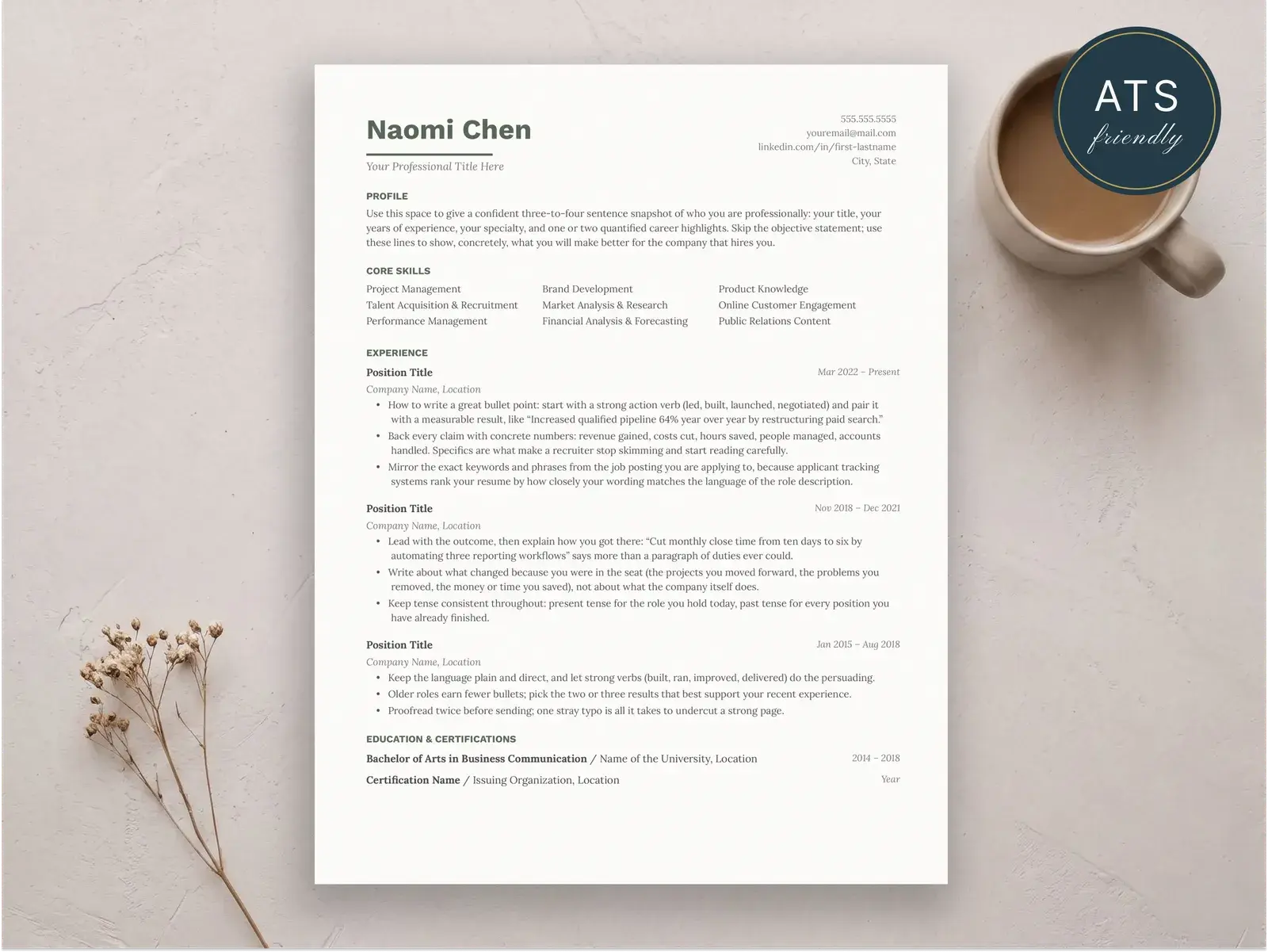
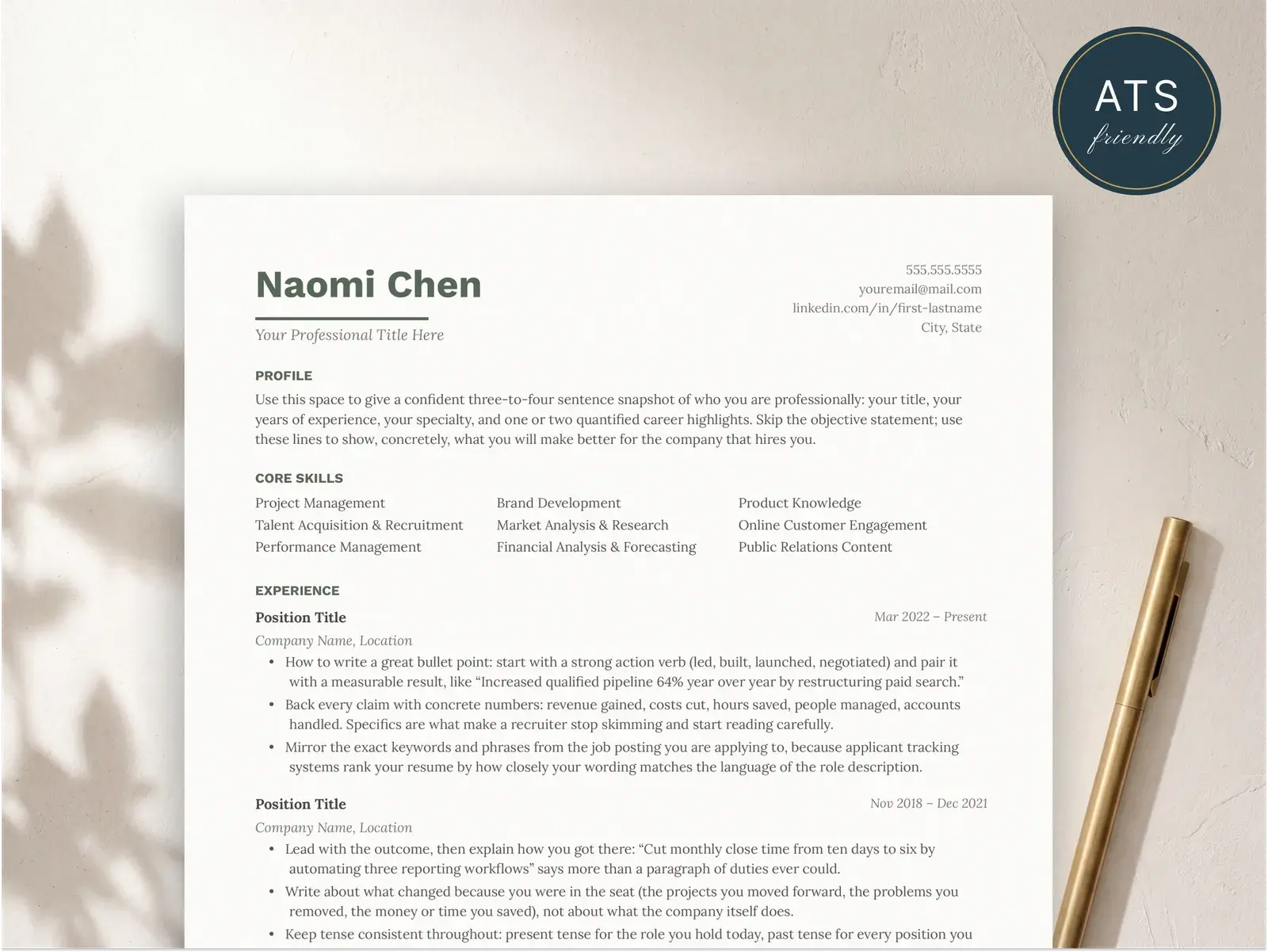
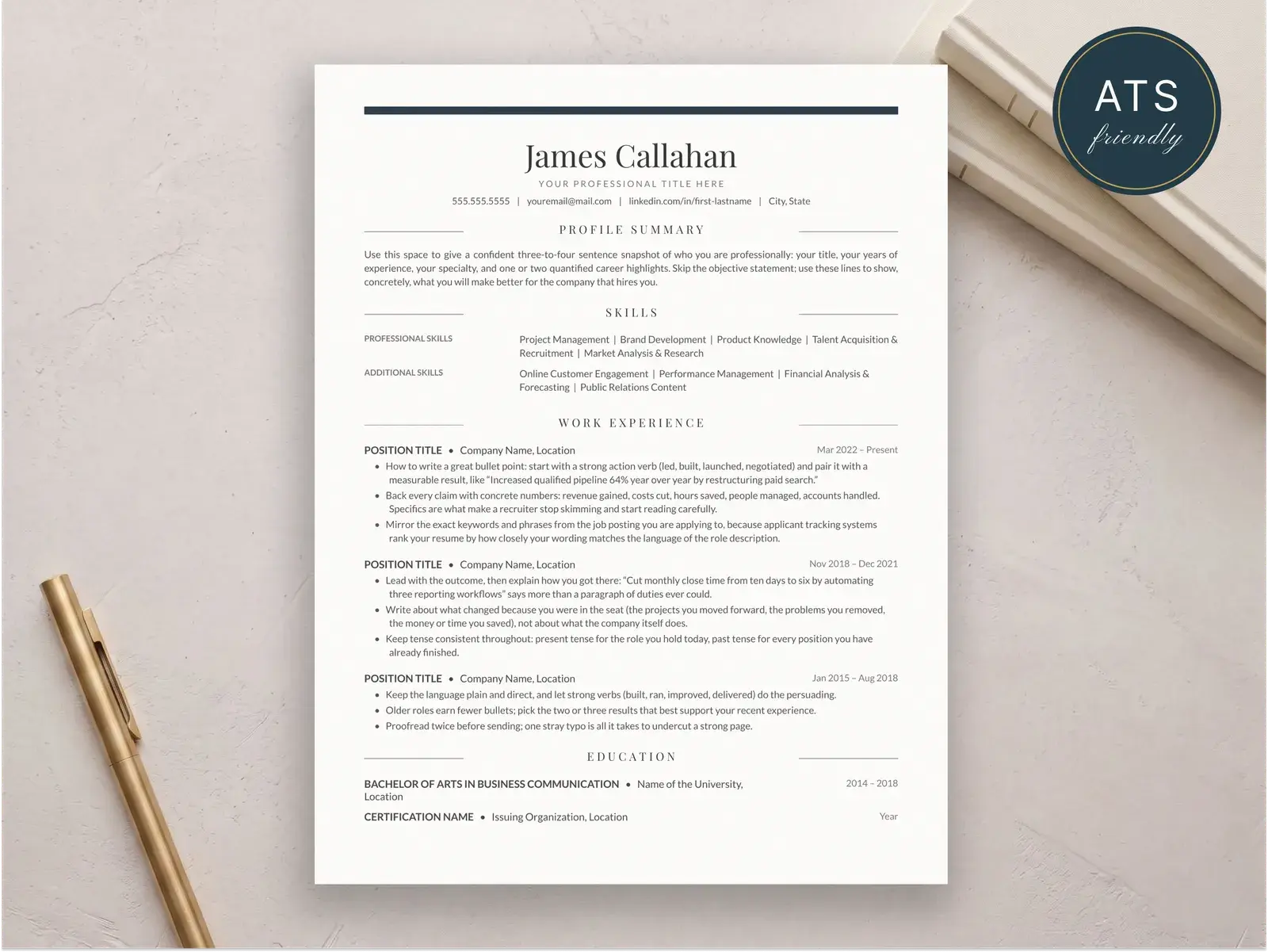
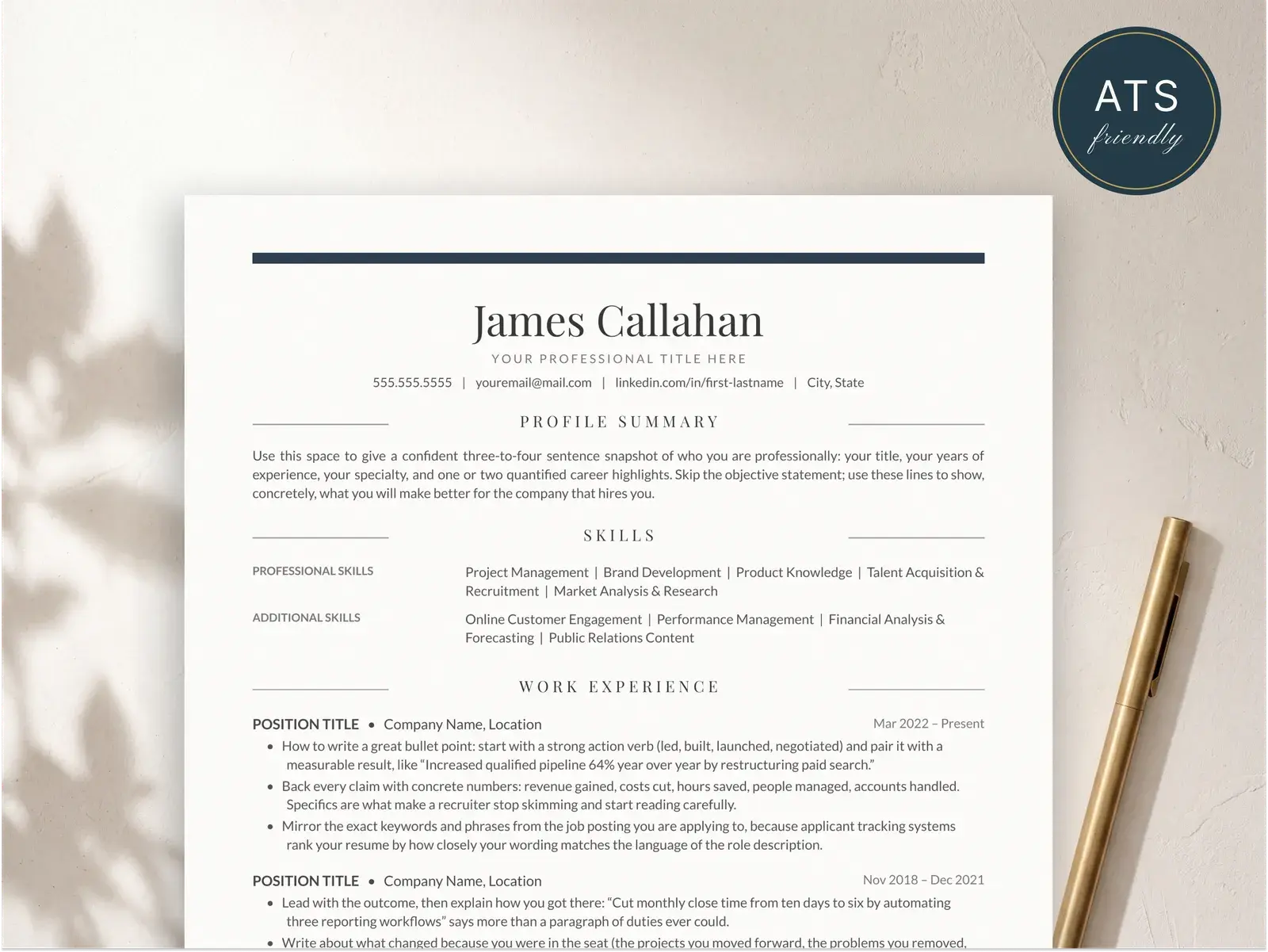
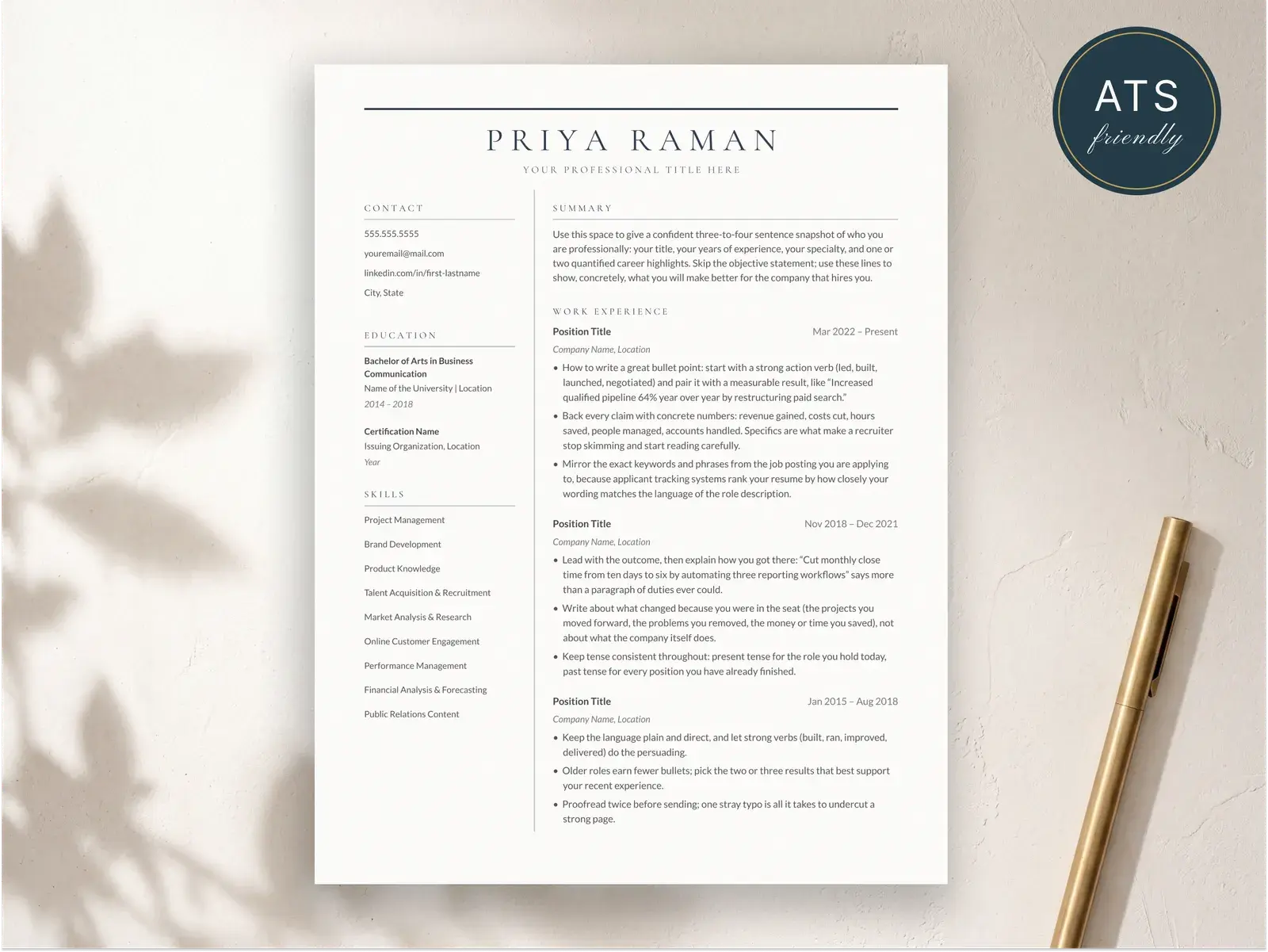
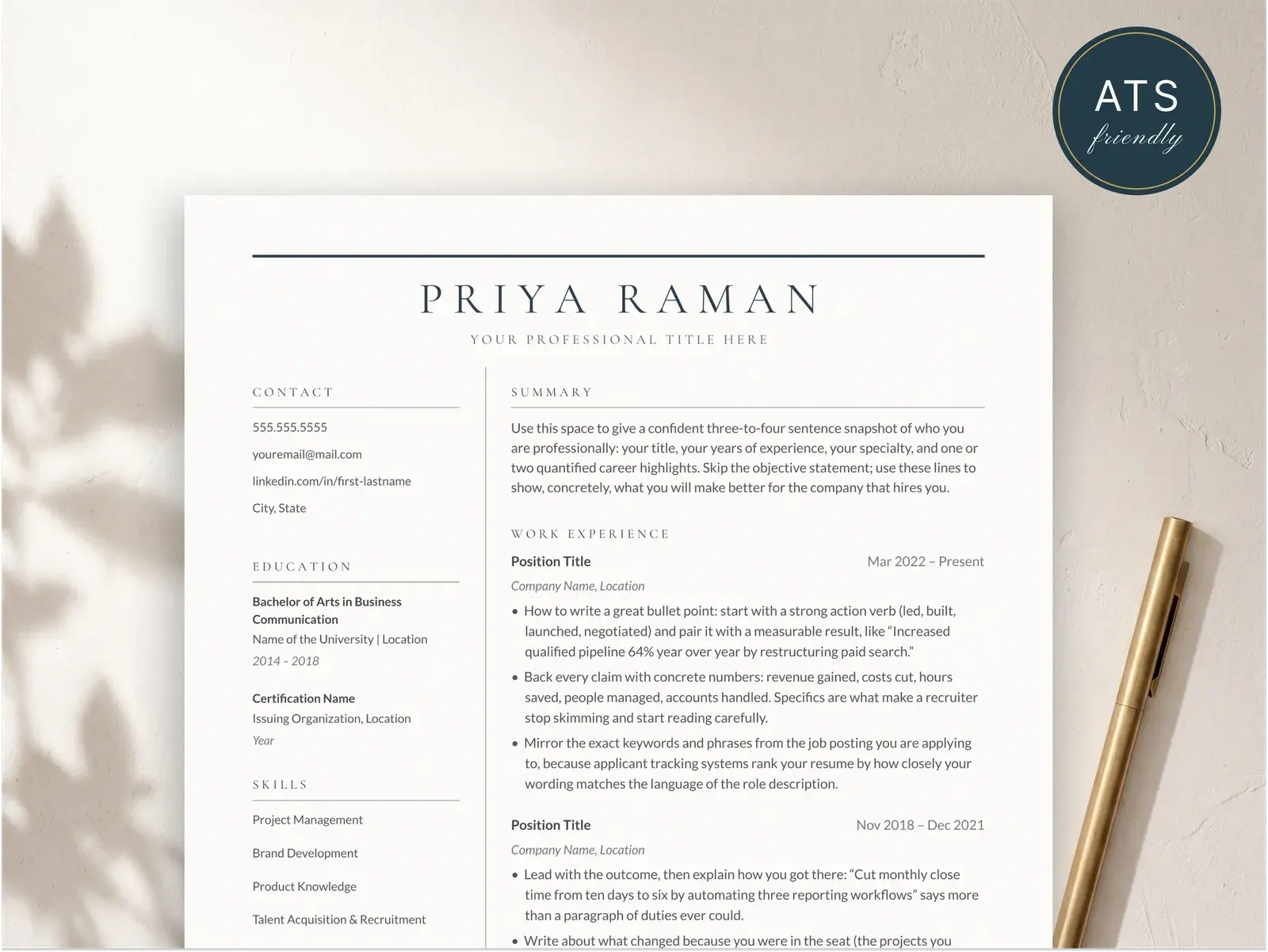
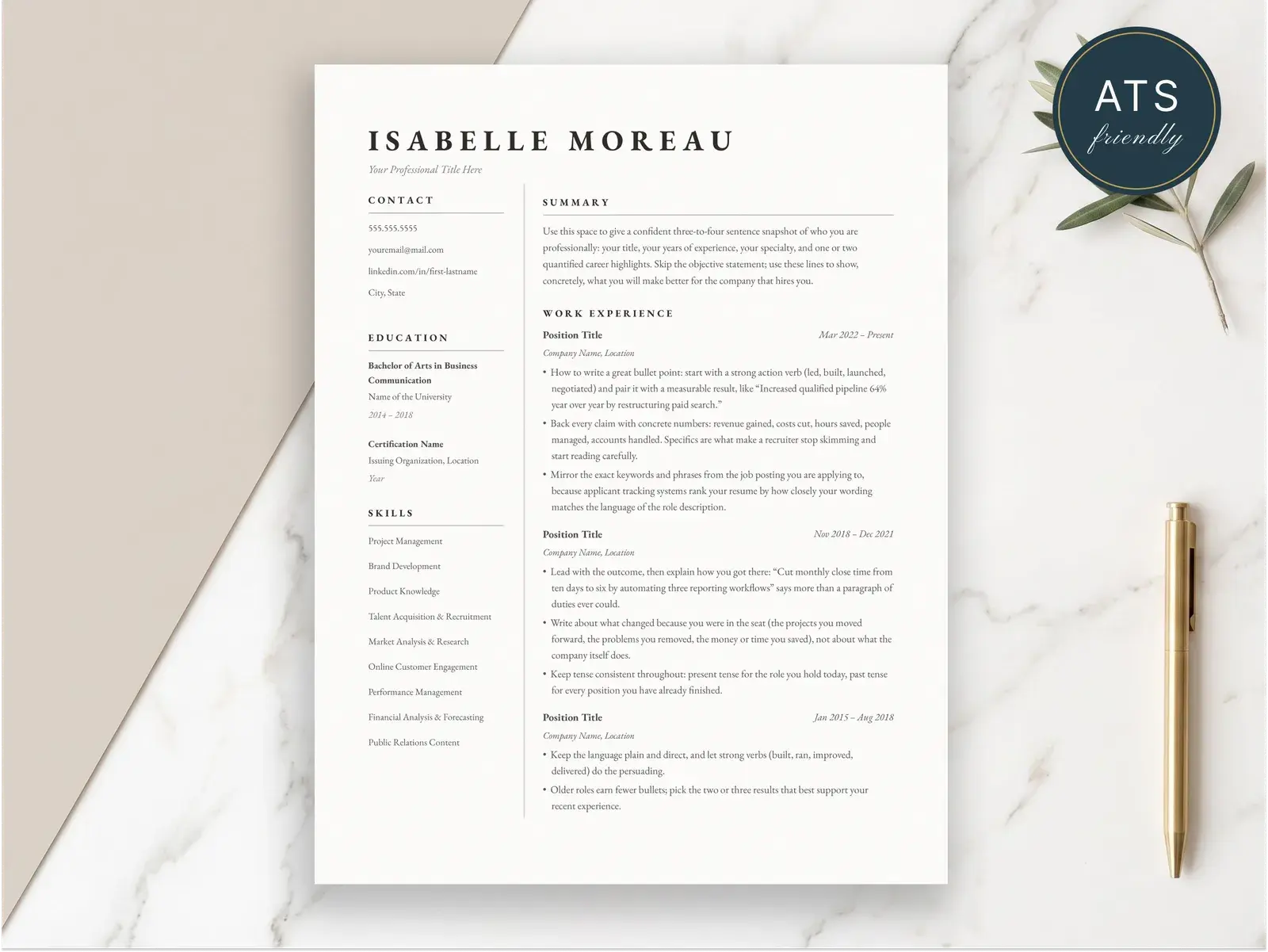
Use a hybrid: summary and skills up top doing the reframing, then a standard reverse-chronological history underneath. It gives the new-field framing maximum visibility while keeping the verifiable timeline recruiters insist on. We’ve written up the full structure in the hybrid resume format guide.
The tempting alternative — the functional format, which buries dates entirely — mostly backfires: recruiters read hidden chronology as hidden problems, and ATS software parses it badly. The hybrid gets you the same reframing without the suspicion.
The pivot summary: three sentences
The formula:
- Sentence 1: who you are + where you’re headed, stated as fact, not aspiration.
- Sentence 2: the strongest transferable evidence, with a number.
- Sentence 3: the bridge you’ve already built — certification, coursework, freelance projects.
Teacher moving into corporate training
Educator transitioning into corporate learning & development after eight years designing curriculum for classrooms of 30+. Built and delivered 100+ hours of original instruction annually, with measurable outcomes (raised average assessment scores 18%). Recently completed the ATD Instructional Design certificate and redesigned onboarding materials for a local nonprofit.
Notice what’s absent: no “seeking to leverage,” no explanation of why teaching ended. Forward-facing, evidence-carrying, done.
Translating your experience
The core work of the resume is rewriting old bullets in the new field’s vocabulary. The events don’t change; the language does. Method: pull the recurring nouns and verbs out of five job postings in your target field, then re-describe what you actually did using those words — wherever it’s honest.
Restaurant manager → project coordinator
Ran the restaurant during evening shifts.
Coordinated daily operations for a 40-seat restaurant: scheduled 25 staff, managed vendor deliveries against budget, and resolved 10–15 customer escalations per week.
Nurse → clinical software analyst
Used Epic for charting.
Power user of Epic EHR across 4 years of bedside documentation; served as unit super-user during two system upgrades, training 20+ nurses on new workflows.
Keep every number. Metrics translate across fields even when job titles don’t — a budget is a budget, a team is a team.
Filling the proof gap
Translation reframes the past; you also need at least one piece of evidence created in the new field. In rough order of weight:
- Real work, however small — freelance projects, volunteer work for a nonprofit, an internal project in your current job that borders the new field.
- Recognized certifications — the kind hiring managers in the field actually name (Google Analytics, PMP, CompTIA, state teaching license — field-dependent).
- A portfolio artifact — a case study, a dashboard, a writing sample. One finished artifact beats five course completions.
These live in a “Relevant Projects & Certifications” section placed above your work history, so the new-field evidence is read before the old-field titles.
Worked example: the top third
DANIEL OKORO
Chicago, IL | (555) 384-2210 | daniel.okoro@email.com
SUMMARY
Operations supervisor transitioning into data analytics after six years running reporting for a $10M distribution center. Built the Excel forecasting models used for all seasonal staffing decisions; completed the Google Data Analytics certificate and rebuilt the warehouse KPI dashboard in Tableau as a capstone.
SKILLS
SQL (intermediate) • Tableau • Excel (advanced: pivot, VLOOKUP, forecasting) • Data cleaning • KPI reporting • Stakeholder presentations
RELEVANT PROJECTS & CERTIFICATIONS
• Google Data Analytics Professional Certificate — 2026
• Warehouse KPI dashboard (Tableau): rebuilt weekly ops reporting, cutting prep time from 6 hours to 40 minutes
EXPERIENCE
Operations Supervisor — Midwest Distribution Co.
2020 – Present
• Own weekly volume forecasting and staffing models for a 120-person facility…
By the time the reader reaches the old job title, the pivot is already established — the title reads as backstory. If your history also has time away from work in it, pair this with how to handle an employment gap ; and when the applications start going out, keep the pipeline honest with a job application tracker — career-change searches run longer, and the follow-ups matter more.