The short answer
The short answer
A strong CEO resume does three things on the first page. It says what scale of business you lead (revenue, headcount, ownership type), what you are known for (growth, turnaround, exit, integration), and what changed because you were there, in numbers. Everything else, from the section order to the font, exists to make those three things fast to find.
Keep it to two pages, single column, with a short executive summary at the top and results-driven bullets under every role. Duties (“responsible for overall operations”) don’t belong; the title already says that.
The structure of a CEO resume
Order the page like this:
- Header: name, a headline title (“Chief Executive Officer | SaaS and Fintech”), city, phone, email, LinkedIn URL.
- Executive summary: three or four lines. Covered below.
- Core strengths: six to nine short phrases in two or three rows, such as “M&A and integration” or “board and investor relations.”
- Professional experience: reverse order. Each role gets a one-line context statement, then three to five result bullets.
- Board and advisory roles: separate section if you have them.
- Education: degrees and any executive programs, without graduation years if you prefer.
Roles from early in your career can be compressed into a single “Earlier career” line listing titles and companies. Your first analyst job rarely needs bullets of its own.
The executive summary
Treat these lines as the most important on the page and make every word earn its place. Name the scale, the industry, the kind of situation you’re best at, and one or two headline results. Skip adjectives like “visionary” and “dynamic”; let the numbers imply them.
The examples on this page, including the full resume below, are illustrative. The names, companies, and figures are invented to show the pattern.
Weak
Visionary, results-oriented executive with a proven track record of driving growth and leading high-performing teams.
Strong
CEO of private equity backed B2B software companies from $20M to $150M in revenue. Led two companies through growth and successful exits, rebuilt executive teams, and moved both from breakeven to 20%+ EBITDA margins.
If you’re a first-time CEO candidate moving up from COO, CFO, or president, write the summary around the parts of the CEO job you’ve already done: owning a P&L, reporting to a board, leading a function through a sale or a merger.
Writing bullets at CEO altitude
The usual formula still applies, verb + what you did + result, but the result has to be company-sized. Revenue, margin, valuation, market share, customer retention, enterprise value at exit. A department-level win only belongs if it moved one of those.
Open each role with context
One italic line before the bullets tells the reader what you walked into: “Recruited by the board to lead a $60M manufacturer after three years of declining sales.” Without it, a strong result can look ordinary, and an ordinary one can look like nothing.
Before and after
Before and after
Oversaw all company operations and strategy.
Set a three-year plan to move from hardware sales to recurring service contracts; grew recurring revenue from 12% to 48% of total and lifted gross margin 9 points.
Before and after
Worked with the board on acquisitions.
Sourced and closed three add-on acquisitions, integrated them onto one platform within 14 months, and led the sale of the combined company at 4.1x the original investment.
A full CEO resume example
DANIEL R. OKAFOR
Chief Executive Officer | B2B Software
Denver, CO | (555) 340-1187 | d.okafor@email.com | linkedin.com/in/dokafor
EXECUTIVE SUMMARY
Two-time CEO of private equity backed software companies. Took Ridgeline Systems from $38M to $112M in revenue and a successful sale; earlier rebuilt Pellwood Analytics from breakeven to 22% EBITDA. Known for building executive teams and integrating acquisitions.
CORE STRENGTHS
Growth strategy | M&A and integration | P&L leadership | Board and investor relations | Executive team building | Pricing and go-to-market
PROFESSIONAL EXPERIENCE
Chief Executive Officer, Ridgeline Systems, Denver, CO
2020 – 2026
Recruited by the board of a $38M logistics software company with flat sales and a planned exit in five years.
• Grew revenue from $38M to $112M through new product lines and three acquisitions
• Replaced four of six executive roles; cut annual senior turnover from 30% to under 10%
• Moved pricing to annual subscriptions, raising net revenue retention from 94% to 117%
• Led the sale of the company to a strategic buyer at 3.8x the sponsor’s investment
Chief Executive Officer, Pellwood Analytics, Boulder, CO
2015 – 2020
Promoted from COO to lead a $21M analytics firm at breakeven.
• Cut unprofitable services lines and refocused on two verticals, reaching 22% EBITDA in three years
• Secured a $40M growth investment and reported quarterly to a five-member board
Earlier career
COO, Pellwood Analytics | VP Operations, Larkspur Data | Consultant, Hale & Morrow
BOARD ROLES
Independent Director, Cobalt Freight Tech (2022 – Present)
EDUCATION
MBA, University of Colorado | BS, Industrial Engineering
Skills and board work
A CEO skills section is short and specific. Leave out software and soft skills like “communication.” Name the leadership capabilities that fit the role you want, then make sure each one shows up again as evidence in a bullet. Useful phrases include:
- Strategy and capital allocation
- P&L and financial management
- Mergers, acquisitions, and integration
- Turnaround and restructuring
- Board, investor, and lender relations
- Executive recruiting and succession planning
Board seats and advisory roles deserve their own section. They can show governance experience from the other side of the table, and they can help when your operating experience is concentrated in one company.
Choosing a CEO resume template
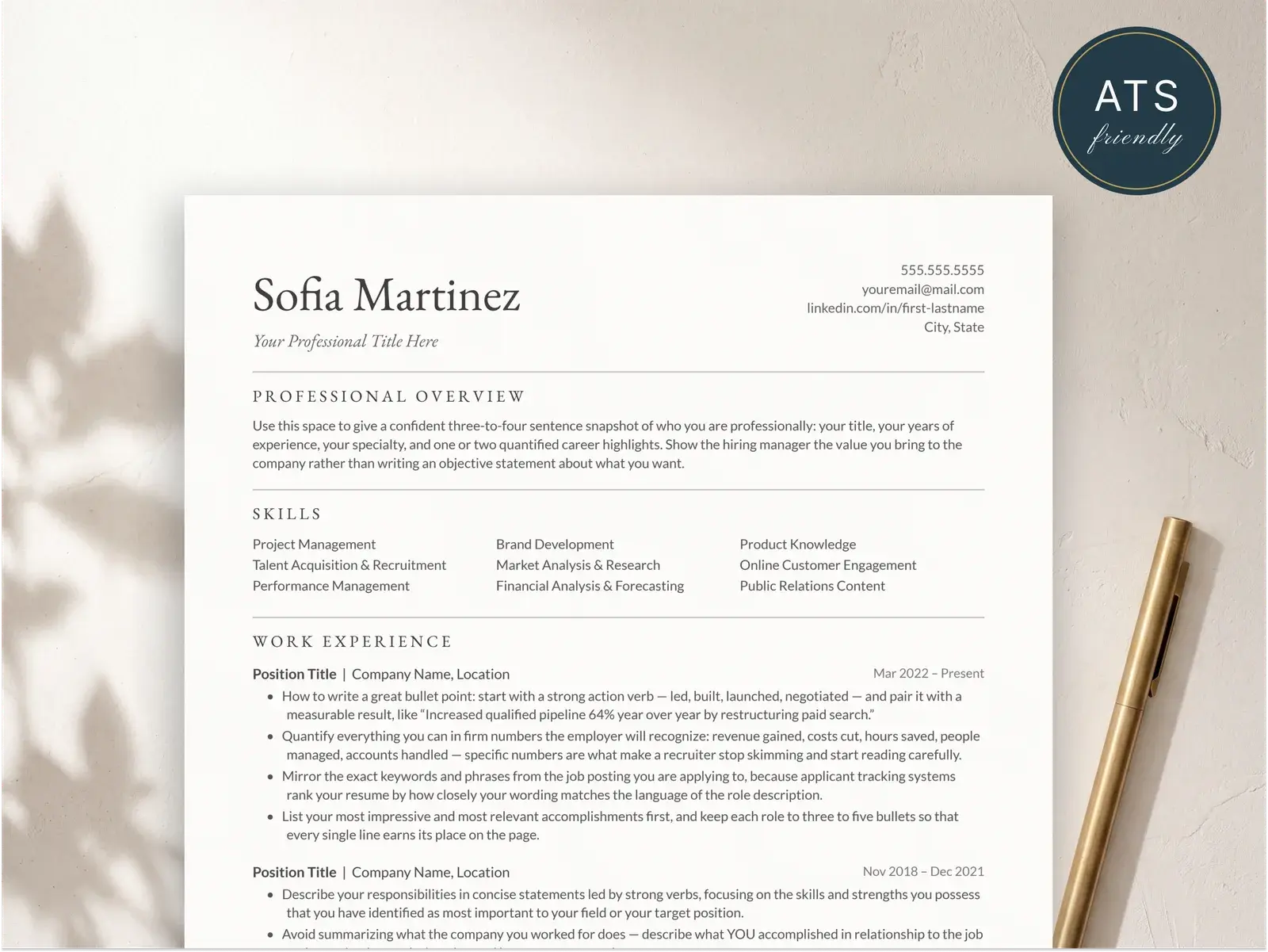
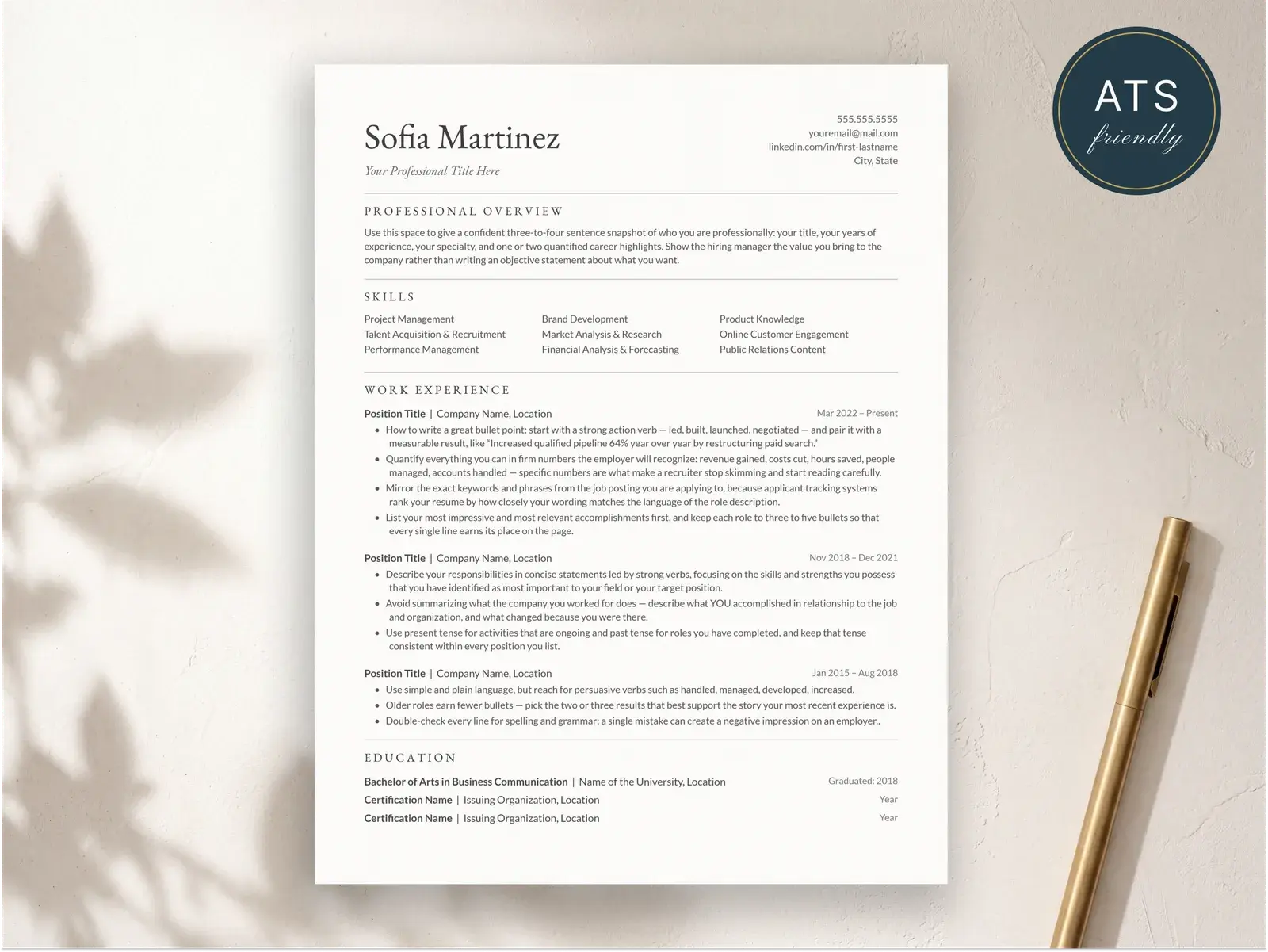
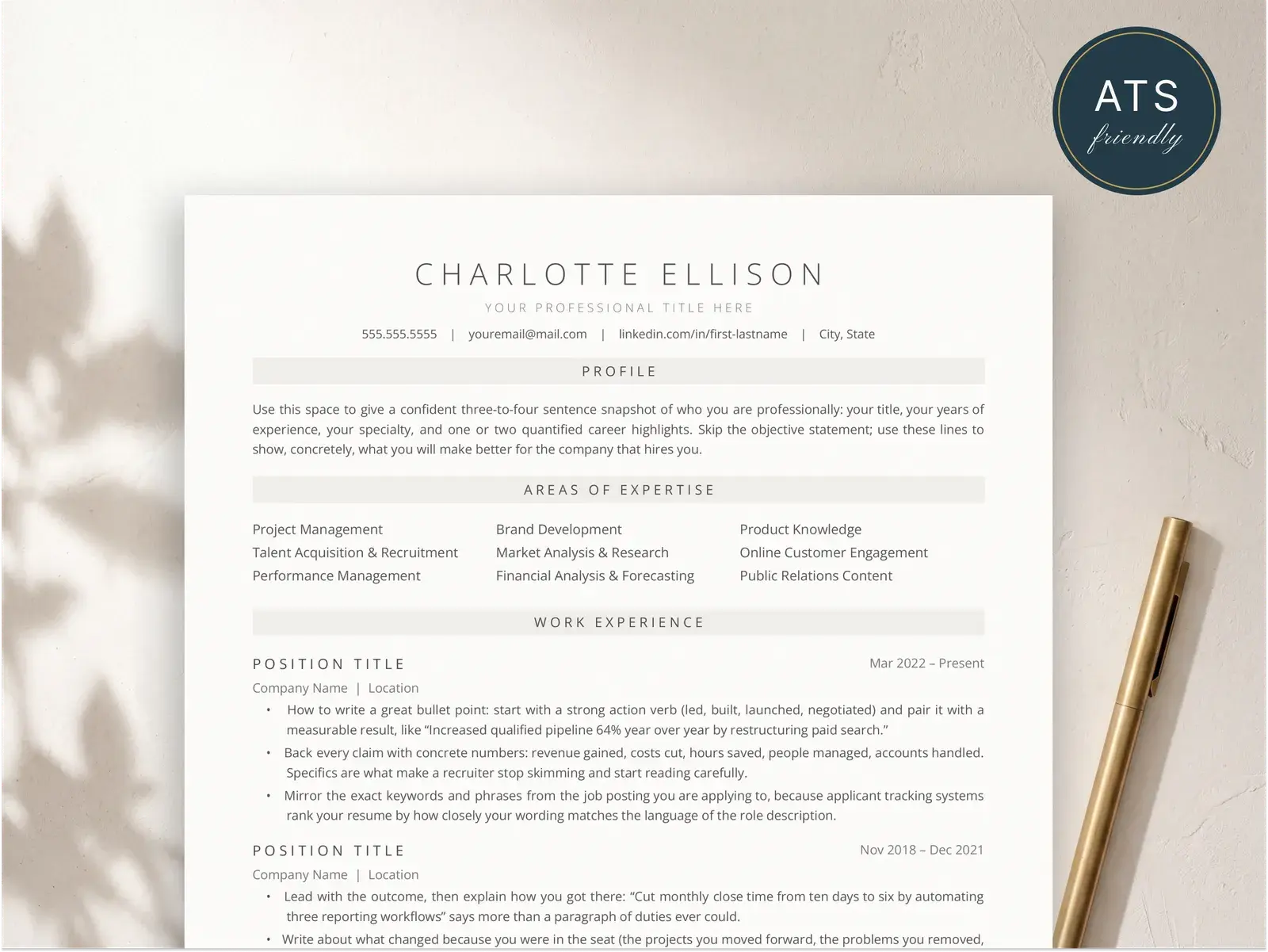
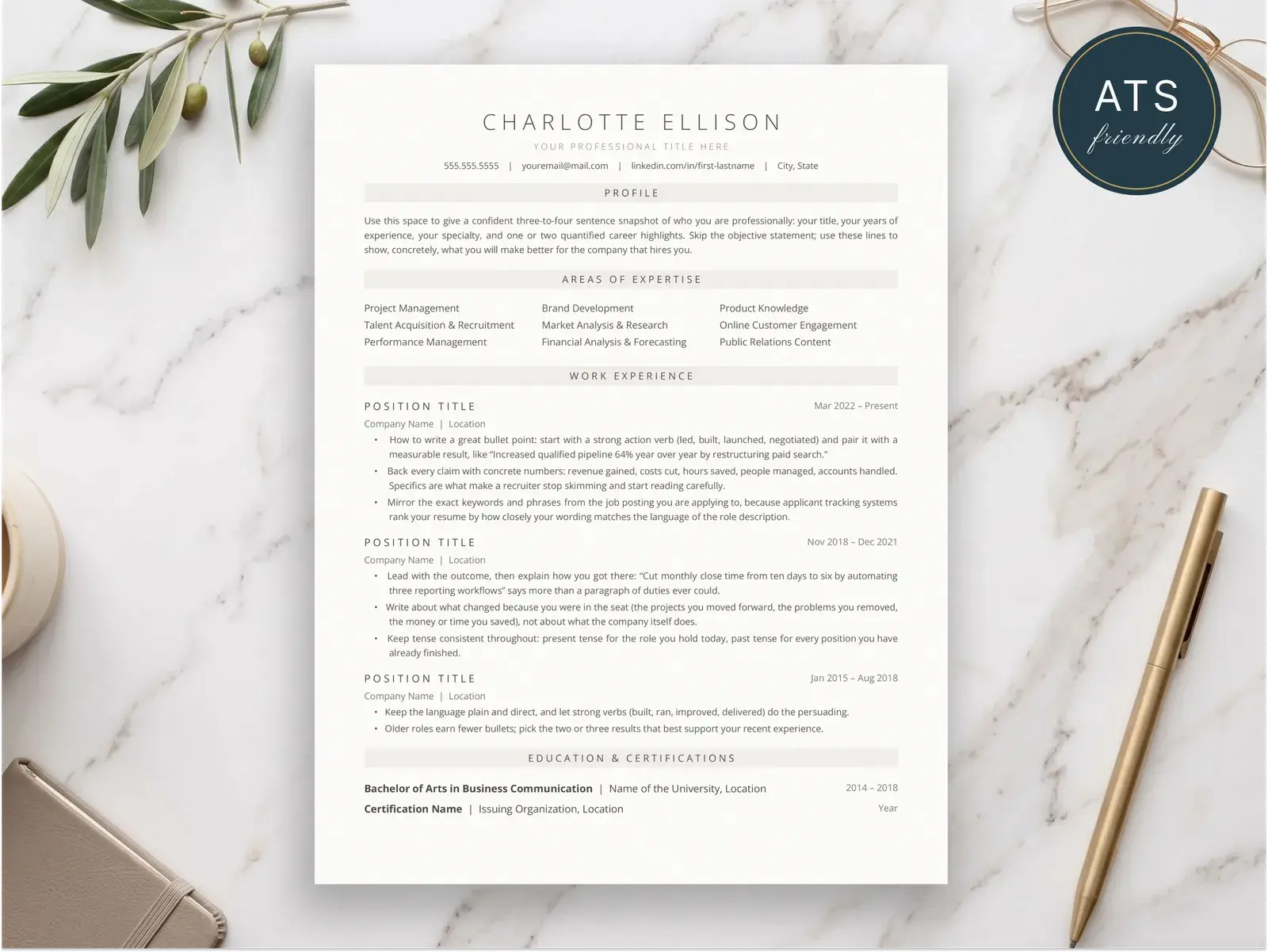
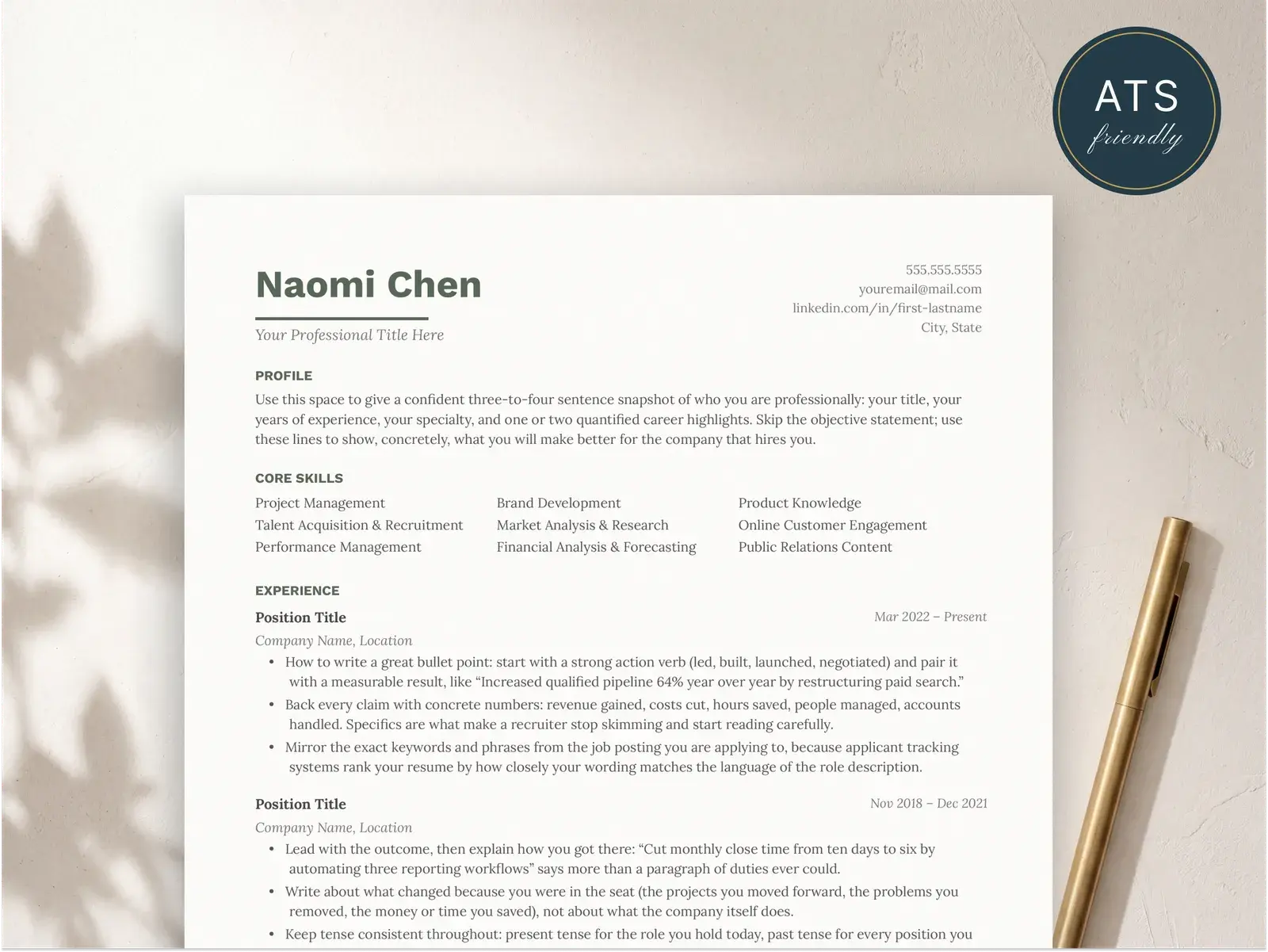
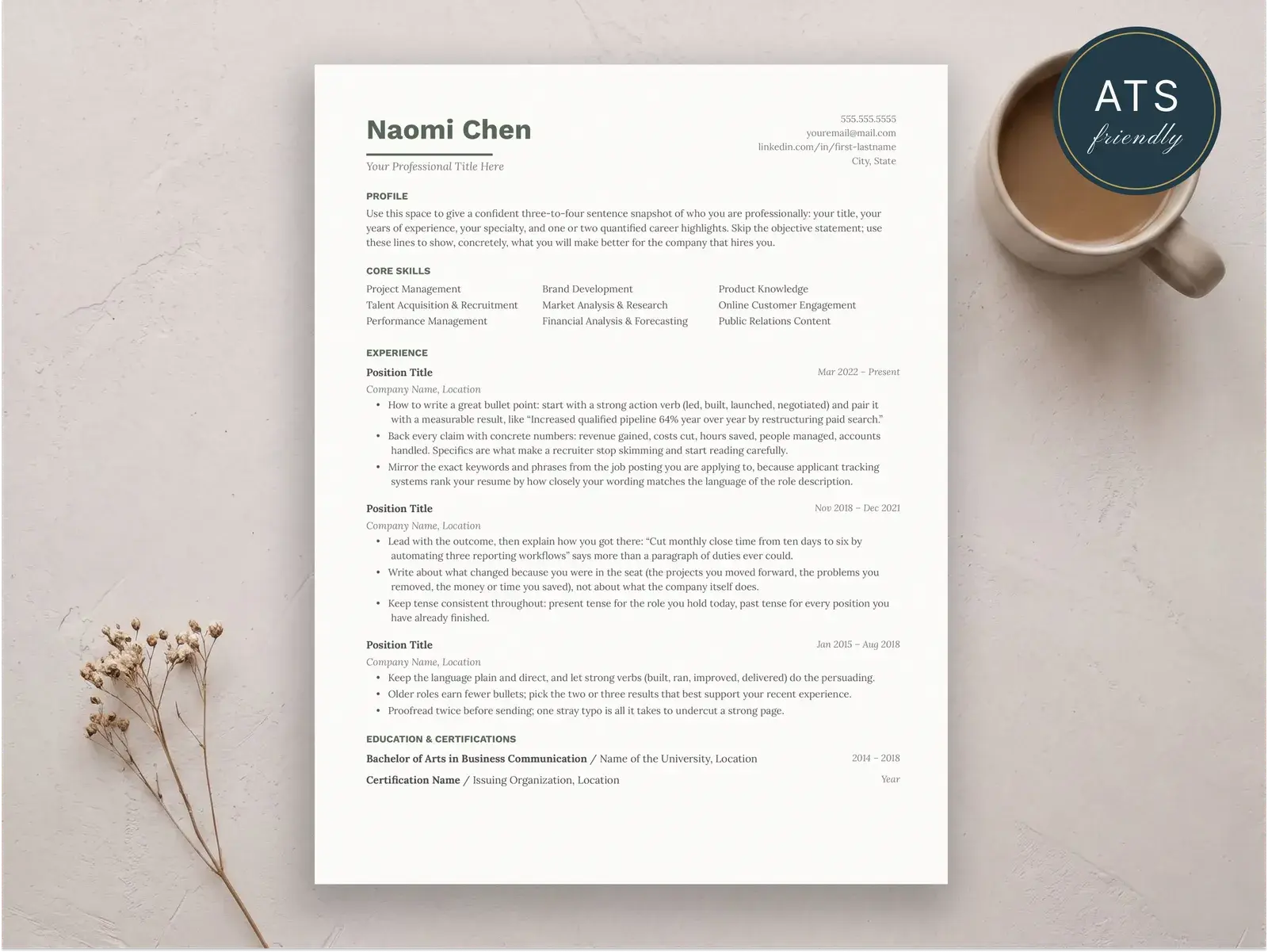
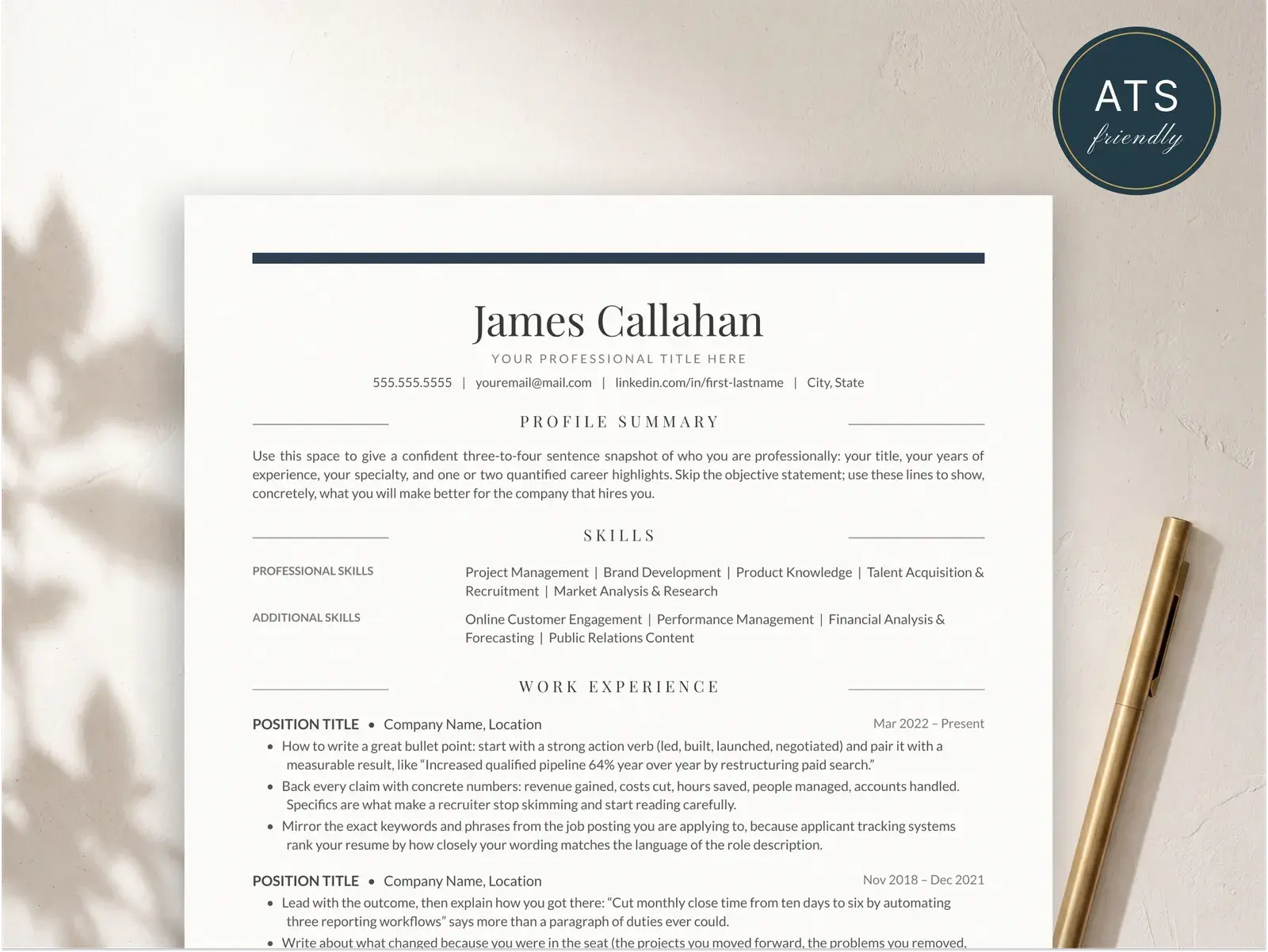
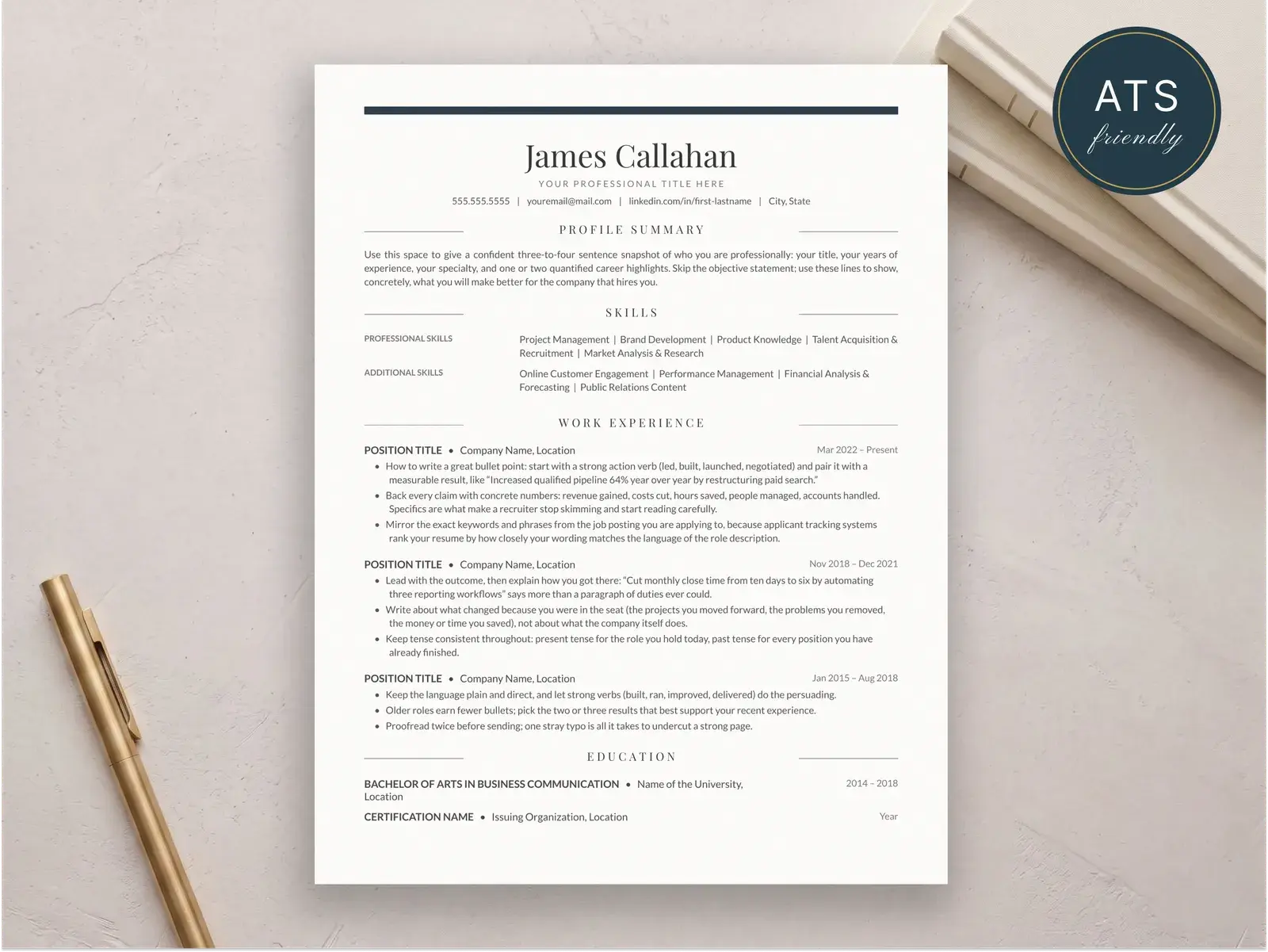
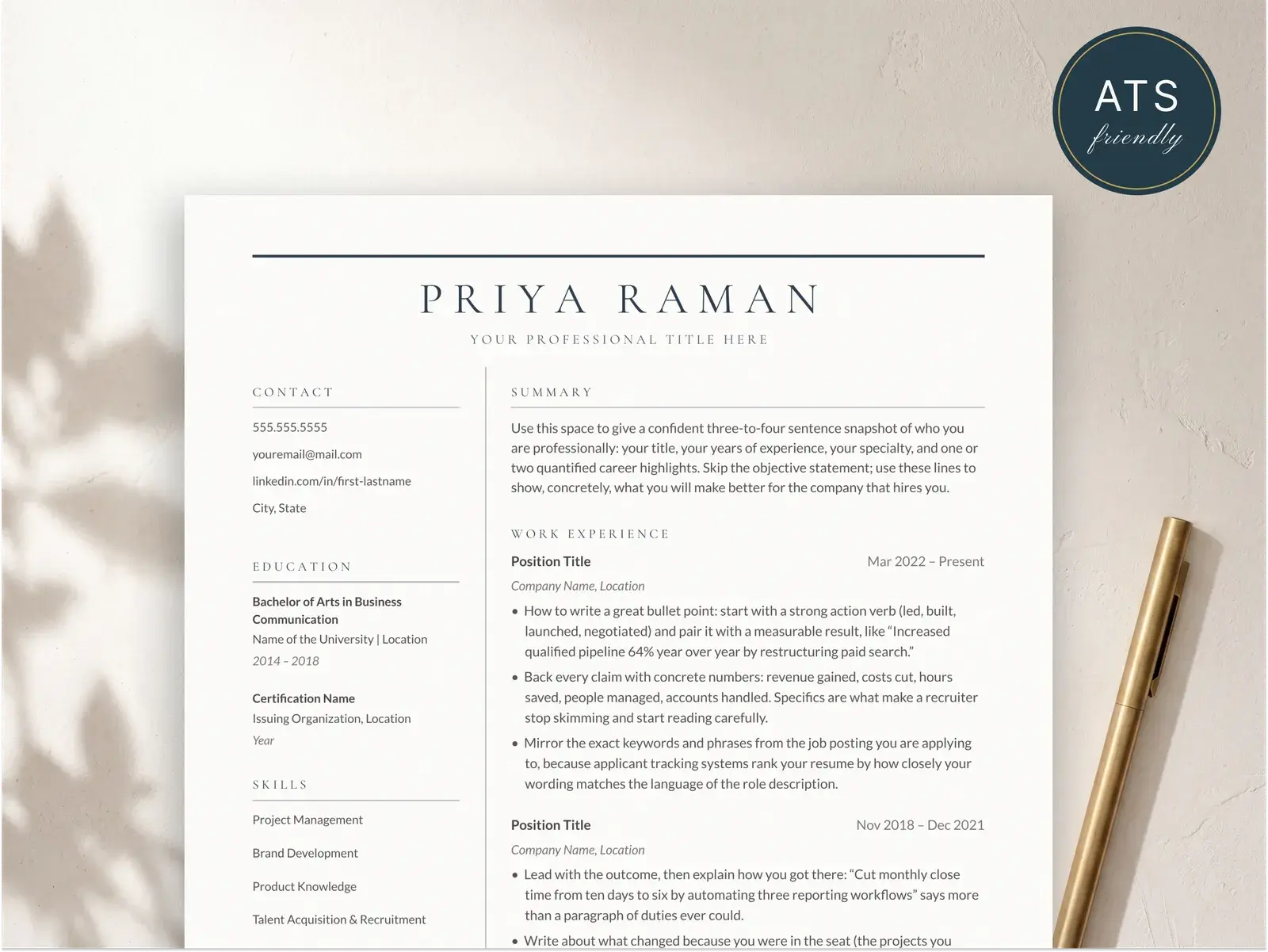
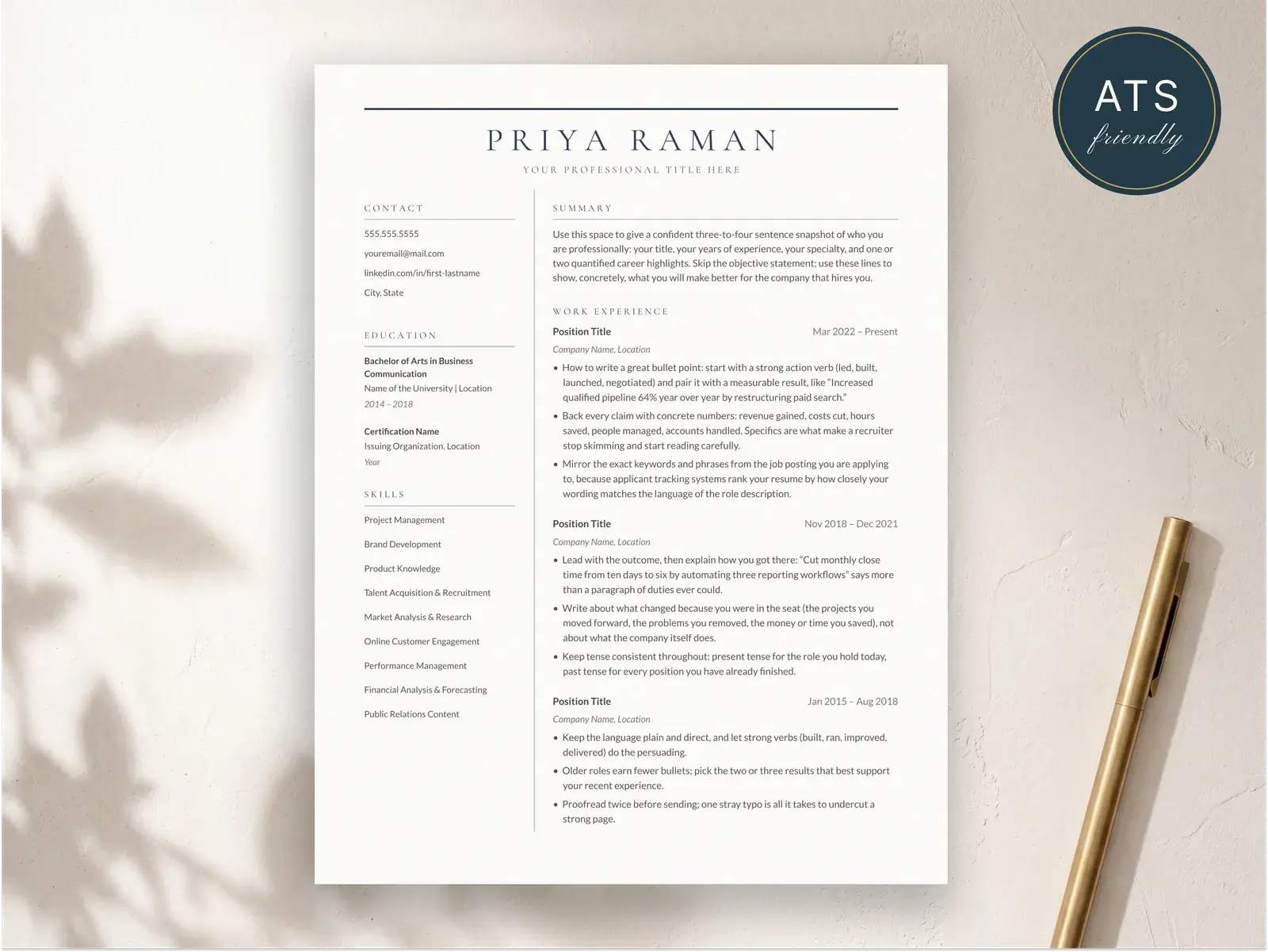
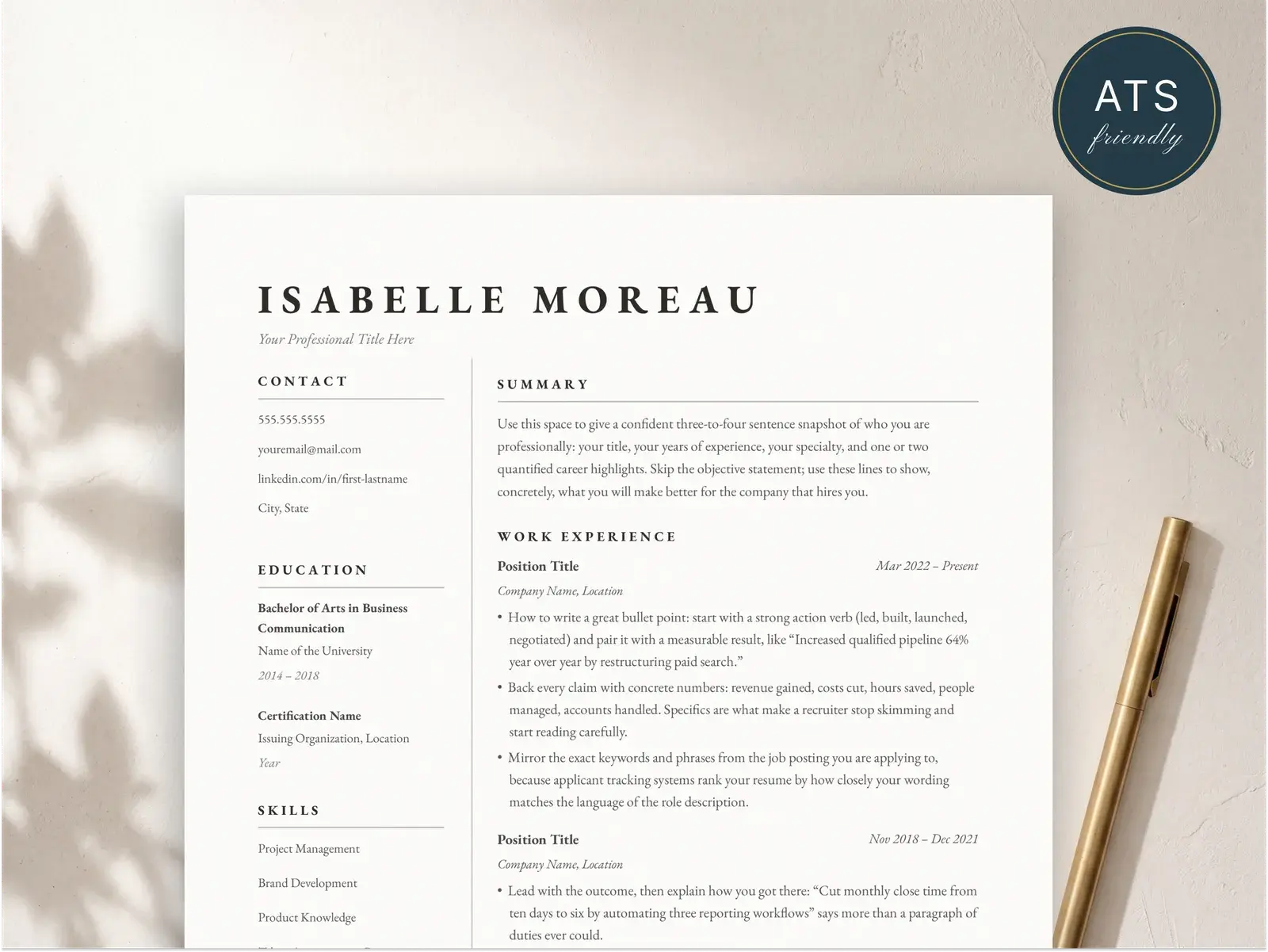
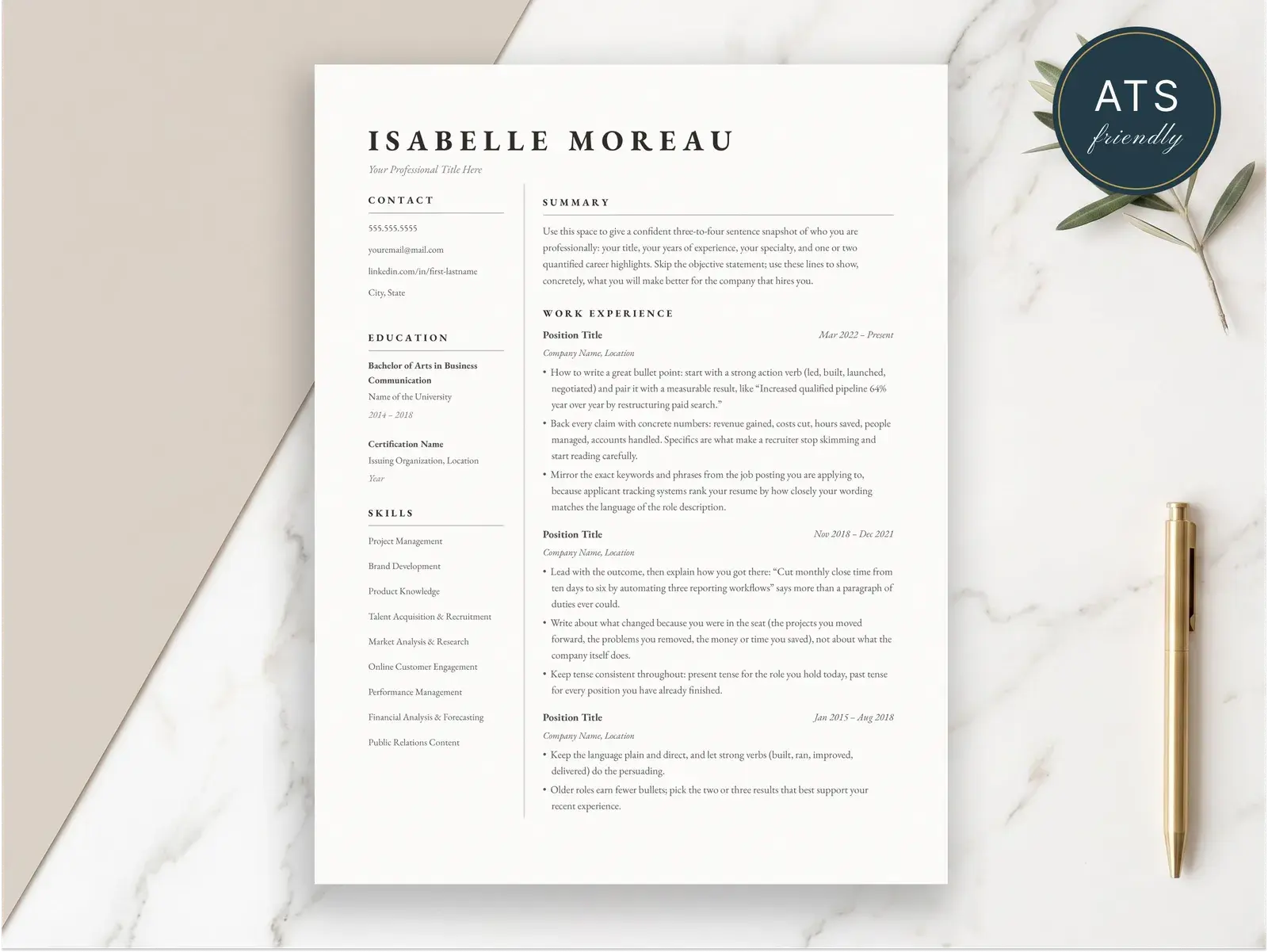
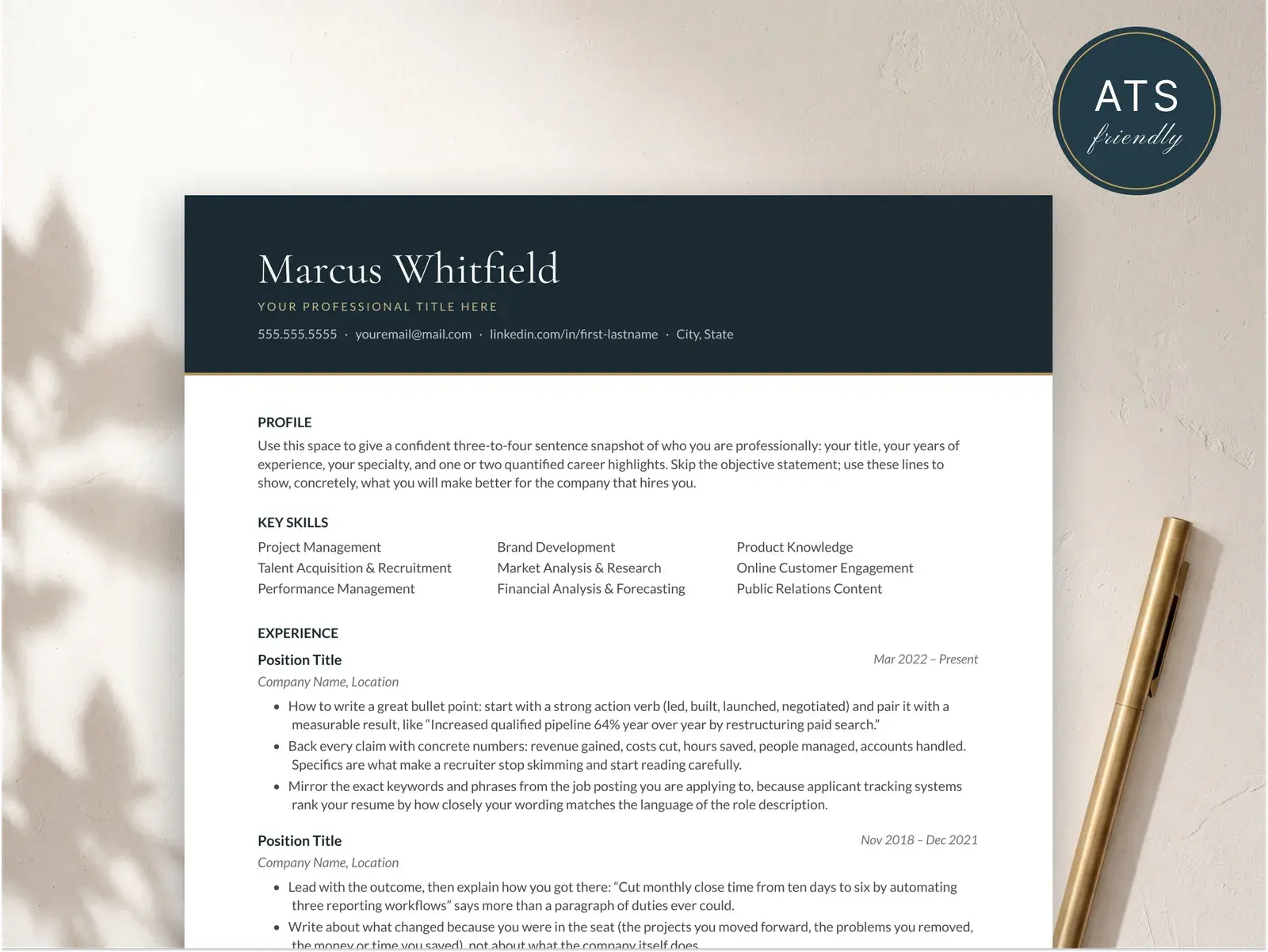
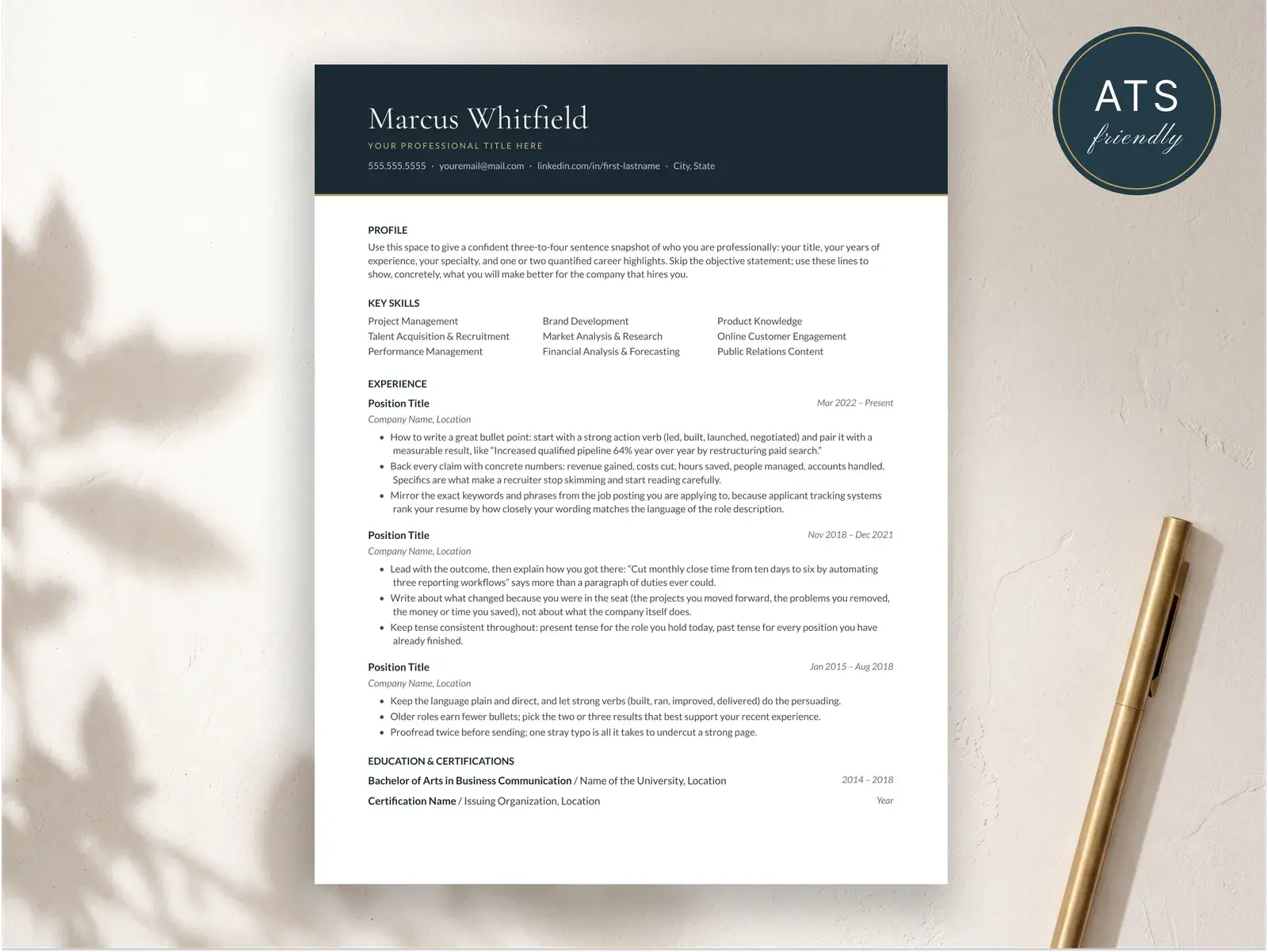
At this level, we suggest a quiet design: a single-column layout with a confident name and clean section headings, without sidebars, skill bars, or photos.
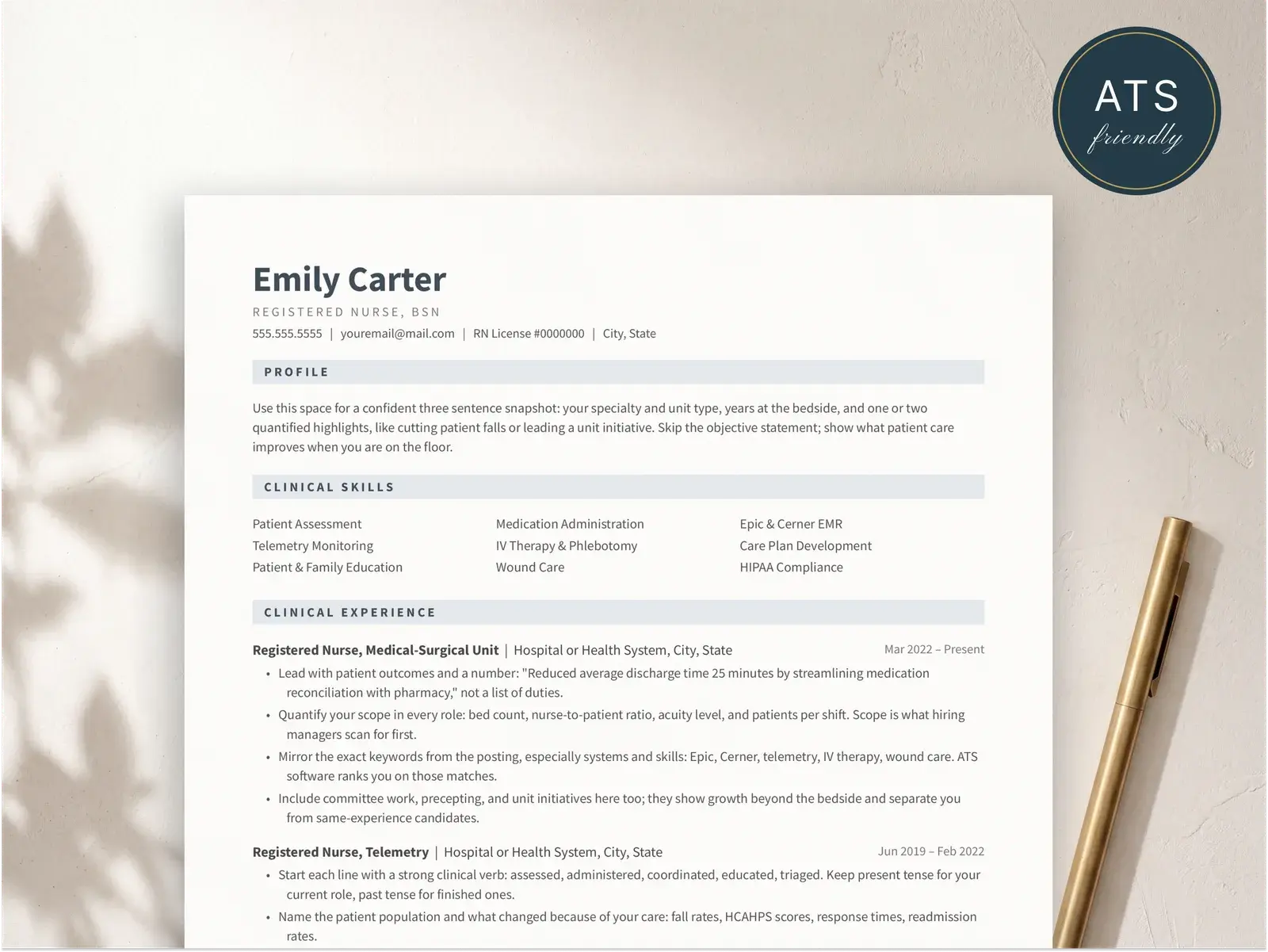
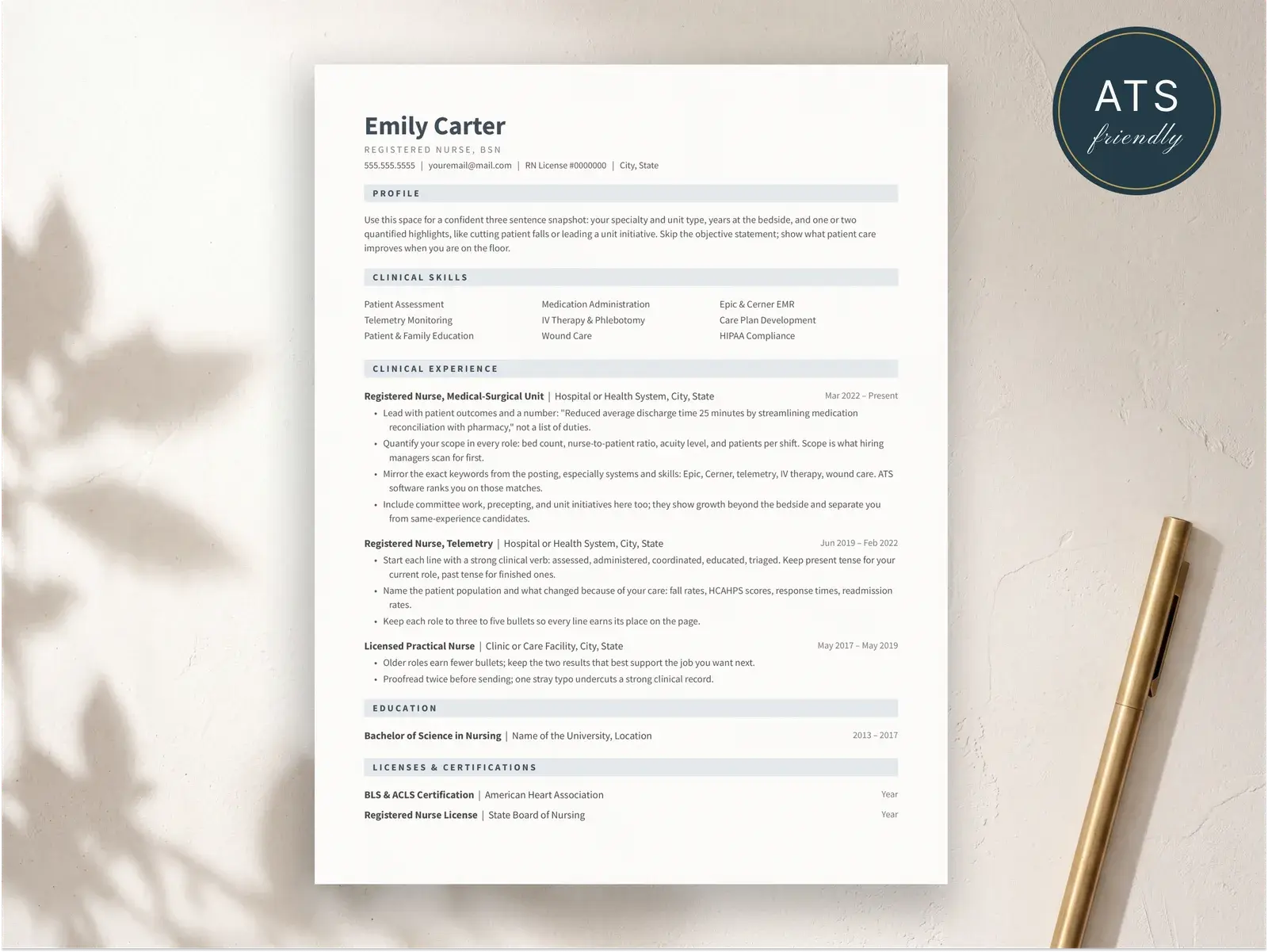
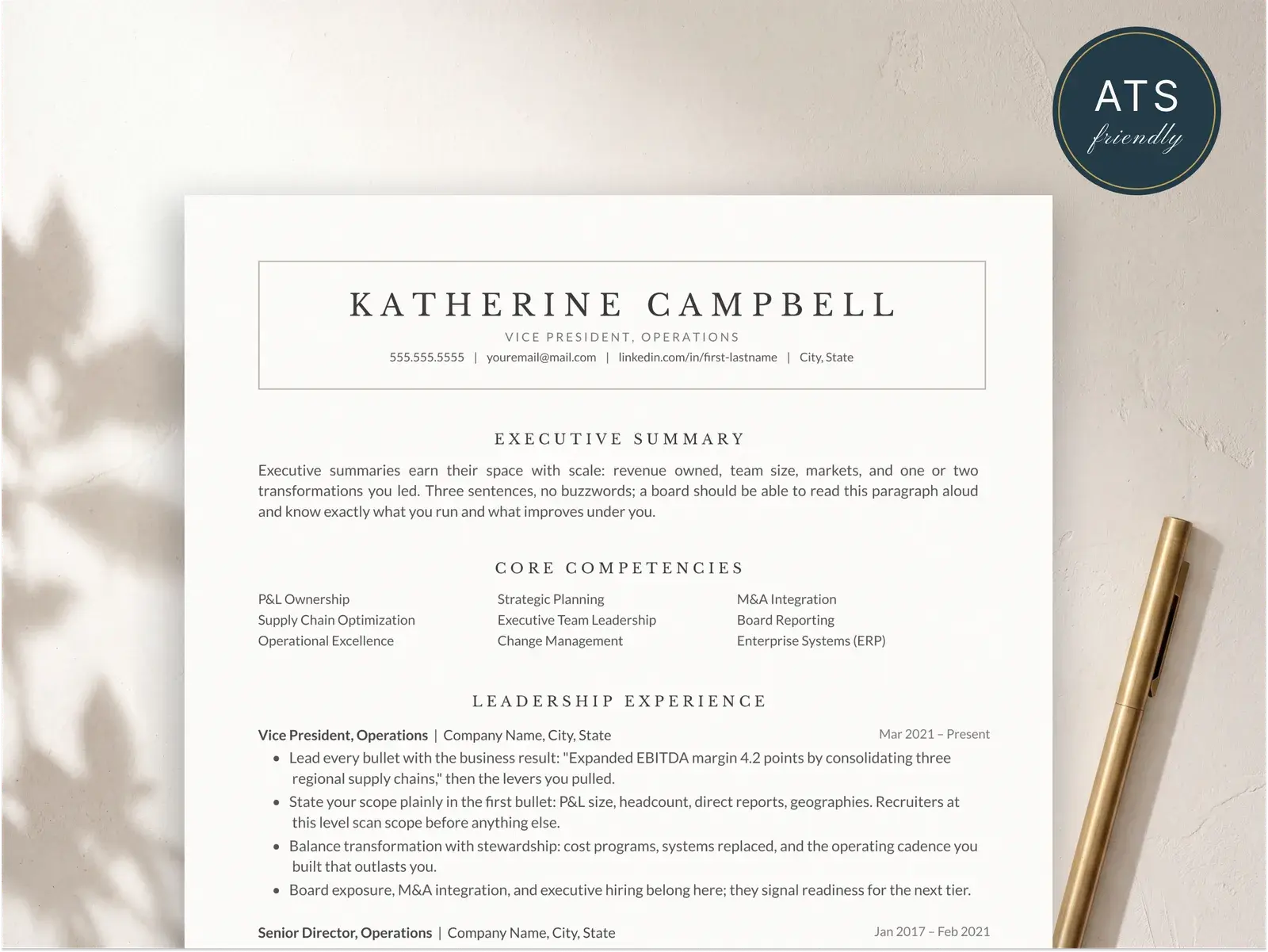
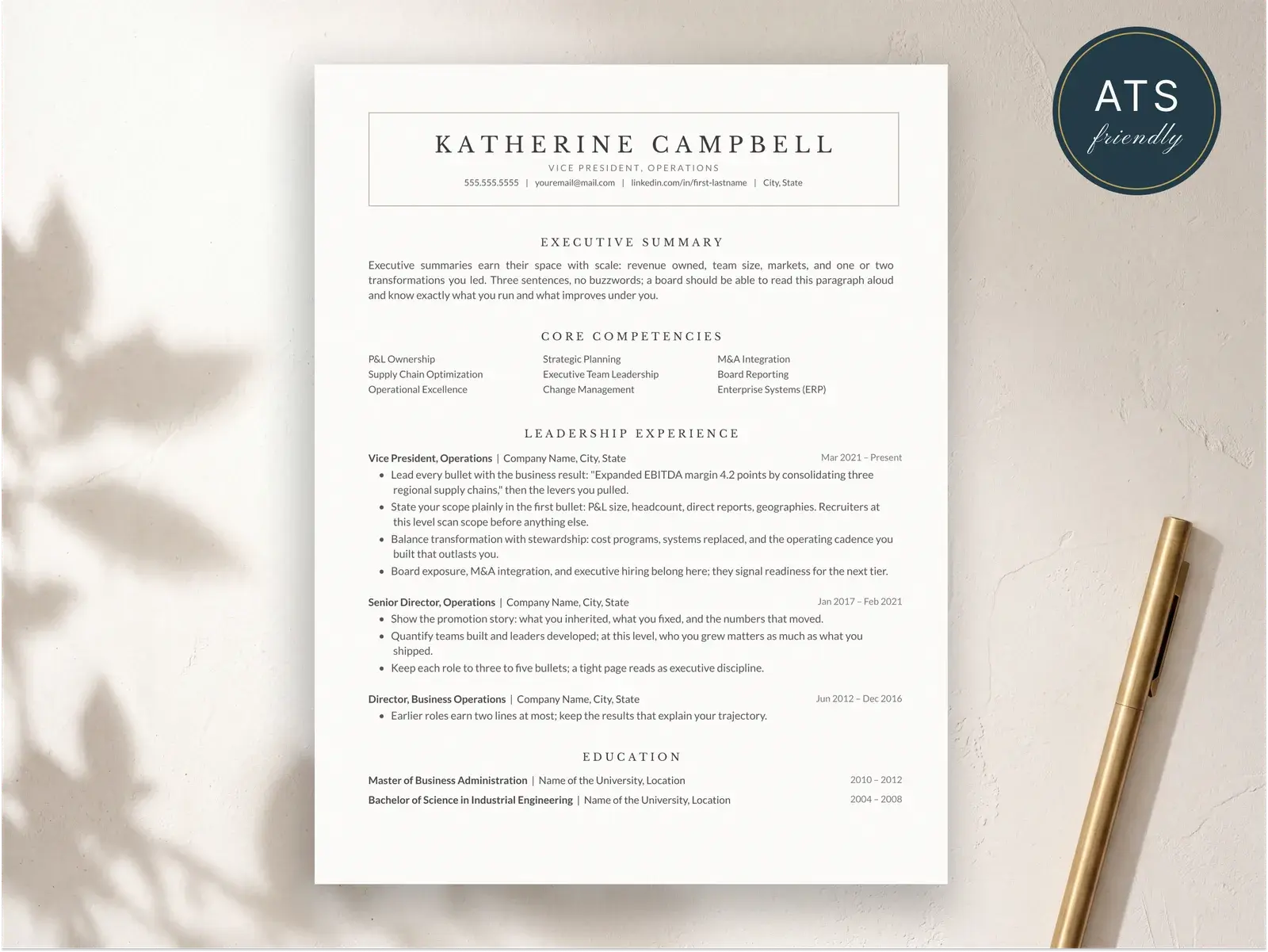
Two of our executive templates for Google Docs, Word, and Pages fit that brief. The Campbell frames a centered serif name with fine hairlines for a traditional look, and The Crest puts the name on a deep navy header band for a more modern contrast. Both are laid out as one page; if you need a second, continue the experience section in the same styles. Either way, check that your second page carries your name and that the exported PDF matches what you see on screen.
Templates for this role
Mistakes that weaken a CEO resume
- Listing duties. “Oversaw strategy, finance, and operations” describes the job, not you. Replace it with what changed.
- Numbers without context. “Grew revenue 40%” means more next to the starting point and the timeframe.
- Too much history. Fifteen years of detail is plenty. Earlier roles get one line.
- Taking credit for the whole team. Be clear about what you led versus what you inherited, and be ready to explain your part in every number in an interview.
- One version for every search. A turnaround role and a growth role usually call for different stories. Reorder your summary and bullets so the most relevant results come first.