Resume templates
Entry-level resume templates
Clean layouts designed for recent graduates and first-time job seekers. Look professional even with limited experience.
See the templatesBest templates for entry-level candidates
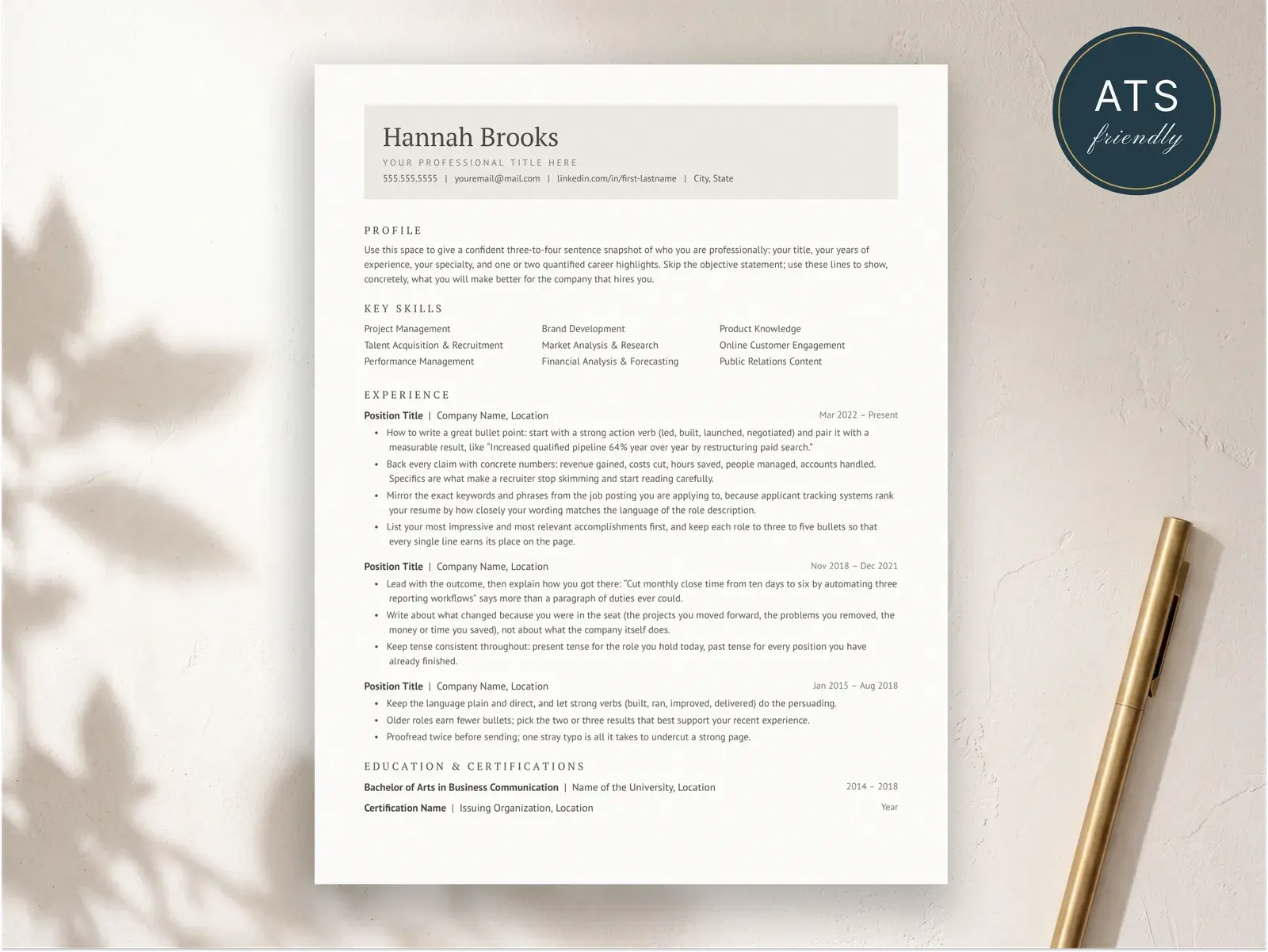
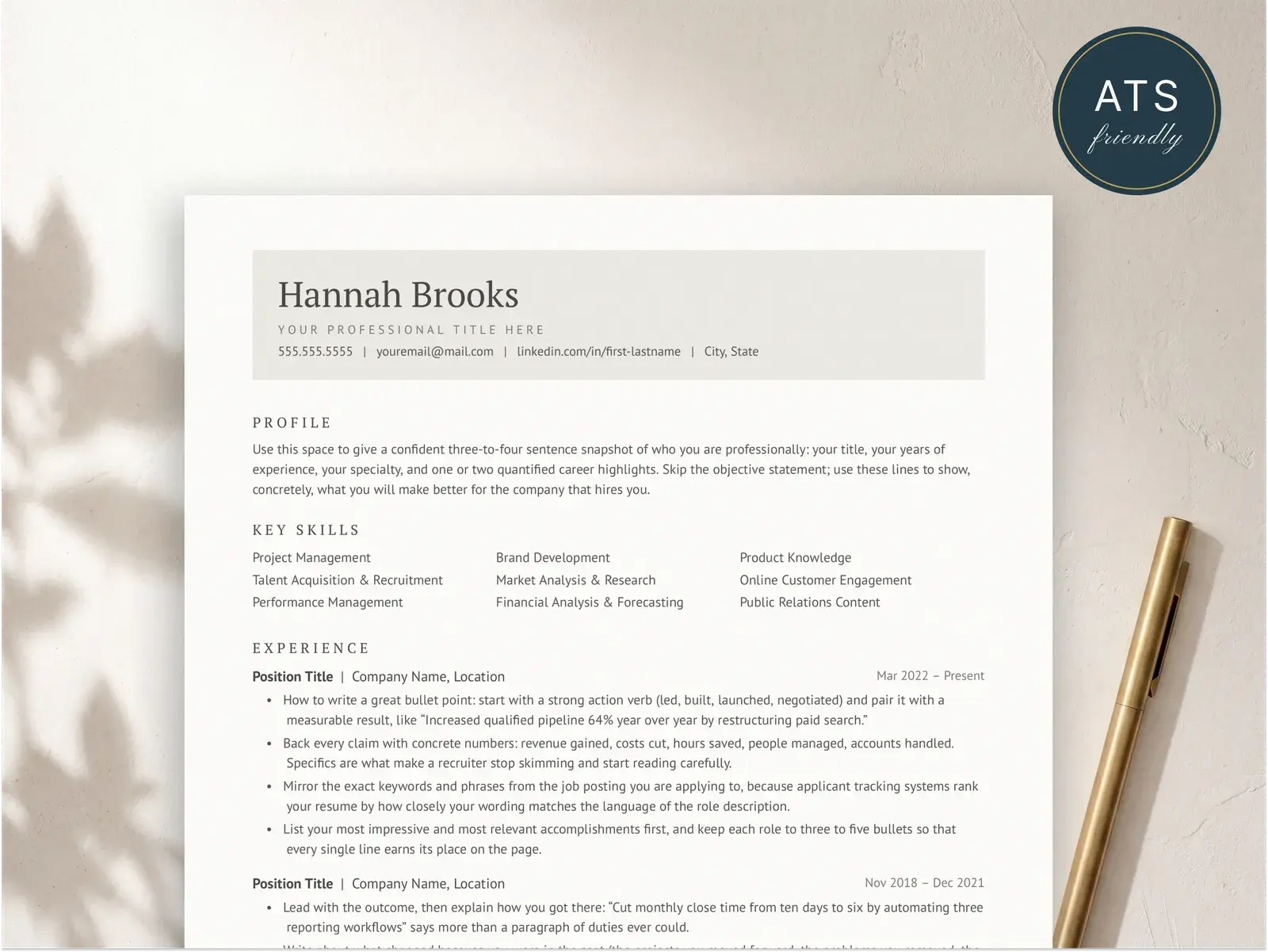
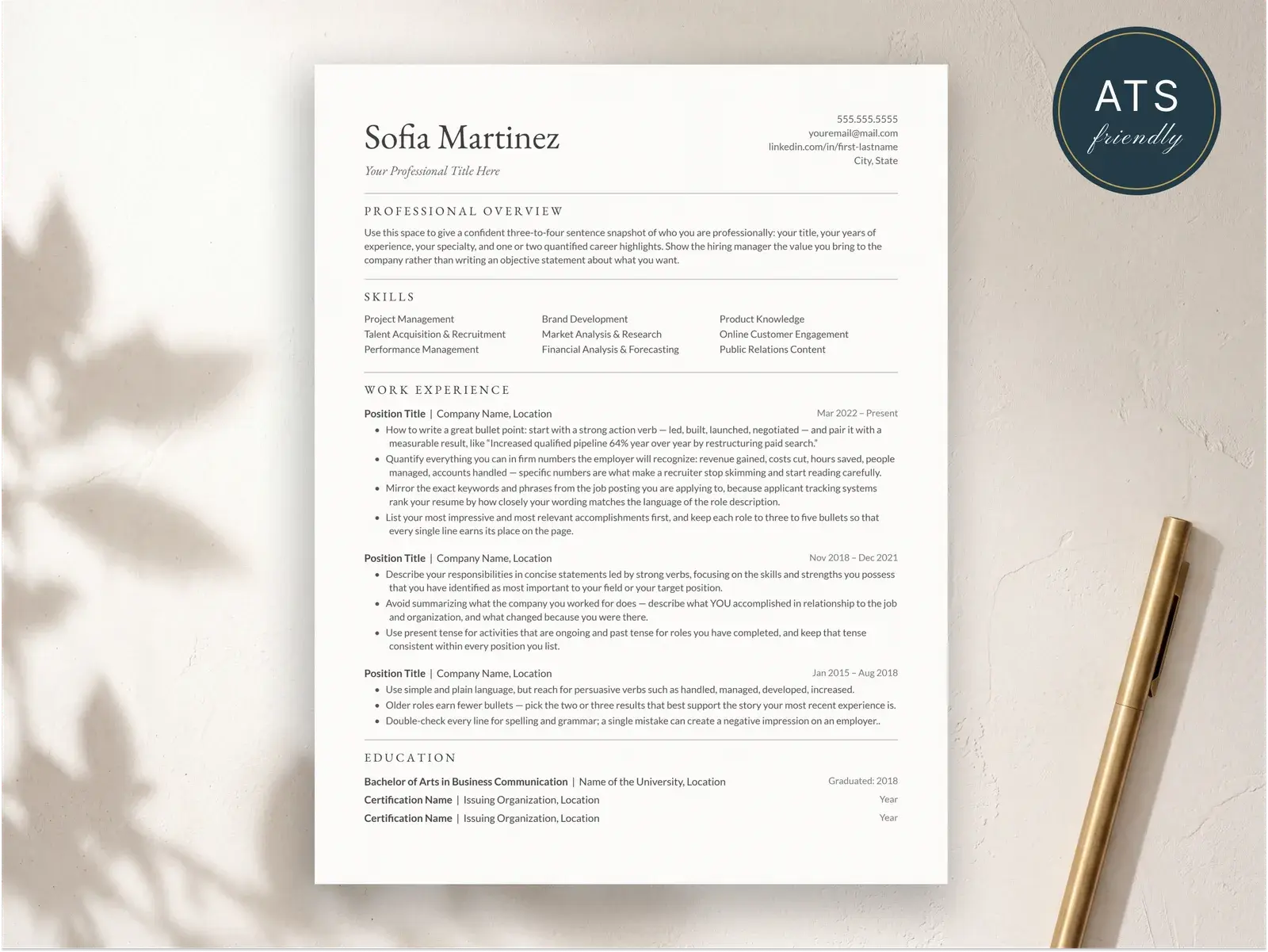
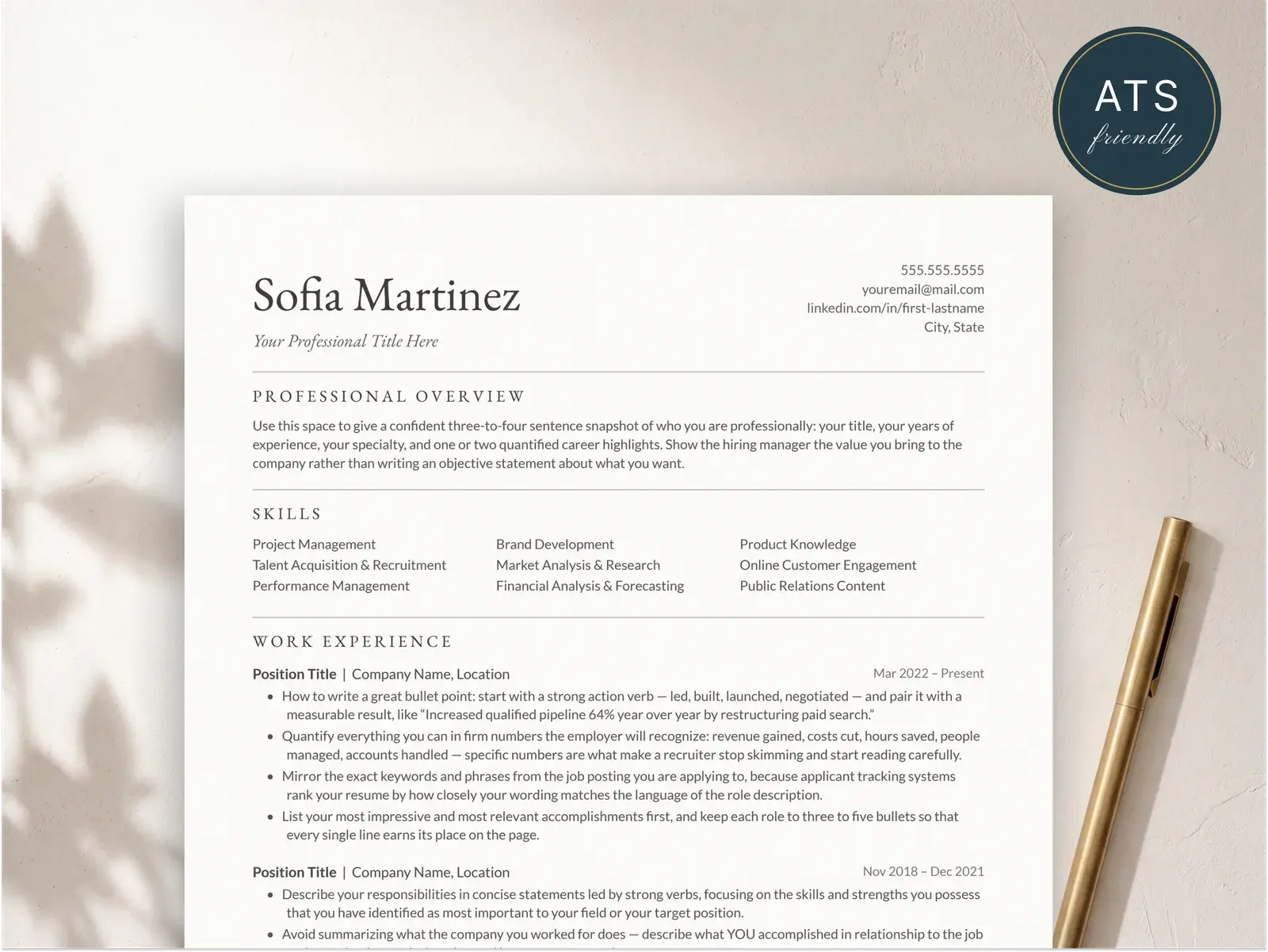
When you do not have years of experience to fill a page, the right template matters even more. These designs use generous spacing and clear structure to make your qualifications look polished and complete.
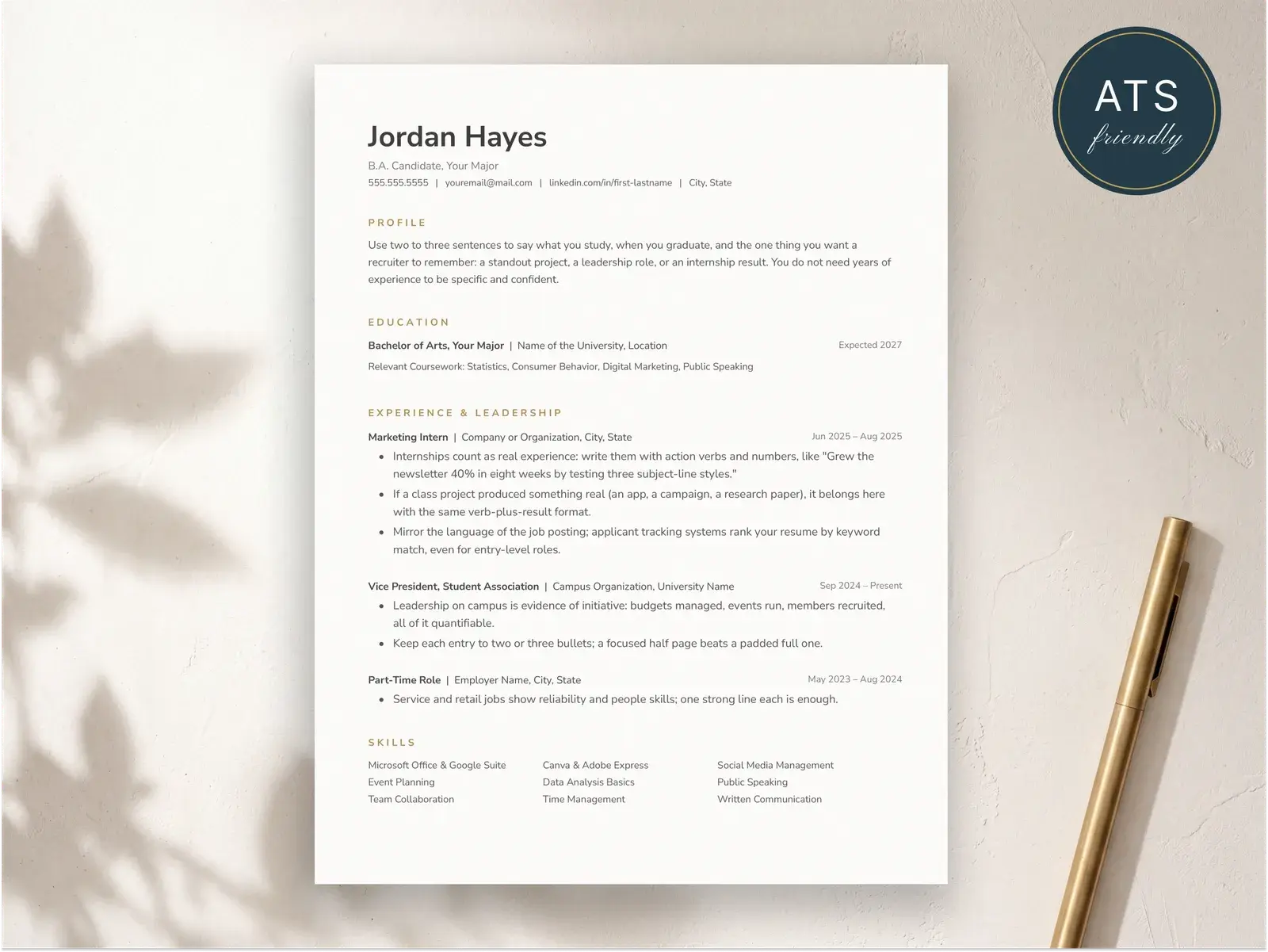
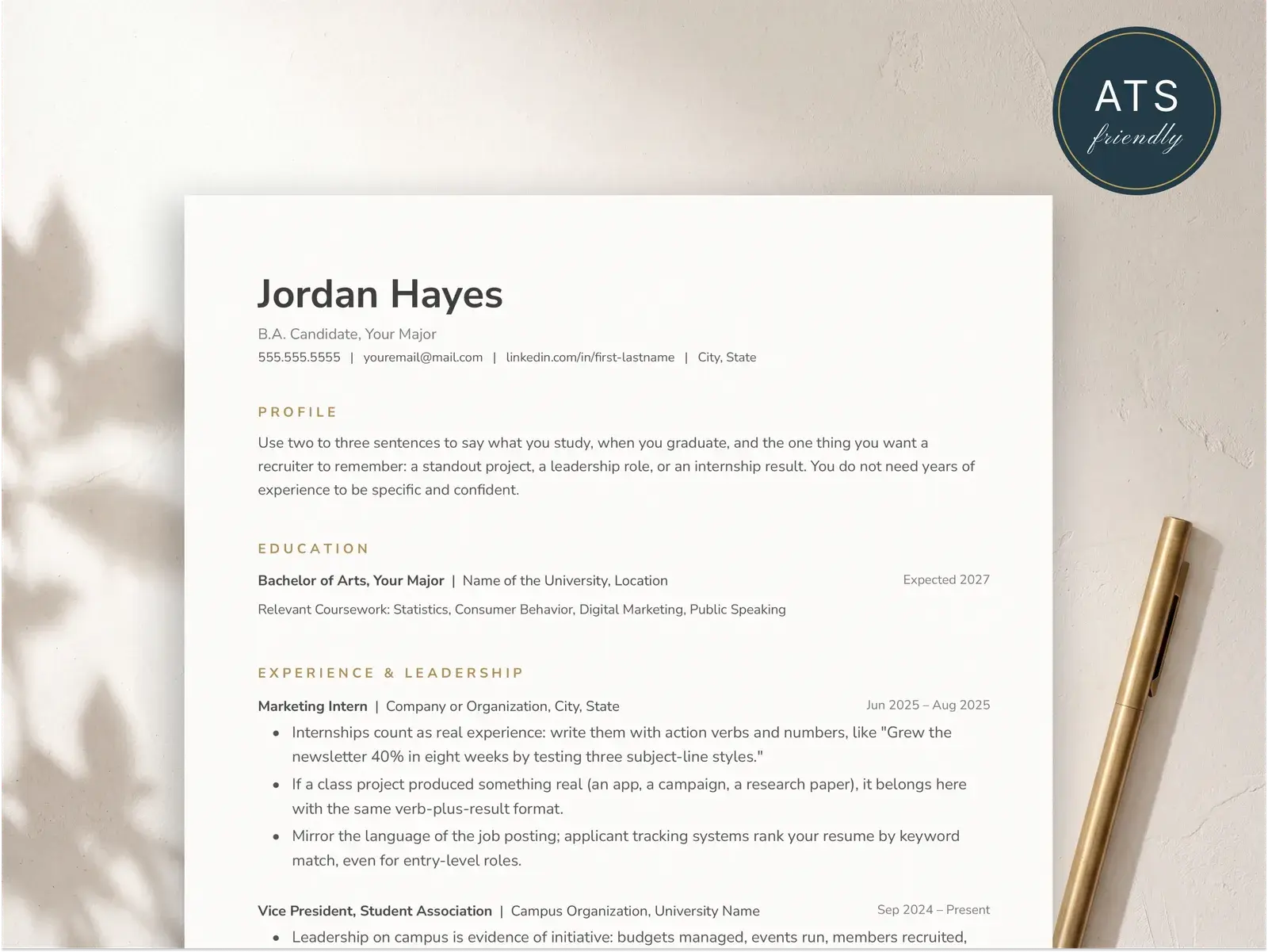
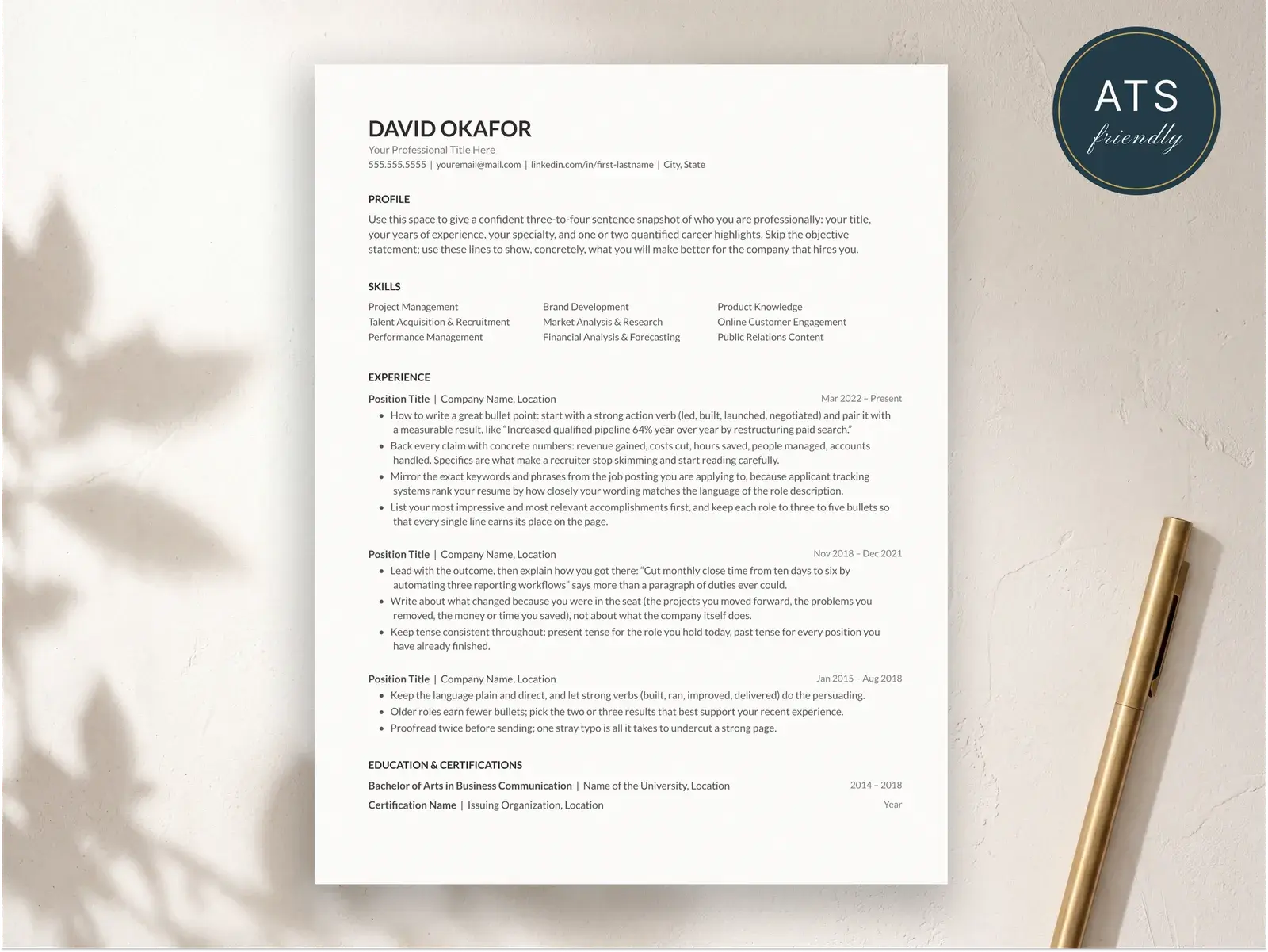
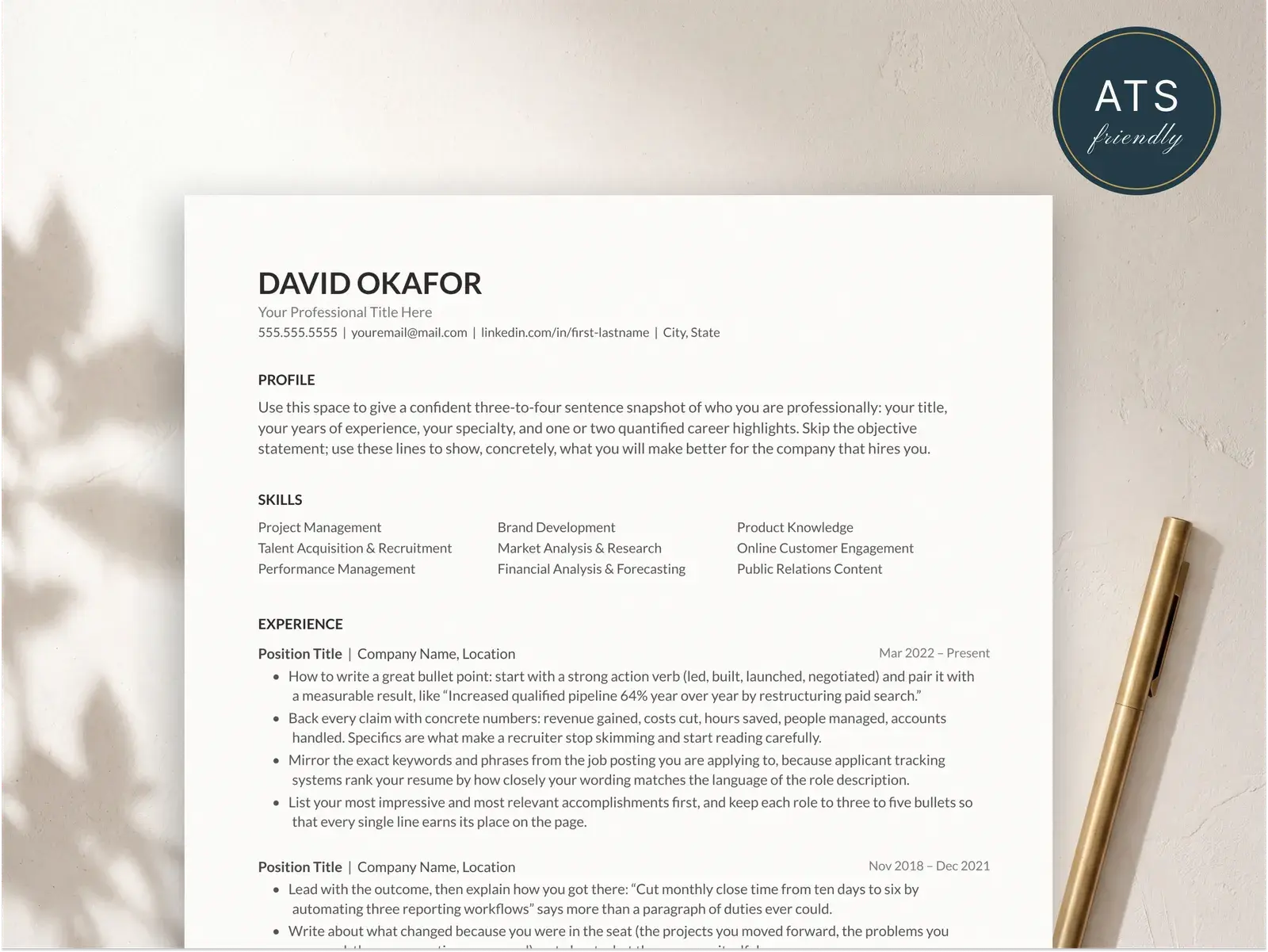
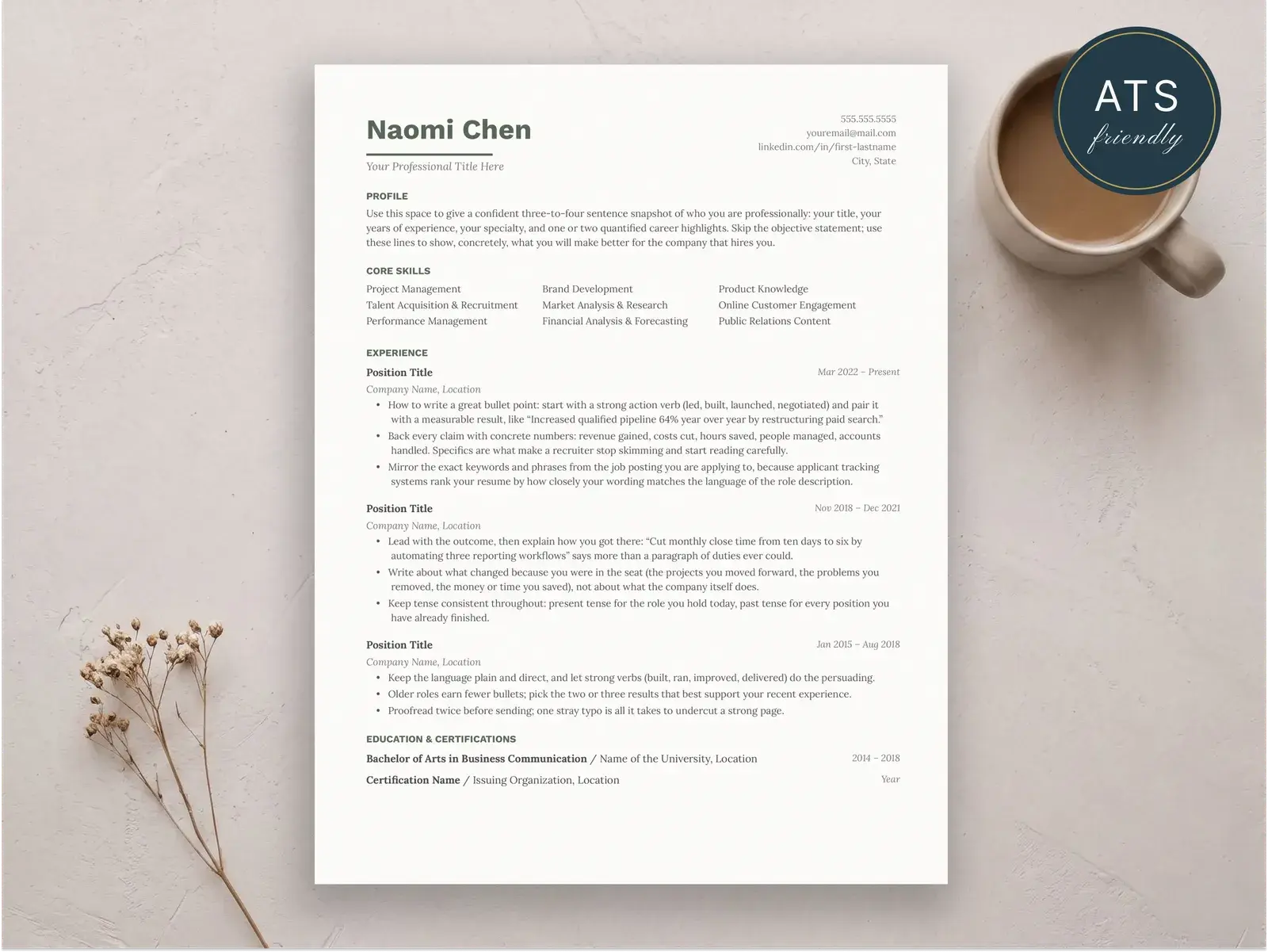
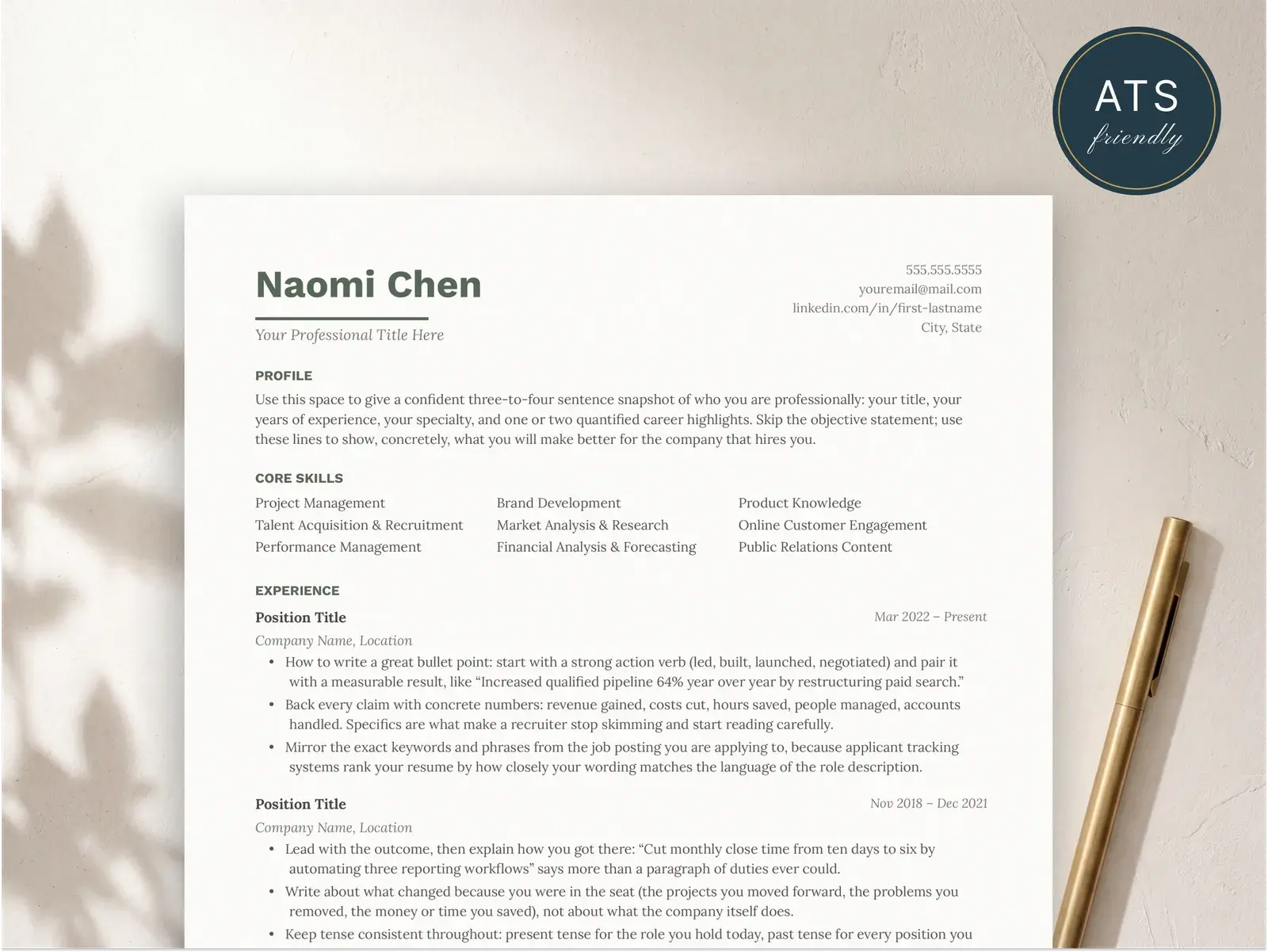
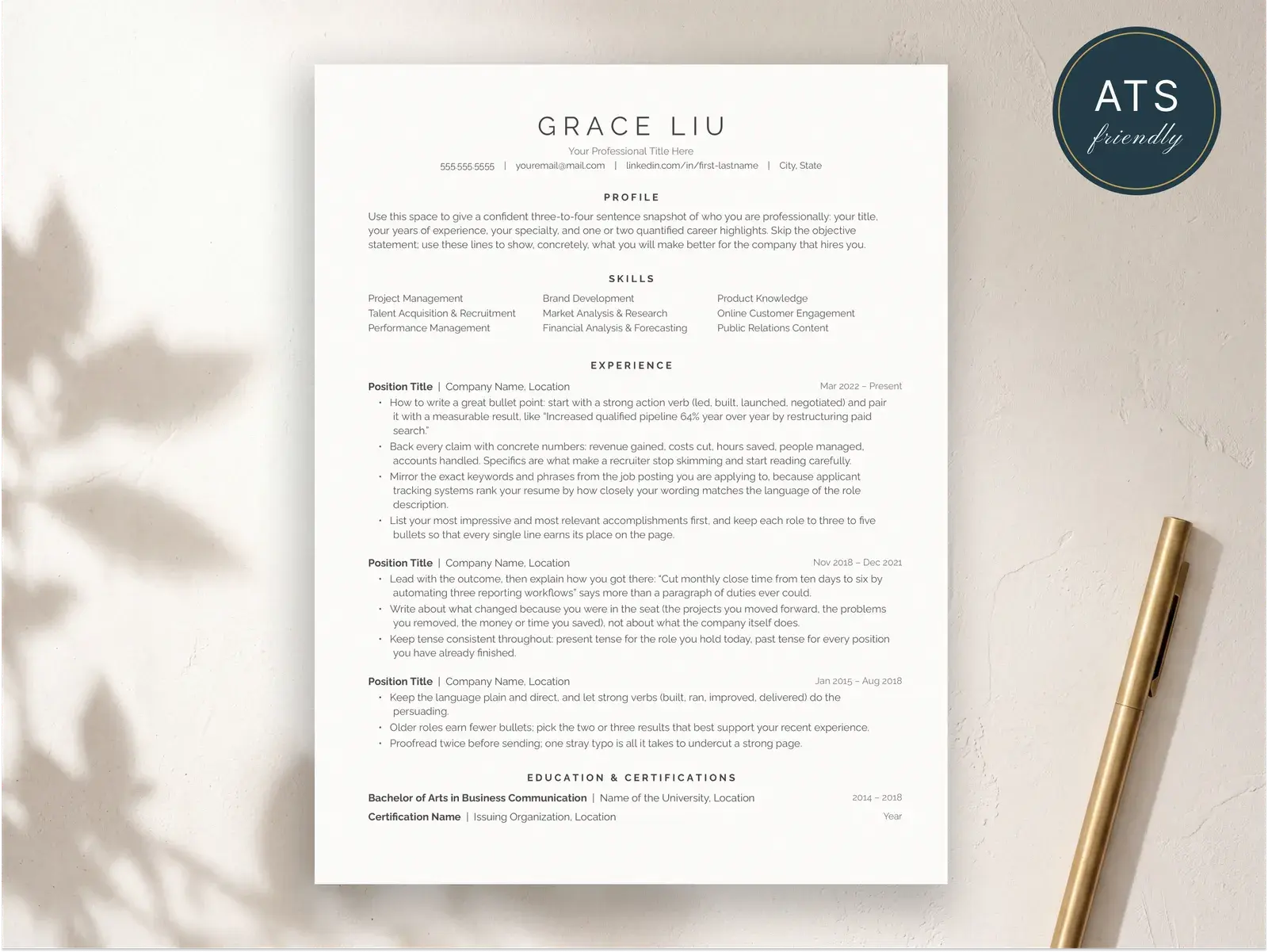
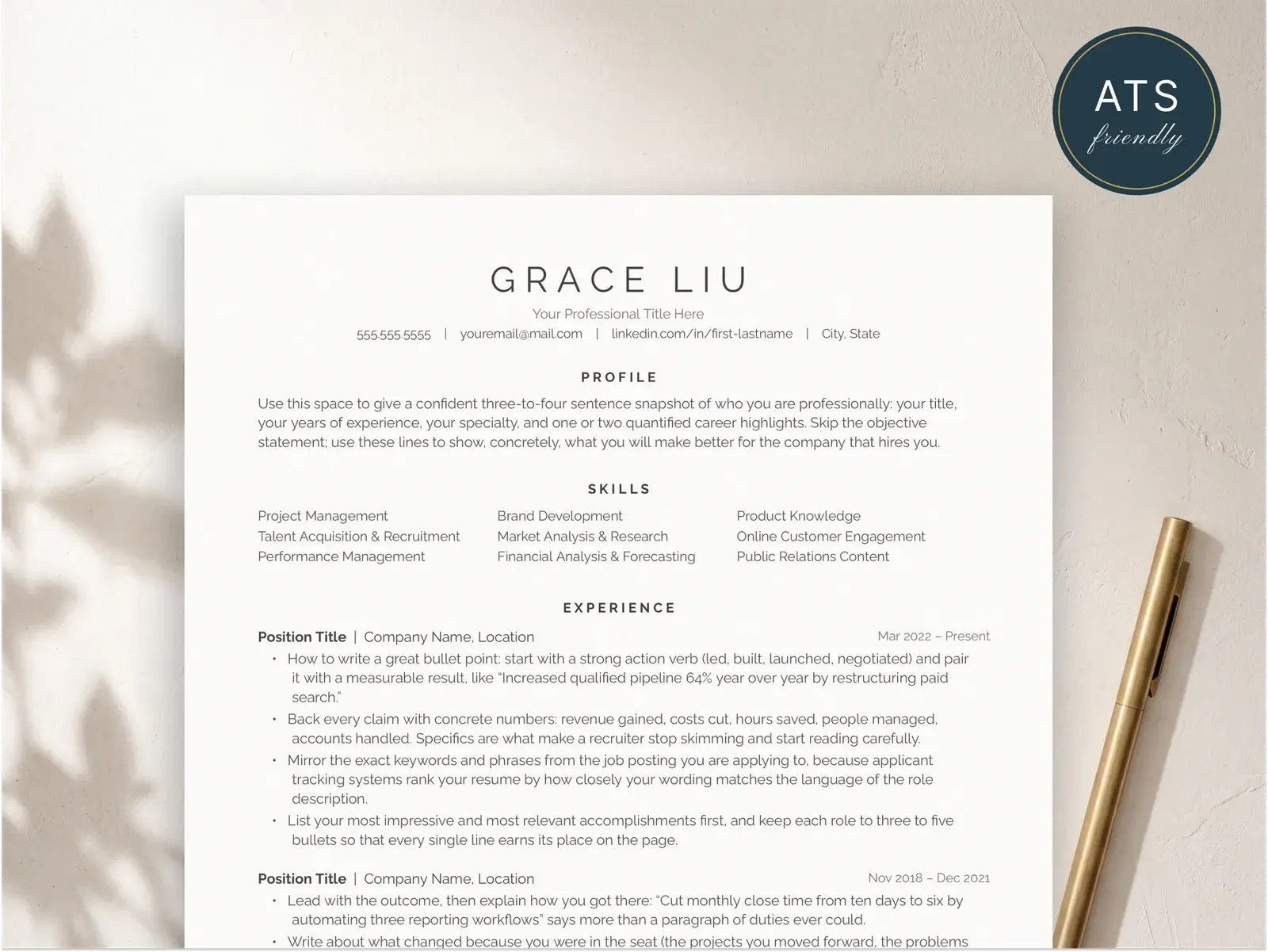
How to write a resume with little experience
Lead with education and relevant coursework
When your work history is thin, your education section should do more than list your degree. Include relevant coursework that aligns with the role you are targeting, academic projects that demonstrate practical skills, and any honors or awards. If you completed a senior thesis or capstone project, describe it like a work accomplishment: what the challenge was, what you did, and what the result was. Dean's list, scholarships, and relevant extracurricular leadership (club president, team captain) all belong here. Place your education section above your experience section — for entry-level candidates, it is your strongest asset.
Turn internships and projects into achievement stories
An internship, class project, or volunteer role is real experience. Treat it the same way a senior professional would treat a job: describe the context, your specific contribution, and the measurable outcome. "Redesigned the nonprofit's email newsletter, increasing open rates from 12% to 24% over 3 months" is a legitimate, impressive bullet point. If you built something for a class — a marketing plan, a financial model, a software application — describe it with the same rigor. Hiring managers at the entry level are looking for evidence of initiative, analytical thinking, and follow-through, regardless of whether the work was paid.
Use a skills-forward approach
When you do not have a long work history, a prominent skills section helps fill the page and demonstrates competency. Group skills into categories: technical skills (programming languages, software, tools), language skills, and relevant certifications. Be specific — "Python, SQL, Tableau, Google Analytics" is far more useful than "proficient in data analysis tools." Only list skills you can genuinely discuss in an interview. If you completed an online certification (Google Analytics, HubSpot, AWS Cloud Practitioner), include it — these credentials carry real weight for entry-level candidates and show initiative beyond your coursework.
Write a summary that frames your potential
Your professional summary is especially important at the entry level because it frames how a hiring manager reads the rest of your resume. In 2-3 concise sentences, state your degree, your strongest relevant skill, and what type of role you are seeking. Avoid generic phrases like "hard-working team player" — every candidate says that. Instead, be specific: "Finance graduate with CFA Level I passed, hands-on experience in financial modeling from two equity research internships, seeking an analyst role at a buy-side firm." This tells the reader exactly who you are and what you want, making it easy to route your resume to the right hiring manager.
Example bullet points
Strong bullets start with an action verb and include measurable results. Here are examples for internships, projects, and part-time roles.
Researched and wrote 15 competitive analysis reports during a summer marketing internship, identifying 3 market opportunities that informed the Q4 product positioning strategy.
Developed a full-stack web application as a senior capstone project using React and Node.js, deployed to 200+ student users and maintained a 99.5% uptime over the 4-month pilot period.
Managed social media accounts for a campus organization with 1,800 followers, growing engagement rate from 2.1% to 5.8% through a content calendar and targeted posting schedule.
Assisted with month-end close procedures during an accounting internship, reconciling 40+ accounts and reducing outstanding variances by 60% within the first month.
Trained and supervised 8 new team members at a retail position, creating a shift checklist that reduced closing time from 45 minutes to 25 minutes and improved inventory accuracy by 15%.
Organized a fundraising event for a student nonprofit that attracted 300 attendees and raised $4,200, exceeding the $3,000 goal by coordinating 12 volunteers and 6 local sponsors.
Analyzed customer survey data using Excel and SPSS for a market research course, presenting findings to a panel of 4 faculty members and receiving the highest project grade in the class.
Completed Google Analytics and HubSpot Inbound Marketing certifications independently, applying learned frameworks to optimize a personal blog that grew from 0 to 2,500 monthly visitors in 6 months.
Related guides for first-job applicants
Reading material that pairs with this template — examples, objectives that beat summaries, and how to handle the education section.
Recent graduate resume example
A full resume for a new graduate with one internship — see how education leads and how a campus role is treated like a job.
Read moreResume objective examples
Fourteen objectives for students, career changers, and returners — the cases where an objective beats a summary.
Read moreHow to put expected graduation date on a resume
Where it goes, how to format it, and what to do when plans change.
Read moreFind the right template
Instant download, edit in Google Docs, Word, or Pages — and apply knowing the layout parses cleanly in hiring systems.
Browse the collectionQuestions, answered
How do I write a resume with no work experience?
Focus on what you do have: education, coursework, projects, volunteer work, internships, and relevant skills. A strong summary that frames your ambition and transferable skills can compensate for a short experience section. Employers hiring entry-level candidates expect potential, not a long work history.
Should I include my GPA on my resume?
Include it if it is 3.3 or higher, or if the job posting specifically asks for it. You can also list your major GPA if it is significantly higher than your cumulative GPA. After your first 1-2 years of professional experience, remove the GPA entirely — employers care more about your work at that point.
What should I put in my summary if I have no experience?
Write 2-3 sentences that highlight your education, strongest skills, and what you are looking for. For example: "Recent marketing graduate with hands-on experience in social media management from two campus organizations. Skilled in content creation, data analysis, and Adobe Creative Suite. Seeking a coordinator role to apply classroom knowledge to real-world campaigns."
Is a one-page resume enough for entry-level?
Yes — one page is not just enough, it is expected. Hiring managers spend about 7 seconds scanning a resume, and a concise one-page document shows that you can prioritize and communicate efficiently. You should never need two pages at the entry level.
Should I use a skills-based or chronological resume format?
For most entry-level candidates, a chronological format with a prominent skills section works best. Pure skills-based (functional) resumes can raise red flags because they hide your timeline. Instead, use a hybrid approach: lead with a skills section, then list your experience (internships, part-time jobs, projects) in reverse chronological order.