Resume templates
Construction resume templates
Straightforward, easy-to-read layouts that put safety certifications, equipment skills, and project experience front and center. Built for the trades.
See the templatesRecommended templates for construction
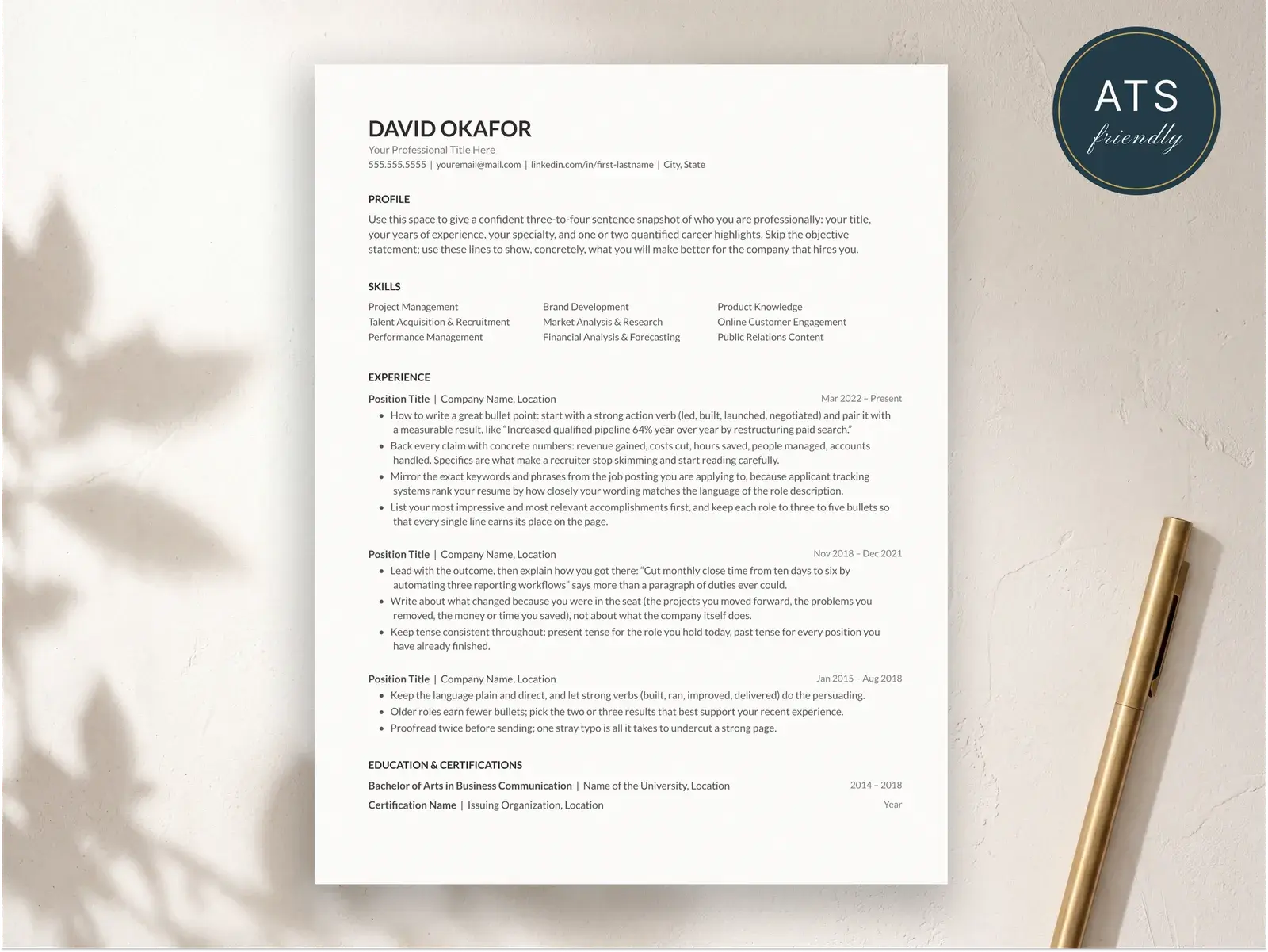
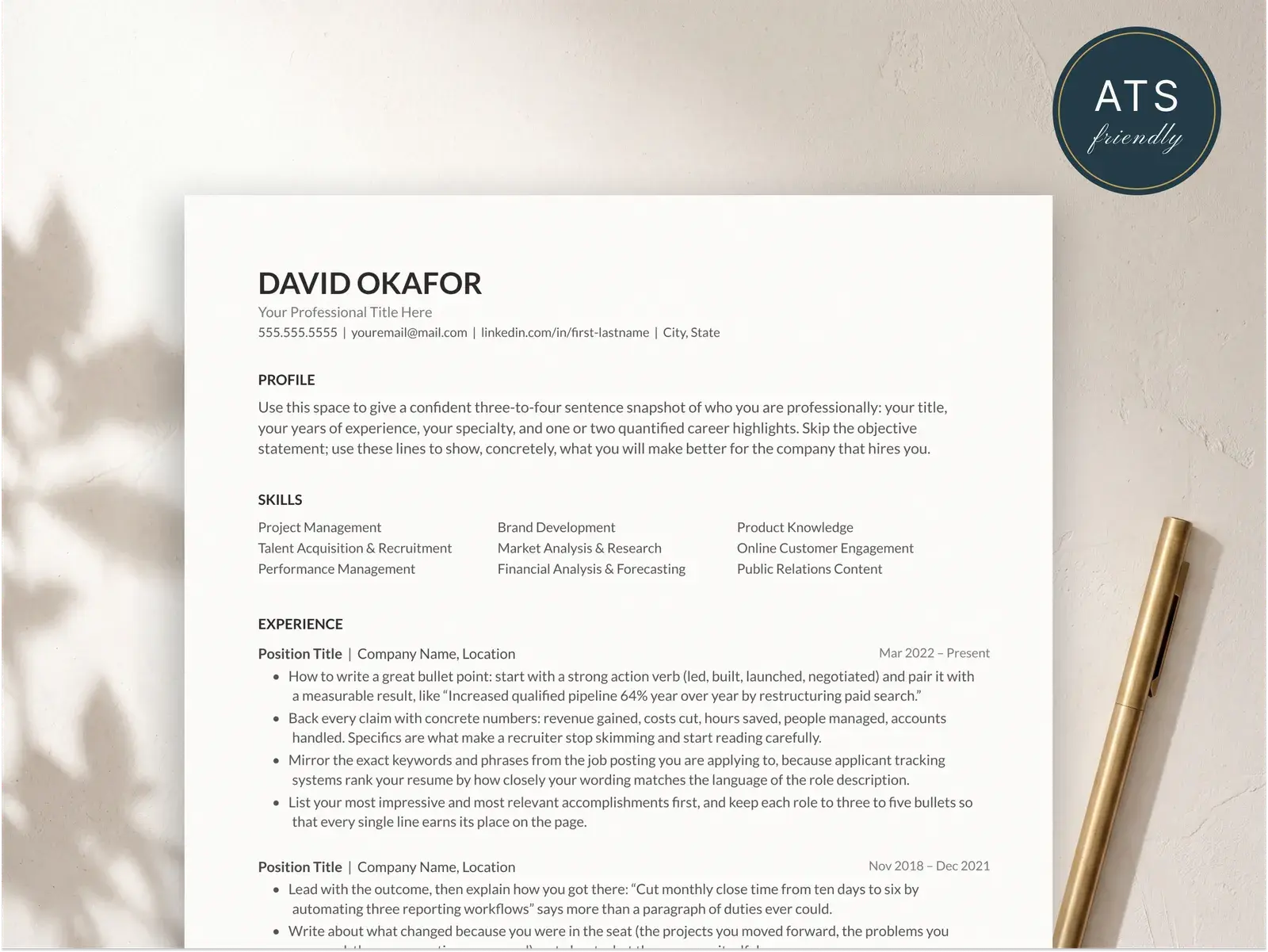
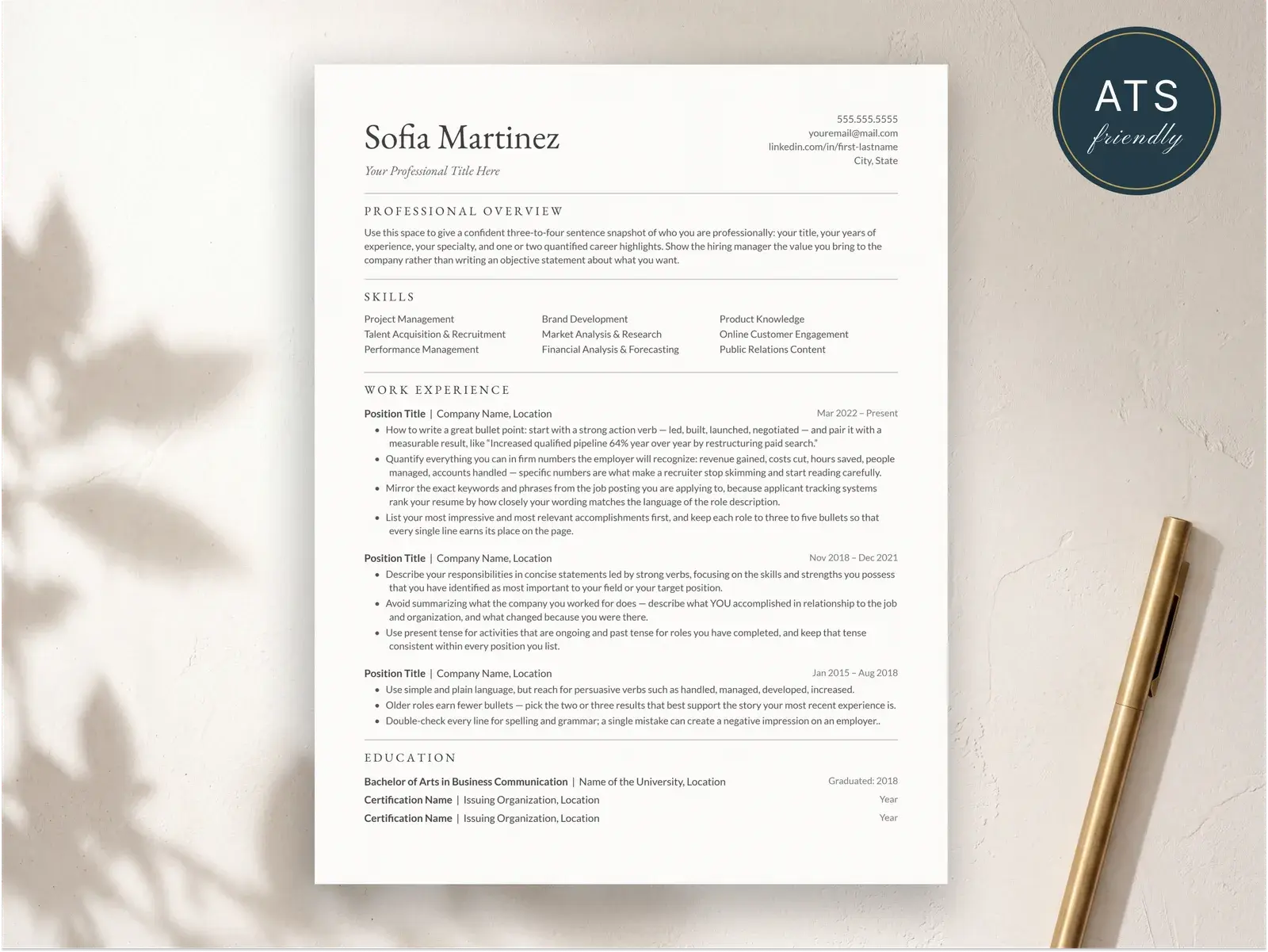
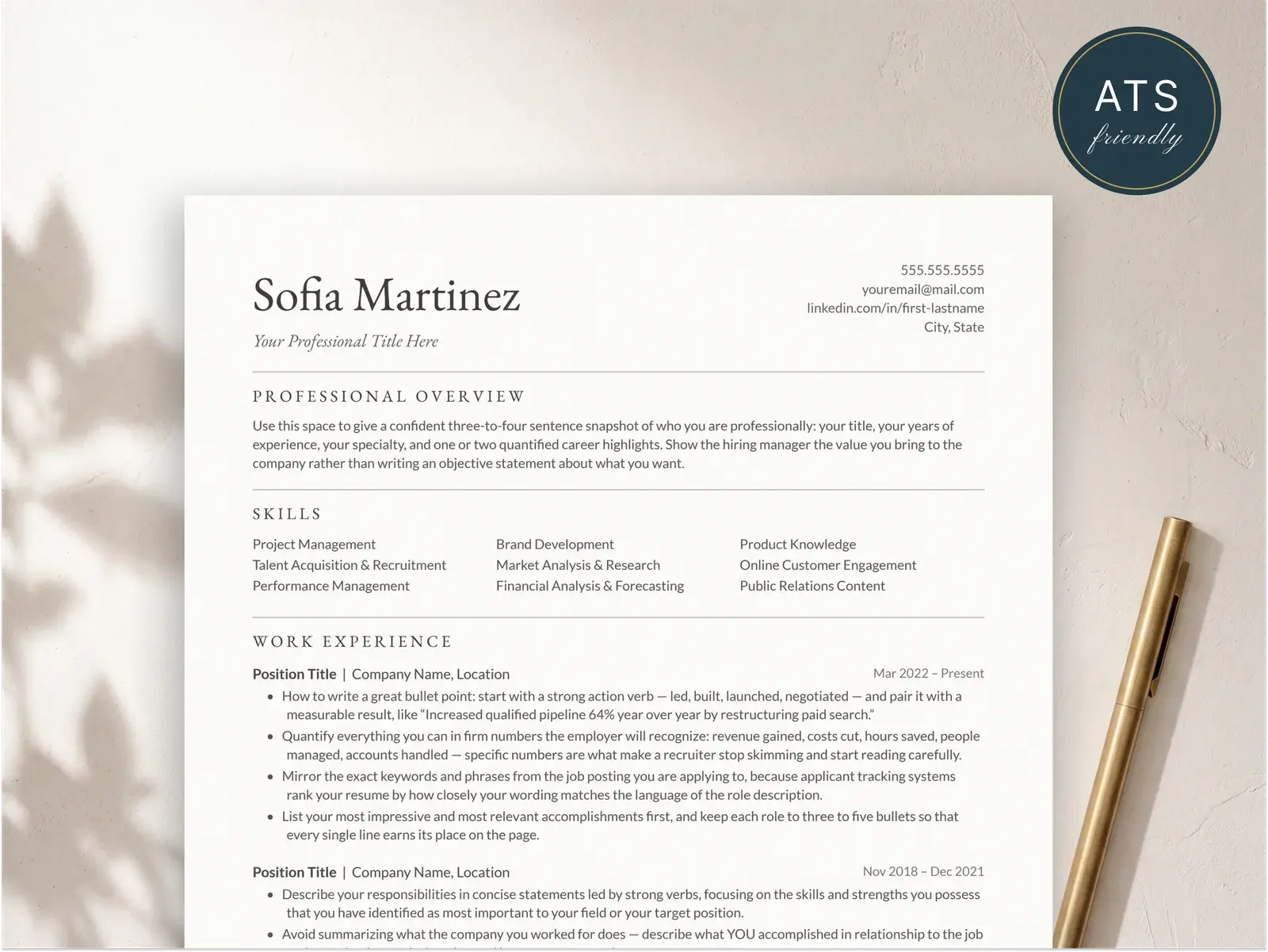
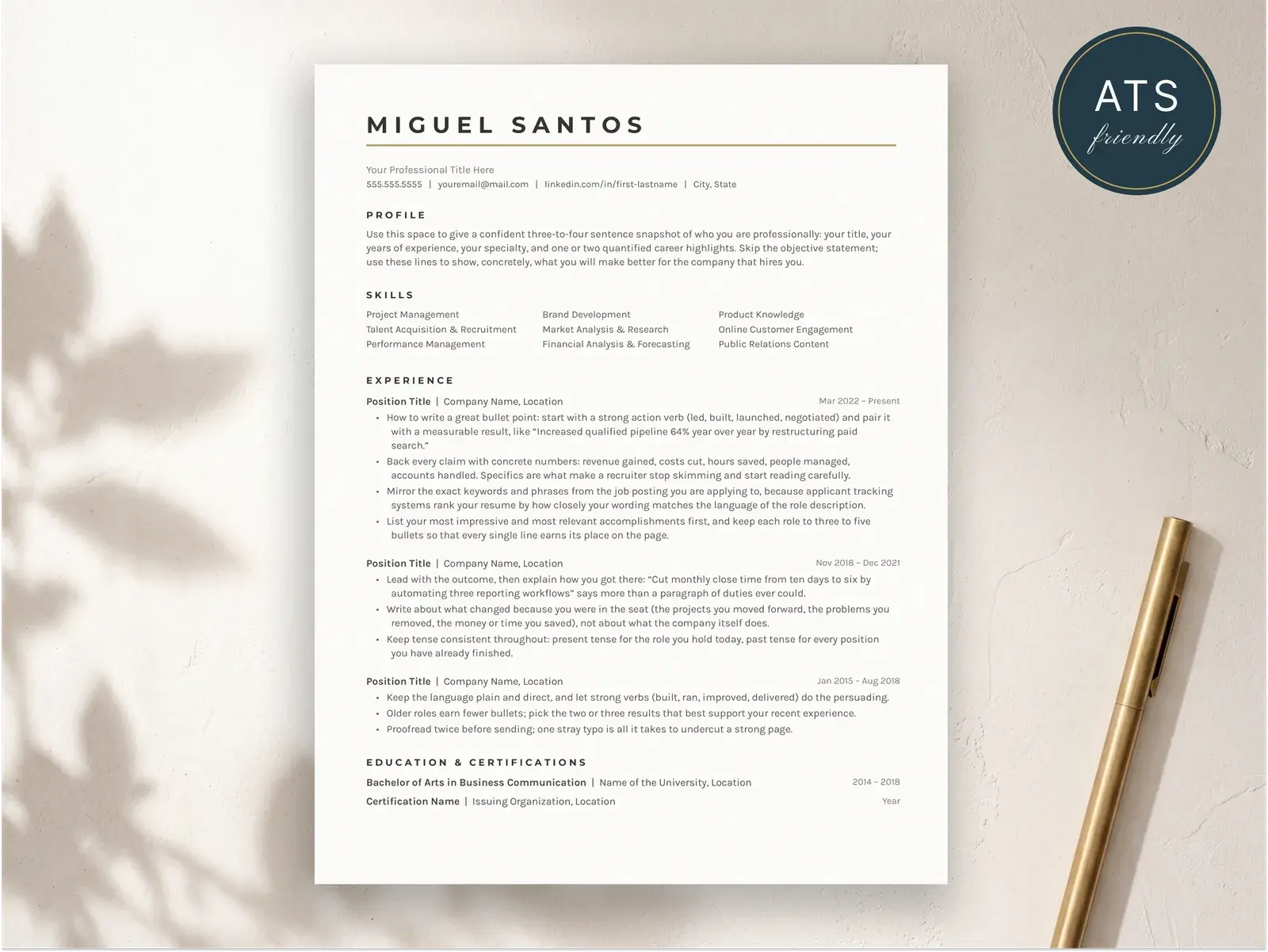
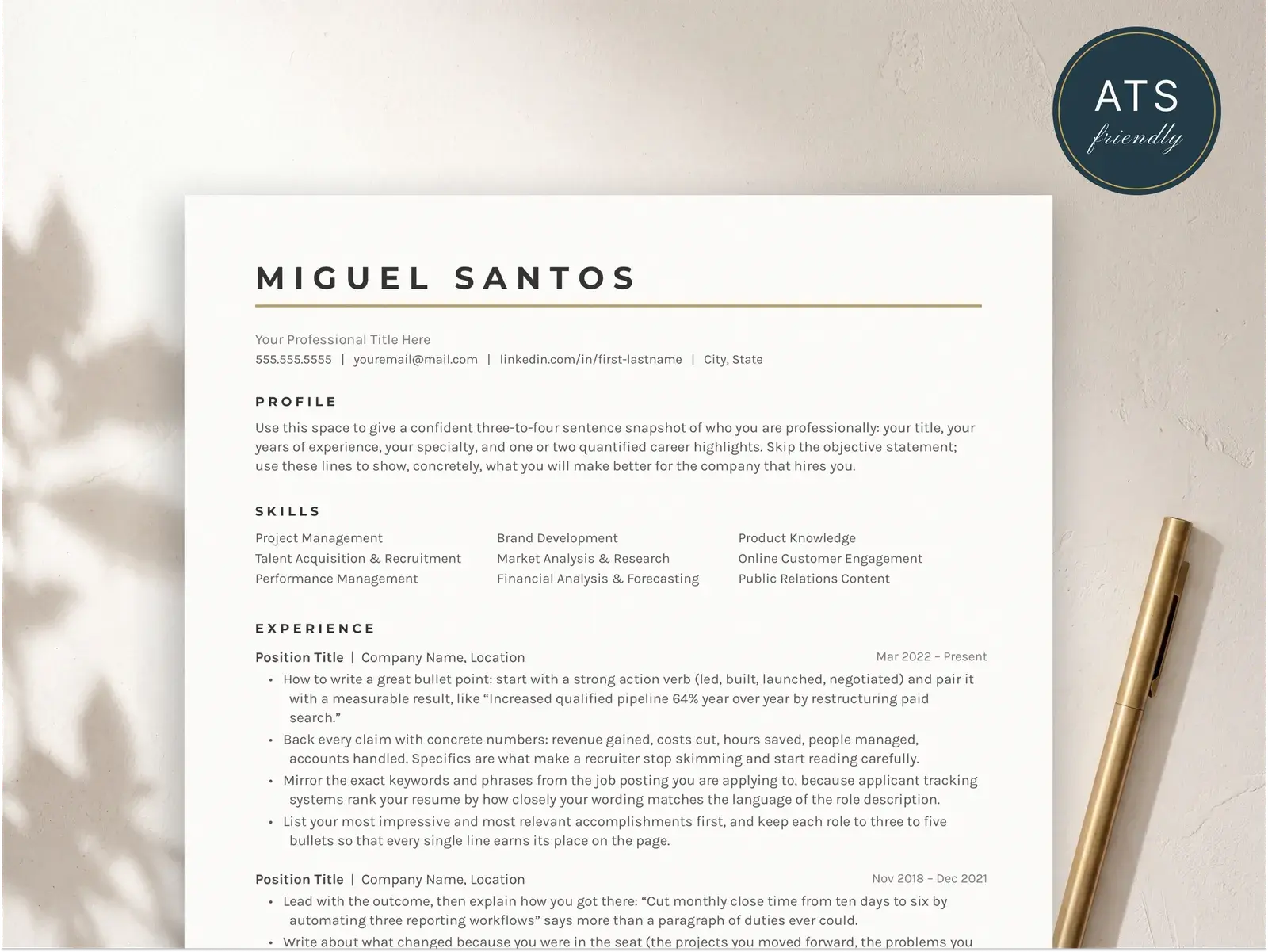
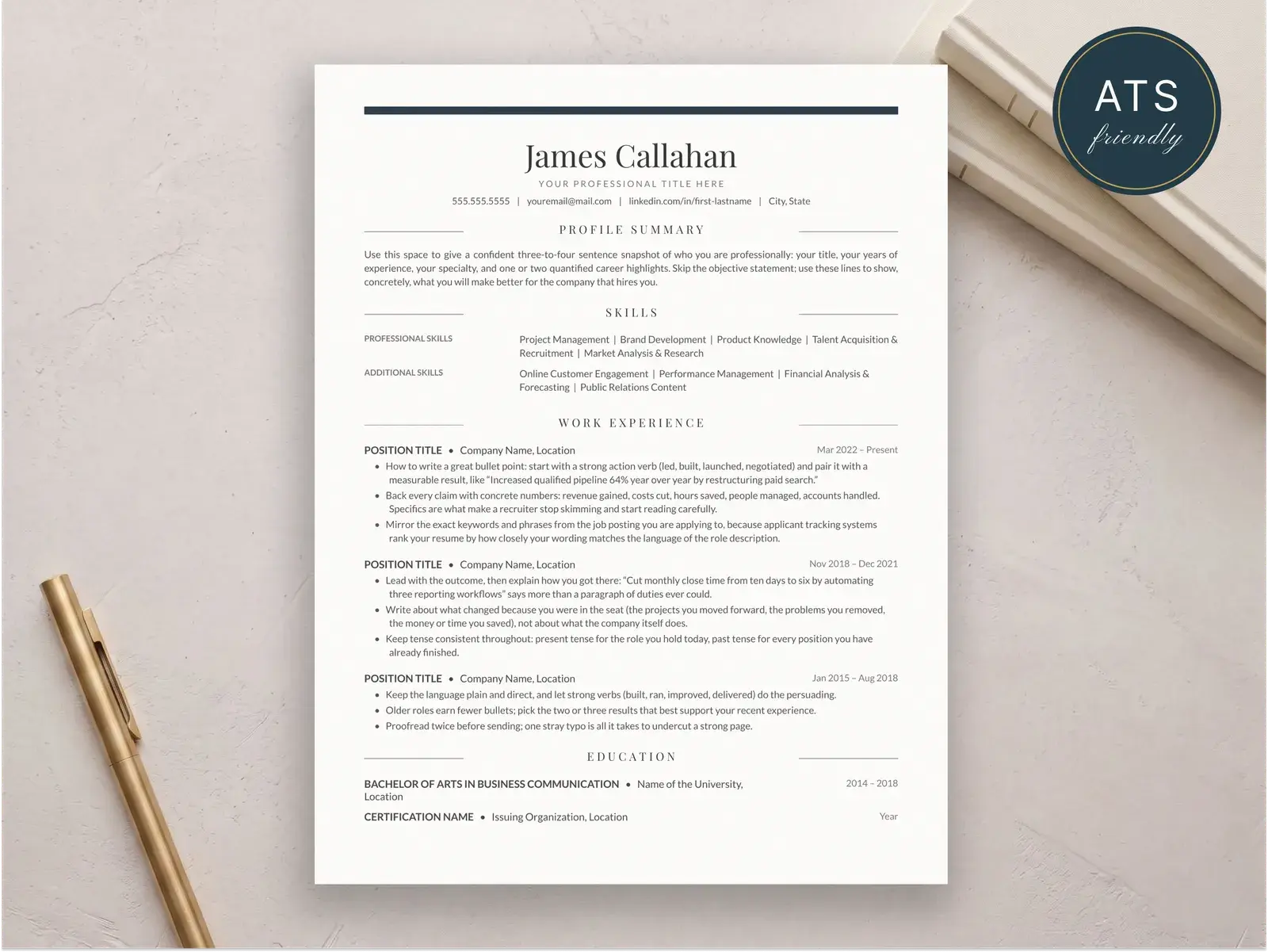
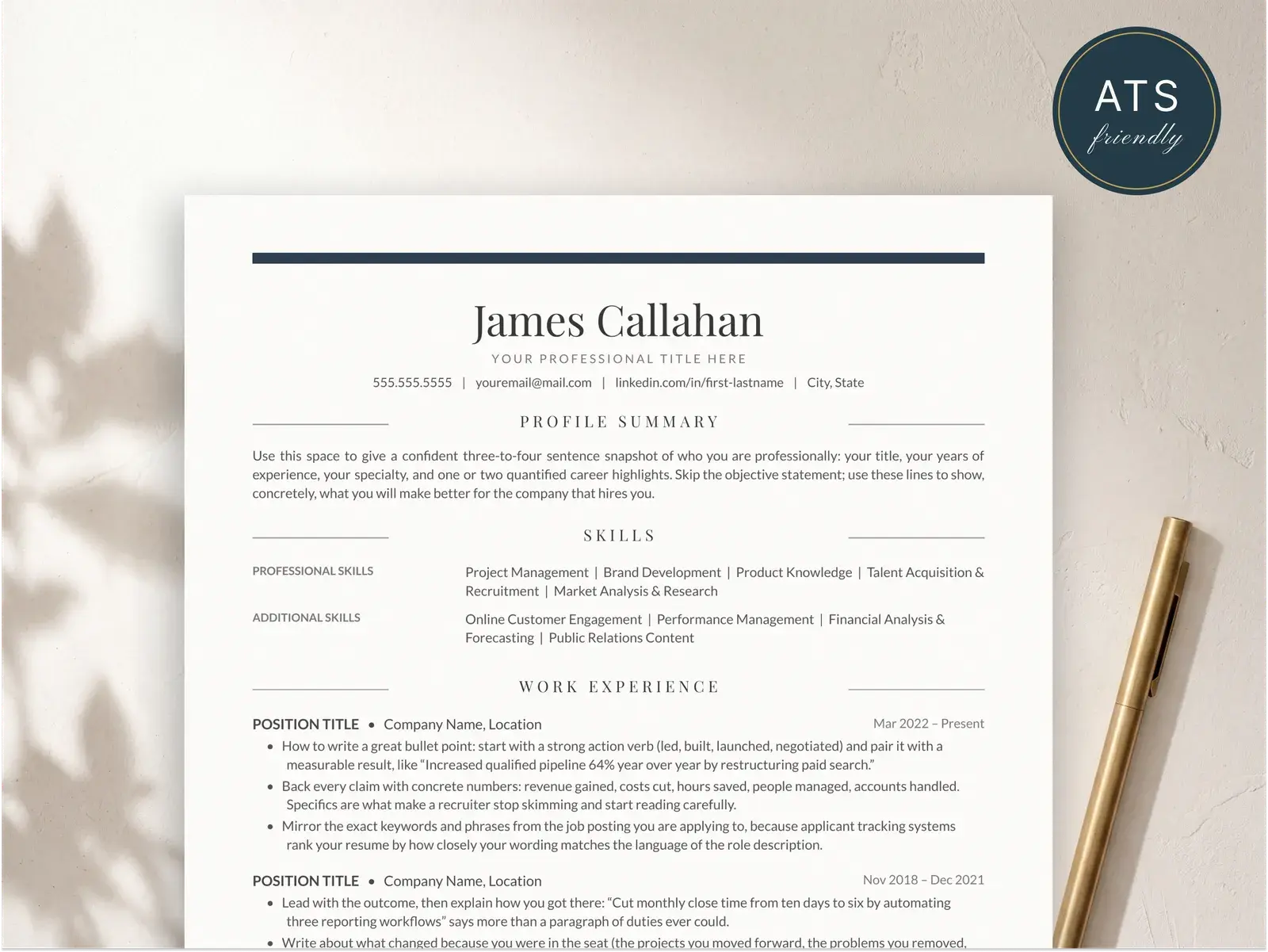
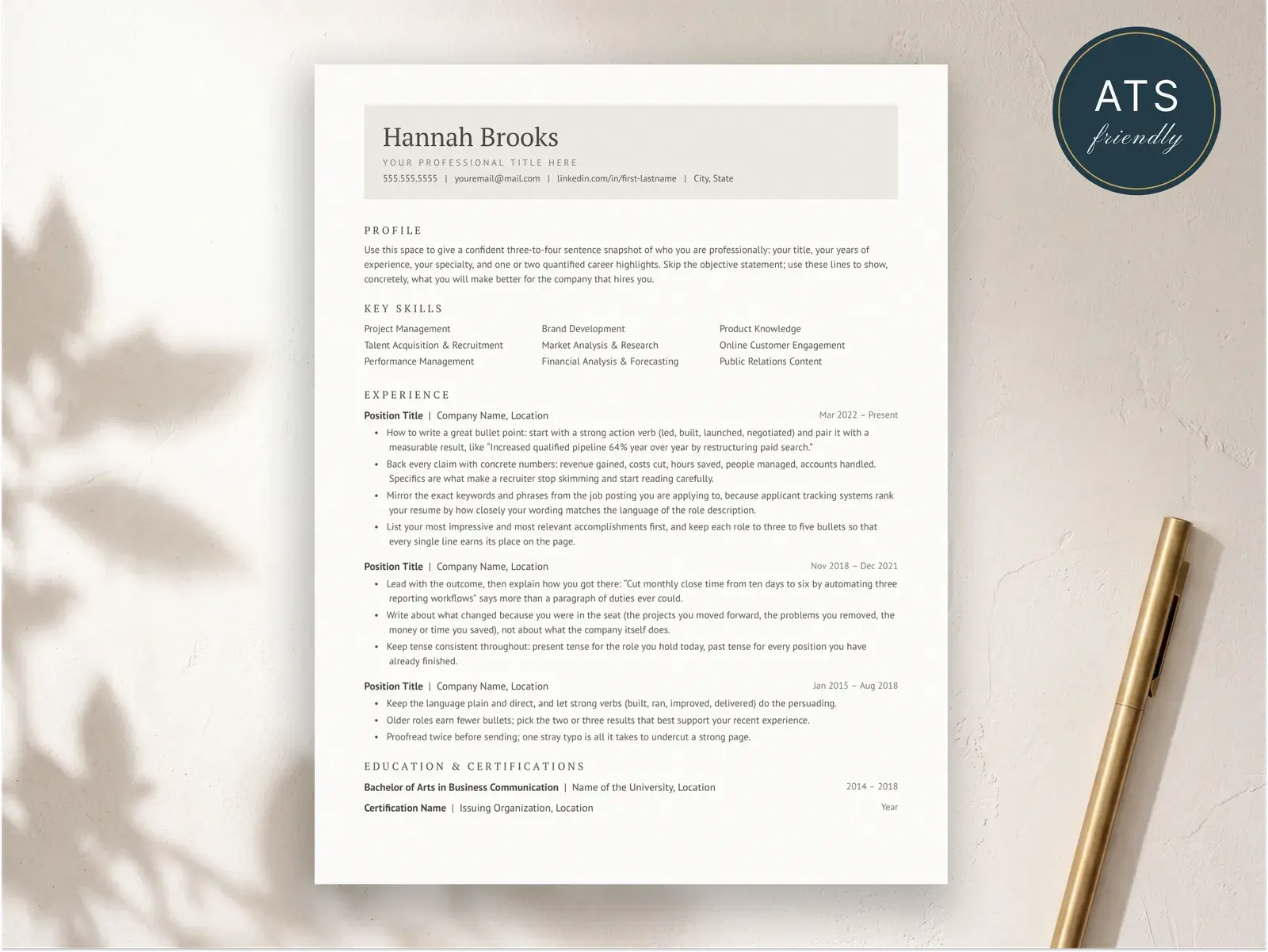
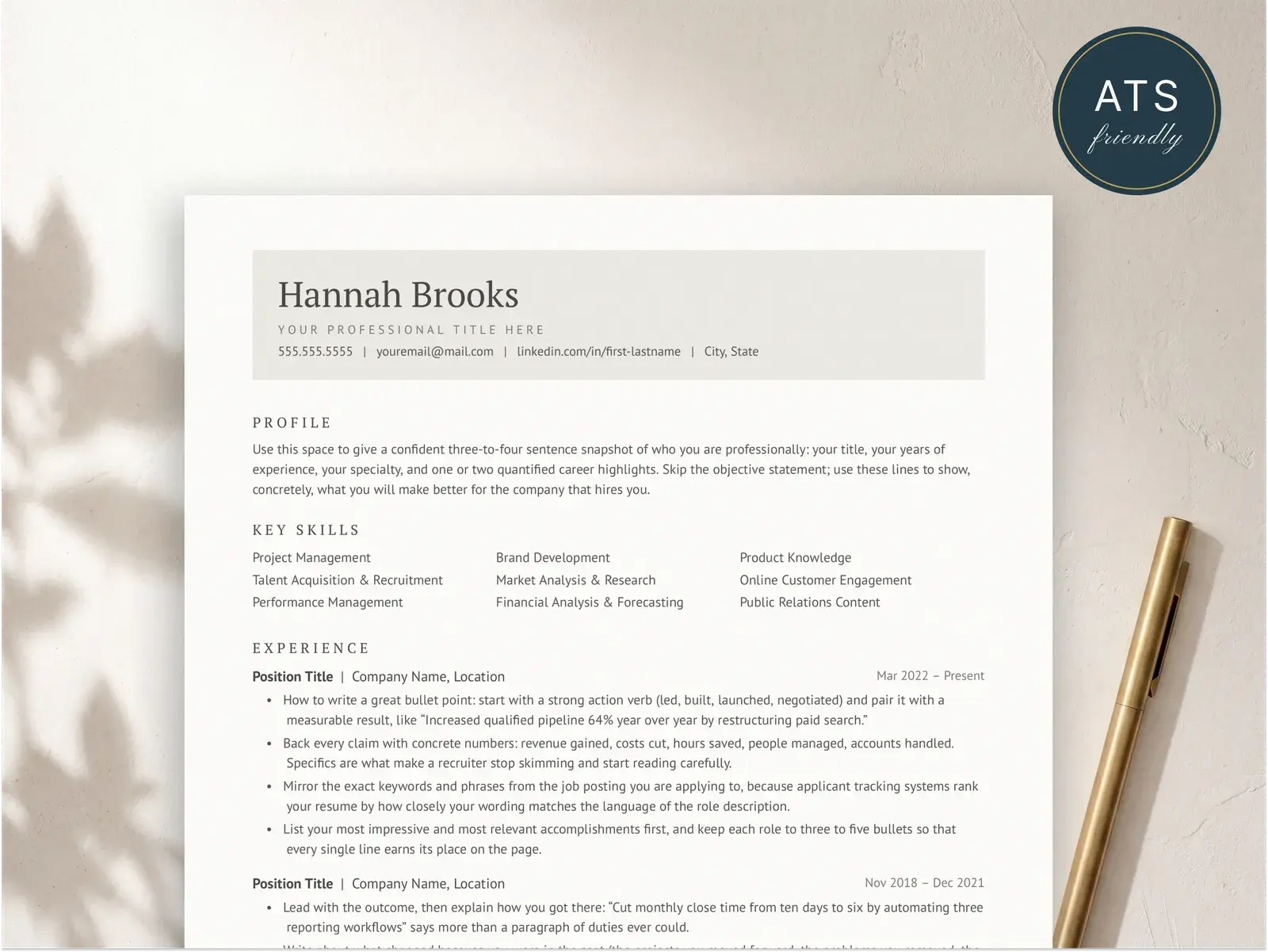
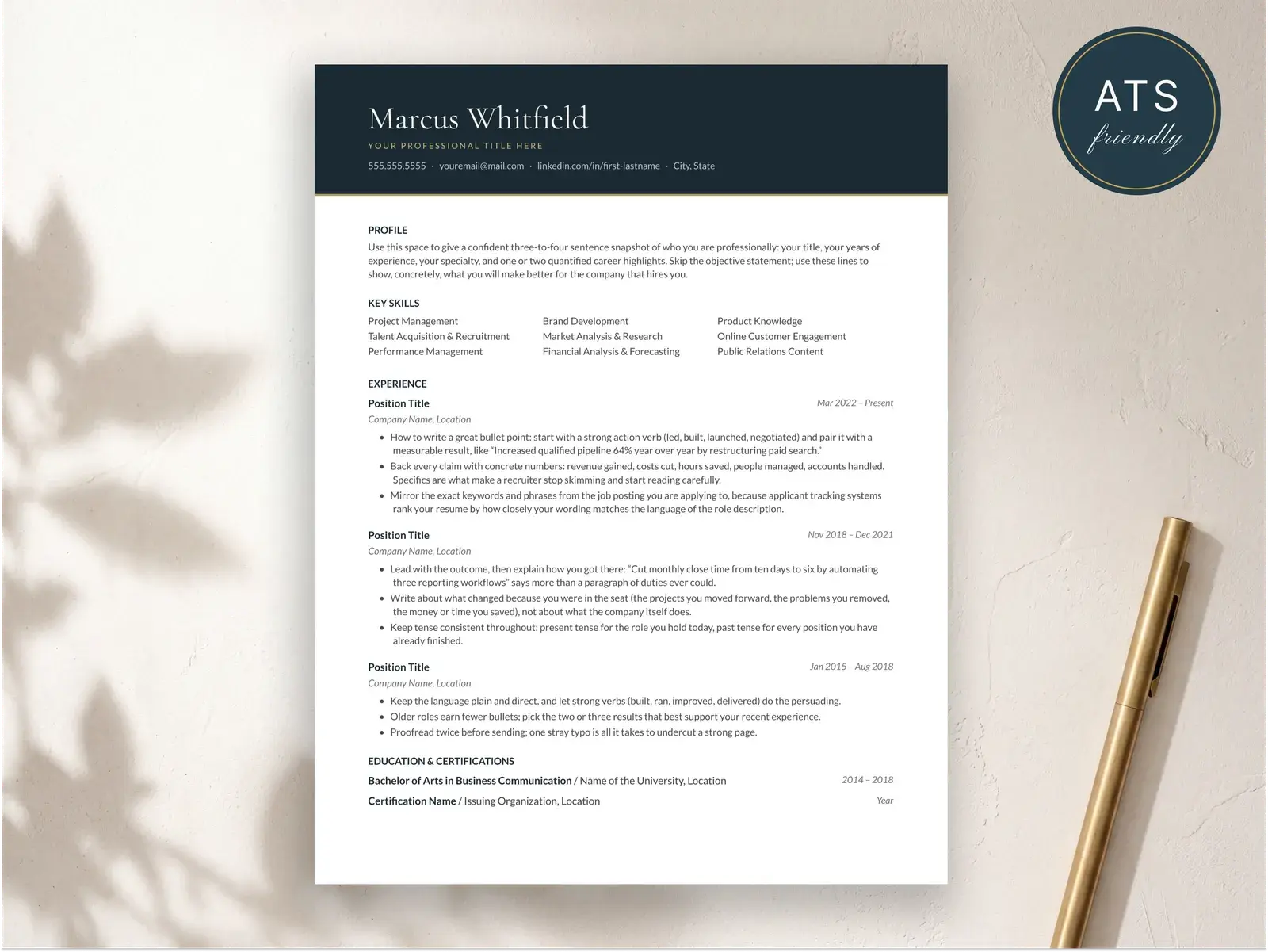
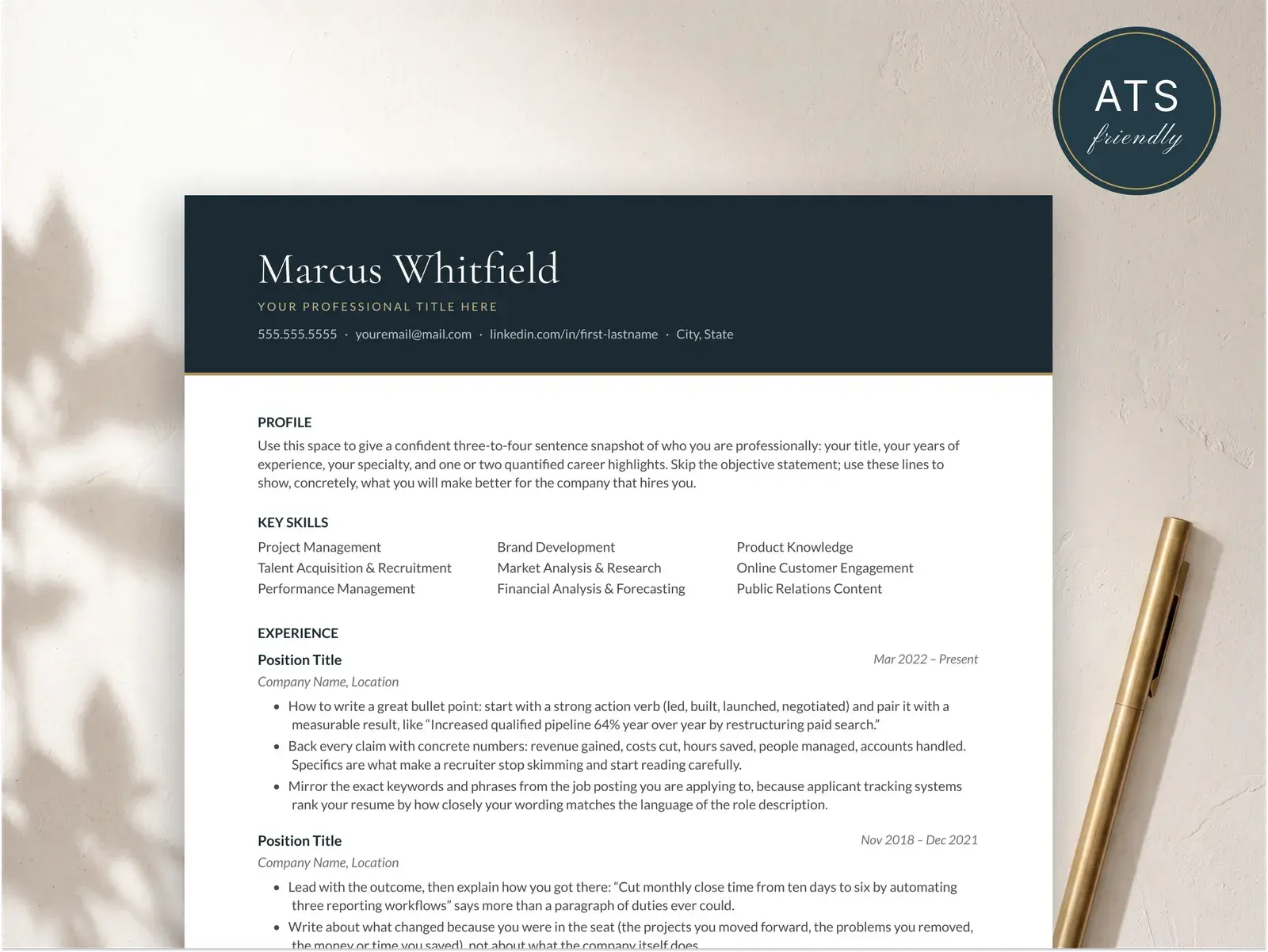
Construction hiring managers value clarity over flash. These templates use clean layouts and strong headings so your certifications, skills, and project history are easy to scan in seconds.
How to write a construction resume
Lead with safety certifications
Safety is the foundation of every construction job, and your resume needs to reflect that immediately. Create a prominent Certifications section near the top of your resume and list every relevant credential: OSHA 10, OSHA 30, First Aid/CPR, fall protection, confined space entry, scaffolding competence, and any trade-specific licenses. Include the issuing organization and the date of completion or renewal. Many job sites require specific certifications for access, so a hiring manager or safety officer will check this section first. If you have a perfect or near-perfect safety record, mention it — “maintained zero lost-time incidents across 3 years and 1,400+ job site hours” is one of the most powerful lines you can put on a construction resume.
List equipment and tools specifically
General statements like “experienced with heavy equipment” don’t help a hiring manager who needs someone certified on a specific excavator or crane. List the exact equipment you can operate: brand and type of machinery (CAT 320 excavator, Liebherr LTM 1100 crane), power tools, hand tools, and any specialized instruments (total stations, laser levels). If you hold equipment-specific certifications like NCCCO crane operator or forklift operator (OSHA compliant), include the credential and its expiration date. For skilled tradespeople — electricians, plumbers, welders — list relevant codes and standards you’re trained on (NEC, IPC, AWS D1.1). The more specific you are, the easier it is for a superintendent to see that you can start contributing on day one.
Describe project scale and your role on site
Construction resumes come alive when they include the scale of the work. For each position, mention the project type (commercial, residential, industrial, infrastructure), the approximate dollar value or square footage, and the size of the crew you worked with or managed. “Performed framing and drywall installation” is generic. “Completed framing and drywall installation for a 120-unit, $34M mixed-use residential project as part of a 16-person crew” gives the reader a clear picture of your experience level. If you supervised others, state the crew size and the scope of your oversight — scheduling, quality inspections, material coordination — to distinguish supervisory experience from individual labor.
Keep descriptions direct and jargon-appropriate
Construction is a hands-on industry, and your resume should read like it. Use direct, action-oriented language: “operated,” “installed,” “supervised,” “inspected,” “coordinated.” Industry-specific terminology is not only acceptable — it’s expected. Terms like “rough-in,” “punch list,” “grade work,” and “load-bearing” tell an experienced hiring manager that you know the trade, not just the vocabulary. However, avoid slang or abbreviations that might confuse an ATS or an HR generalist who screens resumes before they reach the foreman. Spell out acronyms the first time they appear, and keep sentences short — two lines maximum per bullet point.
Example bullet points for a construction resume
Effective construction resume bullets emphasize project scale, safety, and efficiency. Here are examples across trades and experience levels.
Supervised a 12-person framing crew on a $28M commercial office buildout, completing structural framing 10 days ahead of the 16-week schedule with zero safety incidents.
Operated CAT 320 and Komatsu PC210 excavators for site preparation and utility trenching across 4 residential subdivision projects totaling 380 lots.
Installed 14,000 sq ft of commercial electrical wiring per NEC code, passing all rough-in and final inspections on the first attempt across 6 consecutive projects.
Coordinated material deliveries and subcontractor scheduling for a 200-unit apartment complex, reducing material waste by 15% and keeping the project within its $42M budget.
Performed concrete forming, pouring, and finishing for foundation and structural elements on a 6-story parking garage, averaging 120 cubic yards of placement per week.
Maintained a zero lost-time injury record across 2,800+ field hours, conducting daily toolbox talks and weekly safety audits for a 24-member site crew.
Read and interpreted blueprints, structural drawings, and specifications for a $16M highway bridge replacement, identifying 3 design conflicts before field installation.
Related guides for trades and construction
Reading material that pairs with this template.
Journeyman electrician resume example
A full trades resume showing how to lead with license and certifications, and quantify projects by square footage and voltage.
Read moreReverse-chronological resume format
The default format with exact section order and rules — what works for tradespeople moving up to foreman.
Read moreCover letter examples
Seven full cover letters including a returning-to-work example for a project coordinator role.
Read moreFind the right template
Instant download, edit in Google Docs, Word, or Pages — and apply knowing the layout parses cleanly in hiring systems.
Browse the collectionQuestions, answered
Should I list my OSHA certifications on my resume?
Absolutely. OSHA 10 and OSHA 30 are among the most commonly required certifications in construction. List them in a dedicated Certifications section along with the completion date. If you hold specialized safety training (confined space, fall protection, hazmat), include those as well — they are often hard requirements for job site access.
How do I describe physical labor on a resume professionally?
Focus on the scope and outcome rather than the physical effort. Instead of 'carried heavy materials,' write 'transported and staged 2,000+ lbs of structural steel daily across a 14-story commercial site.' Include the project type, team size, and any efficiency or safety outcomes to give context to the physical work.
Do construction companies use ATS to screen resumes?
Yes, especially mid-to-large general contractors, commercial firms, and companies that recruit through job boards like Indeed or ZipRecruiter. Even smaller outfits that receive resumes by email will search for keywords like specific certifications, equipment types, and trade specializations. A clean, text-based format ensures your resume is readable regardless of how it is submitted.
Should I include equipment and tools I can operate?
Yes. Create a dedicated Equipment & Tools section or include them within your Skills section. List specific heavy equipment (excavators, backhoes, cranes), power tools, and any relevant software (AutoCAD, Bluebeam, Procore). Be specific about certifications — for example, 'Certified Crane Operator (NCCCO)' carries more weight than just 'crane operation.'
How long should a construction resume be?
One page is standard for most construction roles, including laborers, apprentices, and journeymen. Foremen, superintendents, and project managers with 10+ years of experience may use two pages. Focus on your most recent 3-5 positions and the projects with the most impressive scope. Older or less relevant jobs can be summarized in a single line.