Resume templates
Healthcare resume templates
Professional layouts for nurses, medical assistants, and clinical staff. Clean formatting that puts credentials, certifications, and patient-care experience front and center.
See the templatesRecommended templates for healthcare
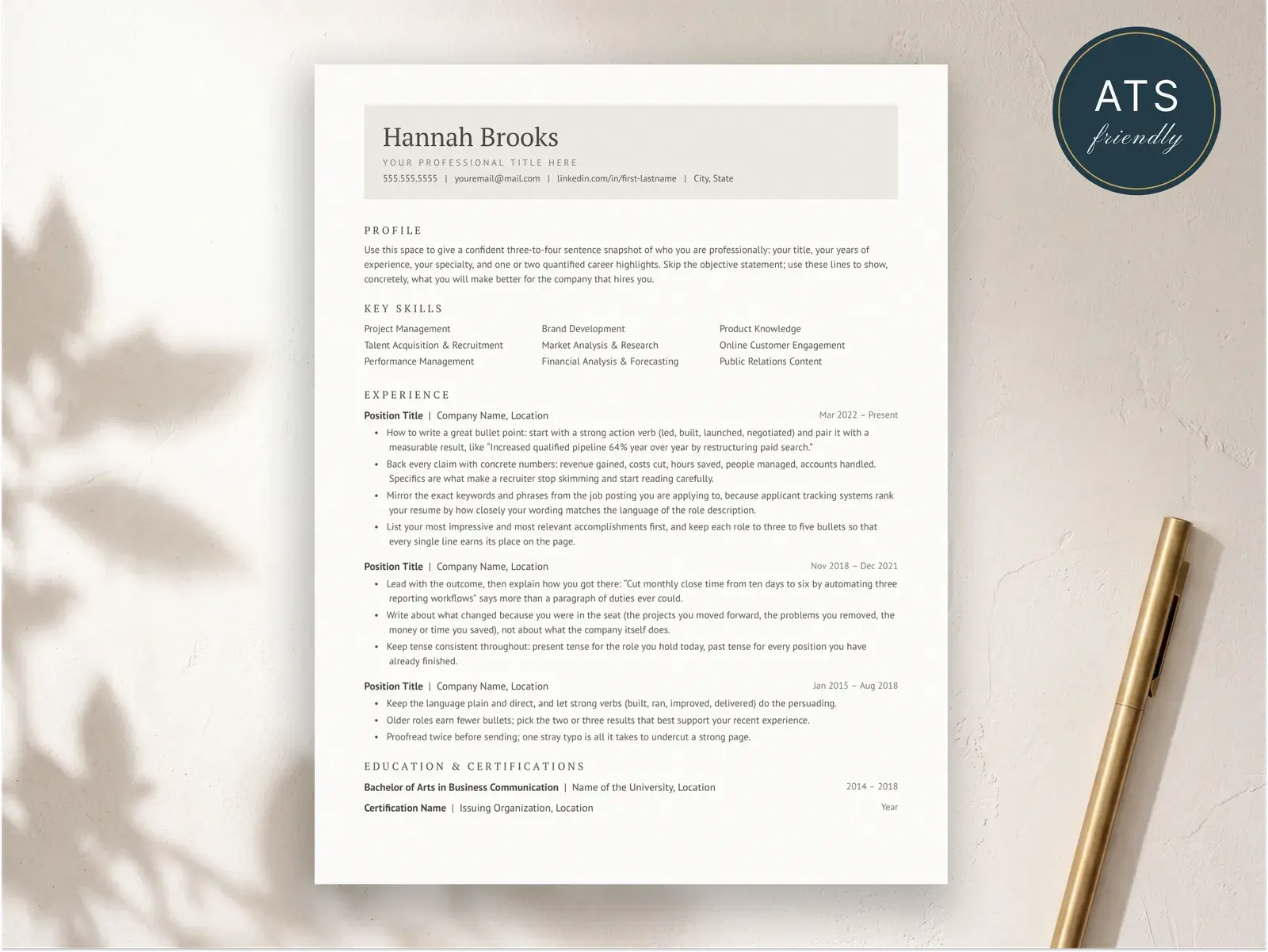
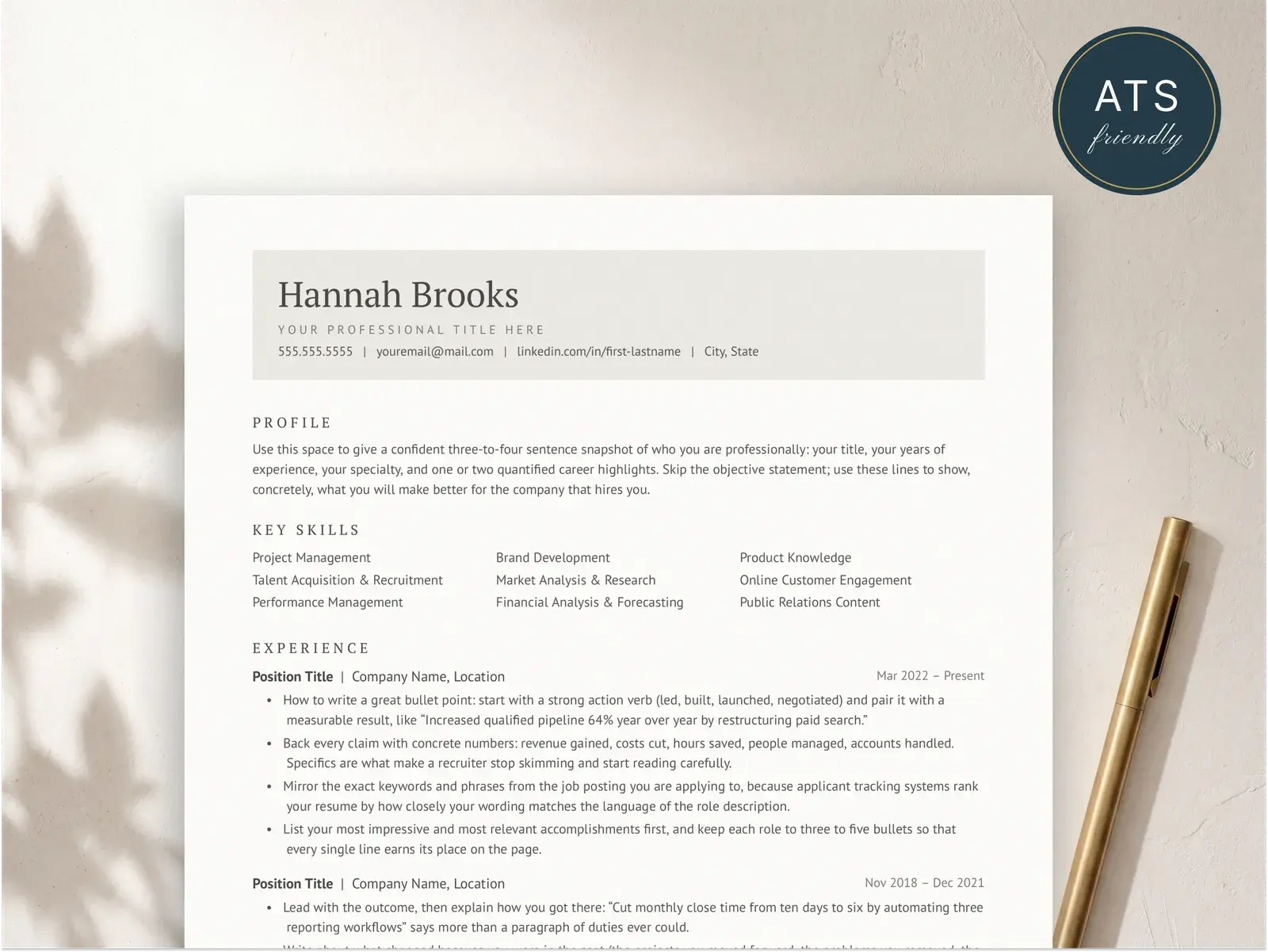
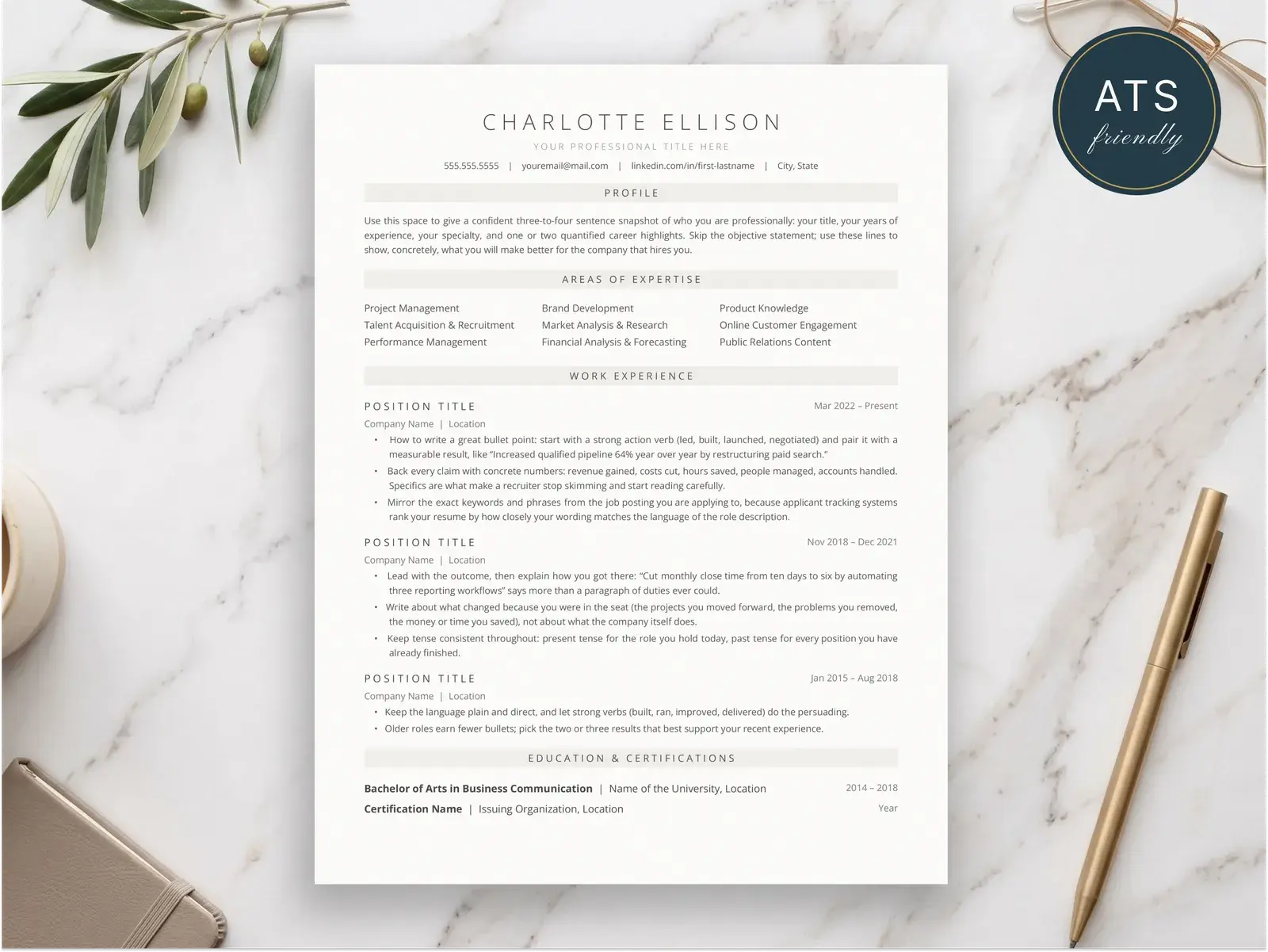
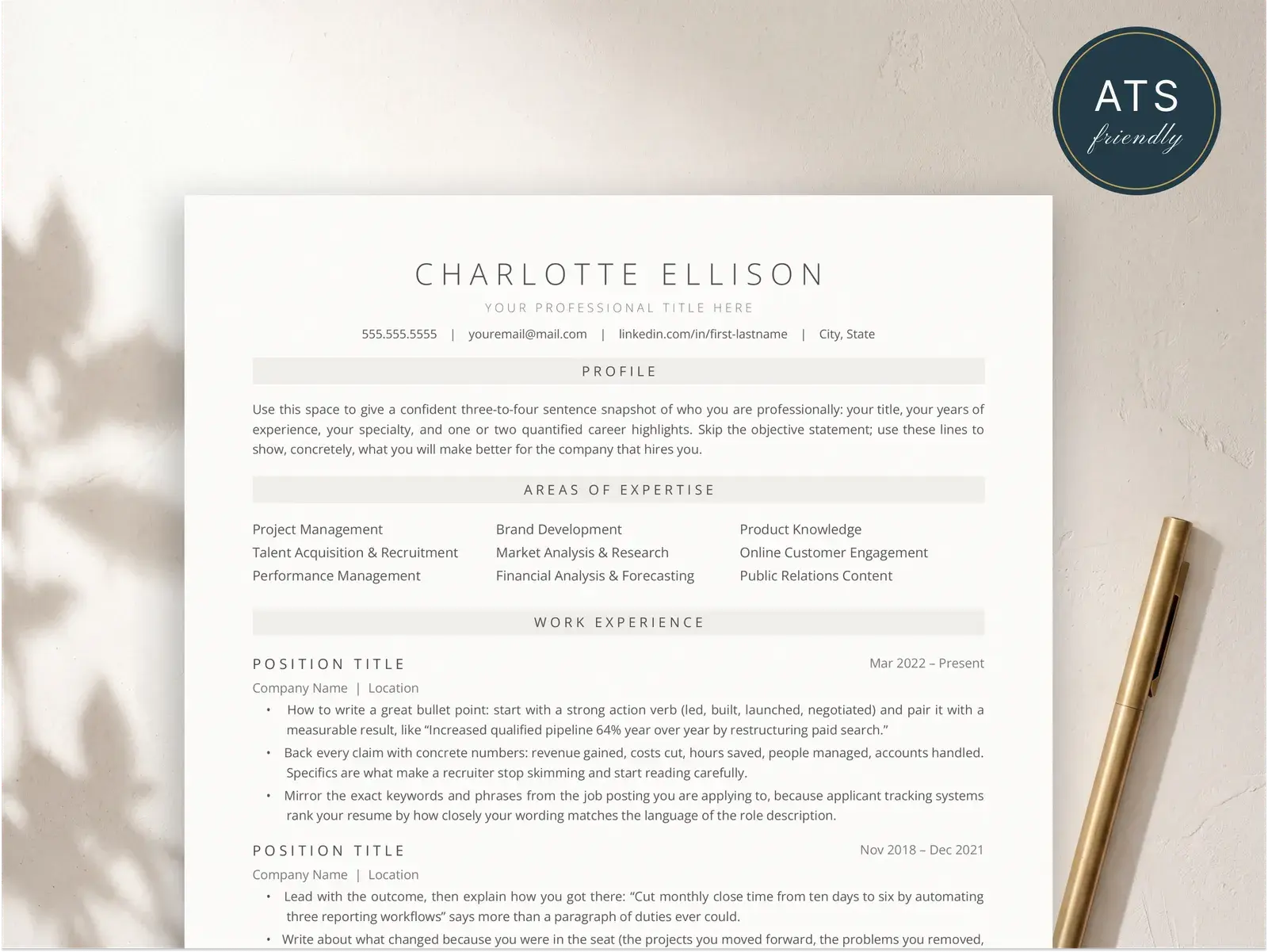
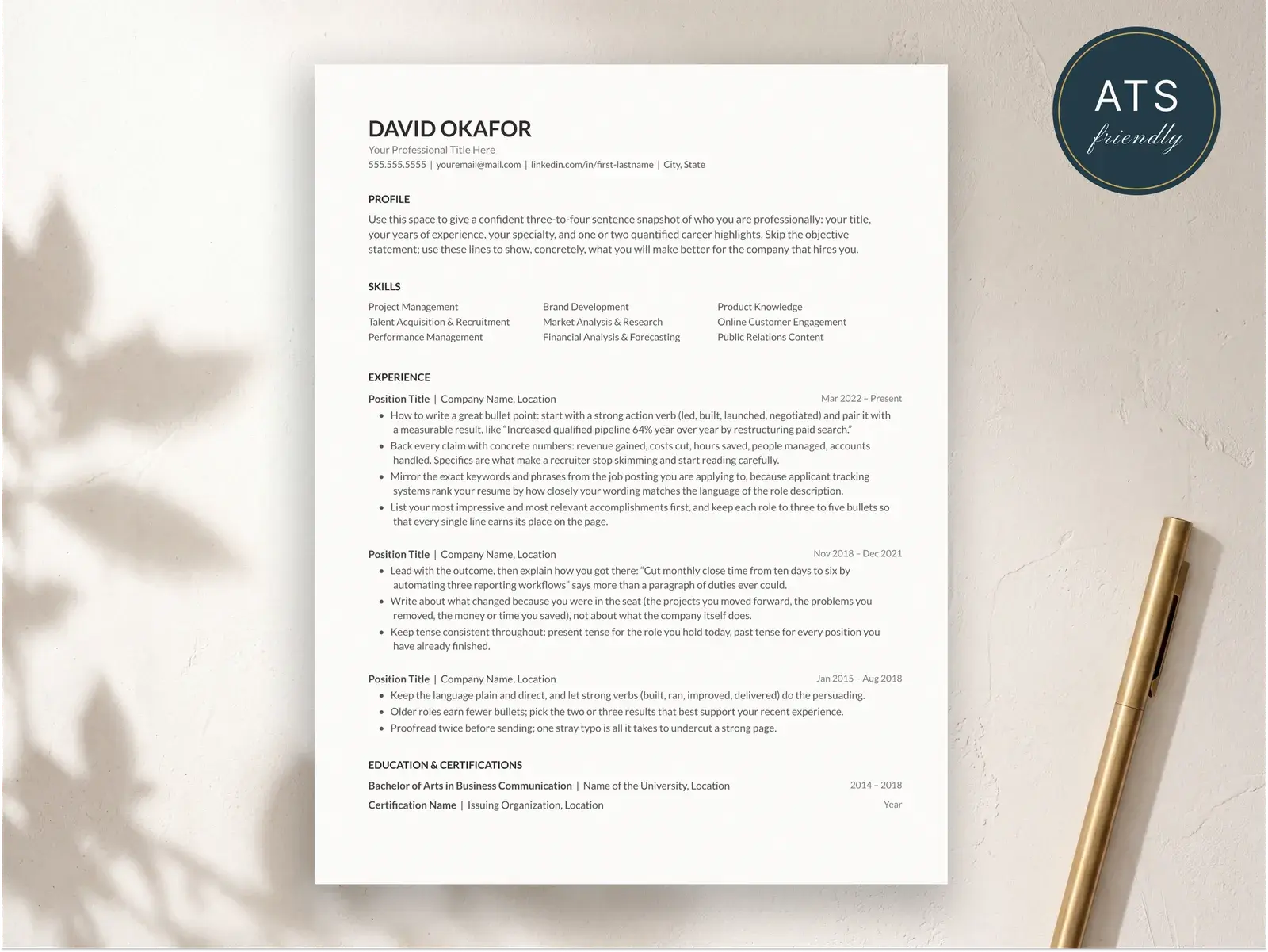
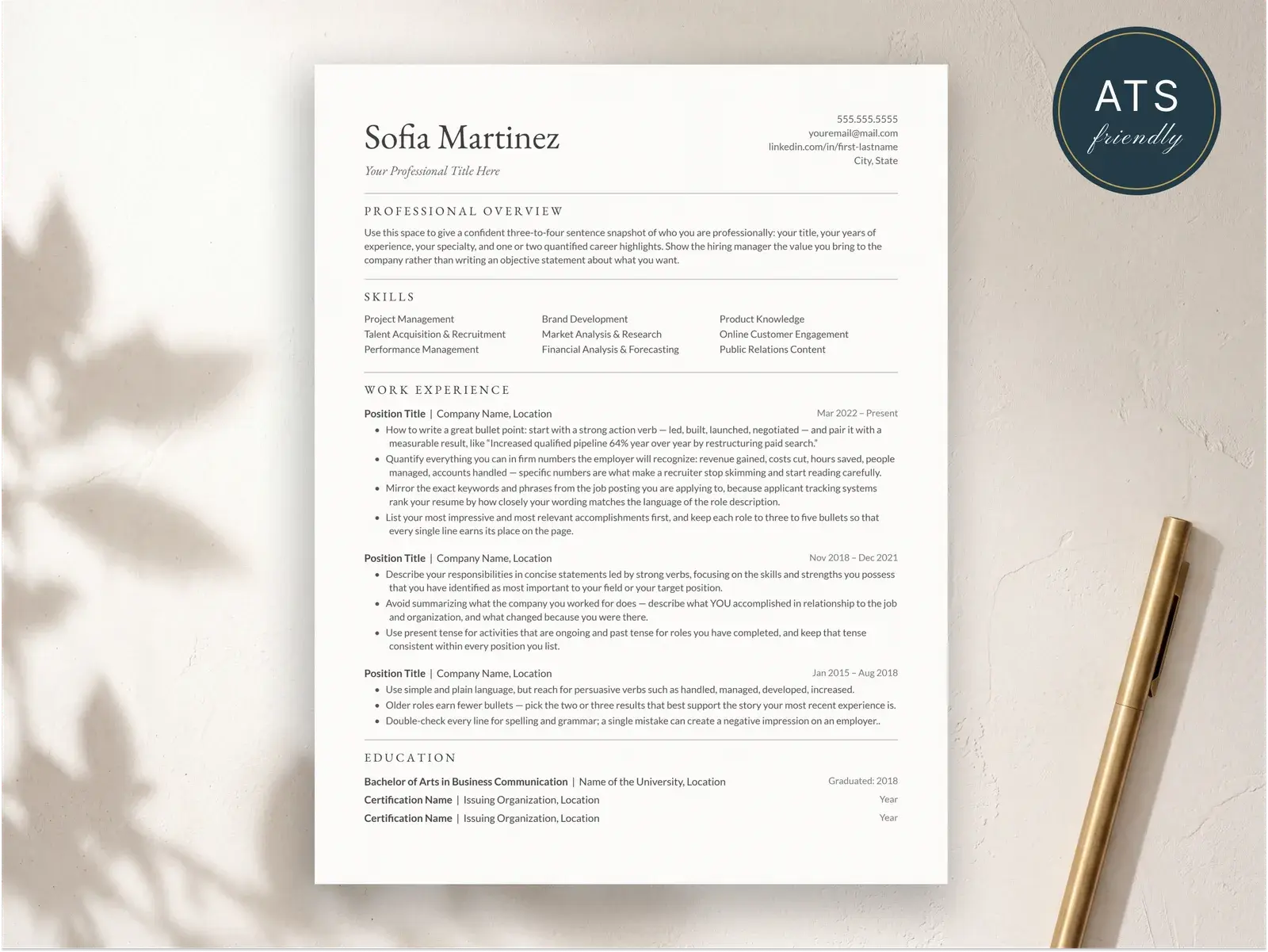
Healthcare hiring is conservative. These templates use traditional single-column layouts with clear section headings — exactly what hospital HR departments and clinical recruiters expect.
How to write a healthcare resume
Lead with credentials and licensure
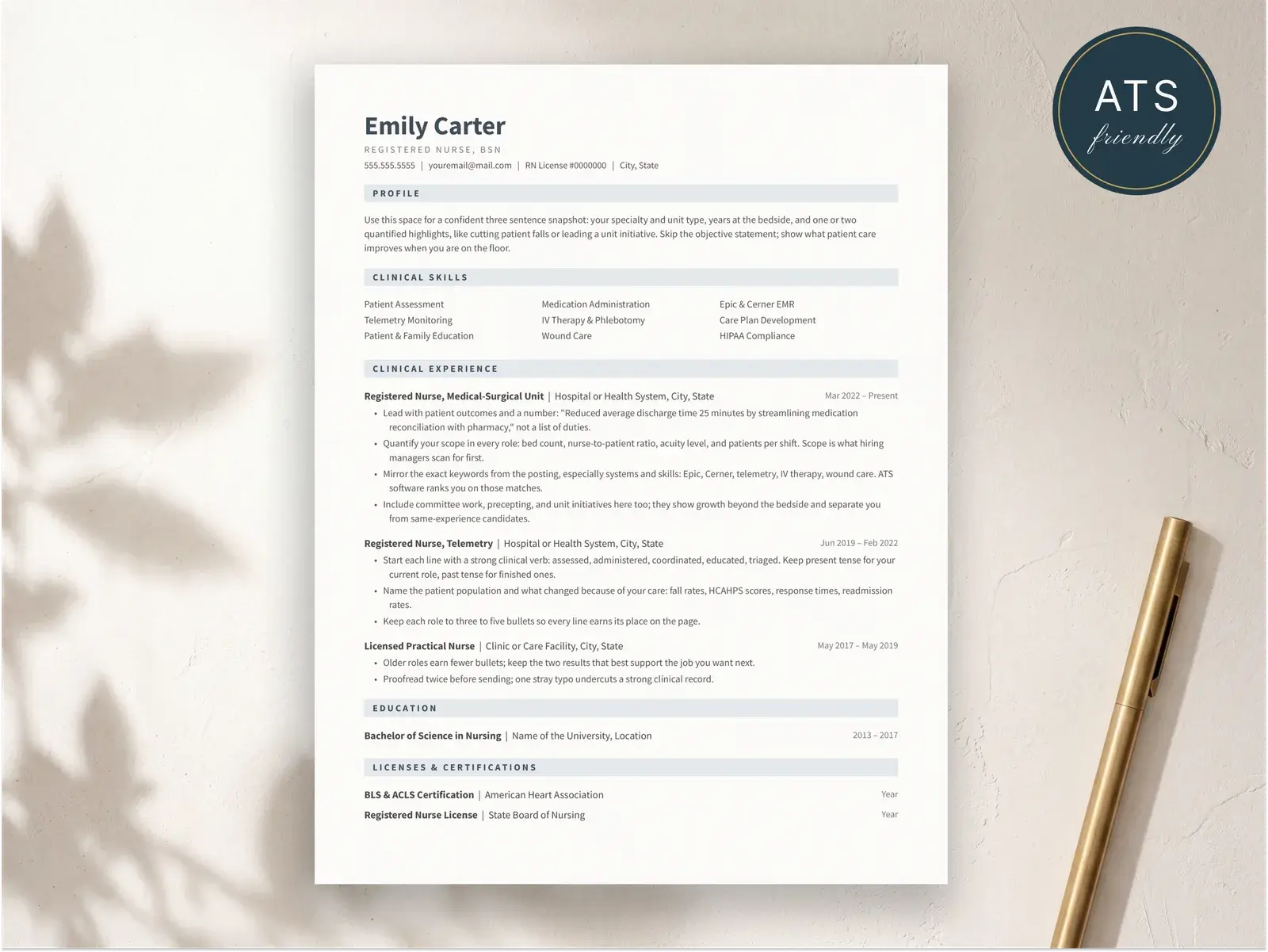
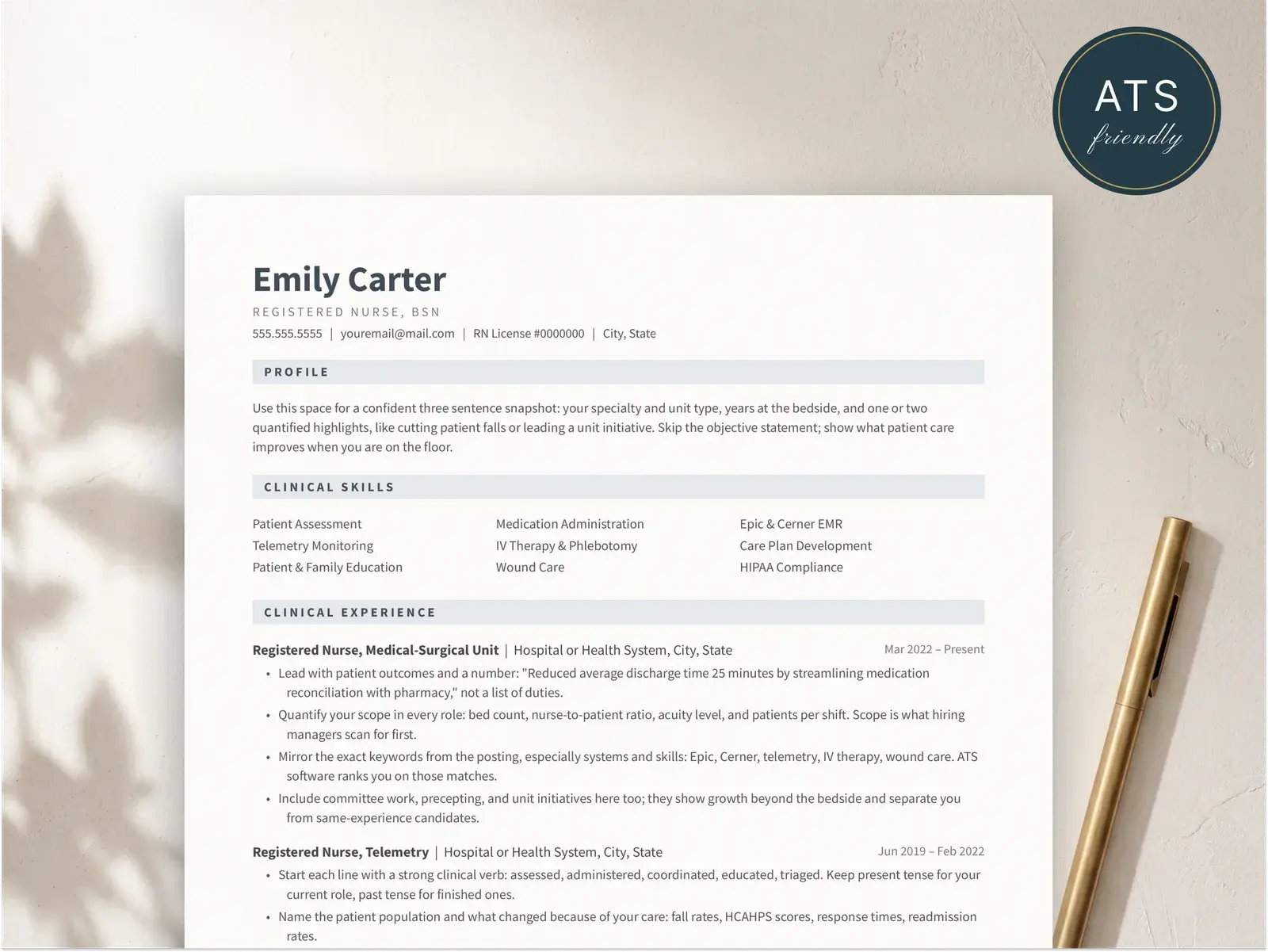
In healthcare, your credentials are your calling card. Place your professional designations immediately after your name in the header (e.g., “BSN, RN, CCRN”). This is not optional — it’s the industry standard and the first thing a clinical recruiter checks. Below the header, include a dedicated Licenses & Certifications section that lists each credential with its issuing body, license number, state of licensure, and expiration date. For multi-state licensure or Nurse Licensure Compact (NLC) status, note that explicitly. Hiring managers at hospitals often need to verify licensure before scheduling an interview, so making this information easy to find speeds up the entire process.
Distinguish clinical from administrative experience
Healthcare roles span a wide spectrum — from bedside nursing to health information management. If you have both clinical and administrative experience, make the distinction clear. For clinical roles, emphasize patient populations, acuity levels, nurse-to-patient ratios, and specific procedures or equipment you’re proficient with. For administrative roles, focus on compliance outcomes, budget management, staff supervision, and process improvements. Use the language of the job posting: if it mentions “EMR documentation,” write “EMR documentation” — not “electronic charting.” ATS keyword matching is literal, and healthcare postings are full of specific terminology that must appear on your resume.
Show HIPAA awareness and compliance experience
Compliance is non-negotiable in healthcare. Even if the job posting does not explicitly mention HIPAA, weave compliance awareness into your experience bullets — mention training programs you completed, audits you participated in, or protocols you helped implement. For roles that involve patient data, electronic health records, or insurance billing, this is especially important. Phrases like “maintained strict HIPAA compliance across all patient interactions” or “led quarterly compliance training for a 24-member nursing staff” demonstrate that you take regulatory requirements seriously without making compliance the entire focus of your resume.
Format continuing education and certifications clearly
Healthcare professionals accumulate certifications throughout their careers. Present them in a clean, scannable format: certification name, acronym, issuing organization, and expiration date on a single line. Group them logically — core certifications (BLS, ACLS) first, then specialty certifications (CCRN, CEN, PALS), then any additional training (EHR systems, telehealth platforms). If you’re applying to a specialty unit, move the most relevant certification to the top. A well-organized certifications section tells a recruiter that you’re not only qualified but also committed to maintaining your skills — a strong signal in an industry where continuing education is required.
Example bullet points for a healthcare resume
Effective healthcare resume bullets connect clinical actions to patient outcomes and operational improvements. Here are examples across common healthcare roles.
Provided direct patient care for a 28-bed medical-surgical unit with a 1:5 nurse-to-patient ratio, consistently achieving patient satisfaction scores above the 90th percentile.
Implemented a bedside shift report protocol across a 40-nurse ICU team, reducing patient safety incidents by 32% over 8 months and improving nurse-to-nurse handoff accuracy.
Managed front-desk operations for a 12-provider family practice, scheduling an average of 180 appointments per day while maintaining a patient no-show rate below 6%.
Trained and mentored 8 new graduate nurses during a 12-week residency program, with all mentees passing competency assessments on the first attempt.
Coordinated care for a caseload of 45 home health patients, completing all documentation within 24 hours and reducing hospital readmission rates by 18% through proactive follow-up.
Led the transition from paper charting to Epic EMR for a 60-staff outpatient clinic, developing training materials and conducting 14 hands-on workshops over a 3-month rollout.
Performed phlebotomy, EKGs, and specimen processing for 35-50 patients daily in a high-volume urgent care setting, maintaining a specimen rejection rate under 1.5%.
Related guides for healthcare professionals
Practical reading that pairs with this template.
Registered nurse resume example
A full med-surg RN resume rendered in one of our templates, with notes on certification placement and clinical bullets.
Read moreResume summary examples
Eighteen examples including registered nurse and ICU nurse summaries you can use as a starting point.
Read moreCover letter examples
Seven full cover letters, including a mid-career letter you can adapt to your next clinical role.
Read moreFind the right template
Instant download, edit in Google Docs, Word, or Pages — and apply knowing the layout parses cleanly in hiring systems.
Browse the collectionQuestions, answered
Where should I put my nursing credentials on my resume?
List your credentials directly after your name in the header — for example, 'Jane Smith, BSN, RN, CCRN.' This is standard in healthcare and tells recruiters your licensure status at a glance. Put the full details (license numbers, expiration dates, state) in a dedicated Licenses & Certifications section.
Should I include clinical rotations on a healthcare resume?
Yes, especially if you are a new graduate or have fewer than two years of post-licensure experience. List each rotation with the facility name, unit type, patient population, and hours completed. Treat them like work experience entries with bullet points describing skills practiced and patient outcomes.
How do I handle employment gaps from burnout or leave?
Healthcare employers understand that the industry has high turnover. Be honest but brief — a one-line note like 'Career pause for personal health' is sufficient. Focus on what you did to stay current: continuing education credits, certifications renewed, or volunteer work. Hiring managers care more about your current readiness than a gap.
Do hospital ATS systems read resumes the same way as corporate ones?
Yes. Major healthcare employers use the same ATS platforms (Workday, iCIMS, Taleo) as any other industry. Use standard section headings like 'Experience,' 'Education,' and 'Certifications.' Avoid headers, footers, text boxes, and multi-column layouts within the document body to ensure clean parsing.
Should I list every certification I have?
List certifications that are relevant to the role you are applying for. BLS and ACLS are expected for most clinical positions and should always appear. Specialized certifications (CCRN, CEN, CNOR) are strong differentiators — feature them prominently. Expired or irrelevant certifications can be omitted to save space.