The short answer
The short answer
An acting resume is a single page with your name at the top, then contact or agent details, union status, and stats, followed by credits in three tidy columns, training, and special skills. It is sized to match an 8x10 headshot and attached to the back of it. That order is the one laid out in the New York Film Academy’s acting resume guide, and it’s the skeleton the rest of this post fills in.
What makes it different from an office resume: there are no bullet points, no summary paragraph, and no job descriptions. Every line is a fact someone can scan in a glance — what you were in, what you played, where you trained, and what else you can do on camera or on stage.
Size and layout
Make it 8x10, not letter size
Your headshot and resume should behave like one object. The acting resume guide from NFI says the resume should be eight by ten inches and one page, trimmed to fit the back of the headshot. The simplest way to get there is to set the page size to 8 x 10 in your document before you type a word, so nothing shifts when you trim.
Attach it with staples
Both guides agree on staples. NYFA rules out paper clips and tape and notes that glue is messy and warps the page; NFI suggests centering the resume on the back of the headshot, stapling all four corners, and trimming any overhang. NFI also advises against printing your resume straight onto the back of your headshots, since it changes every time you book a role. For digital submissions, keep a PDF of the same page so the layout is identical wherever it lands.
Fonts and spacing
Pick one clean, readable font and stick to it. NFI names Times New Roman, Helvetica, Garamond, and Arial as safe professional choices. Use bold or larger type for your name and section headings only, and line the columns up with tab stops or a borderless table so the page reads as a neat grid rather than ragged text.
Section by section
Name and contact
Your name is the largest thing on the page, matching the name you work under. Under it goes your agent or manager’s details if you have representation, or a professional email and phone number if you don’t. Skip your home address.
Union status
If you belong to a performers’ union, list it on one short line under your name. If you don’t, NYFA’s advice is to leave the line out entirely rather than write “non-union.”
Stats
Hair, eyes, and height, with weight if you choose to include it. Keep them current. If you’ve changed your hair color since the headshot, update the headshot or the line, so the person who calls you in sees what they expect.
Credits
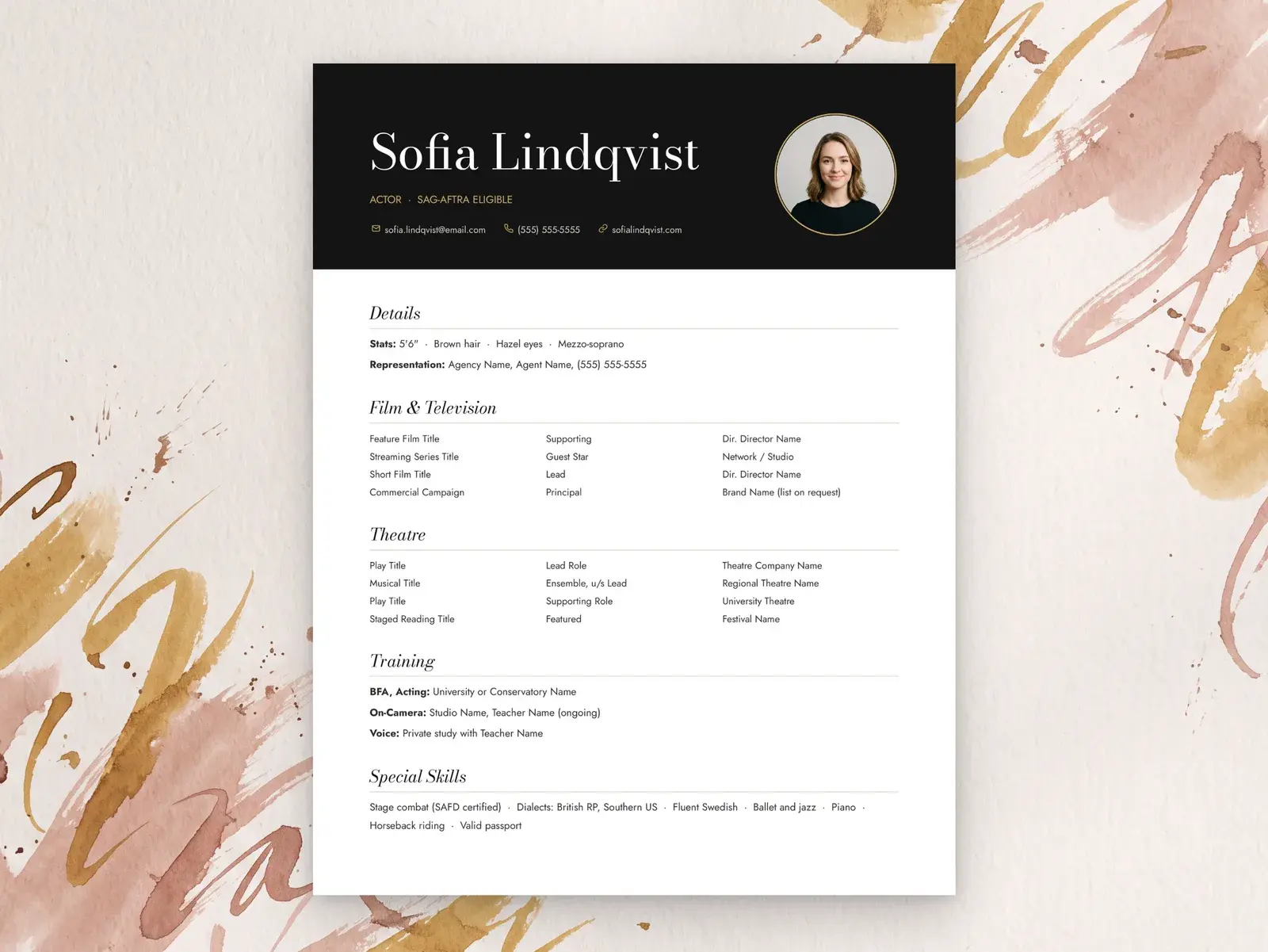
This is the heart of the page. Group credits by medium, typically Film, Television, and Theatre, plus Commercials or New Media if you have them. Put your strongest category first. Within each group, lay out three columns:
- Left: the title of the production.
- Middle: your role. For theatre, NFI suggests the character name, with “ensemble” or similar in parentheses where it applies. For film and TV, it suggests a role description instead of the character name. One simple way to do that is a short label such as Lead, Supporting, or Featured.
- Right: the production company, theater, or director.
Order the entries so the work you’re proudest of is near the top of each group. A lead in a small play can sit above a background role in a bigger production; you’re showing range and responsibility, not just names.
Training
Two columns are enough: the focus (scene study, voice, Shakespeare, stage combat, improv) and the teacher or school. List degree programs here too. Ongoing classes count, and they signal that you’re still working on your craft between jobs.
Special skills
One compact paragraph or a few short lines at the bottom. Make every item specific and performable: “Dialects: Southern US, RP, Irish” beats “good with accents,” and “Juggling (3 balls), stick shift, conversational Spanish” beats “athletic, creative.” If you’d hesitate to demonstrate it in an audition room, leave it off. Our guide to skills on a resume covers the same idea for non-acting work: specific beats generic every time.
A full acting resume example
The actor, productions, and teachers below are fictional and only illustrate the layout.
JORDAN ALVAREZ
jordan.alvarez.actor@email.com | (555) 384-2290
Hair: Brown | Eyes: Hazel | Height: 5’9”
FILM
The Long Way Home — Supporting — Northbank Pictures
Static — Lead — Riverside Film School (dir. T. Okafor)
Last Call — Featured — Copperline Studios
THEATRE
Our Town — Emily Webb — Elm Street Community Players
Twelfth Night — Viola — Lakeside Summer Shakespeare
The Crucible — Mary Warren — Westbrook High School
Into the Woods — (Ensemble) — Westbrook High School
TRAINING
Scene Study — Harbor Actors Workshop, M. Lindqvist
On-Camera Technique — Riverside Film School
Voice and Speech — Private coaching, R. Delgado
Improv Levels 1–2 — Third Rail Comedy
SPECIAL SKILLS
Dialects: Southern US, Standard British. Fluent Spanish. Guitar (intermediate). Stage combat (unarmed). Horseback riding. Valid driver’s license, stick shift.
Notice what’s missing: no objective, no paragraphs, no descriptions of what happened on set. On a real page the three credit columns would line up vertically; the dashes here stand in for tab stops.
Using an acting resume template
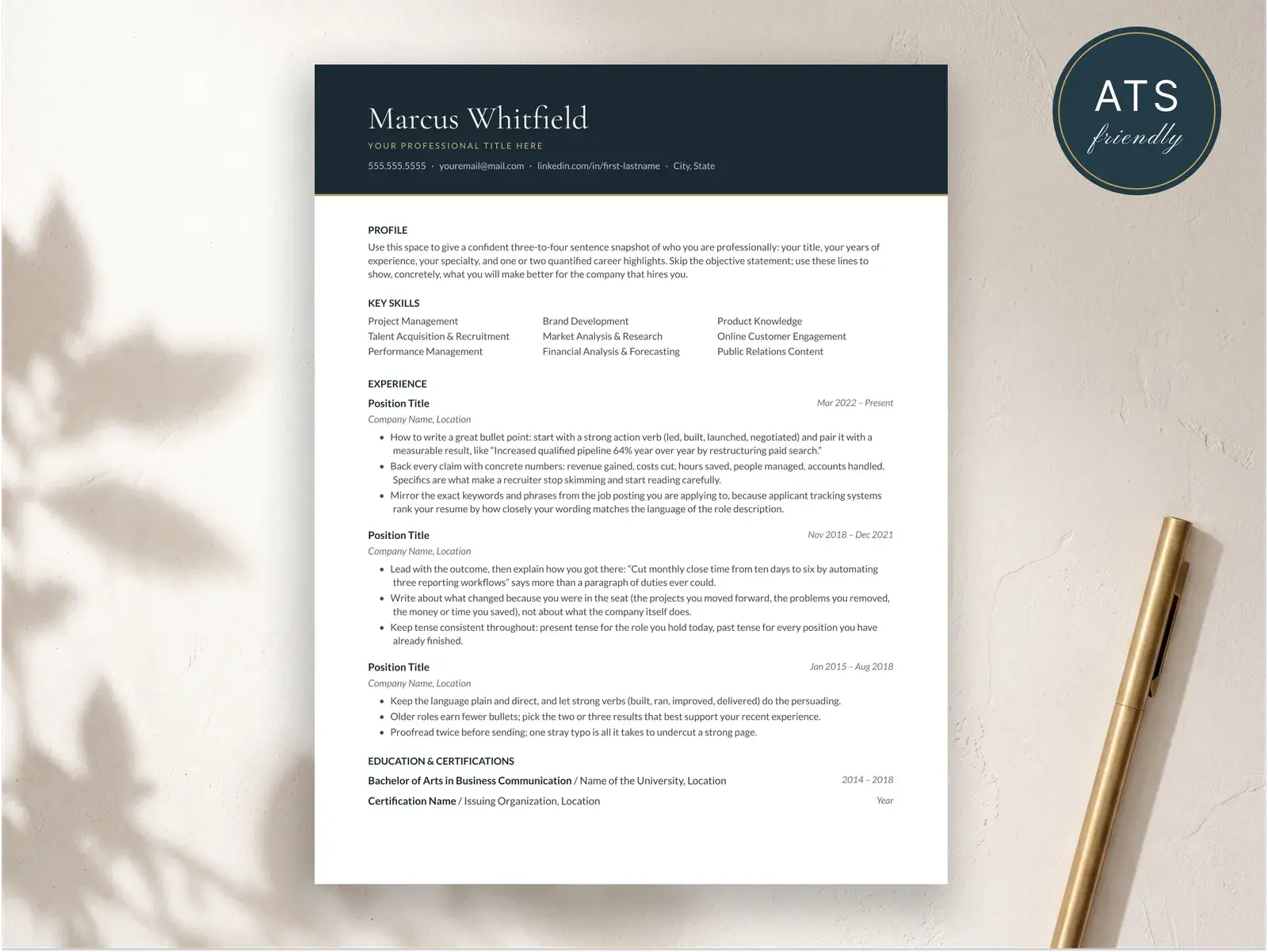
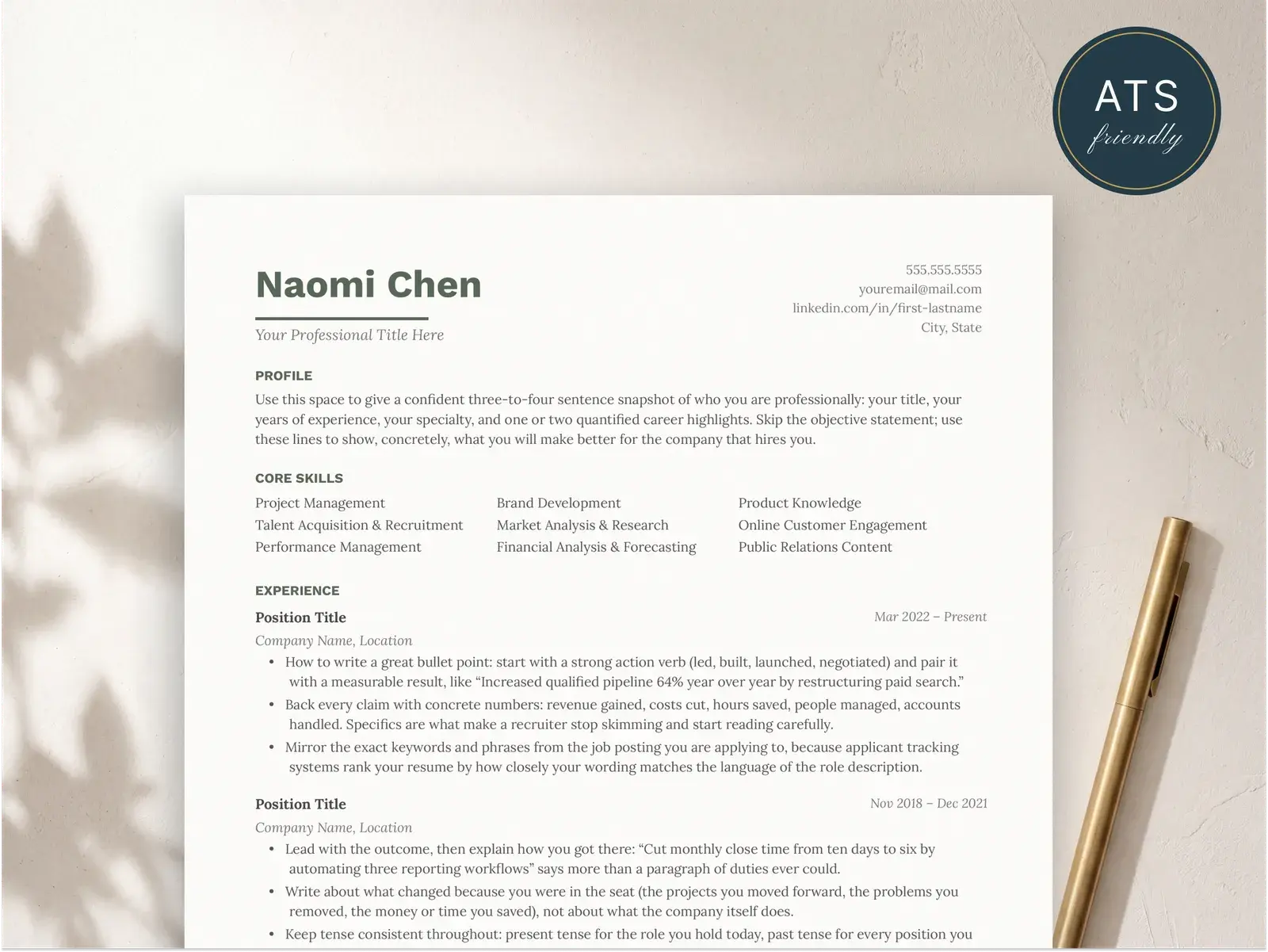
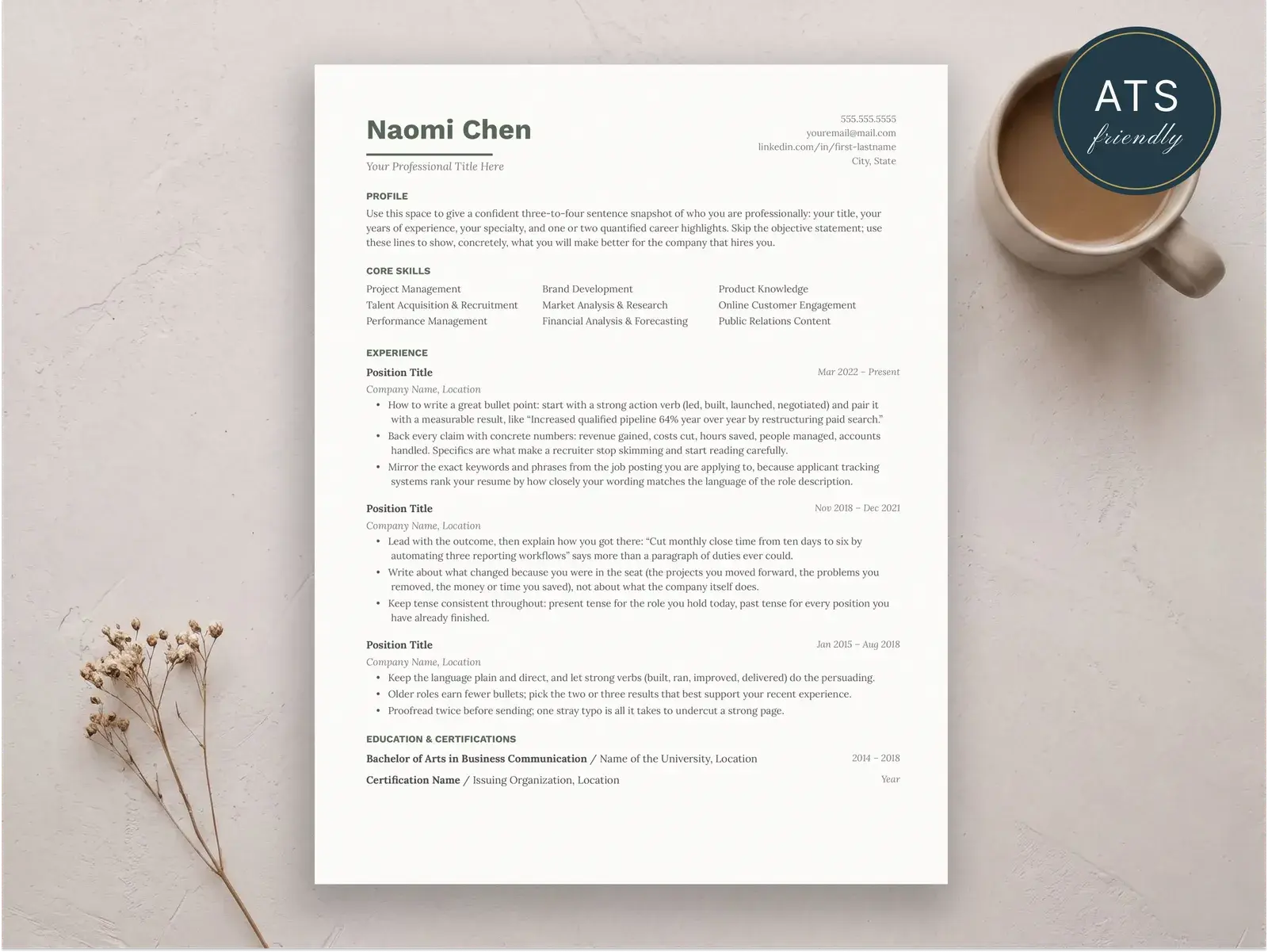
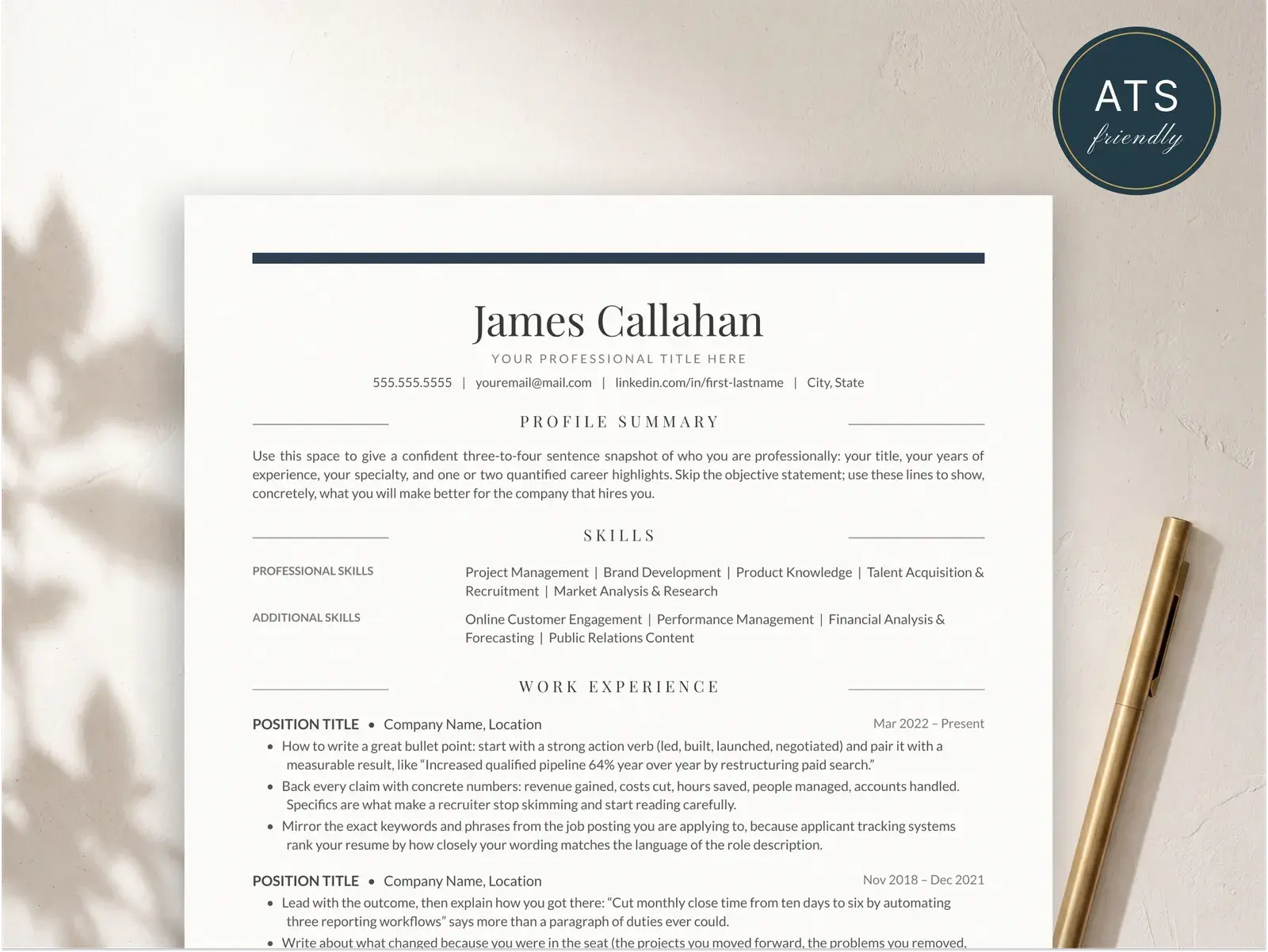
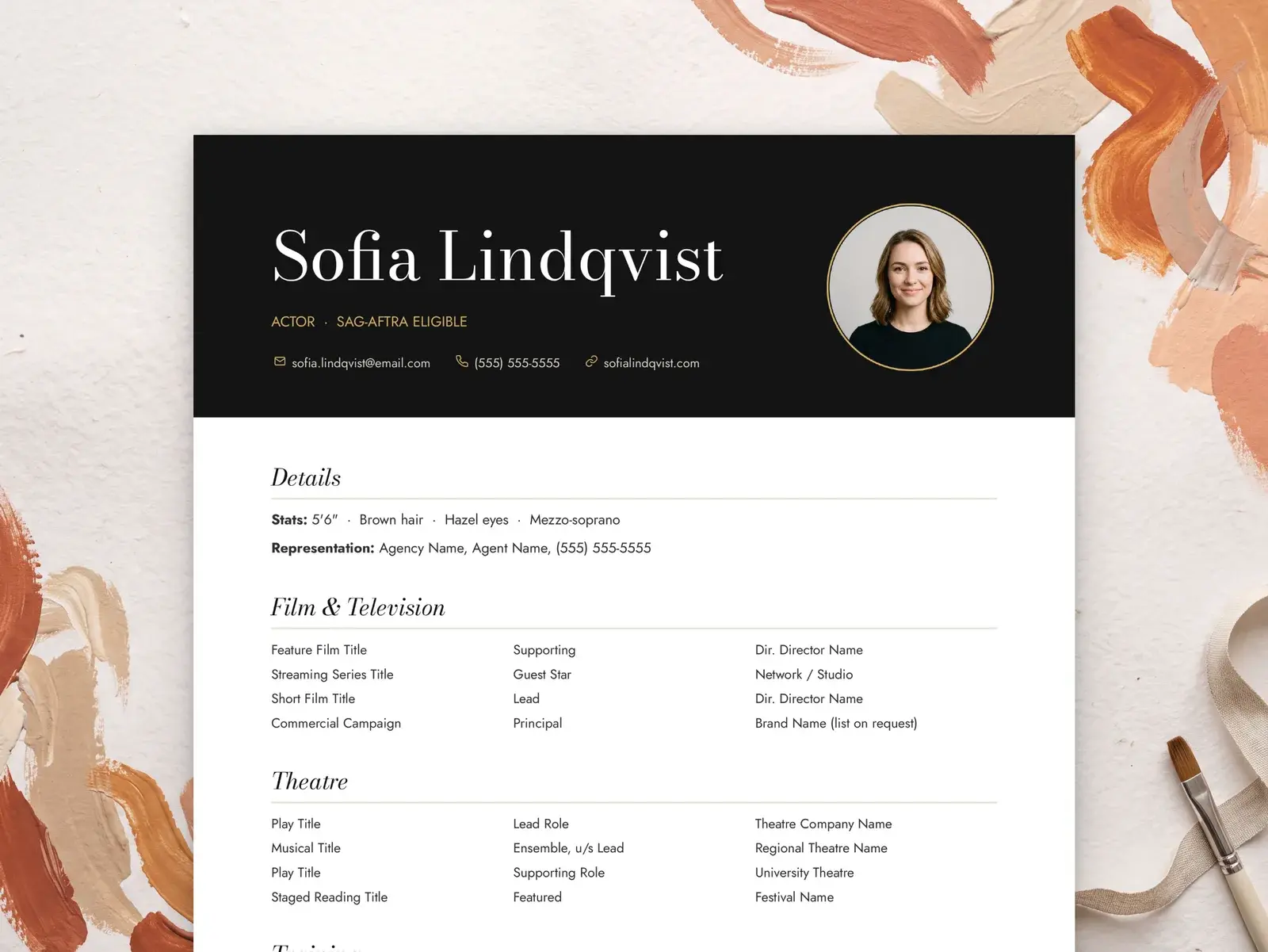
The fiddly part of an acting resume isn’t the writing, it’s the grid: three columns that stay aligned as you add credits, an 8x10 page that prints cleanly, and a header that leaves room for your name to be the first thing anyone reads. A template saves you from fighting tab stops every time you book something new.
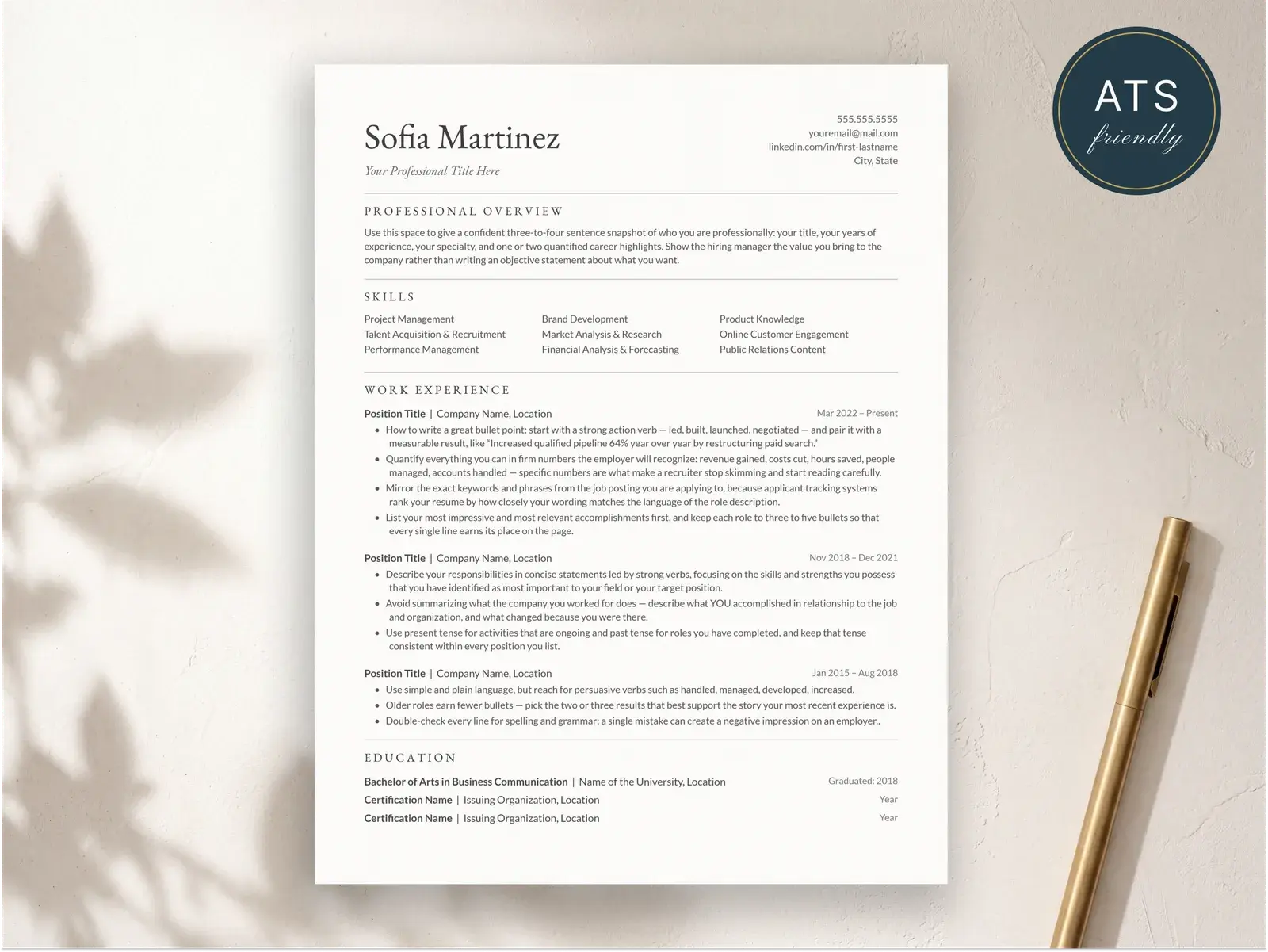
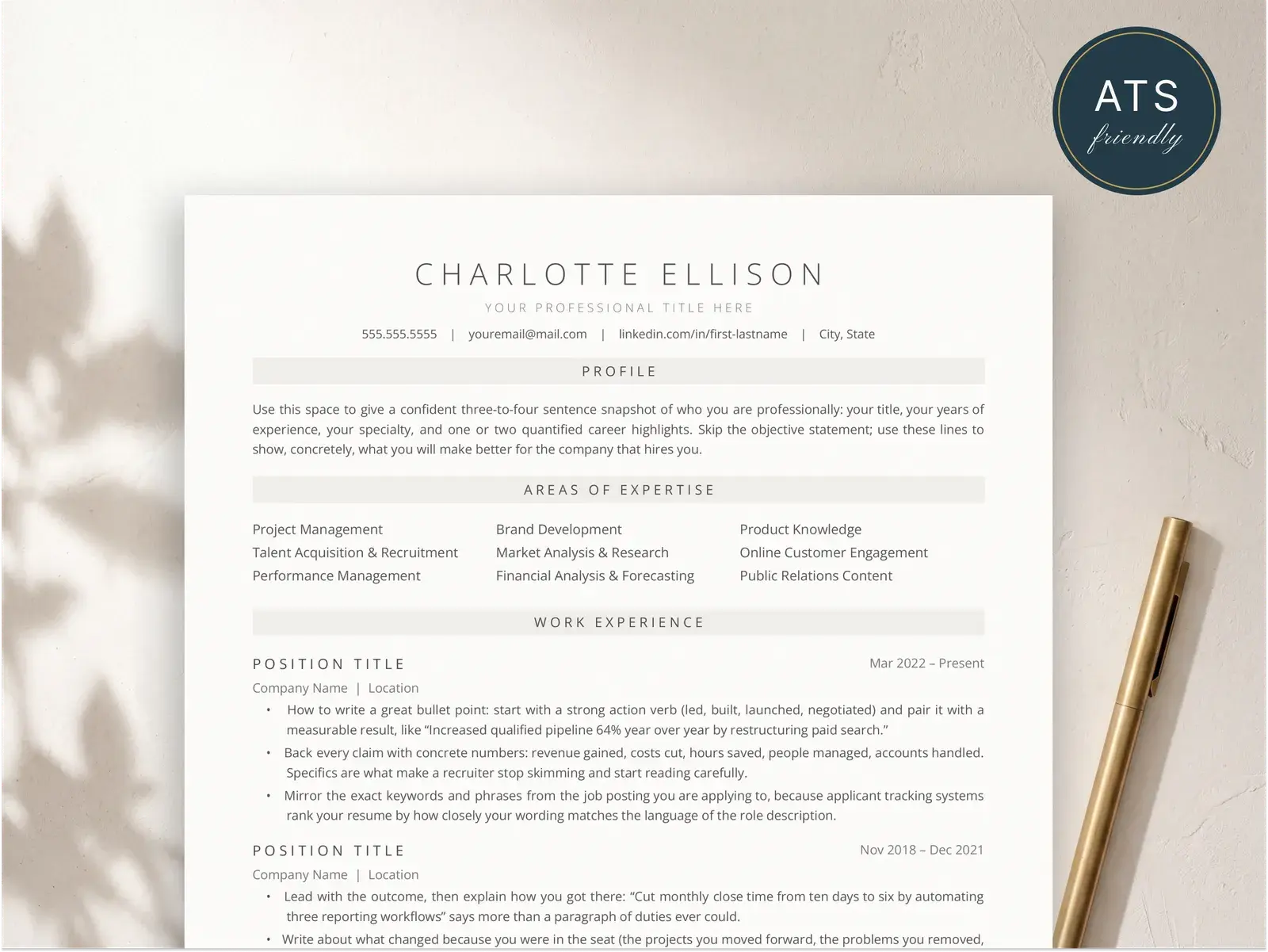
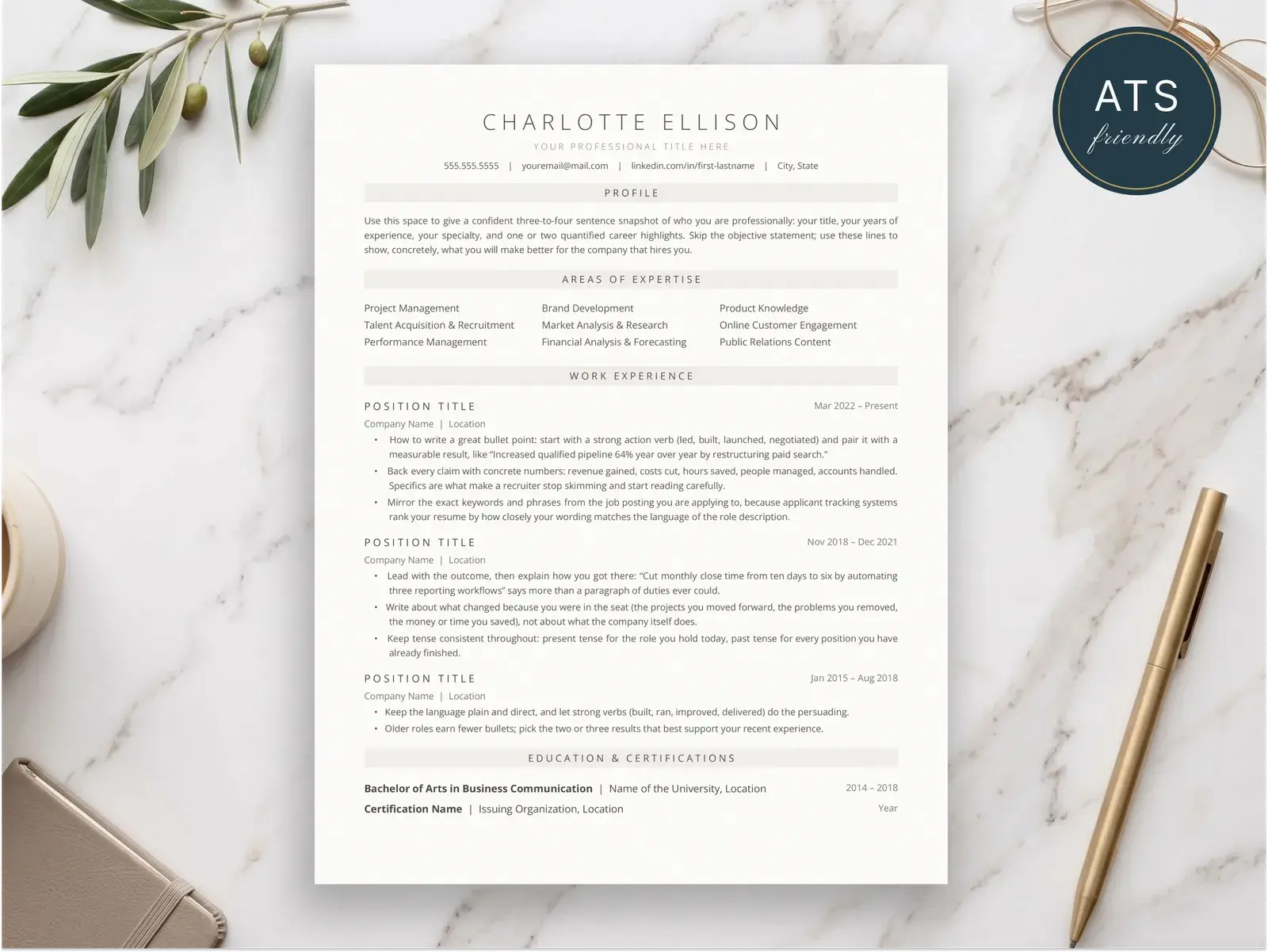
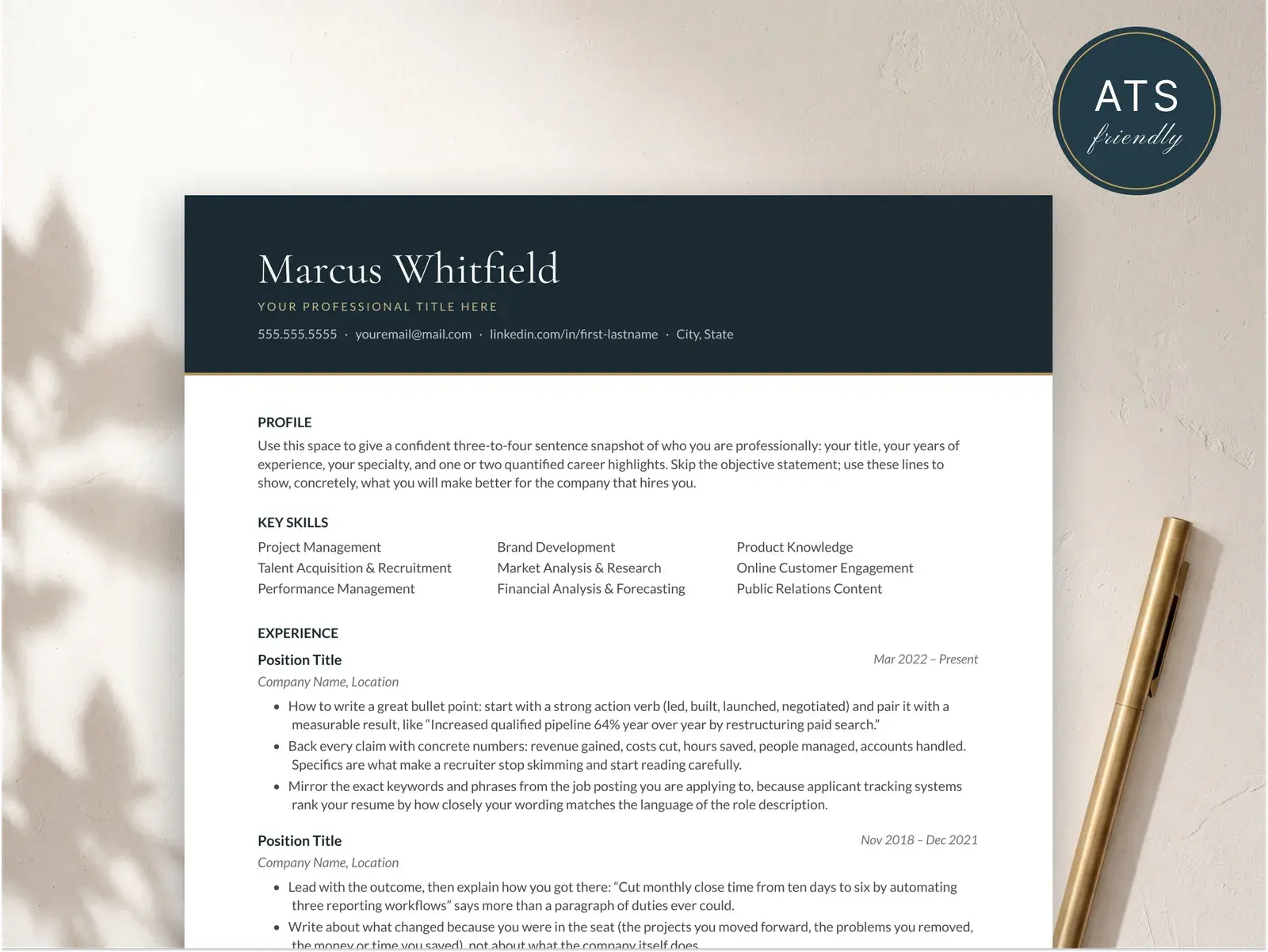
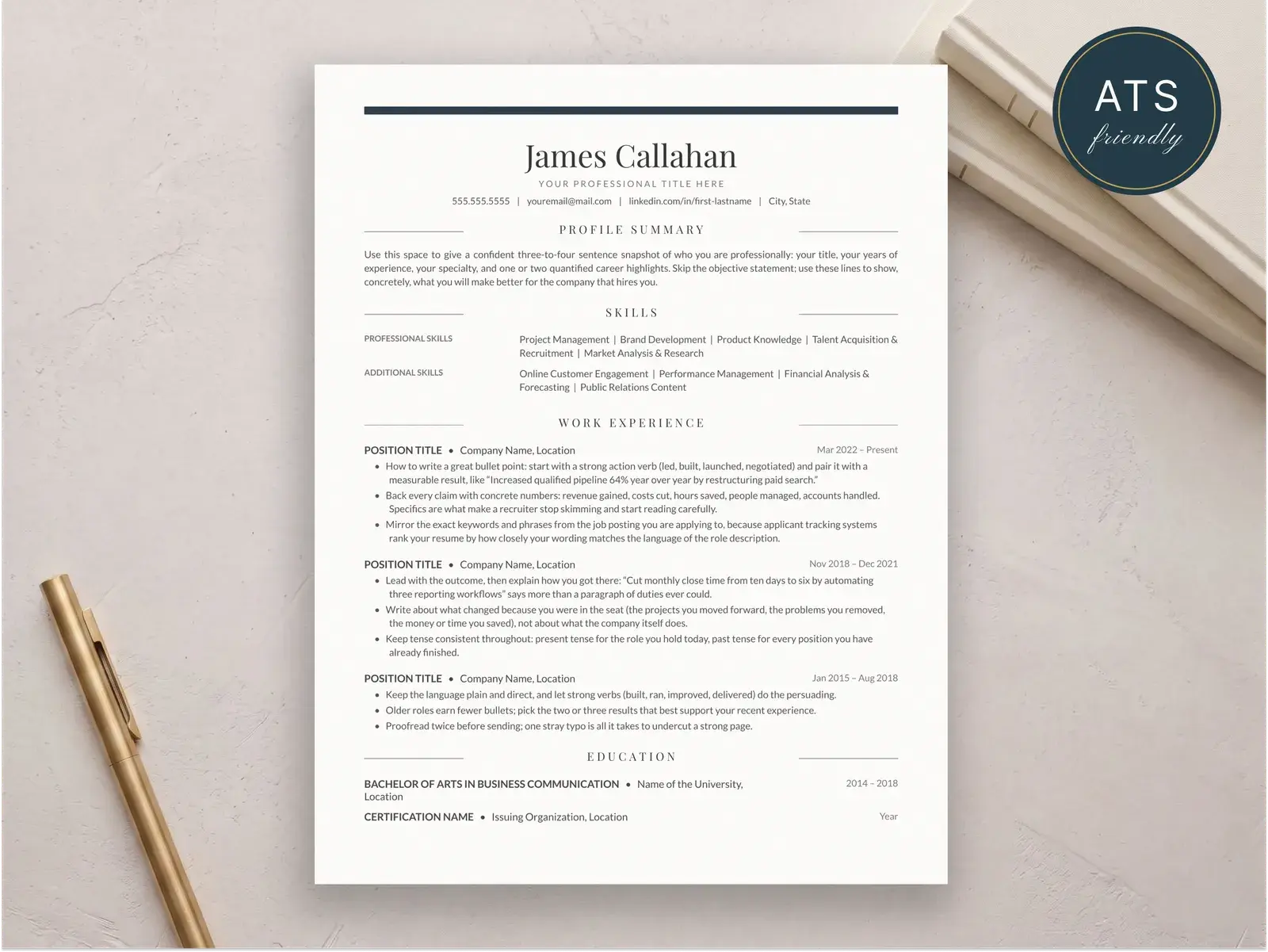
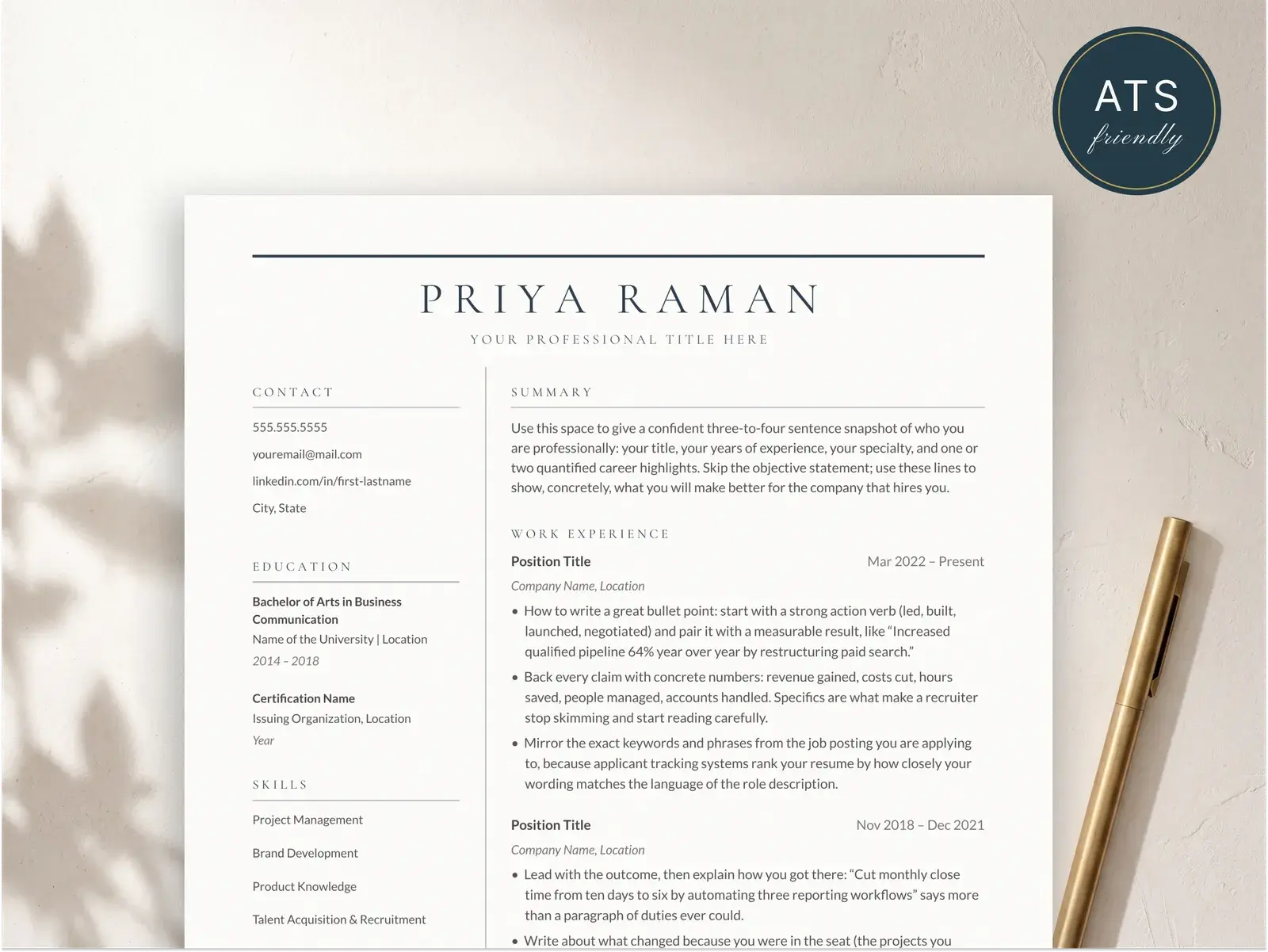
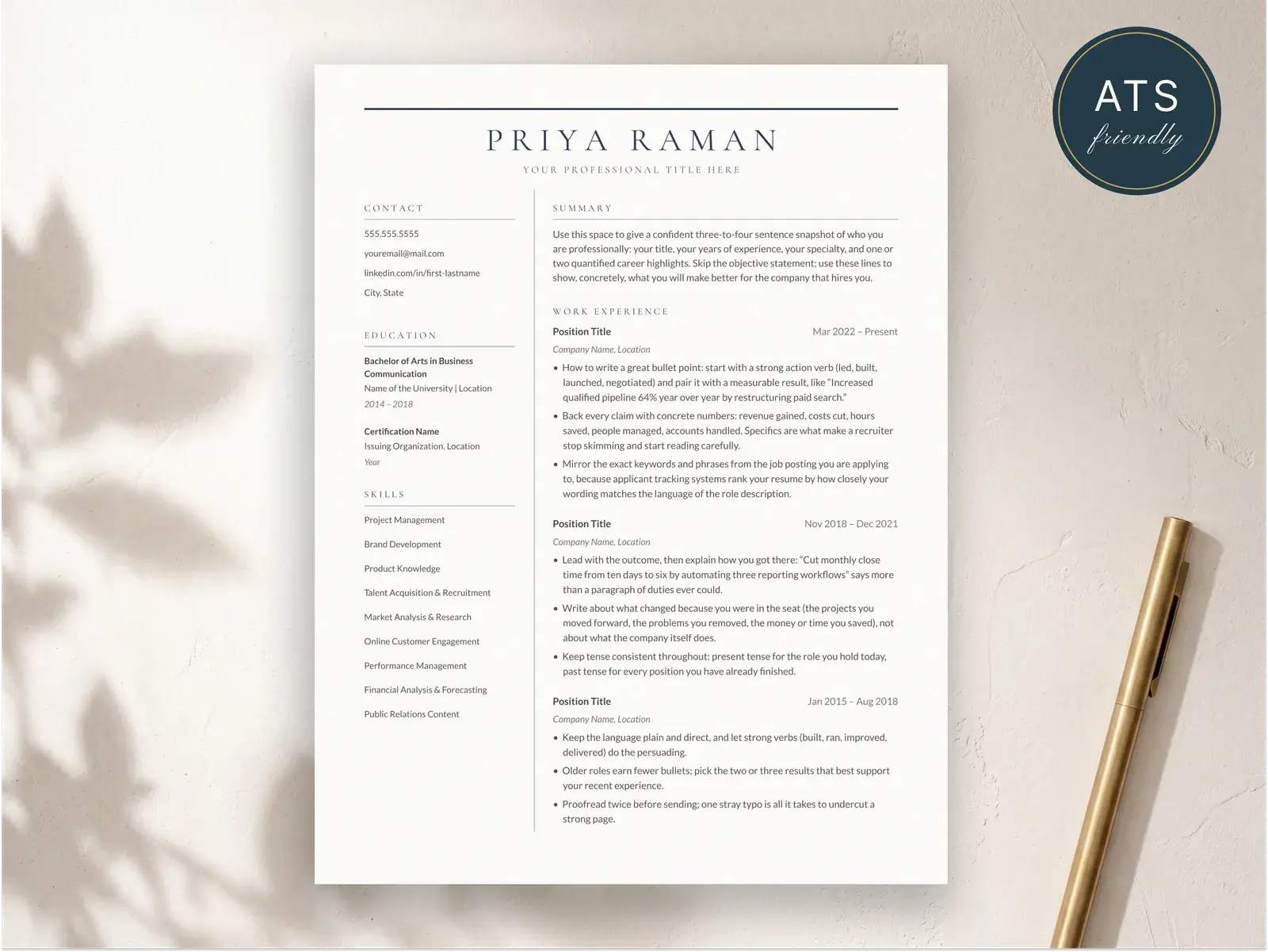
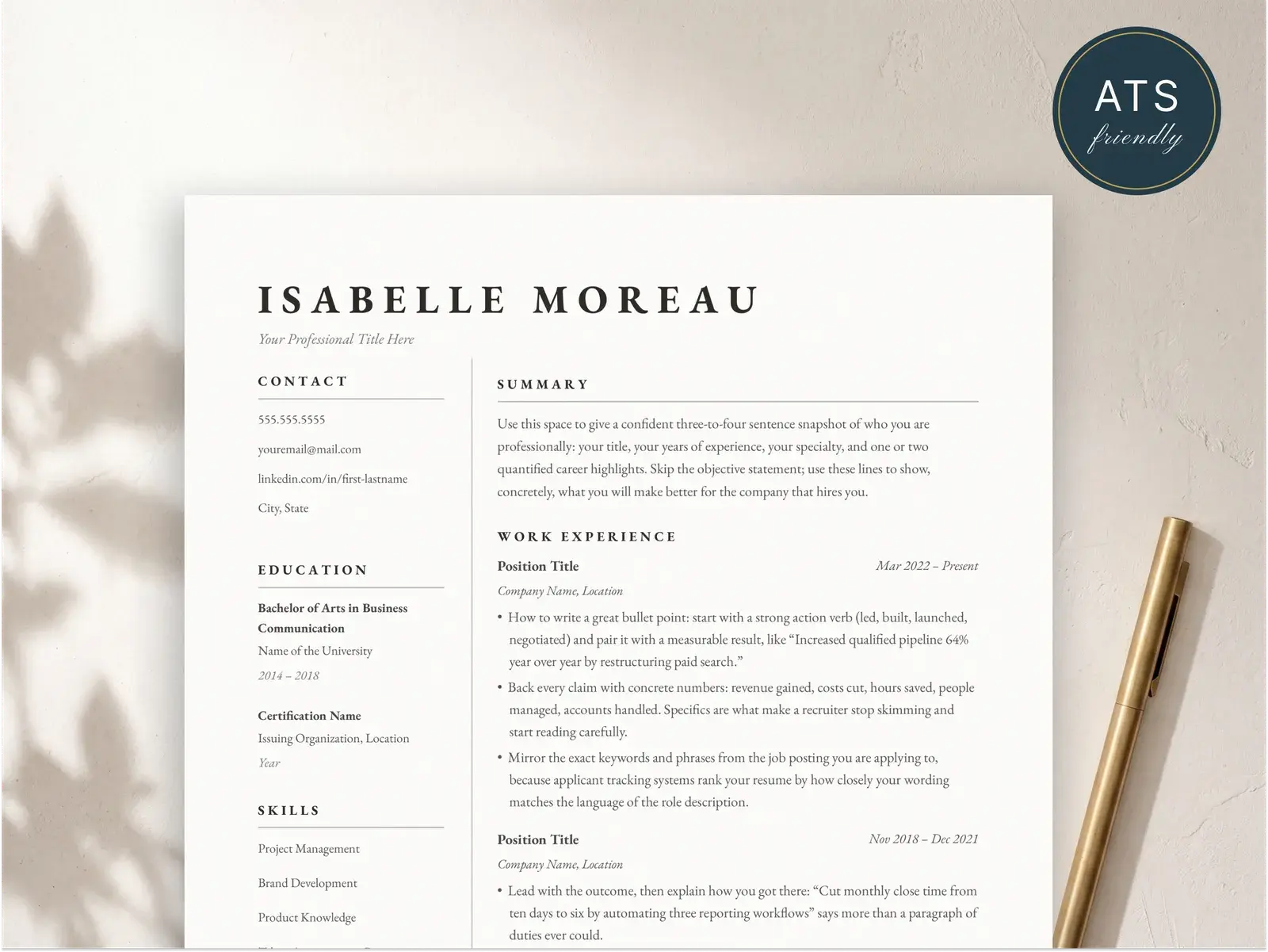
If you work in Google Docs, Word, or Pages, our Acting Resume Template with Headshot for Google Docs, Word & Pages (The Marquee) is built for exactly this kind of page. Whatever template you use, check three things before you send it: the page size matches your headshot, the columns still line up after you edit, and the exported PDF looks identical to what you see on screen.
Templates for this role
An acting resume with no credits yet
Everyone starts with a thin page. The goal isn’t to look experienced; it’s to look serious and honest. A few ways to fill it without padding:
- Use school and community work. High school and college productions, community theater, and student films are real credits. Label the company accurately, and let the work speak.
- Count class work. The NFI guide says it’s acceptable to list characters from classes and workshops. Mark them clearly (for example, the workshop name in the right column) so nobody mistakes a scene study for a production.
- Drop empty categories. NFI also notes it’s fine to have credits in only one area, like theatre, when you’re starting out. A page with a strong Theatre section and nothing else reads better than one with “Film: none.”
- Move training up. When credits are light, put Training directly under your stats. Classes, coaches, and a degree program tell the reader you’re committed.
- Make special skills work harder. A real dialect, an instrument, a sport, or a second language can be what gets you considered for a specific role.
The same thinking applies to any first resume. Our post on writing a resume with no experience walks through how to turn non-job activities into real entries.
What not to do on an acting resume
- Lying. NYFA is blunt that liars are bound to be caught, and a made-up credit or an upgraded role is not worth the risk to your reputation. If you were an extra, say so or leave it off.
- Formatting it like an office resume. Bullet points, a summary, and job-style descriptions make the page longer and harder to scan. Keep every credit to one line.
- Skills you can’t perform. “Fluent French” after one semester invites an awkward moment if you’re asked to use it. List only what you could do on the spot.
- Paper clips, tape, or a full letter-size page. Attach a trimmed 8x10 resume with staples so it stays with your photo.
- Out-of-date stats and contact info. Check them every time you print a new batch or update your PDF.
- Decorative design. Script fonts, colored backgrounds, and multiple typefaces compete with your name and your credits. One clean font, consistent spacing, and aligned columns look more professional than anything ornamental.