The short answer
The short answer
The best marketing cover letters are short, specific, and built around results. Each one below follows the same shape:
- An opening that names the role and leads with one concrete result or one sharp observation about the company.
- A proof paragraph that explains how you got a result: the channel, the tools, the numbers before and after.
- A fit paragraph that connects your work to something specific about this company’s marketing.
- A close that asks for a conversation, in one or two lines.
Aim for 250 to 350 words. Making your point in under a page is a small chance to show you can write tight copy. If you want the general rules for any industry first, start with how to write a cover letter, then come back for the marketing-specific versions.
The structure of a marketing cover letter
Write your cover letter as if it were a writing sample as well as a summary of experience. Treat every paragraph as copy with a job to do.
Header and greeting
Your name, email, phone, city, and a link to your portfolio or LinkedIn profile. If you can find the hiring manager’s name on the posting or the company’s team page, use it. If not, “Dear Hiring Team” or “Dear [Company] Marketing Team” is fine. Skip “To Whom It May Concern.”
Opening paragraph
Two or three sentences. Name the role, then give the reader a reason to keep going: a result, a campaign, or a specific observation about their brand. More on this in the next section.
Proof paragraph
Pick one or two pieces of work and tell them as a short story: the goal, what you did, what changed. Name the channel and tools (Google Ads, HubSpot, Klaviyo, GA4, Canva, whatever you actually used). Numbers belong here: open rates, cost per lead, follower growth, pipeline, revenue.
Fit paragraph
Show that you have looked at their marketing. Mention a campaign, a product launch, their newsletter, their tone on social, or a gap you noticed. Then say what you would bring to it. This paragraph is what separates a tailored letter from a form letter.
Close and sign-off
One line thanking them, one line asking for a conversation. “I’d welcome the chance to talk about how I could help with [specific goal]” is enough. Sign off with “Best regards” or “Sincerely” and your full name.
Opening sentences that earn the second sentence
Try to make your first line worth reading on its own. Three patterns suit a marketing letter, because each one shows rather than claims.
Lead with a result
In my last role I took our webinar series from 40 to 310 average registrants in six months, mostly through better email sequencing, and I’d like to bring that work to the demand generation coordinator role at Brightloop.
Lead with an observation about them
Your “Packed by Tuesday” campaign is the reason I started buying from Tallgrass Foods, so when I saw the opening for a content marketing specialist, I wanted to apply.
Lead with the overlap
I’ve spent three years doing paid social for outdoor brands on small budgets, which is exactly the problem described in your posting for a paid media specialist.
Compare those to “I am writing to express my interest in the Marketing Coordinator position.” The posting already told them what you’re applying for. Use the first line for something only you can say.
Example 1: Entry-level marketing cover letter (no experience)
All five letters below are illustrative: the people, companies, campaigns, and numbers are invented to show the structure. Swap in your own work and real details about the company you’re applying to.
This first one is for a graduate with no marketing job yet. The experience comes from a class project, a campus club, and a personal account, each written with a goal and a result.
Dear Harbor & Pine Hiring Team,
This spring I ran publicity for our university’s spring film festival and grew ticket sales from 180 the year before to 520, mostly through a short-form video series and a student ambassador program. I’d love to bring that same mix of creativity and tracking to the marketing assistant role at Harbor & Pine.
For the festival, I planned a six-week content calendar, filmed and edited twelve short videos, and recruited fifteen student ambassadors with personal referral links so we could see which channels drove sales. Ambassador links accounted for about a third of tickets, which taught me to measure before deciding where to spend time. In my capstone marketing course, my team built a go-to-market plan for a local bakery, including customer interviews, a competitor review, and a budget for a three-month Instagram test.
I’ve followed Harbor & Pine since your reusable bag launch, and I noticed your Instagram leans on product photos while your newsletter tells the stories behind the makers. I’d be excited to help bring more of those stories to social, and to learn from a team that clearly cares about craft.
Thank you for reading. I’d welcome the chance to talk about how I can support your team this season.
Best regards,
[Your name]
Why it works: it treats non-job work like real marketing work (a goal, a tactic, a measurement), and the fit paragraph proves the writer has actually looked at the brand. If you’re still building the resume that goes with it, see how to write a resume with no experience.
Example 2: Digital marketing specialist cover letter
For someone with one to three years of hands-on channel work. The letter is heavier on tools and numbers, because that is what the role is about.
Dear Hiring Manager,
Over the last year I cut cost per lead on our paid search campaigns by 38% while lead volume went up, and I’m applying for the digital marketing specialist role at Lumen Outdoor because your posting describes the same mix of paid search, email, and landing page work I do every day.
At Ridgeway Supply, a regional retailer, I manage Google Ads and Meta campaigns on a monthly budget of around $25,000. The biggest gain came from restructuring our search account by product line and writing dedicated landing pages for our three best-selling categories, which lifted landing page conversion from 2.1% to 3.4%. I also own our email program in Klaviyo, where I built an abandoned cart flow that now drives roughly 9% of email revenue. I report weekly in GA4 and Looker Studio, so I’m comfortable turning data into decisions the rest of the team can follow.
Lumen’s product pages are some of the best written in the category, but I noticed several of your search ads send traffic to the home page instead. Matching ads to the right pages is one of the first things I’d want to test.
I’d be glad to walk you through the account restructure in more detail. Thank you for your time.
Sincerely,
[Your name]
Why it works: each claim has a number and a mechanism behind it, and the suggestion in the fit paragraph is small, specific, and polite. Pointing out an opportunity is fine; criticizing their whole strategy is not.
Example 3: Marketing manager cover letter (with experience)
At manager level the letter shifts from tactics to outcomes: budget, team, pipeline, revenue, and how you make decisions.
Dear Hiring Team,
I’ve spent the last four years building the marketing function at a B2B software company from one person to a team of five, and over that time marketing-sourced pipeline grew from about 20% to just over half of new business. I’m applying for the marketing manager role at Corvid Analytics because you’re at the same stage we were when I joined.
At Fieldline, I own a $1.2M annual budget across paid, content, events, and lifecycle email. When I arrived, most spend went to trade shows with no tracking. I set up attribution in HubSpot and Salesforce, moved a third of the event budget into paid search and a webinar program, and worked with sales to agree on a lead definition both teams trusted. I hired and manage two content marketers, a demand generation specialist, and a designer, and I report pipeline numbers to the leadership team monthly.
Your posting mentions moving upmarket into enterprise accounts. That is the transition I led last year, and I learned the hard way that enterprise buyers need different content, longer nurture, and much closer work with sales. I’d bring that playbook, and the mistakes I’d avoid the second time.
I’d welcome a conversation about where marketing at Corvid goes next. Thank you for your consideration.
Best regards,
[Your name]
Why it works: it tells a short before-and-after story about a whole function, names the stakeholders (sales, leadership), and matches the writer’s experience to one stated goal in the posting. The resume can carry the full list of wins; the letter only needs the one that matters most to this employer.
Example 4: Sales and marketing cover letter (career change)
If you’re moving from sales, customer service, or another field into marketing, the letter’s job is to translate. Lead with what you already know about customers, then show the marketing work you’ve done on the side.
Dear Hiring Manager,
After three years of selling kitchen equipment to restaurants, I know the eight objections every chef raises, and I’d like to use that knowledge on the other side of the funnel as a product marketing associate at Ember & Steel.
As a sales representative at Copperline Supply, I exceeded quota in ten of the last twelve quarters, and the most useful thing I built wasn’t a deal: it was a one-page comparison sheet answering the questions I heard most. Other reps started using it, and our marketing team turned it into an email series. That project got me interested in marketing, so I completed a digital marketing course, started writing a weekly newsletter for independent restaurant owners (now 1,400 subscribers), and volunteered to help our marketing team with case study interviews.
Ember & Steel sells to the same buyers I’ve been talking to for three years. I can write in their language, I know which features they actually care about, and I can bring a direct line of feedback from the field to your launches.
Thank you for considering a non-traditional candidate. I’d love to talk about what I could contribute.
Sincerely,
[Your name]
Why it works: customer knowledge is the career changer’s advantage, and the letter makes it concrete. It also shows initiative (the course, the newsletter) instead of asking the reader to take interest on faith. For the resume side of a switch, see our career change resume guide.
Example 5: A short marketing cover letter
Some applications have a small text box, and some postings ask for “a brief note.” Keep the same shape, just one sentence per part.
Hi Brightloop team,
I’m applying for the social media coordinator role. At my current agency I manage TikTok and Instagram for three consumer brands, and last quarter I grew one client’s TikTok from 2,000 to 31,000 followers with a weekly series built around customer questions. I love how Brightloop answers comments with real personality, and I’d like to help turn more of those conversations into content. My portfolio is linked below. Thanks for reading.
[Your name] | [portfolio link]
Under 100 words, and it still has a result, a mechanism, a specific observation, and a next step.
Choosing the proof for your letter
Every example above runs on evidence. If you’re staring at a blank page, list everything you’ve done that had a goal and a result, then pick the one or two closest to the job posting. Marketing work that translates well into a cover letter:
- Growth numbers: followers, subscribers, traffic, leads, signups, with a start point, end point, and timeframe.
- Efficiency numbers: cost per lead, cost per acquisition, return on ad spend, conversion rate.
- Revenue and pipeline: sales influenced by a campaign or channel, if you can honestly attribute it.
- Scale: budget managed, number of campaigns, size of the team or list.
- Creative work: a campaign concept, a rebrand, a video series. Link to it rather than describing it at length.
No numbers? Describe the decision you made and why. “I noticed most of our signups came from one partner, so I shifted our outreach to similar partners” shows marketing judgment even without a percentage attached.
It also helps to read the posting for the skills the role leans on. The U.S. Bureau of Labor Statistics lists analytical, communication, creativity, decision-making, interpersonal, and organizational skills as important qualities for advertising, promotions, and marketing managers. Rather than listing those words, pick the two the posting emphasizes and make sure one story in your letter demonstrates each.
Pairing the letter with your resume
The cover letter and resume should look like they came from the same person. Use the same header (name, contact details, portfolio link), the same fonts, and the same tone. The letter tells one or two stories in depth; the resume lists the rest as short, result-led bullets. Avoid repeating the same bullet word for word in both places. If the letter goes deep on your email program, let the resume cover your paid and social work.
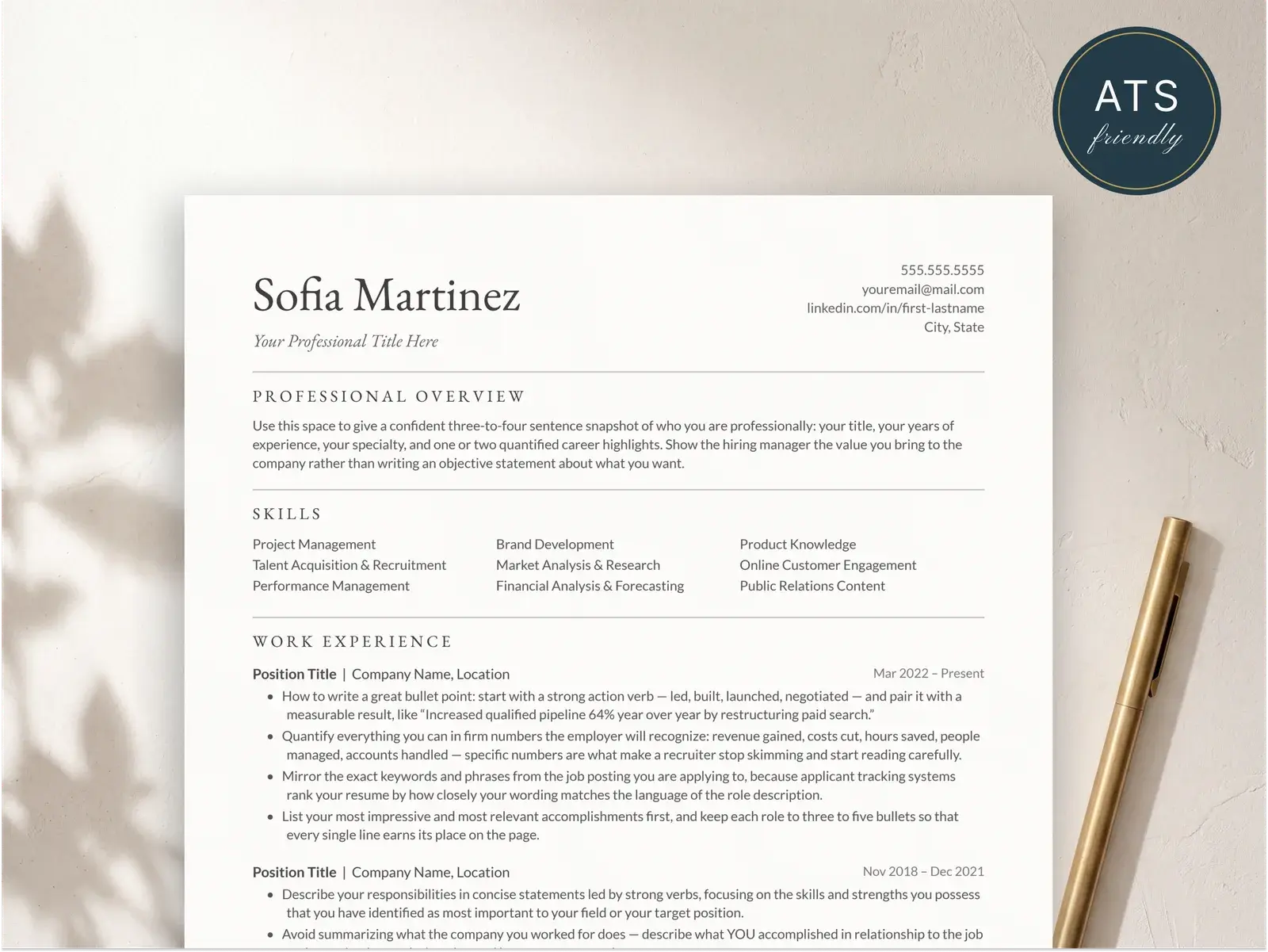
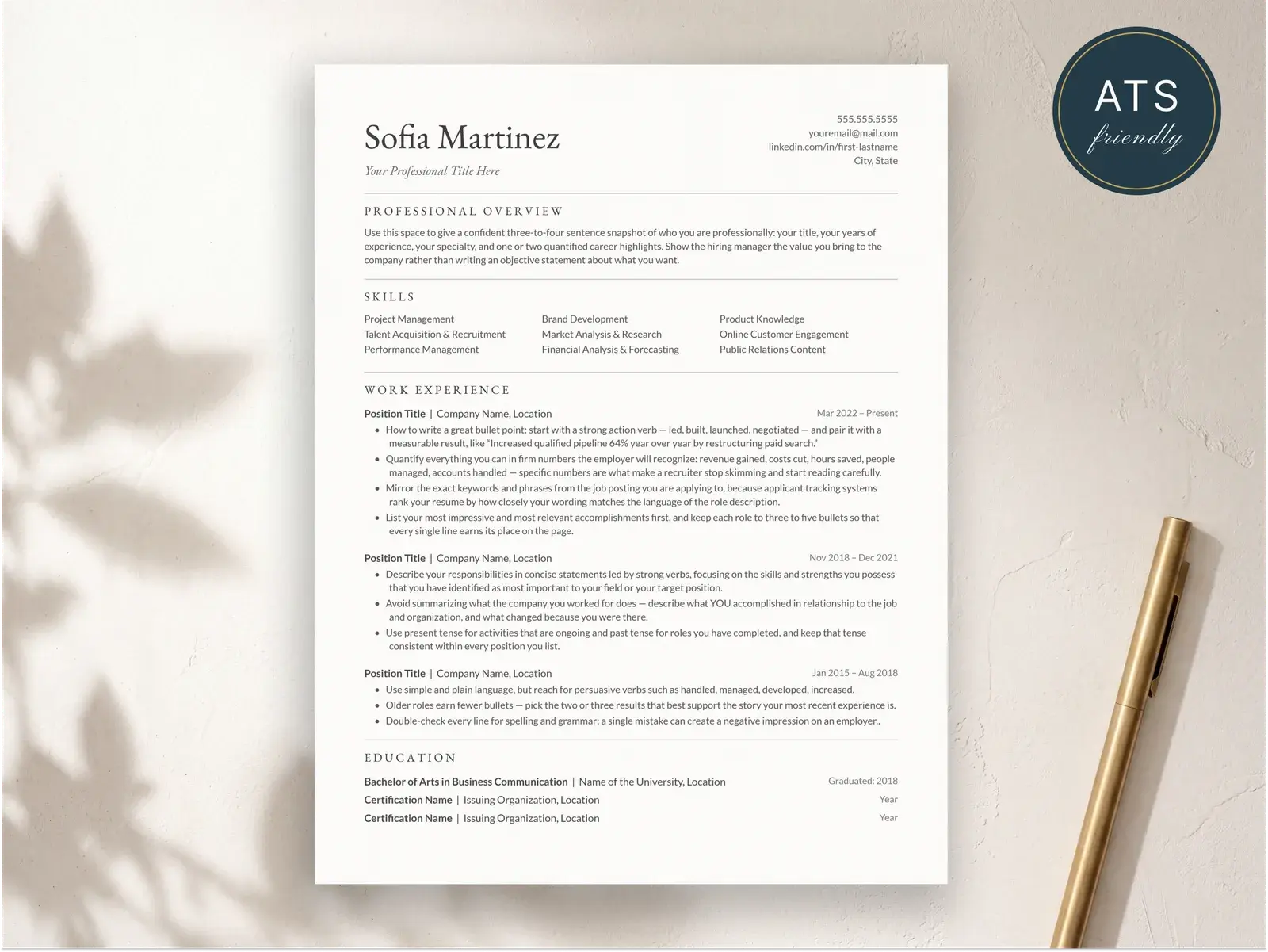
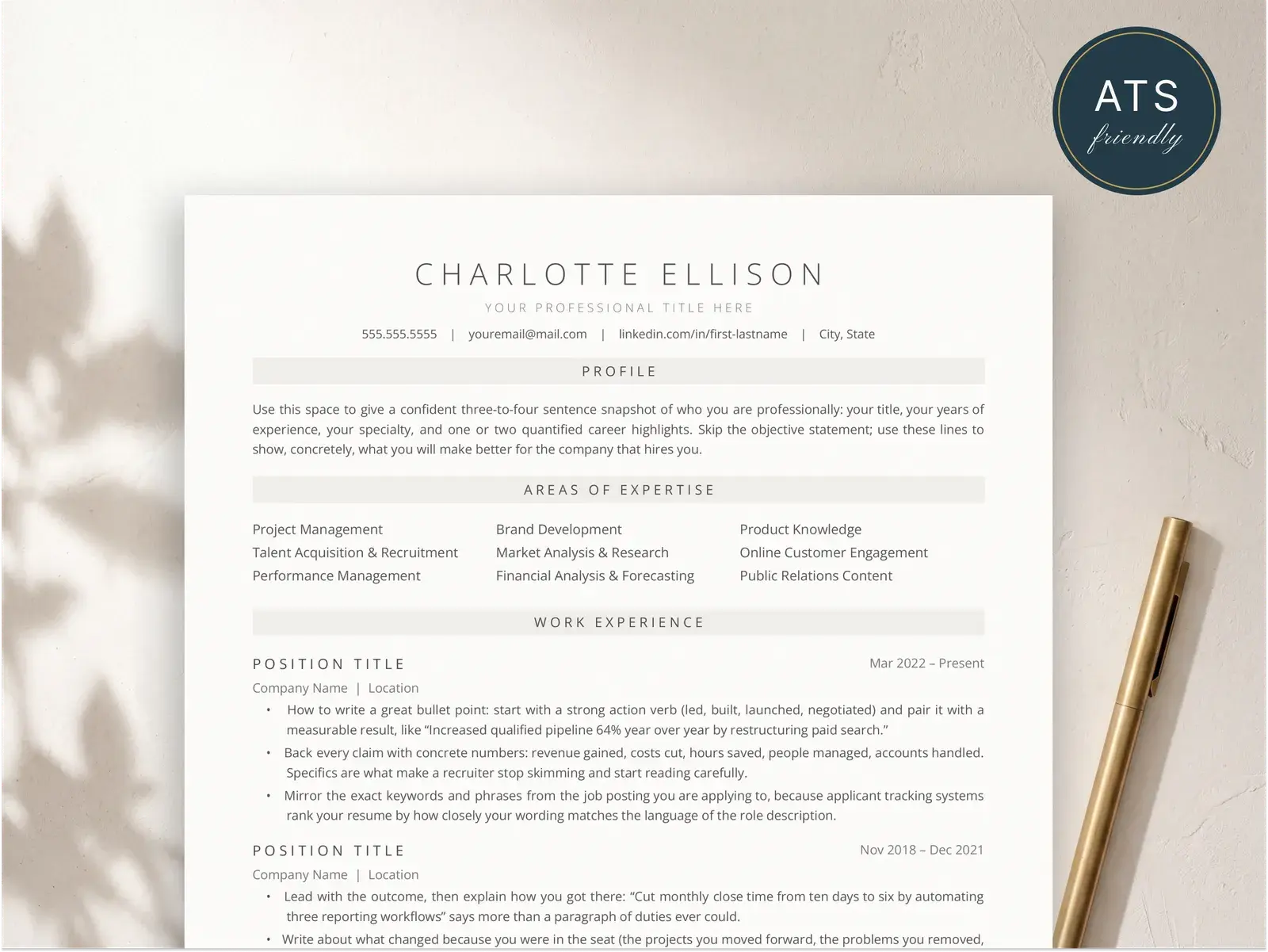
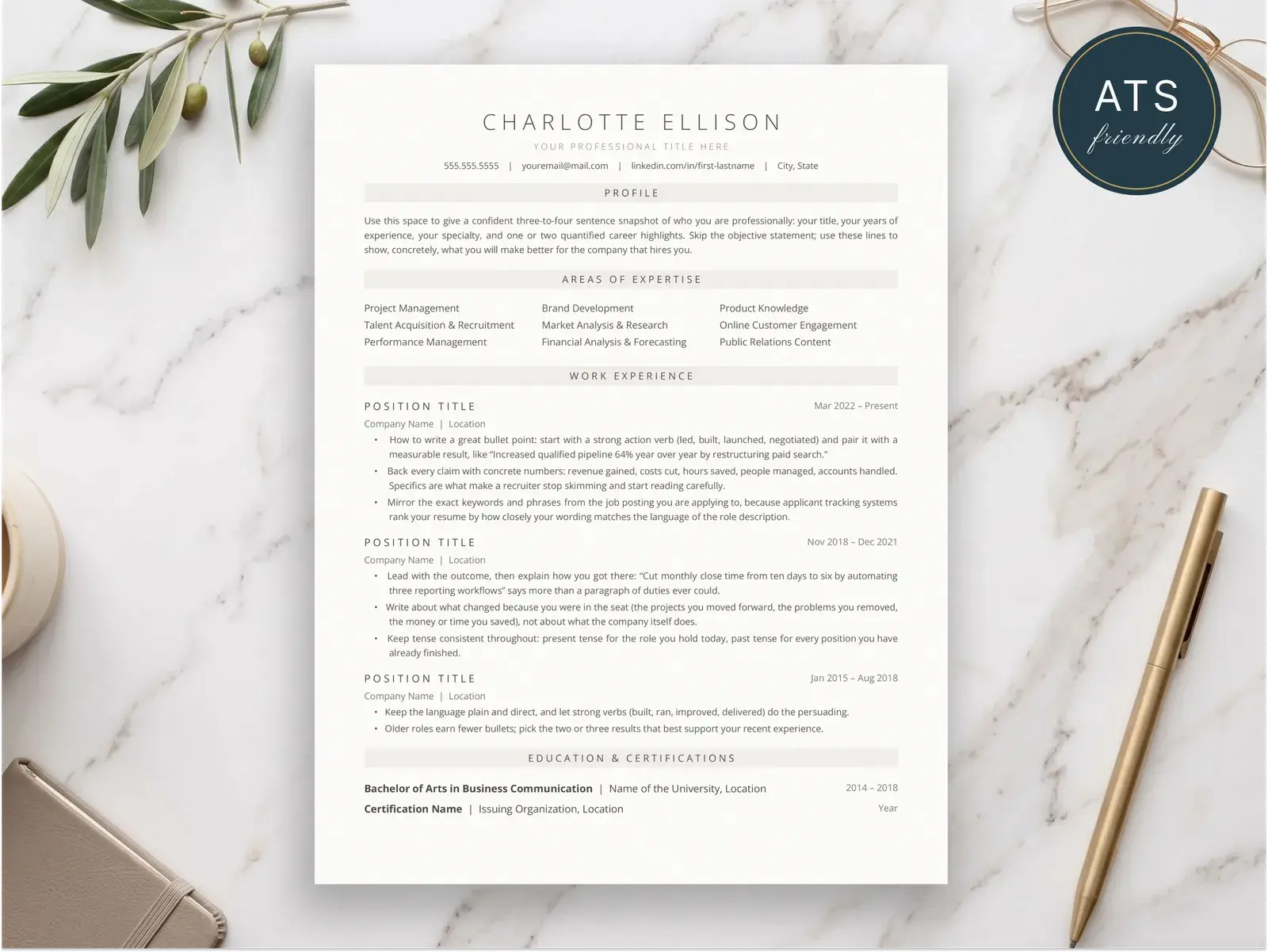
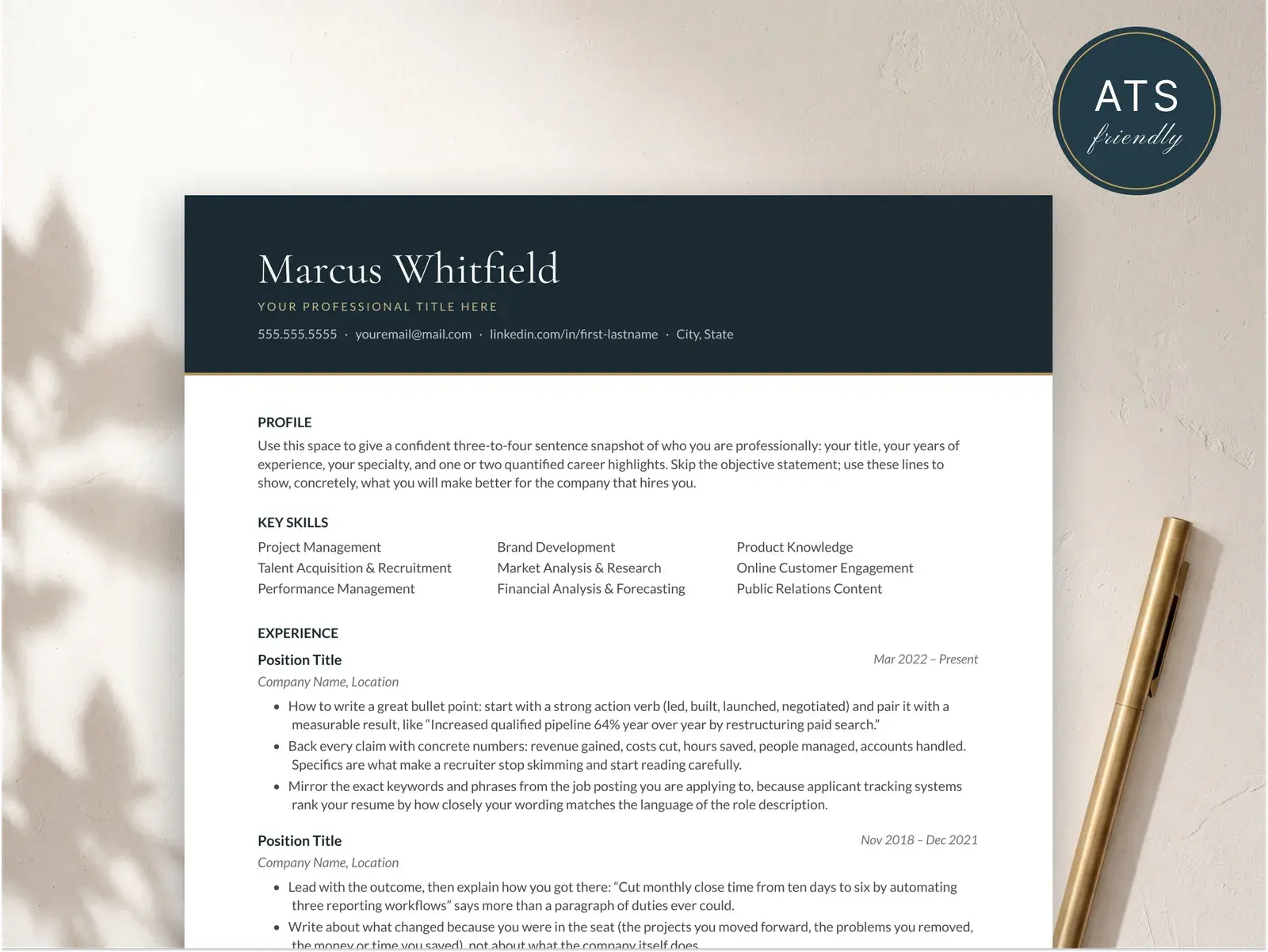
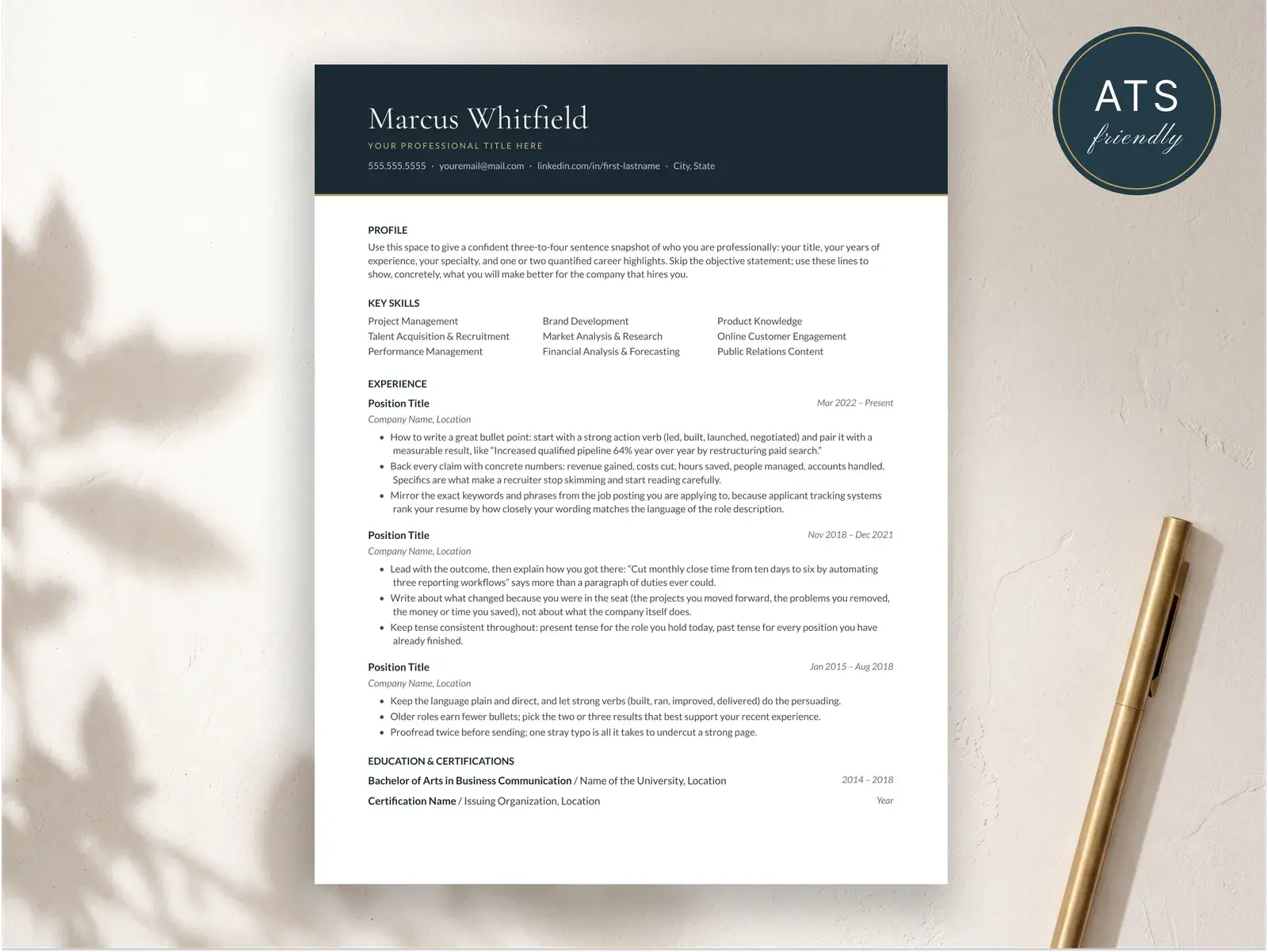
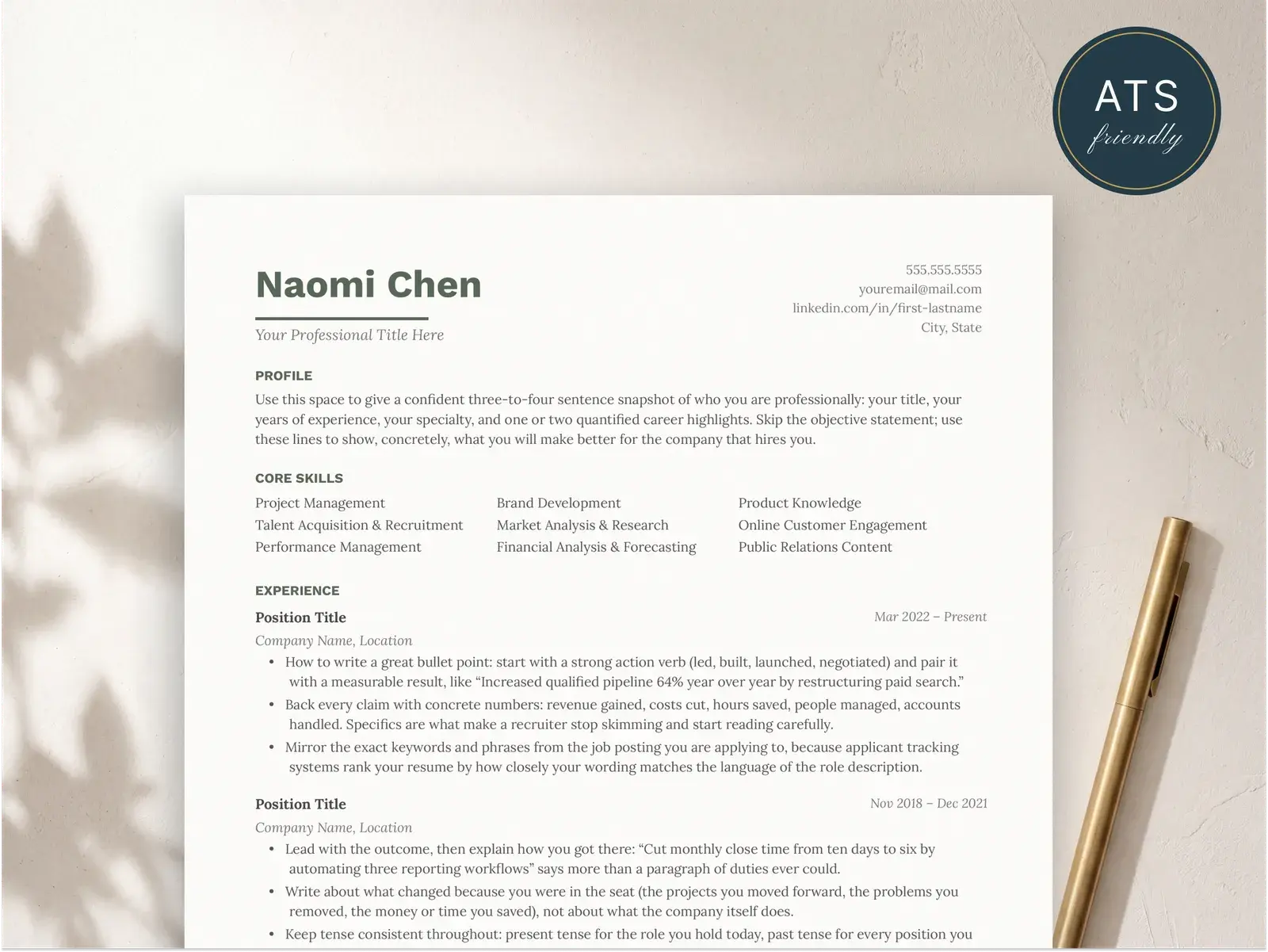
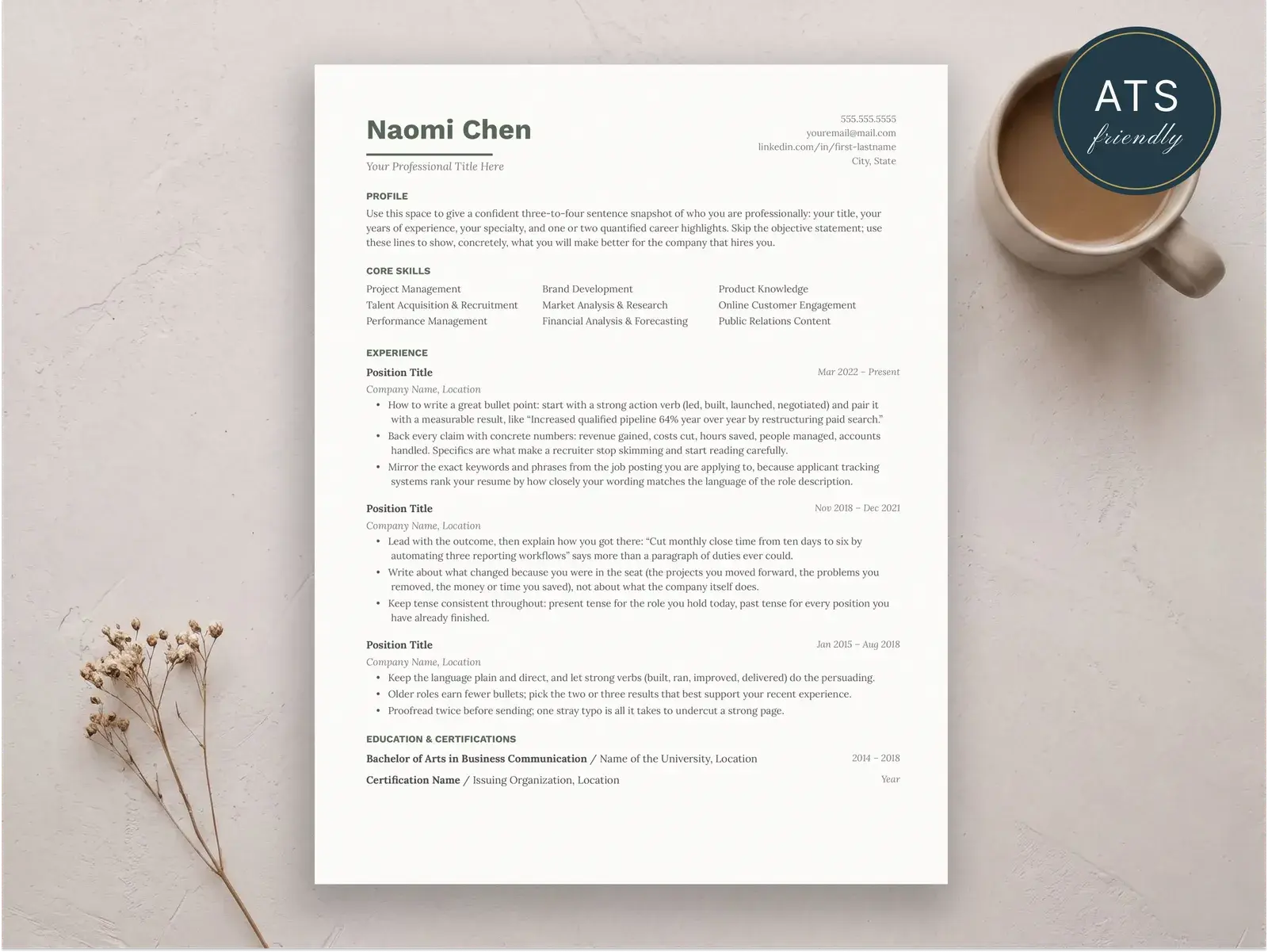
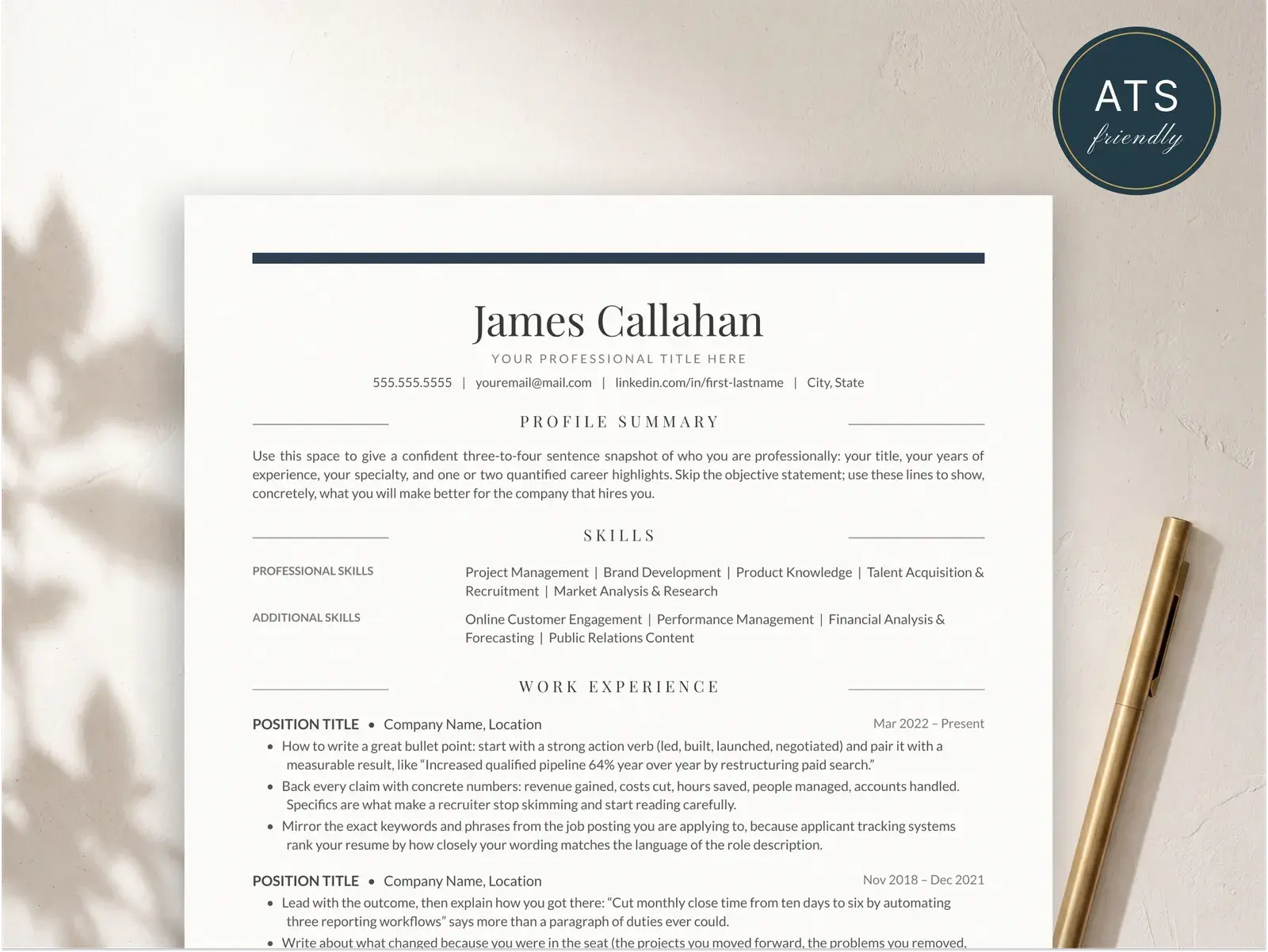
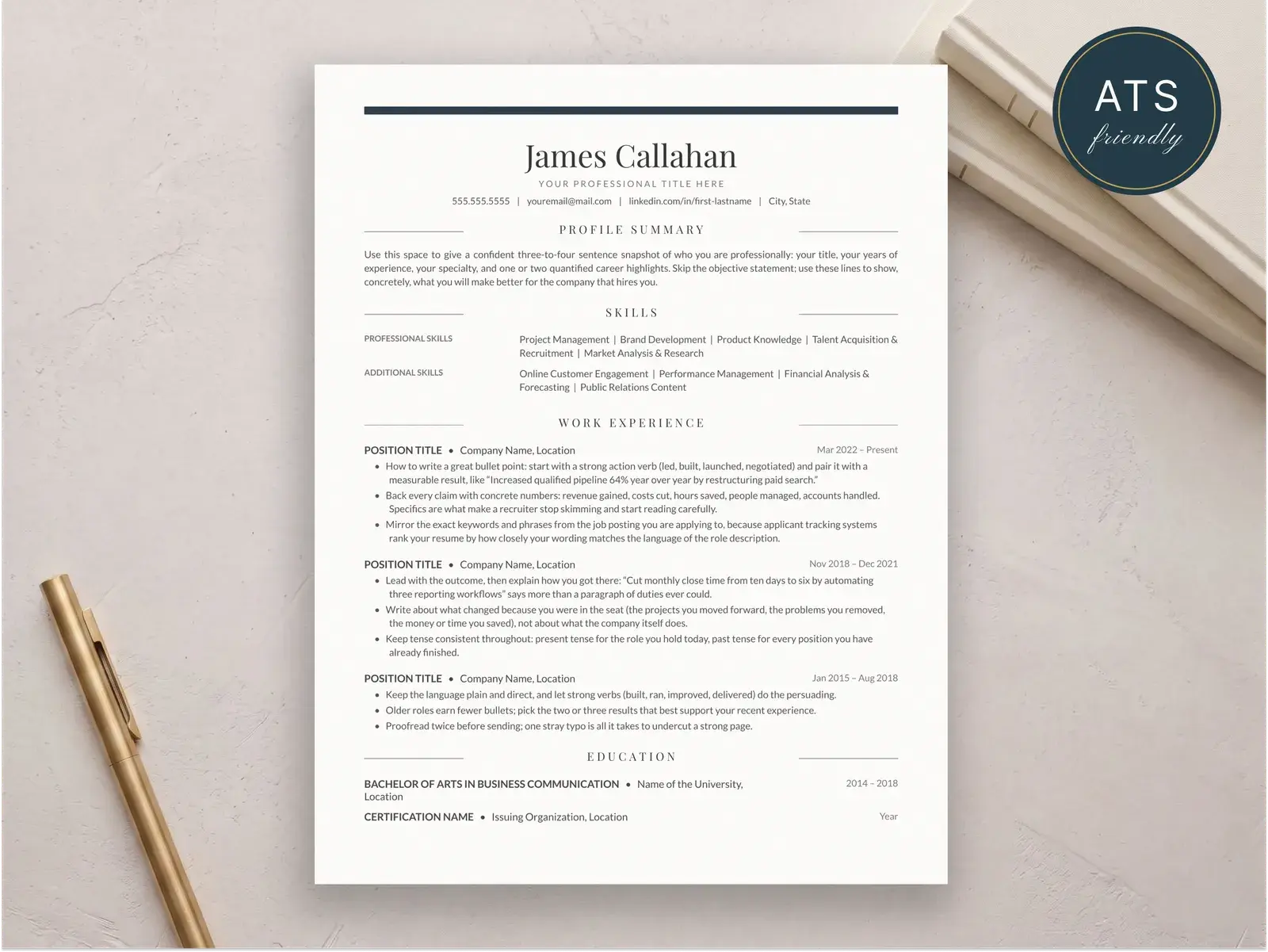
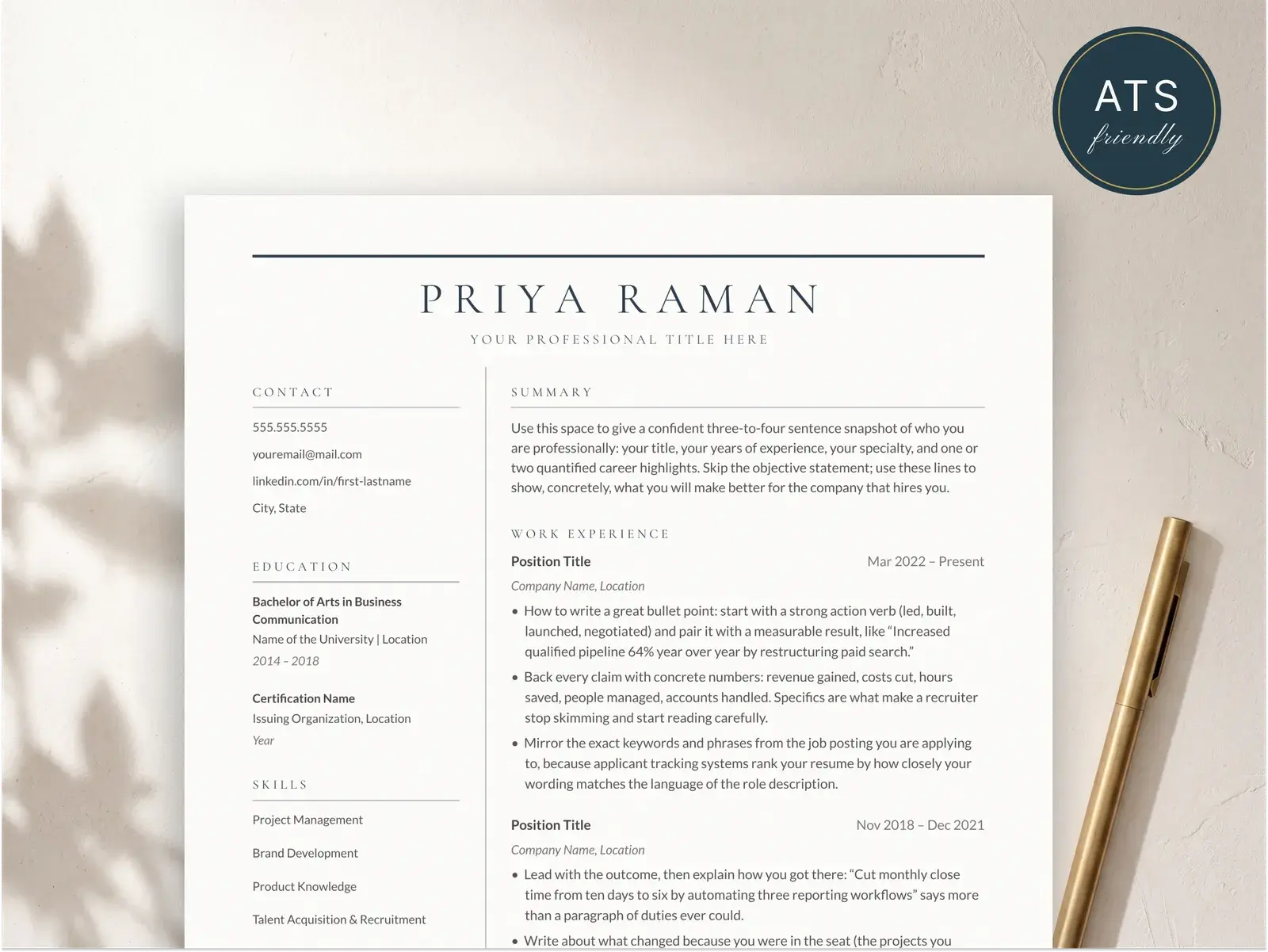
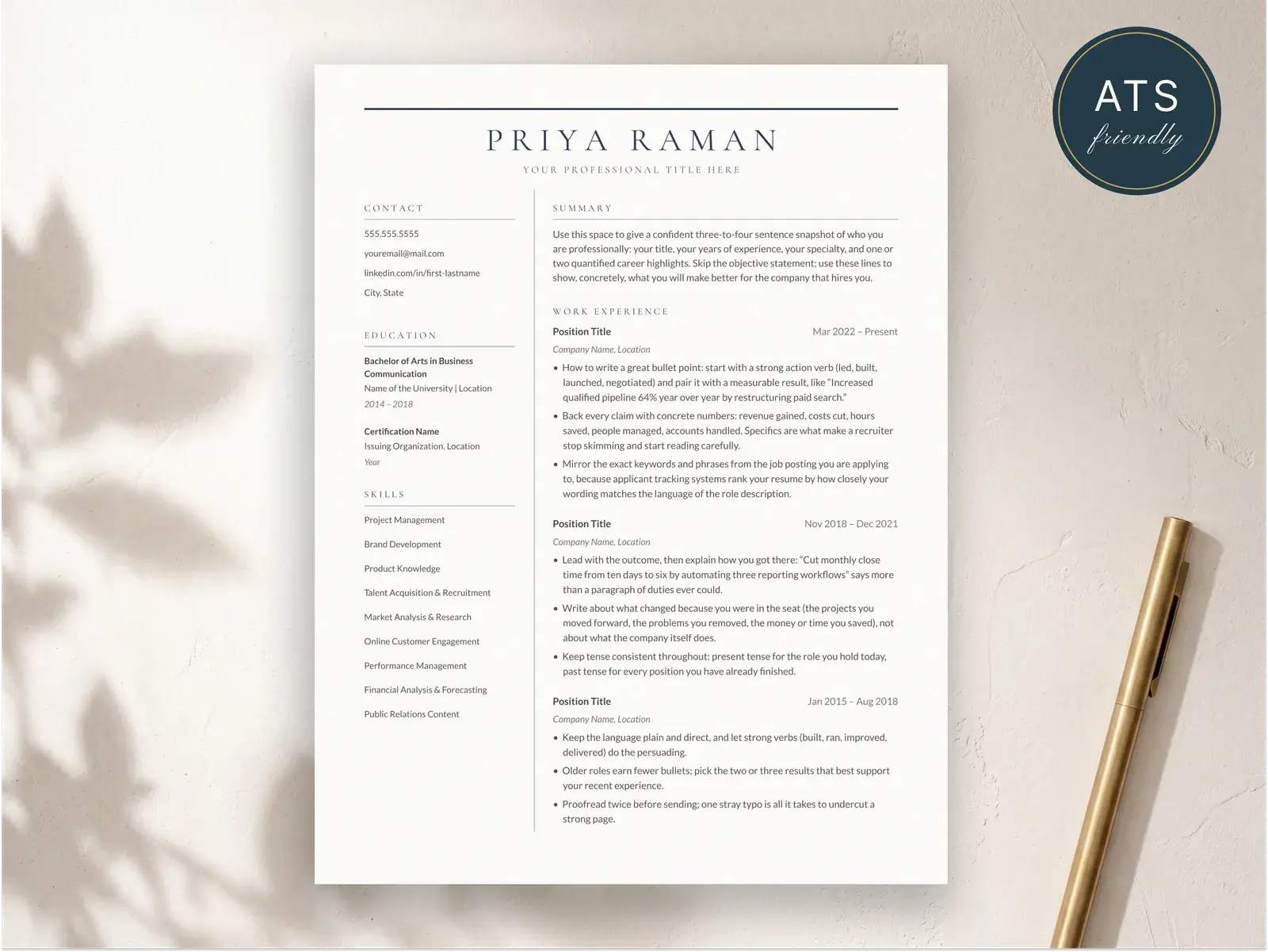
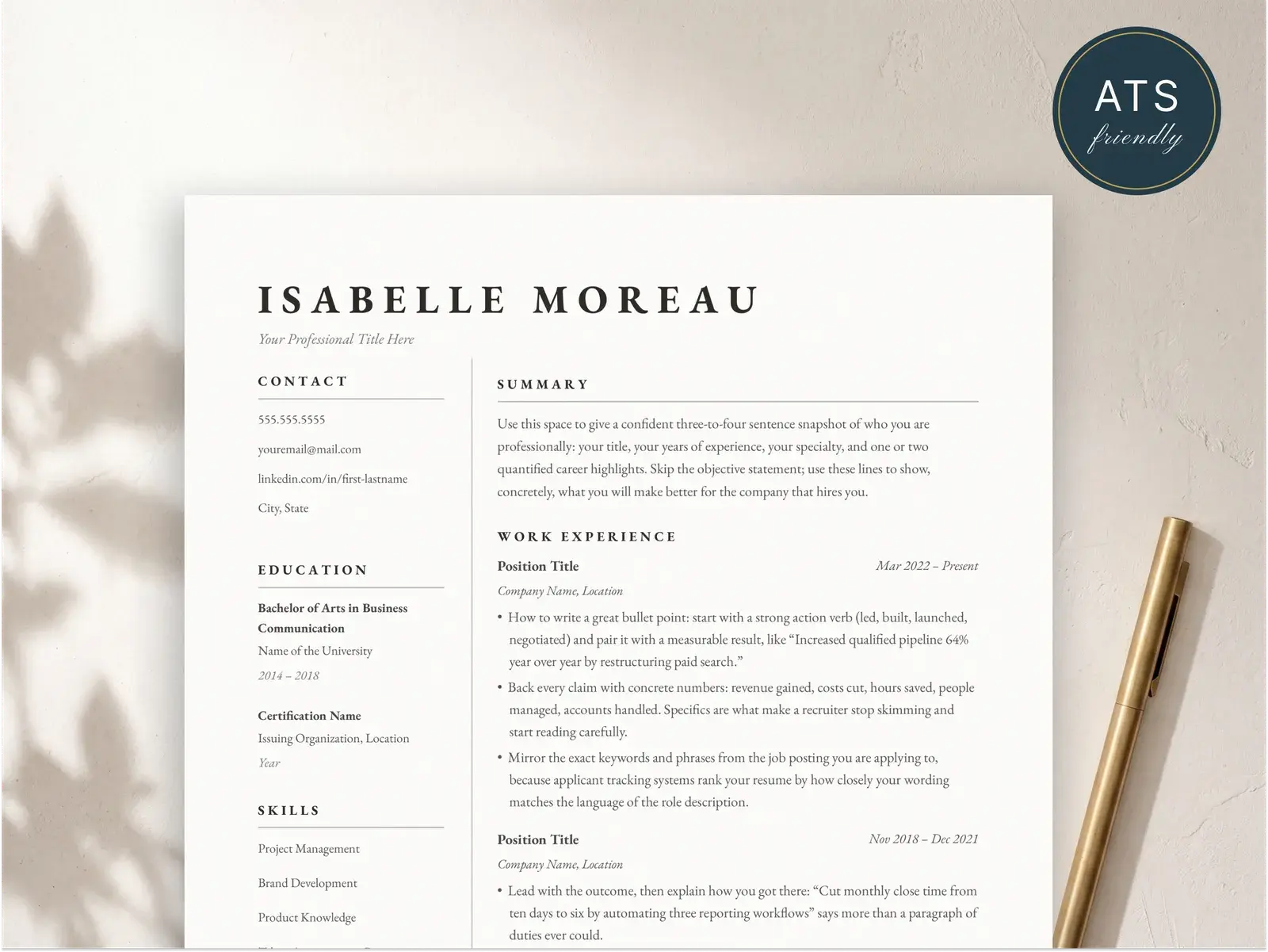
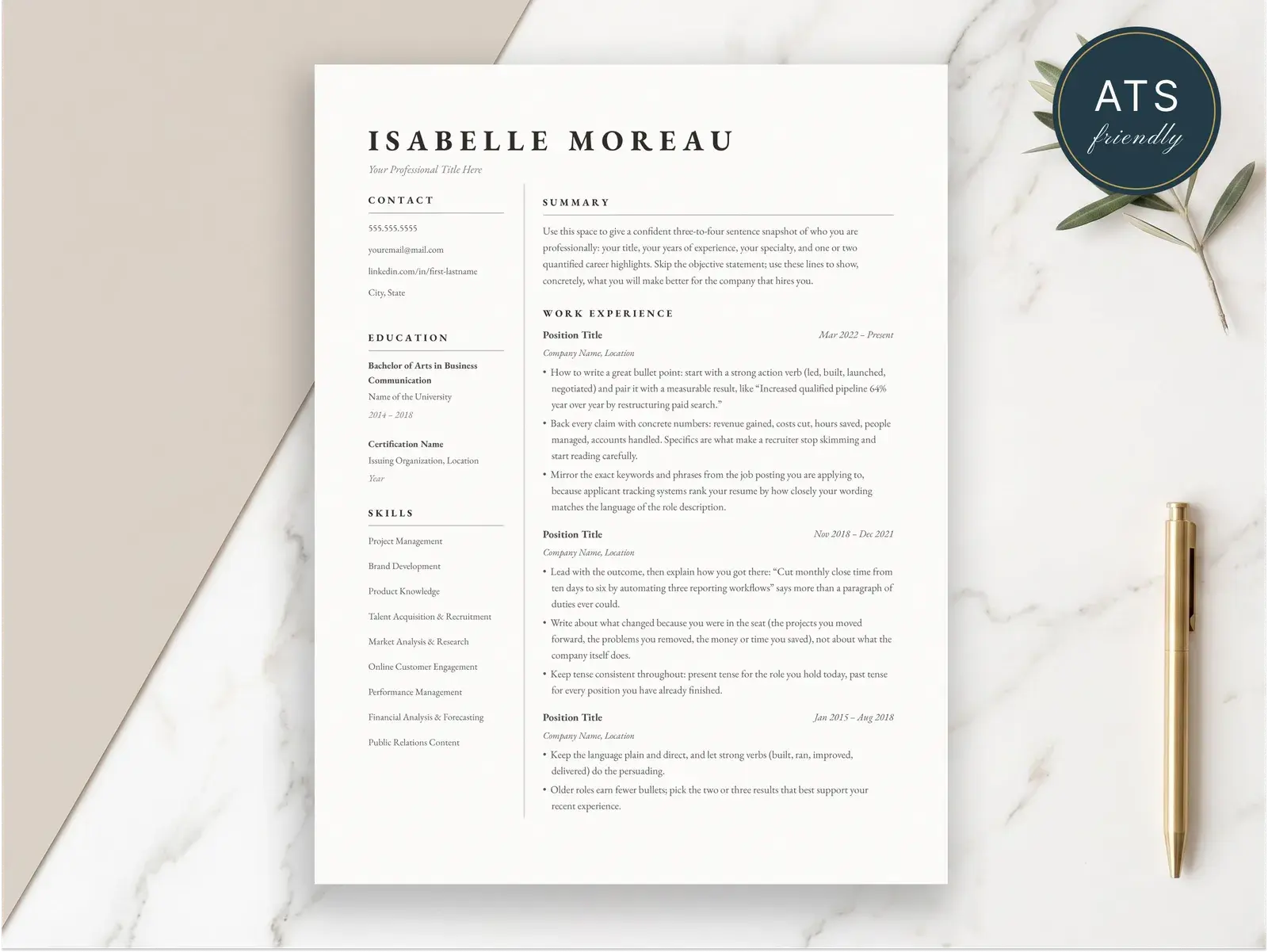
For marketing roles, aim for a clean layout that doesn’t get in the way of the content. Choose a single-column design with clear section headings, the kind built for applicant tracking systems. Keep the design restrained: if the role is creative, your portfolio link is where the visual work belongs.
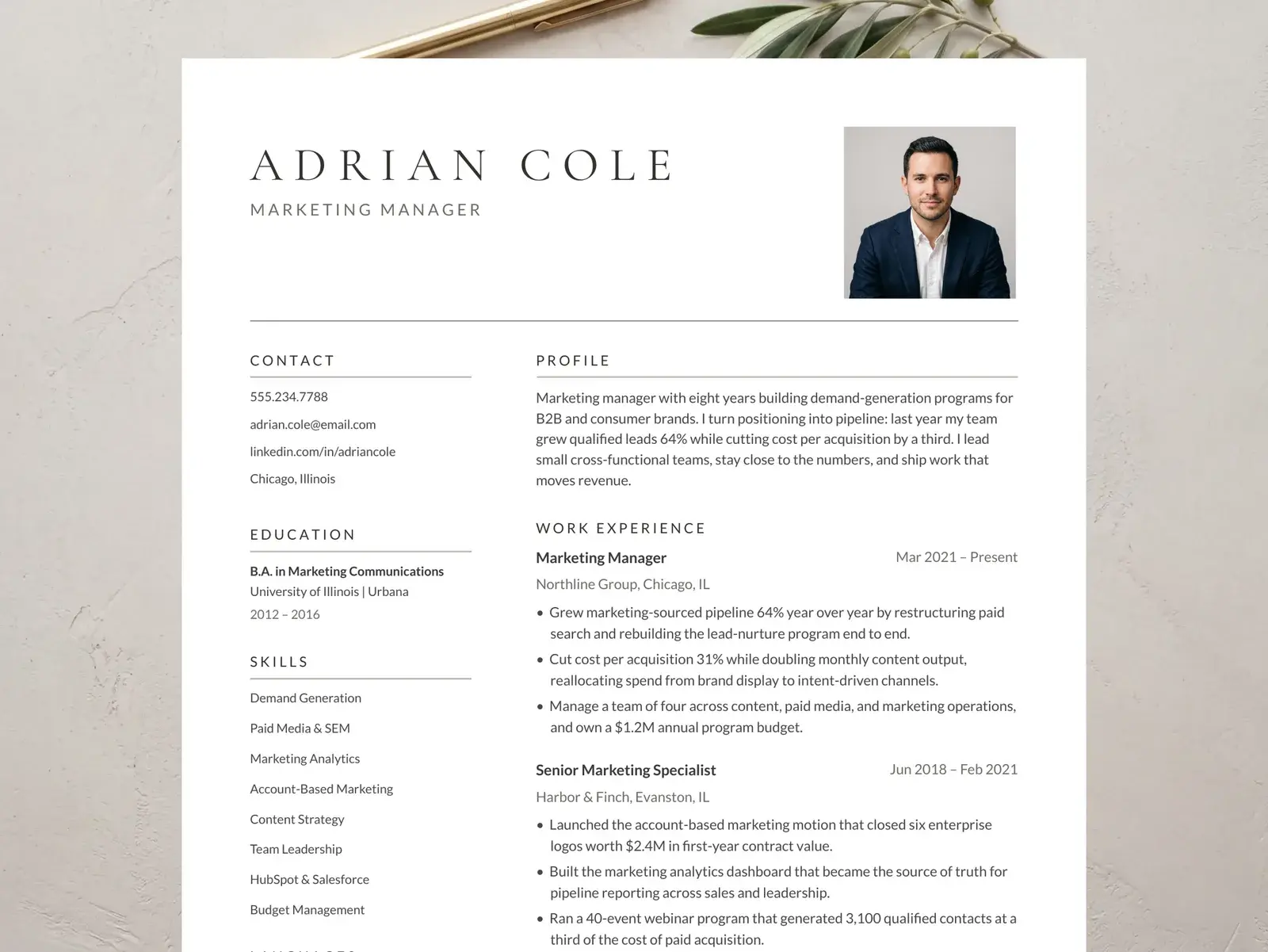
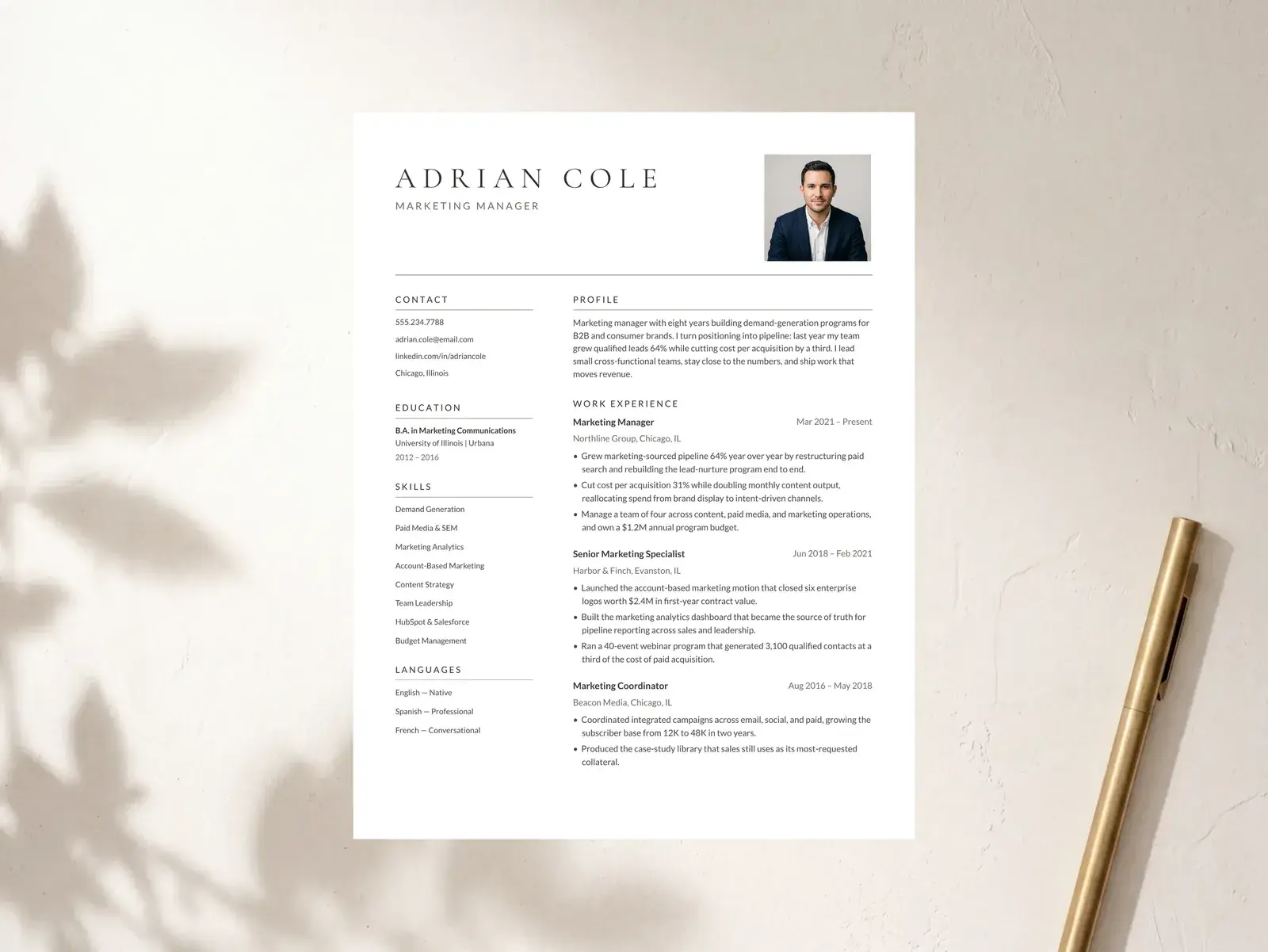
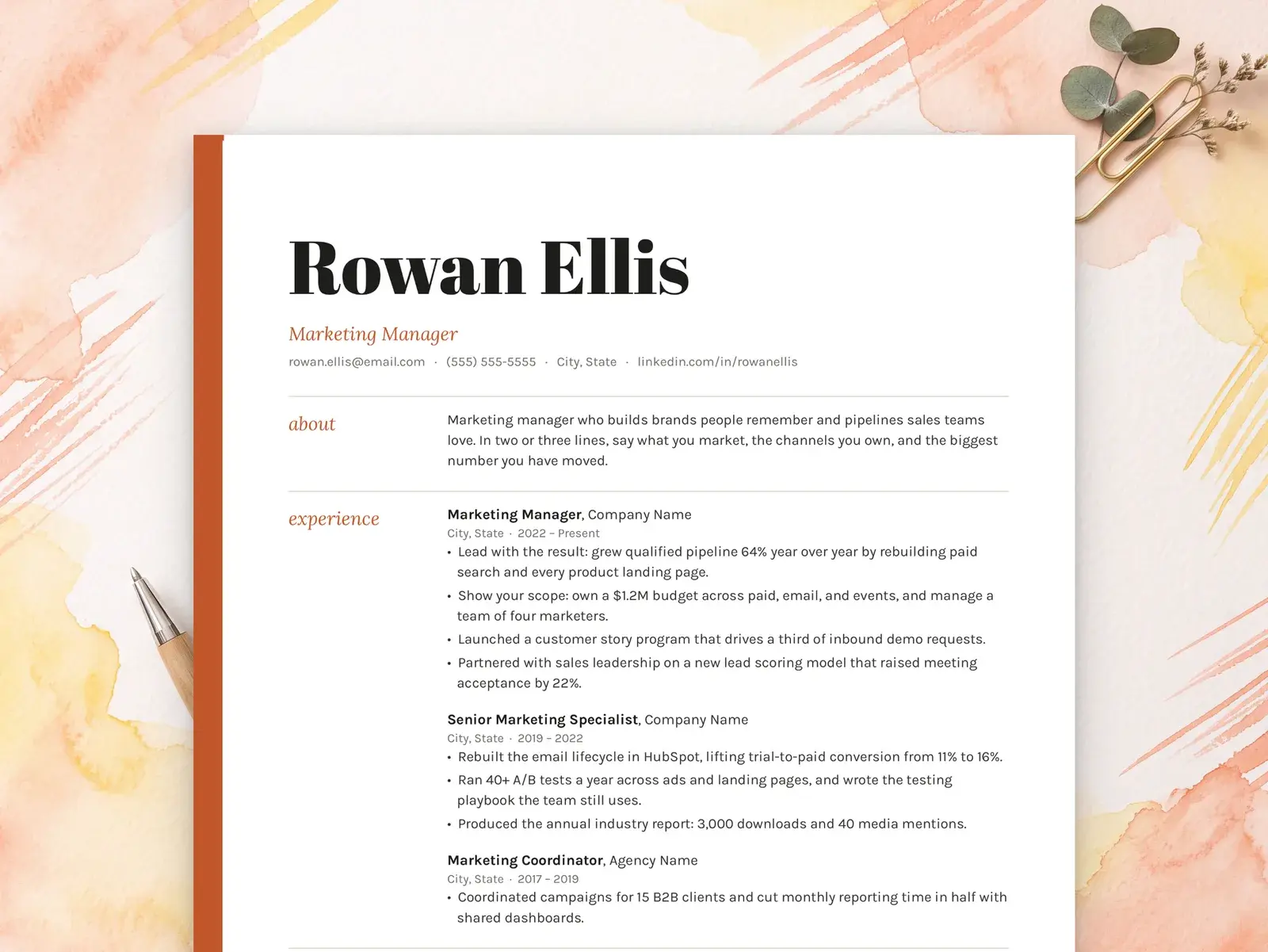
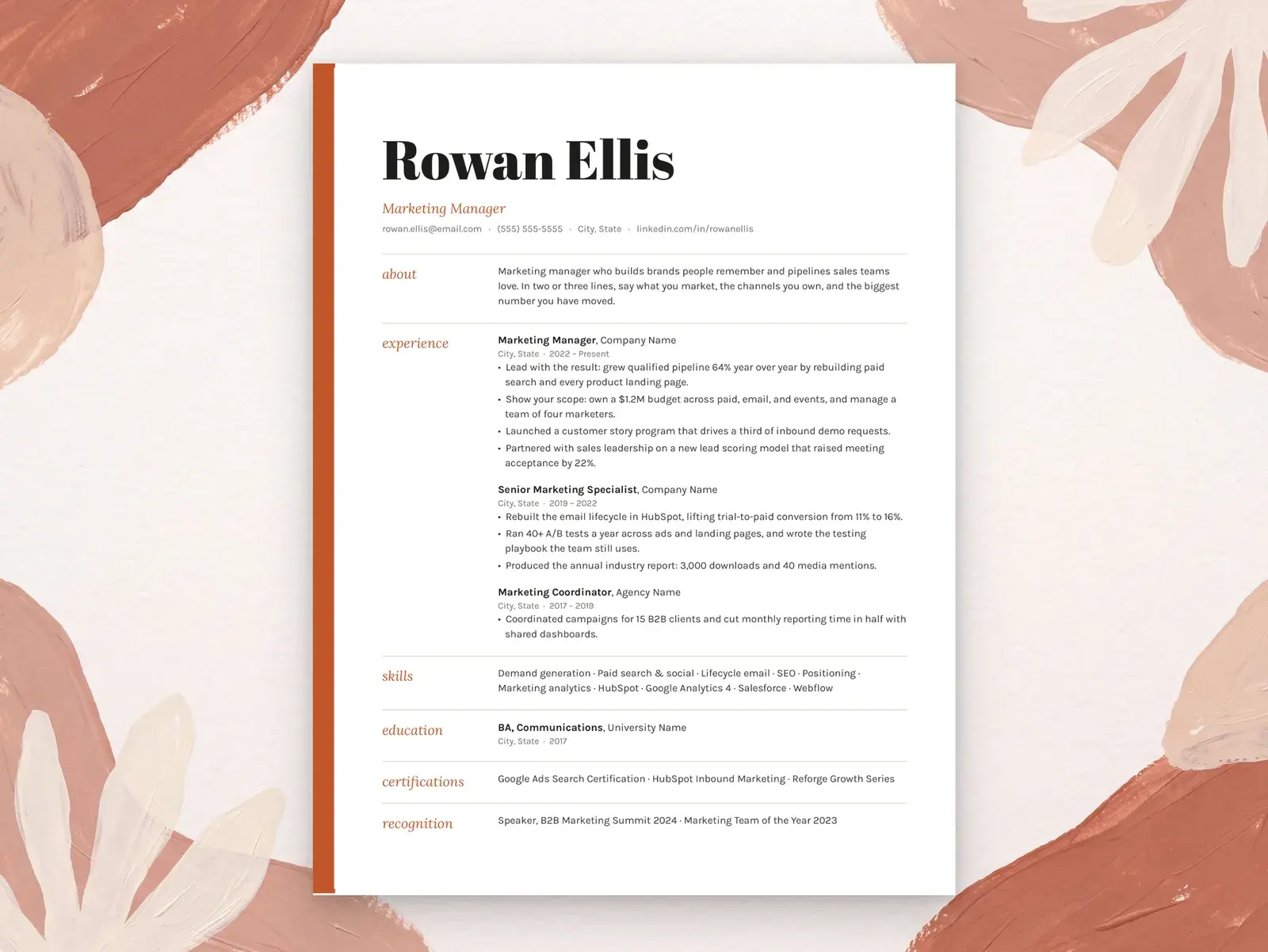
If you want a matching starting point, The Calder is our marketing resume template for Google Docs, Word, and Pages. You can also browse our marketing manager templates and our cover letter examples for other roles.
Templates for this role
Using ChatGPT to write a marketing cover letter
AI tools are useful for parts of the job: turning a messy list of results into a first draft, suggesting a tighter sentence, or checking that your letter answers what the posting asks for. The risk is that the output can sound generic, and in marketing your letter doubles as a sample of how you write.
A workflow that keeps the letter yours:
- Write your raw material first. Your two best results with numbers, the tools you used, and one specific thing you noticed about the company.
- Give the tool the posting and your notes, and ask for a draft under 300 words in the four-part structure above.
- Rewrite it out loud. Read every sentence as if you were saying it in an interview. Anything you wouldn’t say, cut or rephrase.
- Check every claim. Read the draft for skills, numbers, or details you never gave the tool. Remove anything that isn’t true; be ready to talk about every line.
- Delete the filler. Phrases like “I am thrilled to submit,” “dynamic and fast-paced,” and “proven track record” add words without adding proof.
Mistakes that weaken marketing cover letters
- Claiming passion instead of showing it. “I’m passionate about marketing” is something every applicant can write. A campaign you ran, a newsletter you started, or a sharp read on their brand shows it.
- Buzzwords without evidence. “Data-driven,” “growth mindset,” and “omnichannel” mean nothing without a result behind them. Replace each one with the thing it describes.
- Numbers without context. “Increased engagement by 200%” is hard to judge. From what, to what, over how long, and on which channel?
- Writing about yourself only. If the company’s name could be swapped for any other without changing a word, the letter isn’t tailored. The fit paragraph fixes this.
- Going long. Three dense paragraphs beat six loose ones. If it runs past a page, cut the weakest story.
- Typos. Proofread twice, then read it aloud. Check the company name and the hiring manager’s name letter by letter.
- Forgetting the portfolio. If you have work to show, link it in the header and mention one piece in the body.
Once it’s sent, log the application and set a date to check in. Our guide to the follow-up email after an application has wording you can adapt.