The short answer
The short answer
A strong NP resume does three jobs, in this order. It proves you can be credentialed: license, certification, and degree are visible in the first few lines. It shows your scope: which patients you see, in what setting, how many per day, and what you manage on your own. And it proves you’re already a nurse with judgment: RN years that show you can handle acuity, volume, or a specialty.
All three examples below follow the same skeleton and change the emphasis to suit the candidate. The new grad leans on clinical rotations and RN history. The experienced FNP leans on panel size and outcomes. The hospitalist leans on census, procedures, and interdisciplinary work. The people, employers, and numbers are illustrative, not real. Treat them as patterns to fill with your own facts.
Section order for an NP resume
Most of an NP resume is predictable, which helps: a reader can find what they need without hunting. Use this order:
- Header. Name with degree and certification after it (for example, “MSN, APRN, FNP-BC”), city and state, phone, email. A LinkedIn URL is optional.
- Summary. Two or three lines: your specialty, your setting, and one concrete strength. Examples below.
- Licenses and certifications. Near the top, not buried at the end. Details in the next section.
- NP experience or, for new grads, NP clinical rotations. This is the core of the page.
- RN experience. Its own heading, so the reader can tell your advanced practice work apart from your bedside work at a glance.
- Education. NP degree first, then the BSN. Include graduation dates.
- Clinical skills. Procedures, EHR systems, and languages. For how to choose and phrase these, see skills for a nursing resume. The same principles apply, with an advanced practice slant.
Optional sections go after these: professional memberships, quality improvement projects, precepting, and presentations. Add them only if you have something real to put there.
The license and certification block
According to the Bureau of Labor Statistics, NPs typically need at least a master’s degree in an advanced practice nursing field, and APRNs pass a national certification exam and hold an APRN license, with the exact requirements set state by state. That makes this the section a reader checks first, so make it easy to scan.
Use the exact credential your board awards. The ANCC’s family NP certification awards the FNP-BC credential, valid for five years. The AANP Certification Board runs its own exams, including family (FNP) and adult-gerontology primary care (AGNP), so copy the designation exactly as it appears on your AANPCB certificate. Don’t write “board certified FNP” when the credential has a precise name.
A clean format, one line per item:
Family Nurse Practitioner, Board Certified (FNP-BC), ANCC — exp. 08/2031
APRN License, State of Ohio — exp. 10/2027
RN License, State of Ohio — exp. 10/2027
BLS, American Heart Association — exp. 03/2027
Add any other licenses that matter for the role, such as additional state licenses or a prescribing registration if you hold one, in the same format. Expiration dates answer an obvious follow-up question before anyone has to ask it.
Example 1: new grad family nurse practitioner
The new grad’s challenge is having NP training but no NP job. The fix is to treat the clinical rotations as the experience section, with hours, settings, and real visit types, and to let several years of RN work back them up. If you’re earlier in the pipeline, our guide to the new grad nursing resume covers the RN version of this problem, and the nursing student resume covers the stage before that.
DANIELLE OKAFOR, MSN, APRN, FNP-BC
Columbus, OH | (555) 314-2290 | d.okafor@email.com
Newly certified family nurse practitioner with 780 supervised clinical hours across primary care, urgent care, and pediatrics, and four years of med-surg RN experience. Seeking a primary care NP role where patients get continuity across visits.
LICENSES & CERTIFICATIONS
FNP-BC, ANCC — exp. 06/2031
APRN and RN License, Ohio | BLS, AHA
NP CLINICAL ROTATIONS
Family Medicine — Riverbend Community Health, 280 hours
• Managed 10–14 patients per day under preceptor supervision, covering wellness exams, diabetes and hypertension follow-ups, and acute visits
• Ordered and interpreted labs, adjusted medication regimens, and wrote plans reviewed and co-signed by the preceptor
Urgent Care — QuickCare Clinic, 200 hours
• Assessed and treated common acute presentations: respiratory infections, minor lacerations, sprains, and UTIs
• Performed simple laceration repairs, incision and drainage, and splinting under direct supervision
Pediatrics — Northside Pediatric Associates, 140 hours
• Conducted well-child visits from newborn to adolescent, including developmental screening and vaccine counseling for hesitant parents
RN EXPERIENCE
Registered Nurse, Medical-Surgical — Mercy Valley Hospital
2021 – 2025
• Cared for 5–6 patients per shift on a 32-bed unit; charge nurse on rotation for the final two years
• Led the unit’s discharge teaching workgroup, rewriting patient handouts for heart failure and new insulin starts
EDUCATION
MSN, Family Nurse Practitioner — Ohio State University, 2025
BSN — University of Toledo, 2021
SKILLS
Epic, eClinicalWorks | Laceration repair, I&D, splinting, pap smears | Spanish (conversational)
Why it works: the summary gives hours and RN years as numbers instead of adjectives. Each rotation has a setting, an hour count, and a description of what she managed, and the wording about supervision is honest without underselling. The RN section is short but shows leadership (charge nurse, the workgroup), which gives a new provider credibility.
Example 2: experienced family nurse practitioner
Once you have a few years of practice, the rotations come off and the page centers on panel size, visit volume, independence, and anything you improved. RN history shrinks to a line or two.
MARCUS ELLWOOD, DNP, APRN, FNP-C
Raleigh, NC | (555) 880-1173 | marcus.ellwood@email.com
Family nurse practitioner with seven years in outpatient primary care, carrying a panel of about 1,400 patients with a focus on chronic disease management. Built and ran a clinic-wide diabetes group visit program.
LICENSES & CERTIFICATIONS
FNP-C, AANPCB — exp. 04/2029
RN License and state NP credential, North Carolina | BLS, AHA
NP EXPERIENCE
Family Nurse Practitioner — Oak Hollow Primary Care
2021 – Present
• Manage a panel of about 1,400 adult and pediatric patients, seeing 18–22 per day across wellness, chronic care, and same-day acute visits
• Designed a monthly diabetes group visit program; enrolled patients’ average A1c fell from 8.9 to 7.8 over 12 months
• Precept two NP students per year and onboarded three newly hired NPs to the clinic’s templates and workflows
• Serve on the quality committee; led the push that raised the clinic’s colorectal screening completion rate by 14 points
Family Nurse Practitioner — Cardinal Urgent & Family Care
2019 – 2021
• Saw 25–35 patients per shift in a combined urgent and family care clinic; performed procedures including joint injections and skin biopsies
RN EXPERIENCE
Registered Nurse, Emergency Department — Wake Regional, 2013 – 2019
EDUCATION
DNP — Duke University, 2023
MSN, Family Nurse Practitioner — East Carolina University, 2019
BSN — UNC Greensboro, 2013
SKILLS
Epic, athenahealth | Joint injections, skin biopsy, IUD and Nexplanon insertion | Group visit design, precepting
Why it works: panel size and daily volume tell the reader how much he can carry before the interview starts. The diabetes and screening bullets show results, not just duties. Older roles are cut down to one bullet or a single line, which keeps the resume to two pages and the focus on the current job.
Example 3: acute care hospitalist nurse practitioner
Hospital NP resumes swap panel size for census, and swap visit types for admissions, procedures, and rapid responses. Teamwork with physicians, residents, and specialists also matters more, because so much of the work happens across a team.
PRIYA RAMANATHAN, MSN, APRN, AGACNP-BC
Denver, CO | (555) 602-4418 | priya.ramanathan@email.com
Adult-gerontology acute care NP with four years on a hospitalist service and six years of ICU nursing before that. Comfortable managing high census days, admissions from the ED, and overnight cross-cover.
LICENSES & CERTIFICATIONS
AGACNP-BC, ANCC — exp. 09/2027
RN License and state APRN credential, Colorado | ACLS, BLS, AHA
NP EXPERIENCE
Hospitalist Nurse Practitioner — Front Range Medical Center
2022 – Present
• Carry a daily census of 14–18 patients on the hospitalist service, from admission H&P through discharge summary
• Admit 4–6 patients per night shift from the ED and provide cross-cover for about 90 inpatients
• Respond to rapid responses and codes as the first provider on scene, stabilizing and escalating to ICU when needed
• Co-led a discharge-before-noon workflow with case management that moved the service’s average discharge time two hours earlier
RN EXPERIENCE
Registered Nurse, Medical ICU — St. Brendan Hospital
2016 – 2022
• Cared for ventilated, septic, and post-arrest patients; member of the unit’s sepsis bundle compliance team
EDUCATION
MSN, Adult-Gerontology Acute Care NP — University of Colorado, 2022
BSN — Regis University, 2016
SKILLS
Cerner, Epic | Arterial line placement, paracentesis, thoracentesis (ultrasound-guided) | Hindi, Tamil
Why it works: census, admissions, and cross-cover numbers describe the actual workload of a hospitalist job. Procedures are listed by name. The ICU background is short but matters, since it explains why she’s steady at a rapid response.
Bullets by practice setting
The pattern behind every bullet above is what you managed + for whom + at what volume or with what result. NP work is easy to count, so put the numbers in: patients per day, panel size, census, procedures, screening rates. Here are some patterns to adapt for other settings.
Psychiatric mental health NP
• Manage medication for a caseload of about 300 outpatients with depression, anxiety, bipolar disorder, and ADHD, seeing 12–15 per day in a mix of in-person and telehealth visits
• Built a shared intake template with the therapy team, cutting time from referral to first appointment from five weeks to three
Women’s health NP
• Provide annual exams, contraception counseling, prenatal visits through 28 weeks, and menopause management for 16–20 patients per day
• Perform IUD and implant insertions and removals, colposcopy referrals, and endometrial biopsies
Specialty clinic NP (cardiology, oncology, and similar)
• Run an independent heart failure follow-up clinic, titrating guideline-directed therapy for about 120 patients between cardiologist visits
• Created a 72-hour post-discharge call protocol adopted across the practice’s three locations
Turning a weak bullet into a strong one
Before and after
Responsible for seeing patients in primary care.
See 18–22 patients per day across wellness, chronic disease, and same-day acute visits in a three-provider family practice.
Before and after
Helped improve diabetes care.
Launched monthly diabetes group visits for 40 enrolled patients; average A1c in the group dropped by more than a point in a year.
If you don’t track an outcome, don’t make one up. Volume, scope, and independence (“manage independently,” “first provider on scene,” “precept”) already carry a lot of weight.
Summary lines for different situations
The summary is two or three lines that tell the reader which pile to put you in. Name the specialty, the setting, and one specific thing. Here are four patterns:
New grad, RN background in the same specialty
Newly certified psychiatric mental health NP with five years of inpatient psych RN experience and 780 clinical hours in outpatient and community mental health settings.
New grad, changing settings
New family NP moving from eight years of ICU nursing to primary care, with a primary care rotation in a federally funded community clinic and a particular interest in chronic disease.
Experienced, same specialty
Women’s health NP with six years in a high-volume OB/GYN practice, skilled in in-office procedures and contraception counseling.
Experienced, moving into a specialty
Family NP with five years in primary care, three of them managing the practice’s heart failure patients, now seeking a cardiology clinic role.
Skip phrases like “compassionate, dedicated provider.” They tell a reader little on their own, and the bullets should show those qualities anyway.
Format, length, and templates
Length. One page for a new grad. Up to two for an experienced NP. If a posting asks for a CV, switch to a CV format that adds publications, presentations, teaching, and committee work, and don’t worry about page count.
Layout. Use a single column with clear section headings. Put dates on the right and credentials after the name. Keep key information in plain text rather than text boxes and graphics. Write out each credential once in full (for example, “Family Nurse Practitioner, Board Certified”) as well as the abbreviation, so both forms appear on the page.
Tailoring. Read the posting for the setting, patient population, and procedures it names. Then reorder your skills line and adjust the summary to match. A primary care job and an urgent care job want the same FNP described in different ways.
File type. Send a PDF unless the application asks for a Word file, and name it with your name and credential, for example Okafor-FNP-Resume.pdf.
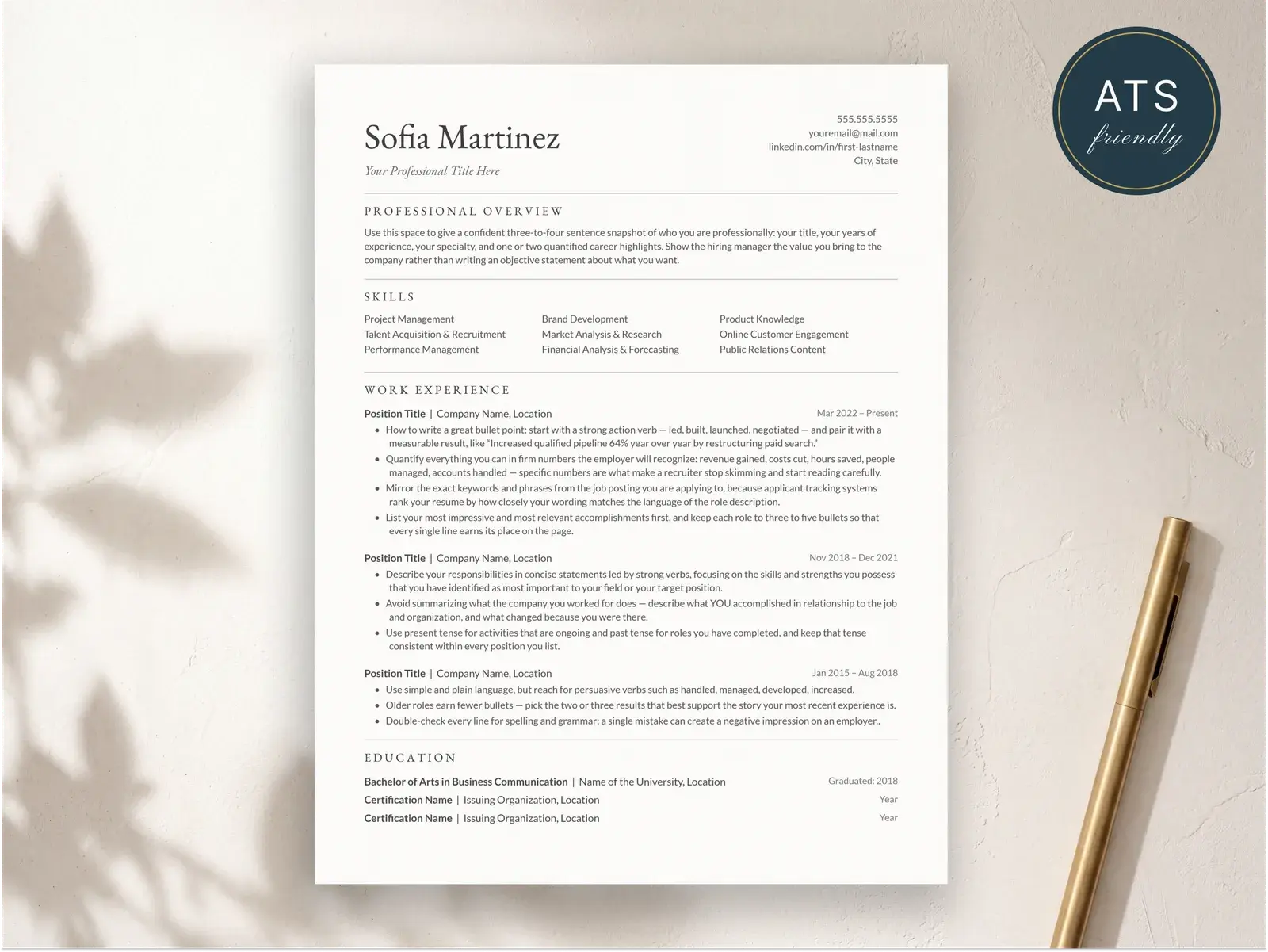
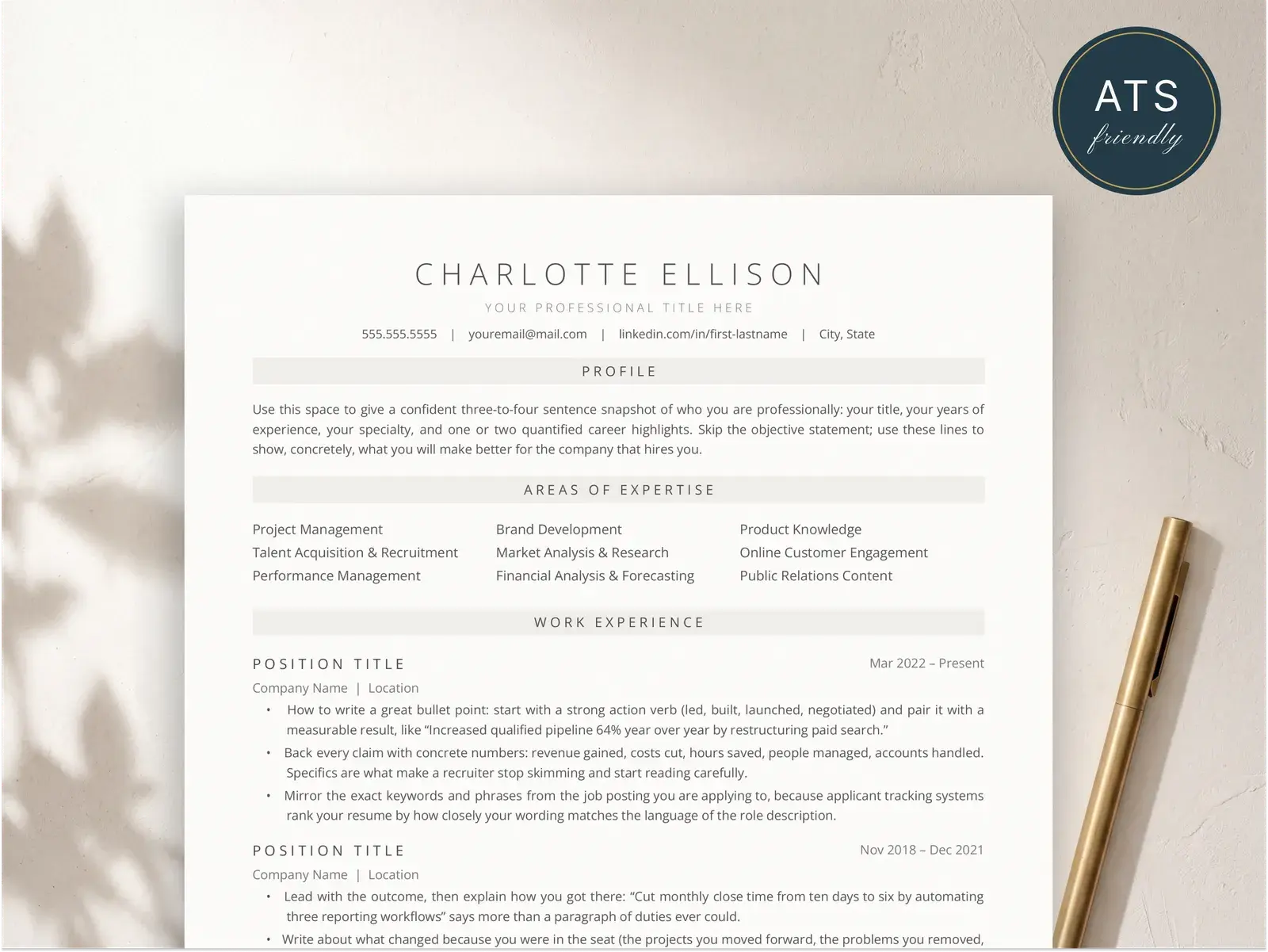
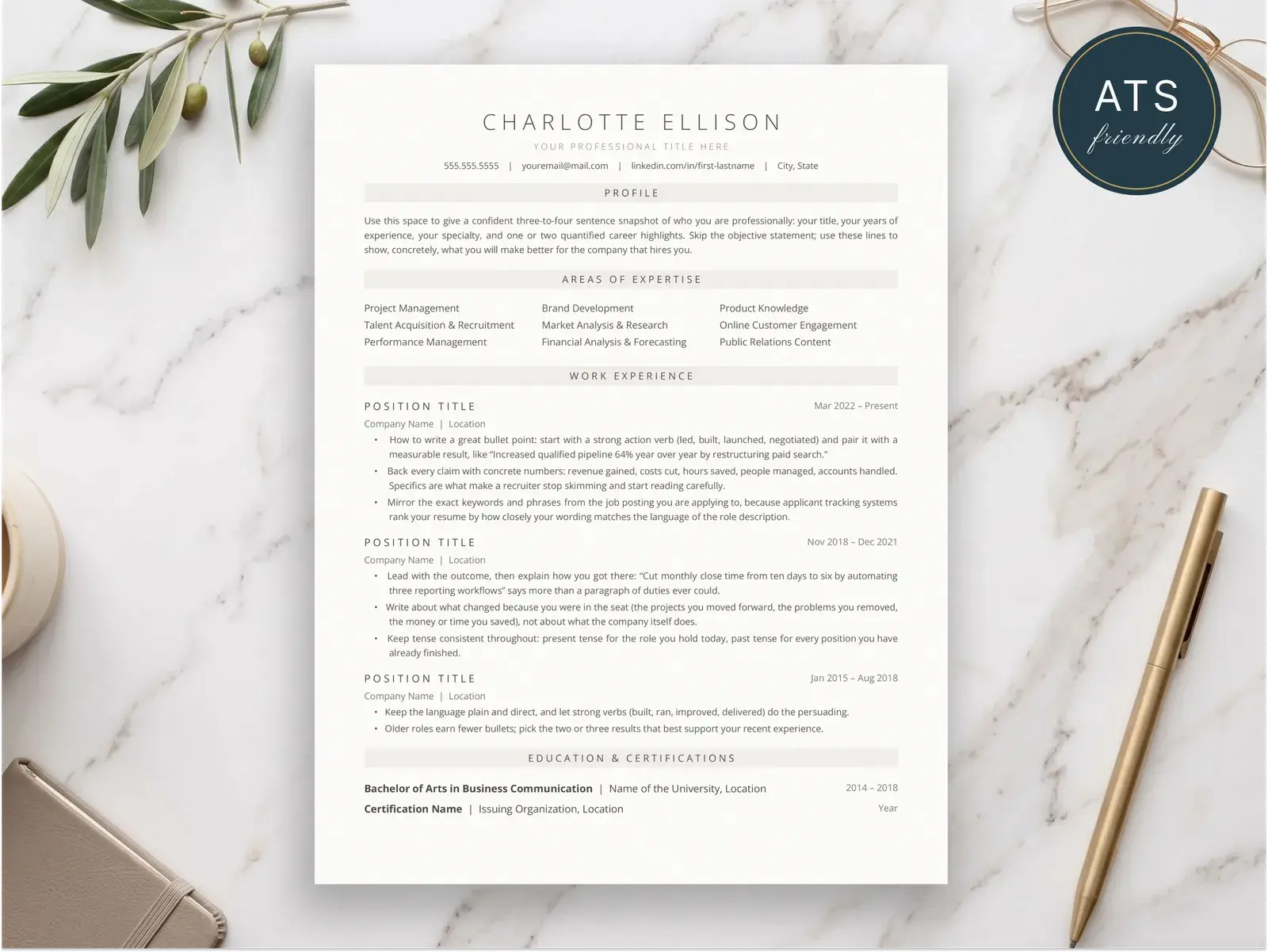
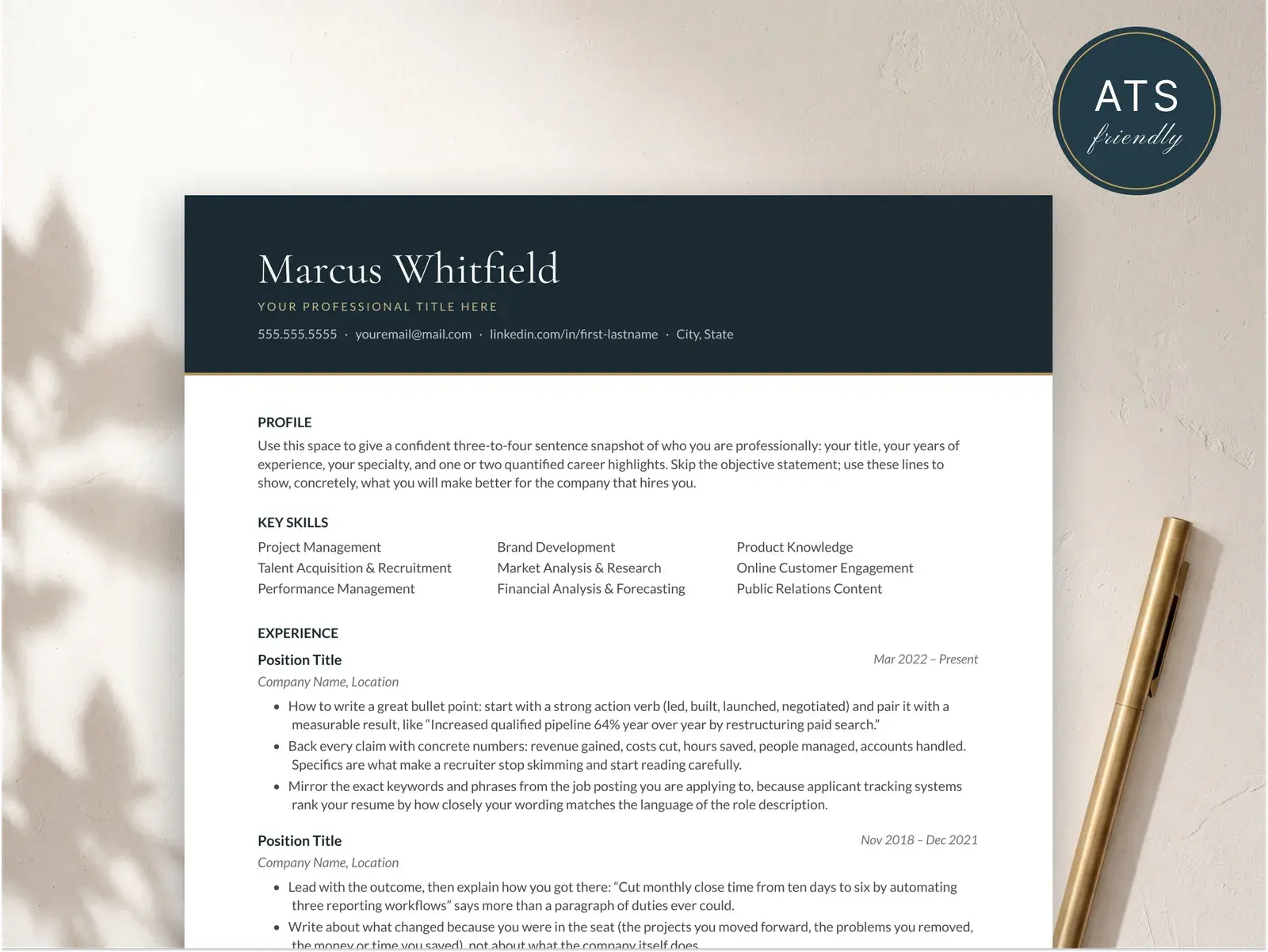
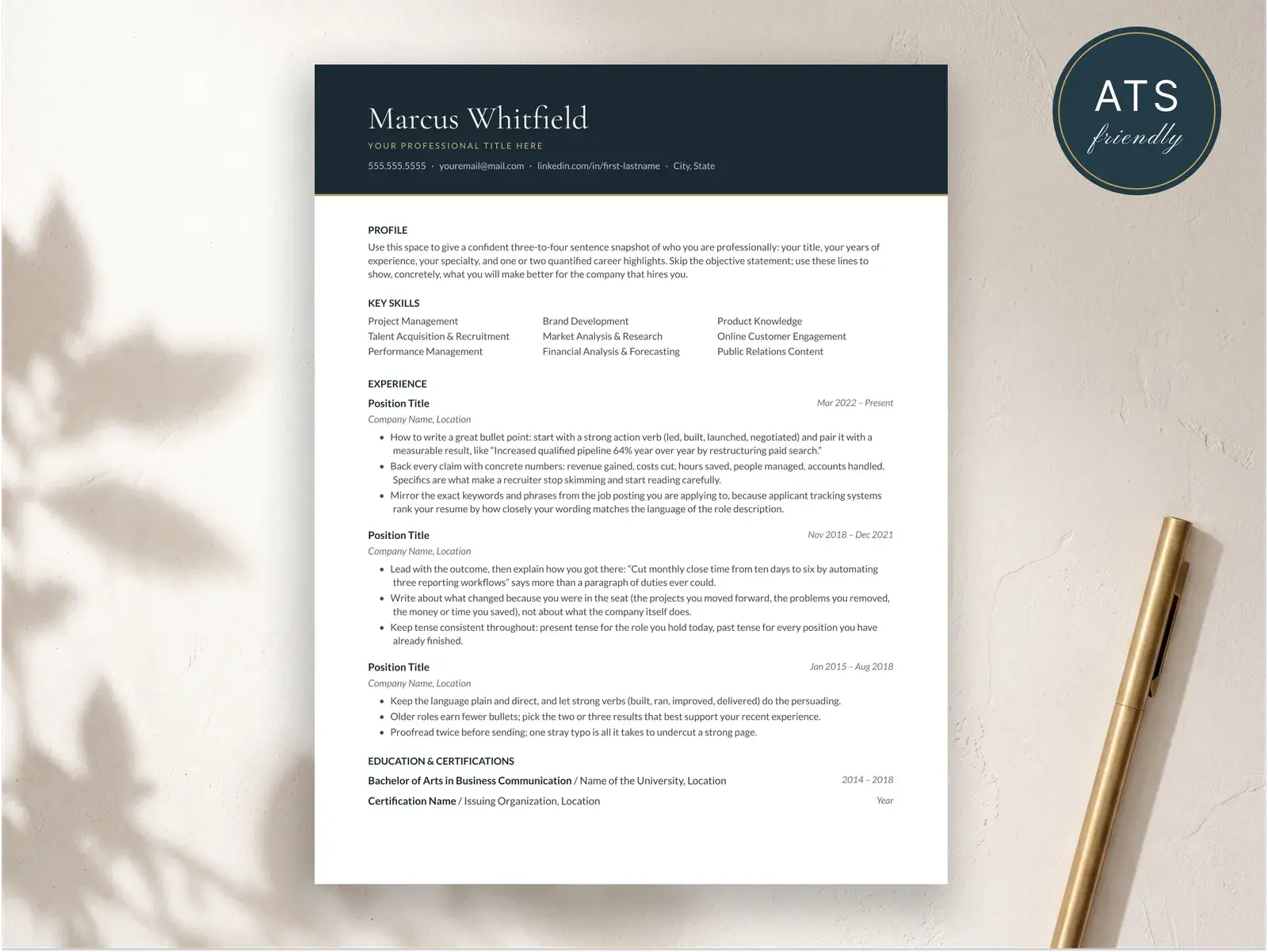
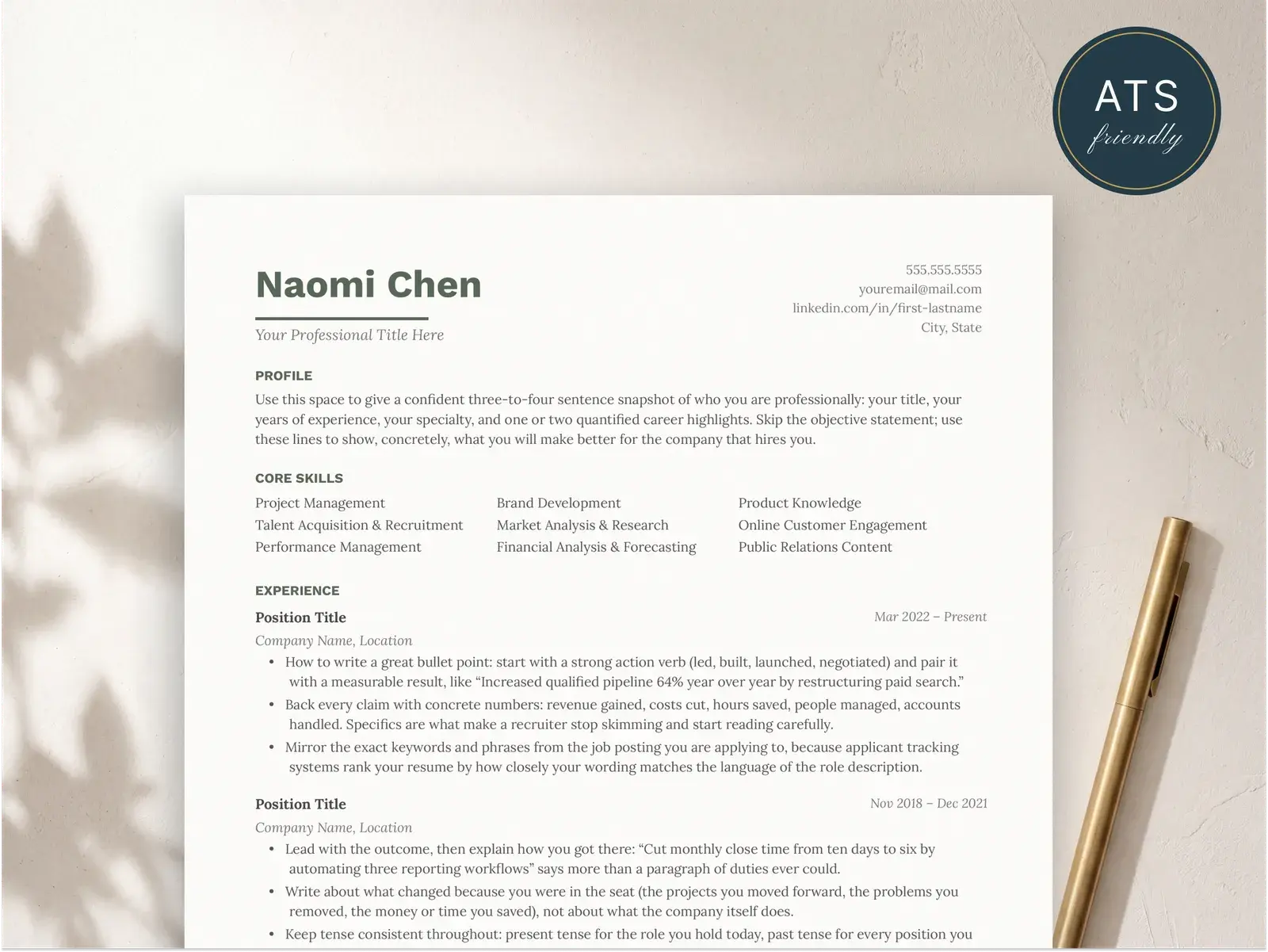
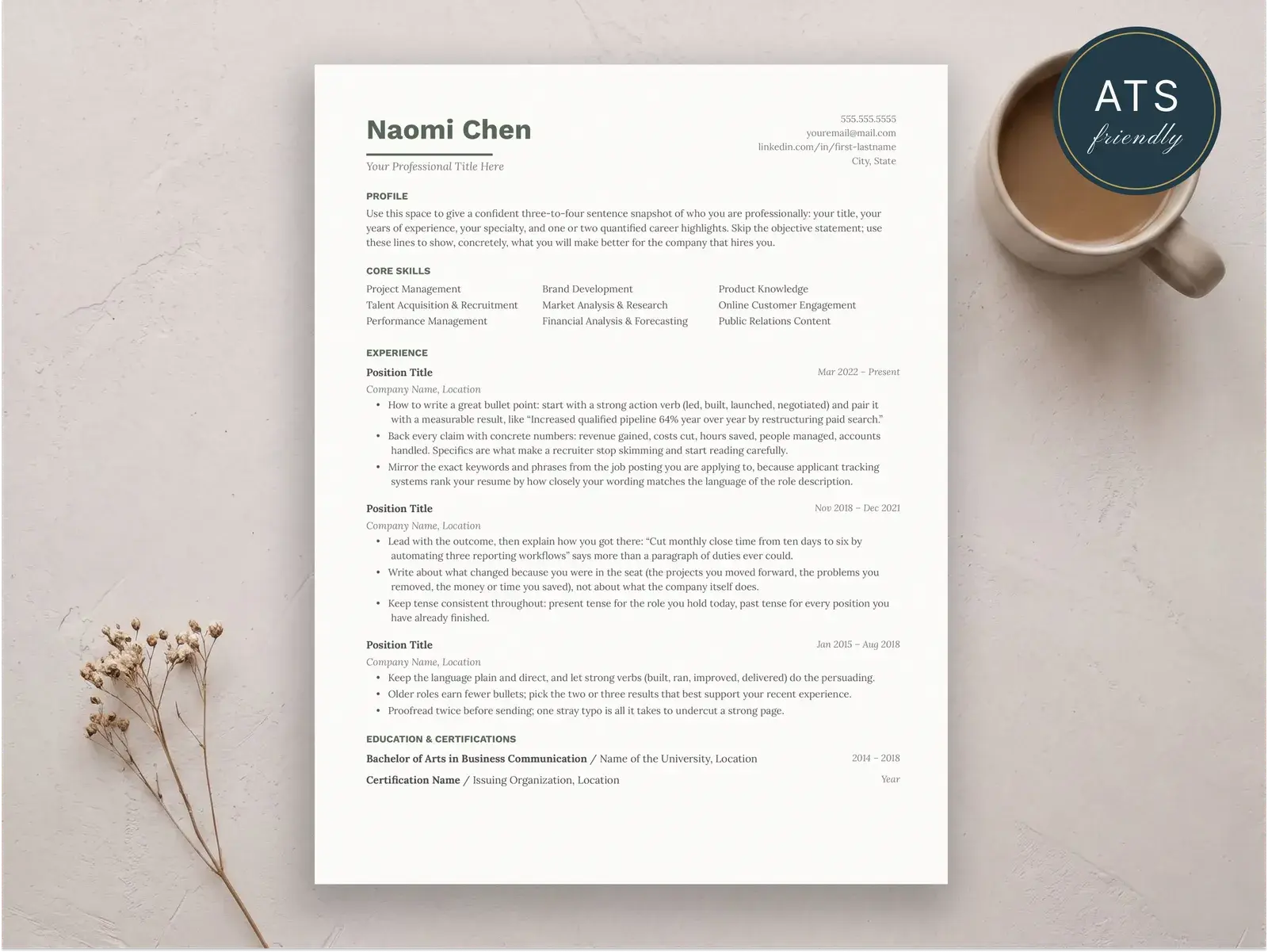
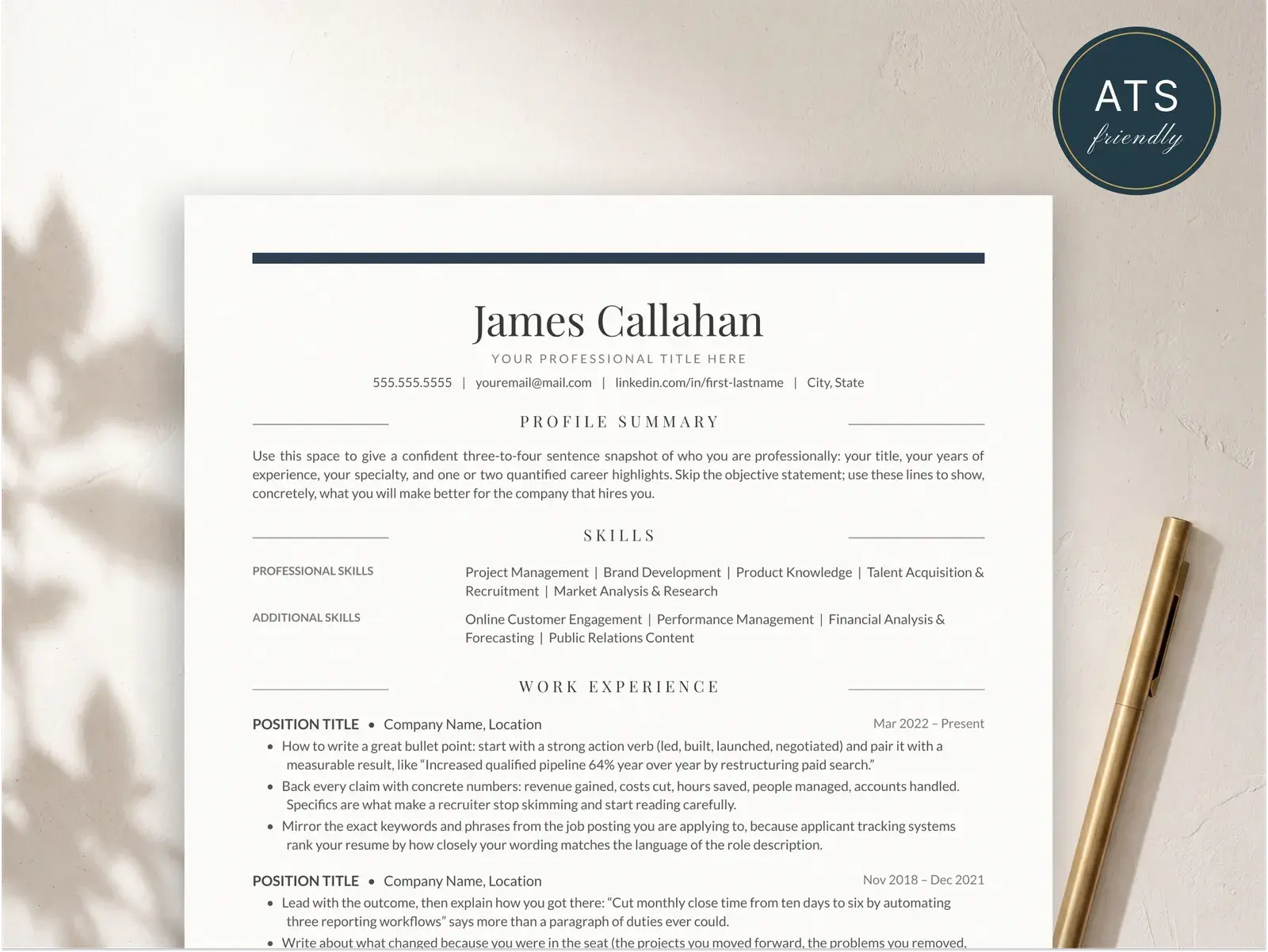
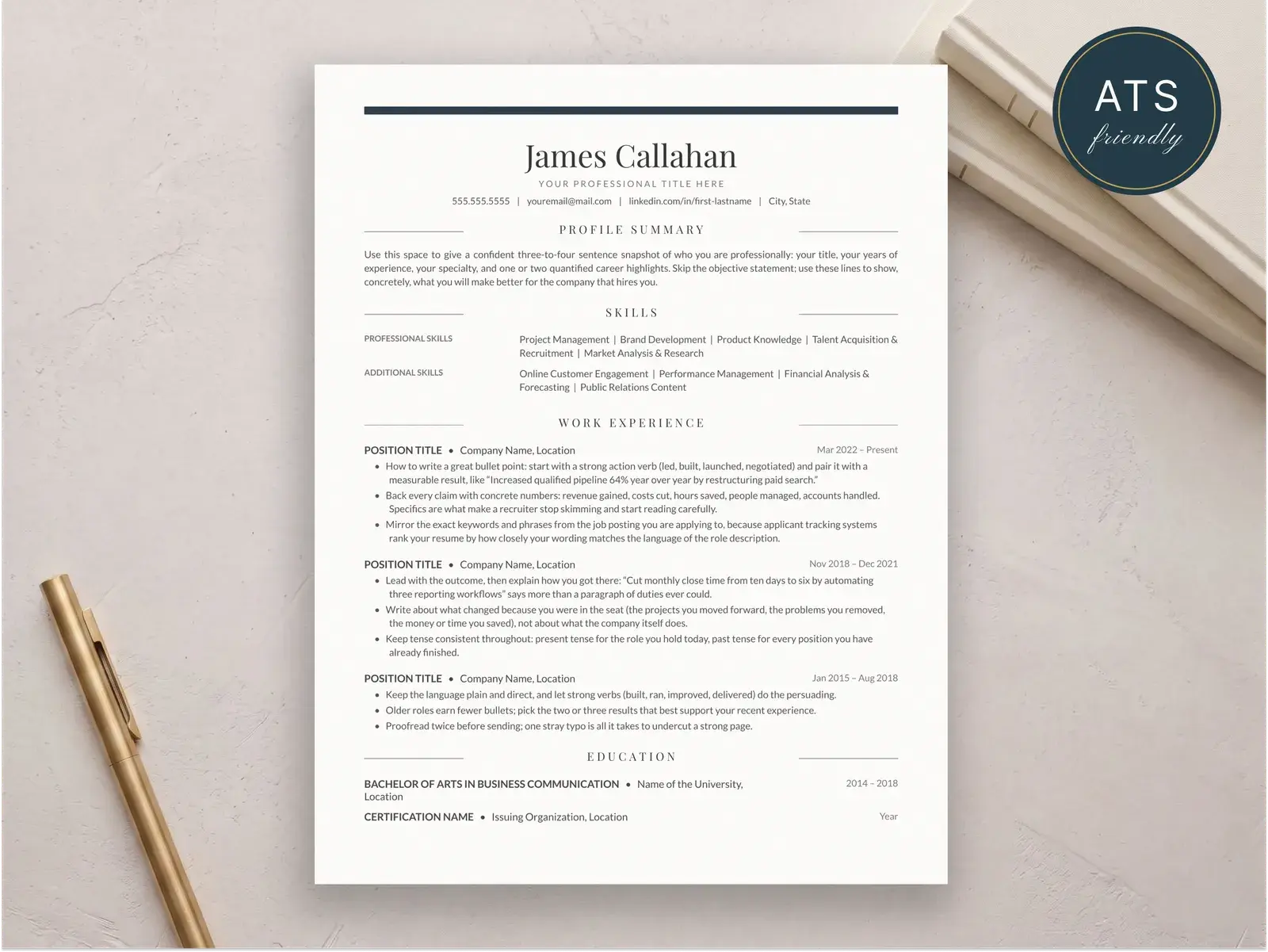
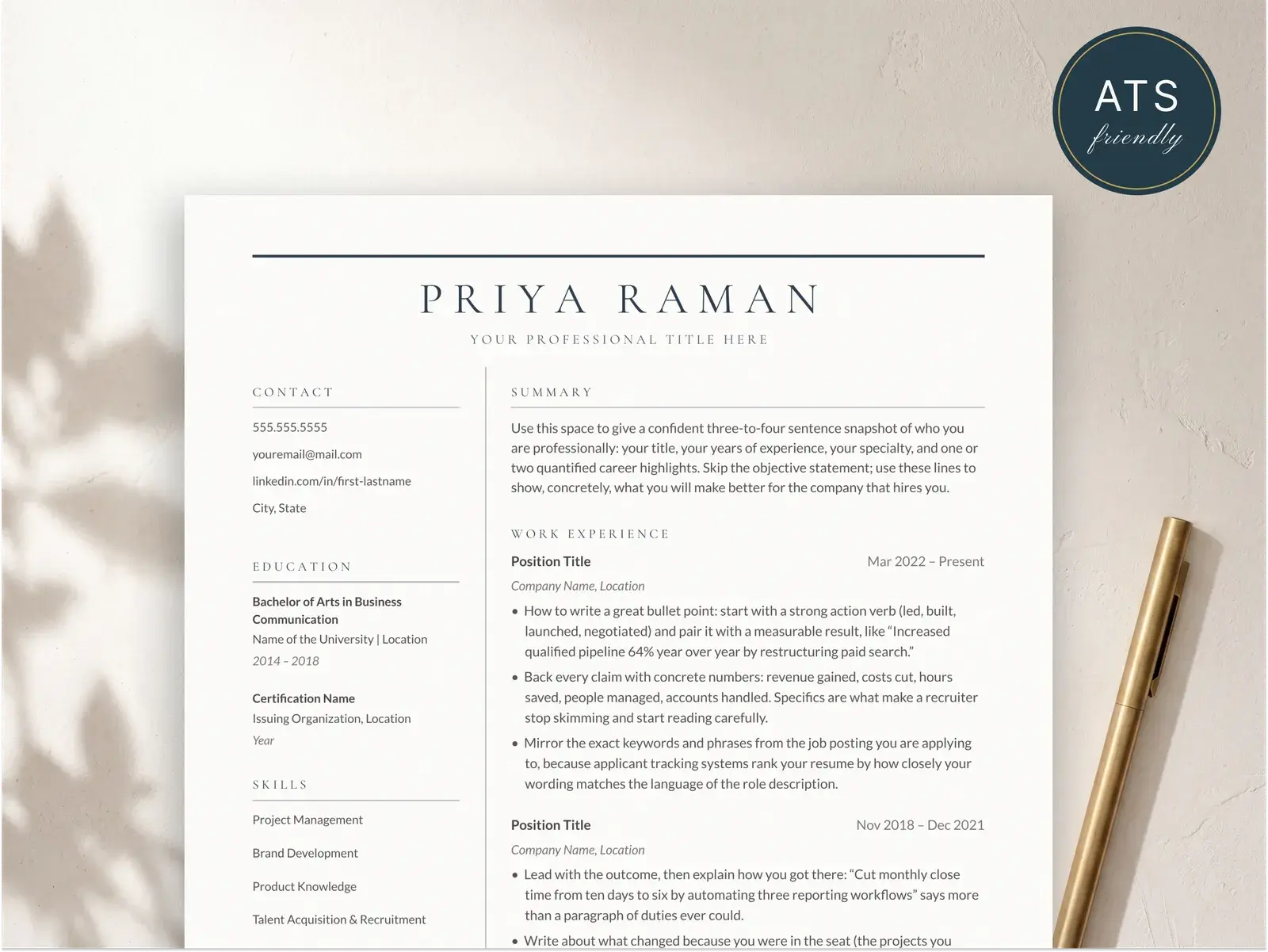
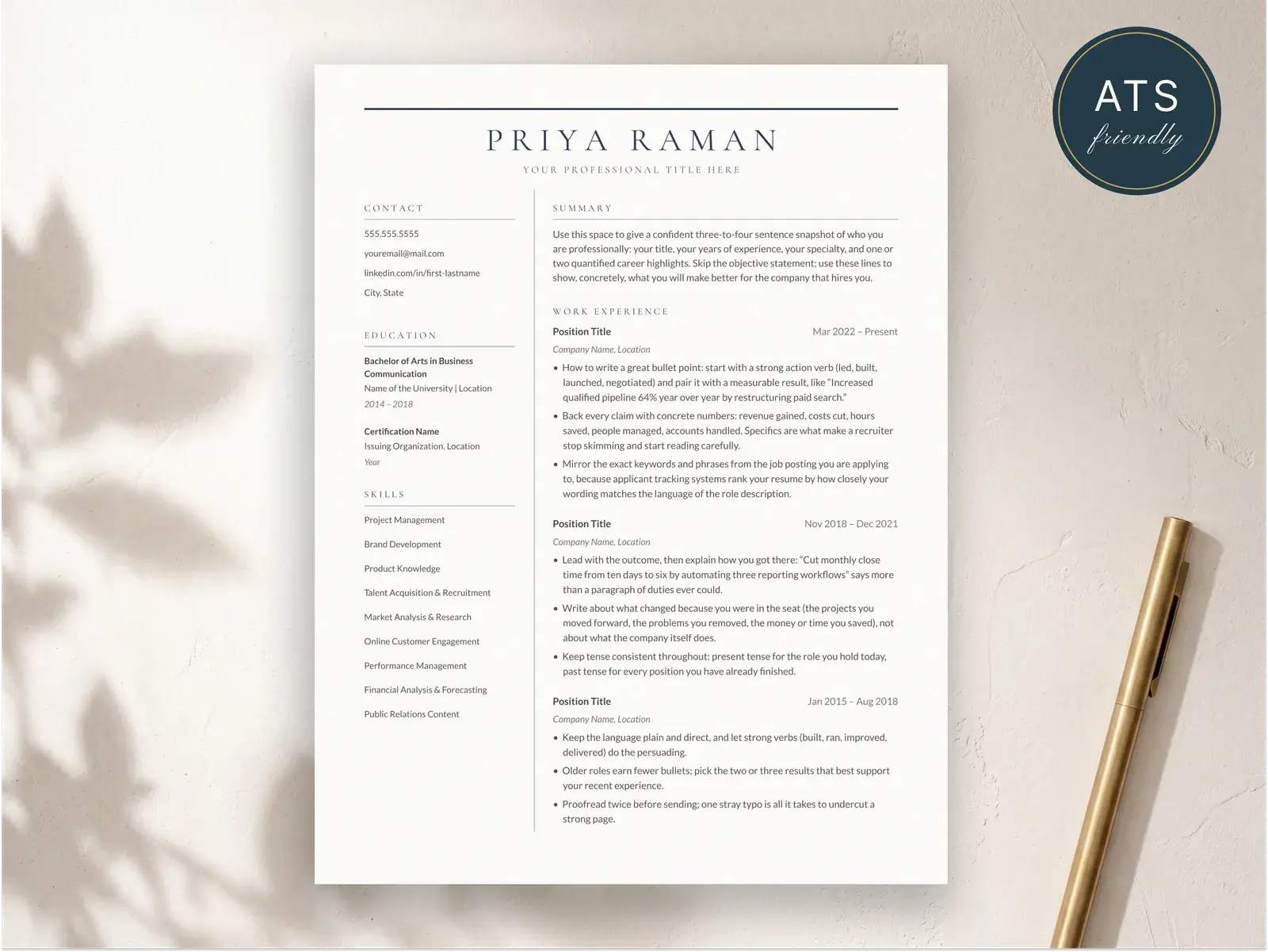
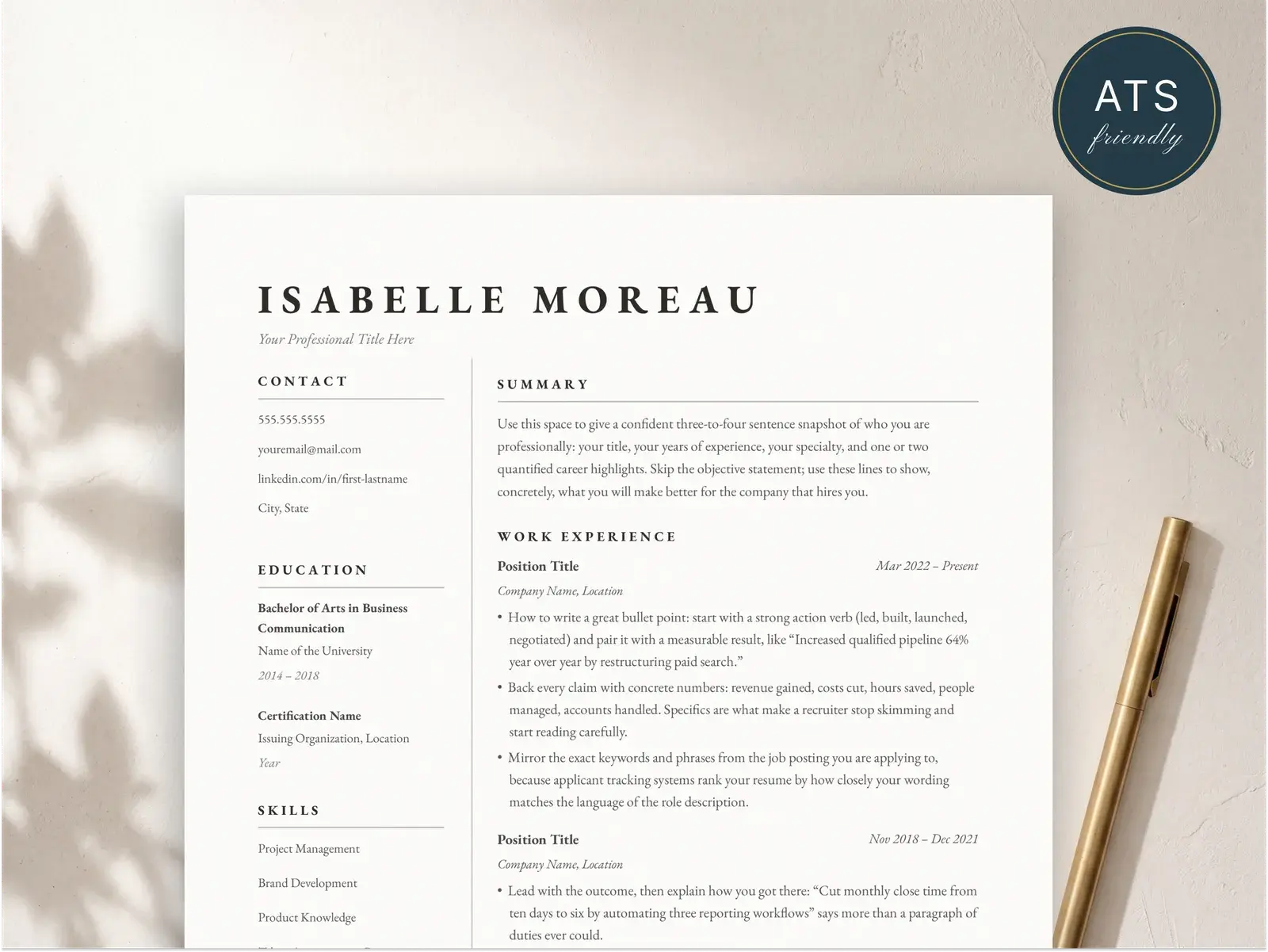
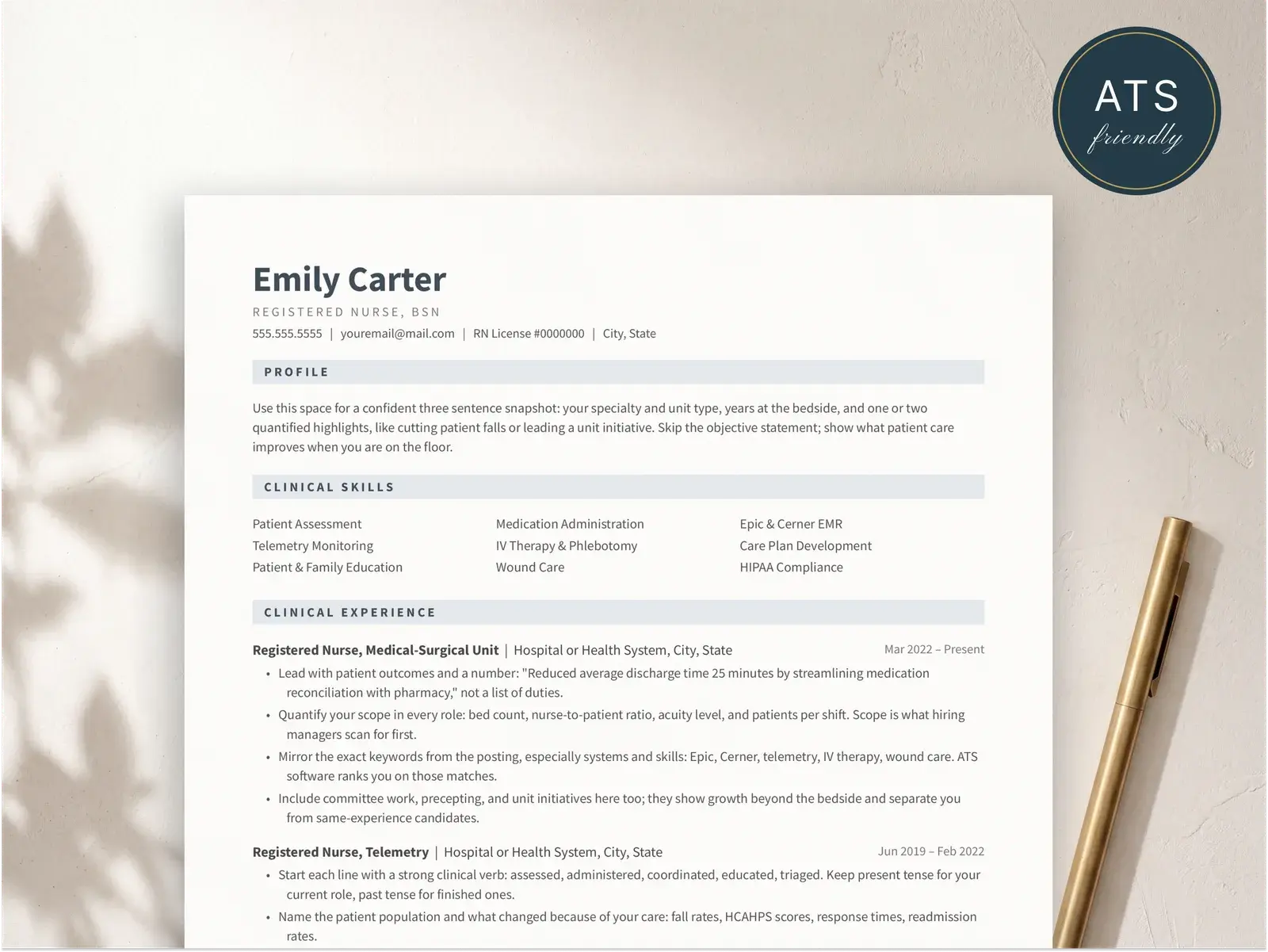
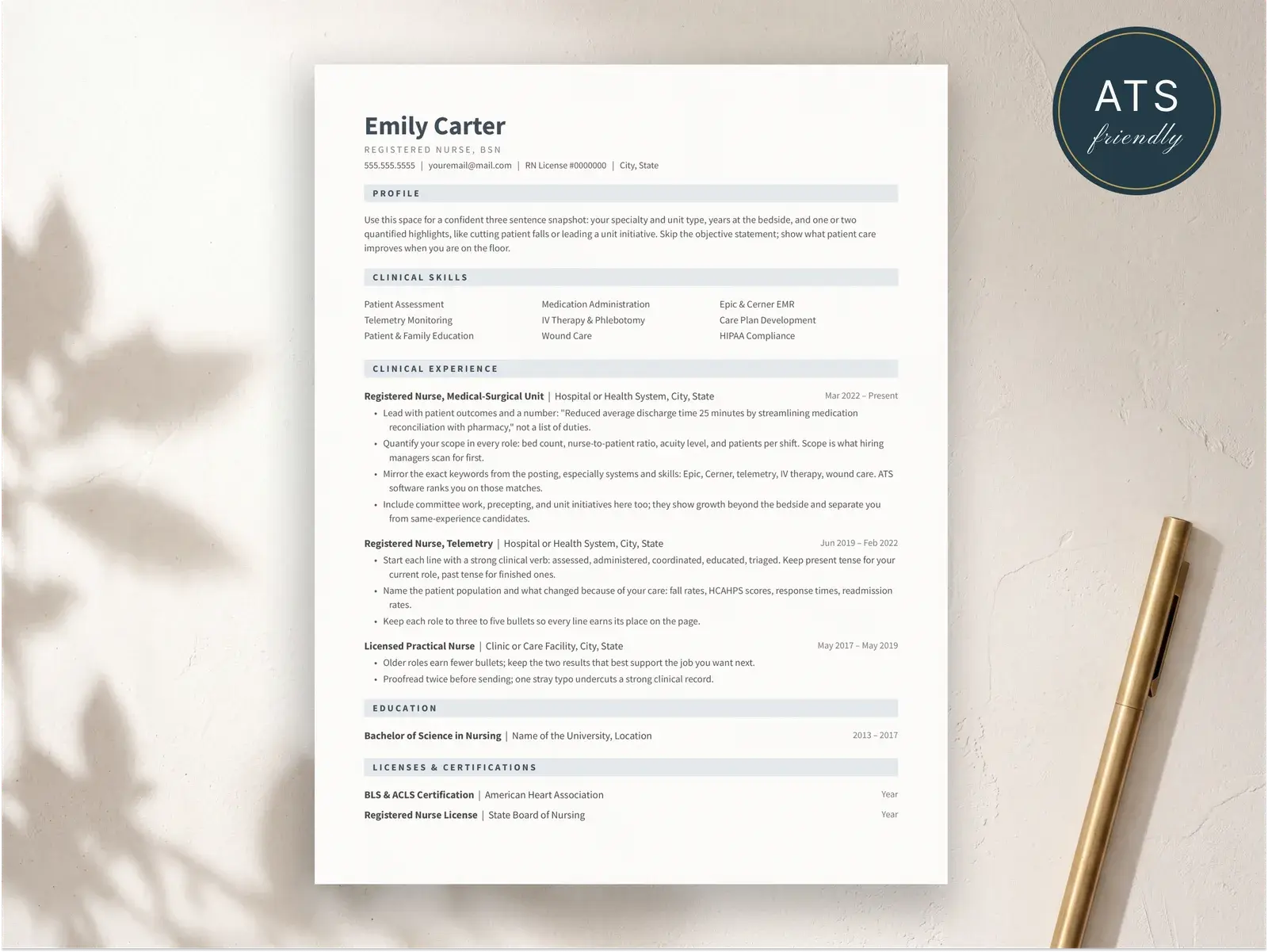
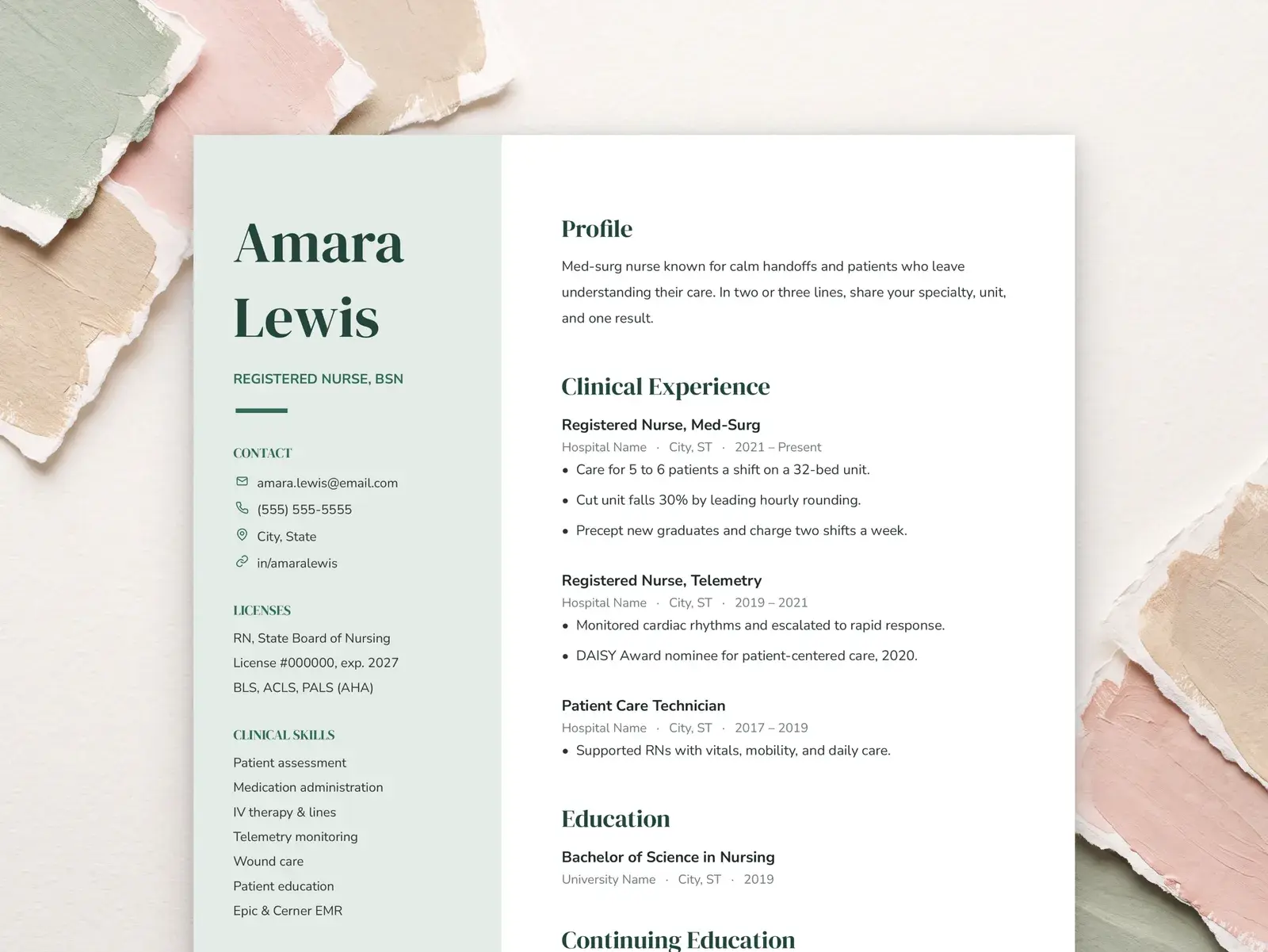
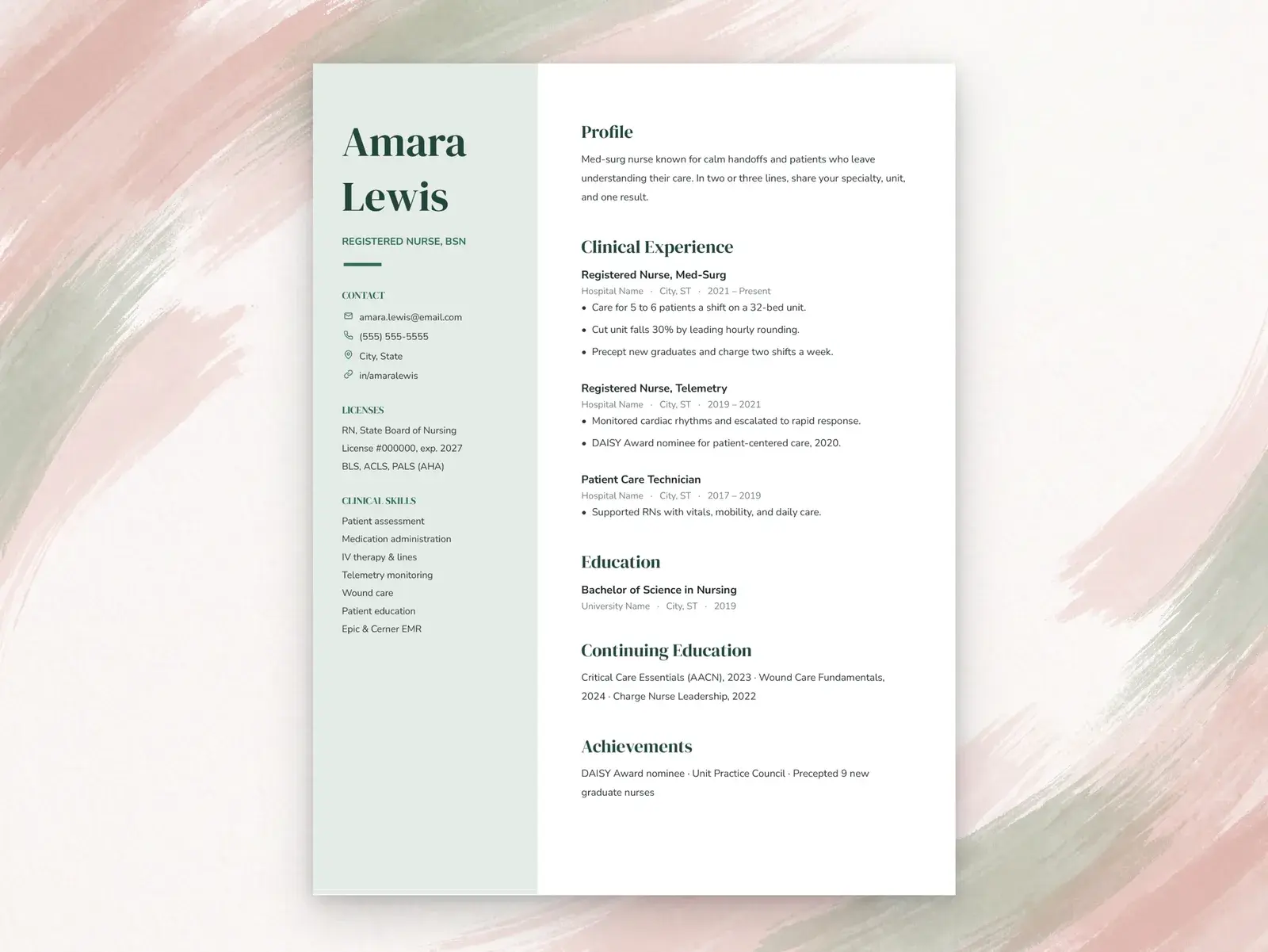
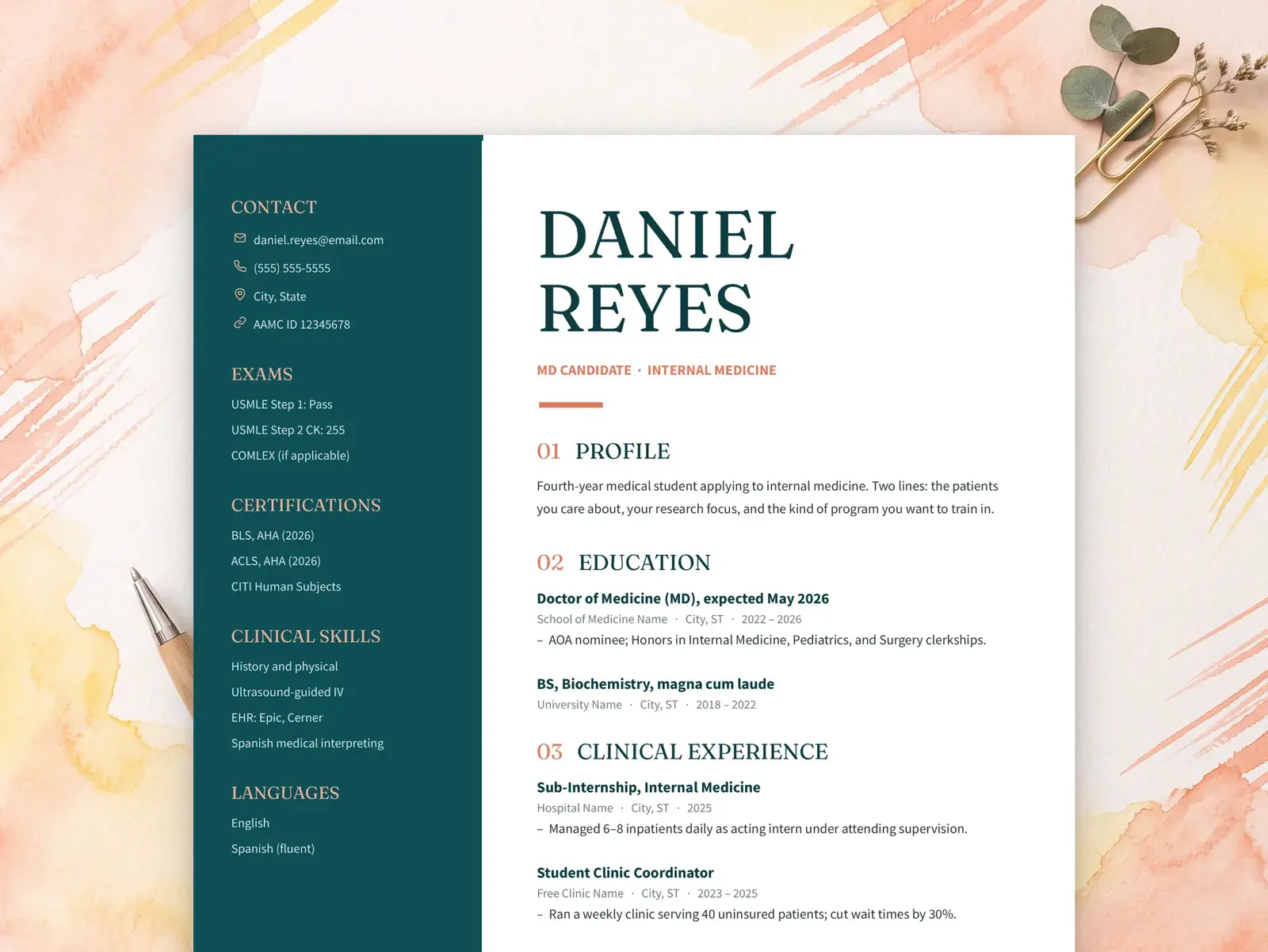
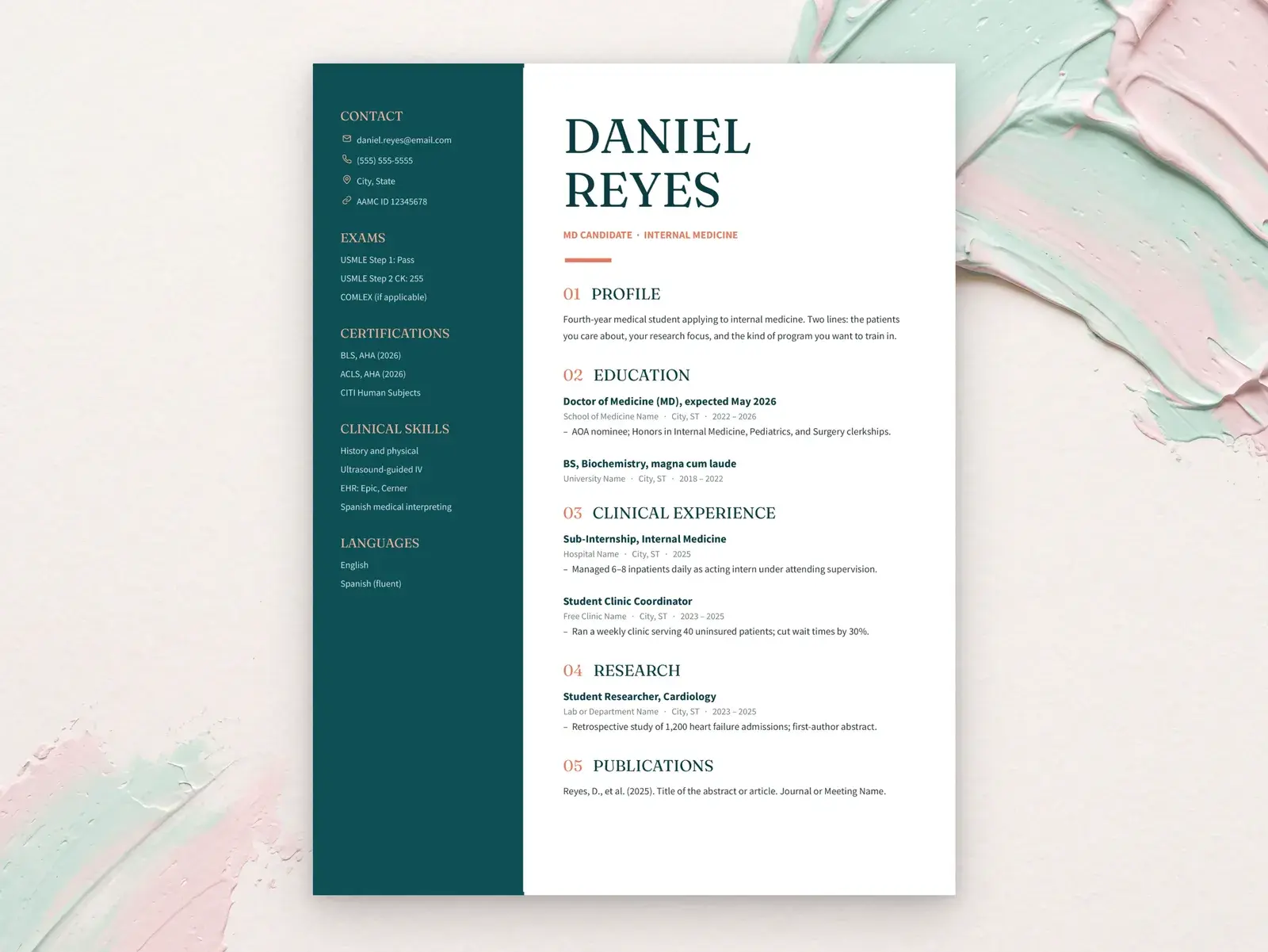
If you’d rather not build the layout from scratch, the templates below are tagged for nursing and healthcare roles. They include nurse resume templates and a medical CV template, editable in Google Docs, Word, and Pages.
Templates for this role


Mistakes that weaken NP resumes
- Burying the credentials. If certification and license are on the bottom half of page two, the first reader may never reach them.
- Writing NP experience like RN experience. “Provided patient care” describes either job. Use advanced practice verbs: diagnosed, managed, prescribed, ordered and interpreted, performed, admitted, discharged.
- Leaving rotations vague. “Completed clinical rotations” with no hours or settings wastes the new grad’s best section.
- Listing every RN job in full. Ten years of bedside bullets crowd out the advanced practice story. Shorten older roles.
- Overstating independence. If a preceptor co-signed your plans, say you managed patients under supervision. Your preceptors and references know what you actually did.
- Inconsistent credential order. Pick one order for the credentials after your name and use it the same way everywhere: resume, cover letter, and email signature.
Start with the example closest to where you are, swap in your own settings, hours, and numbers, and keep the credential block at the top.