What is a professional summary?
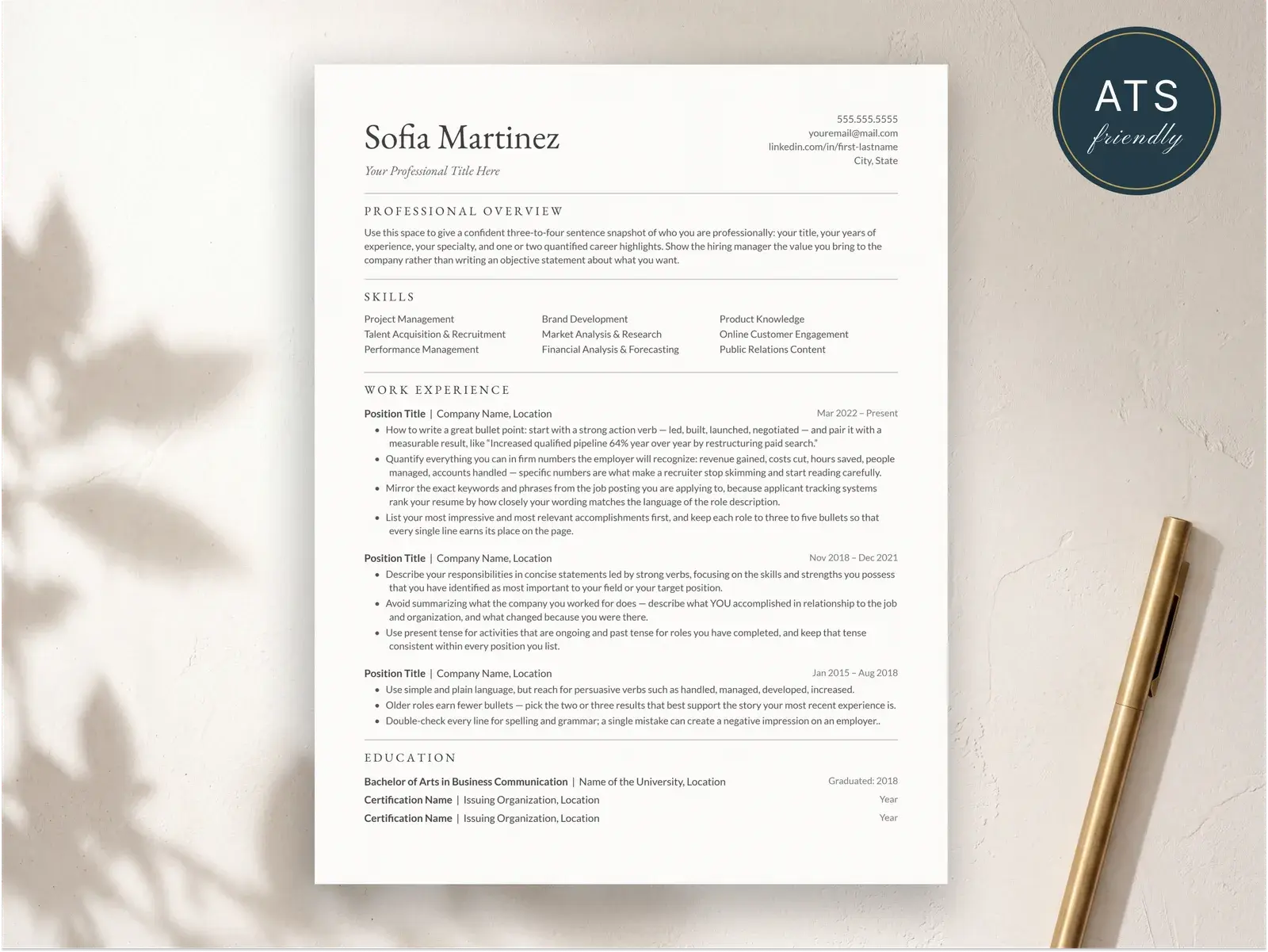
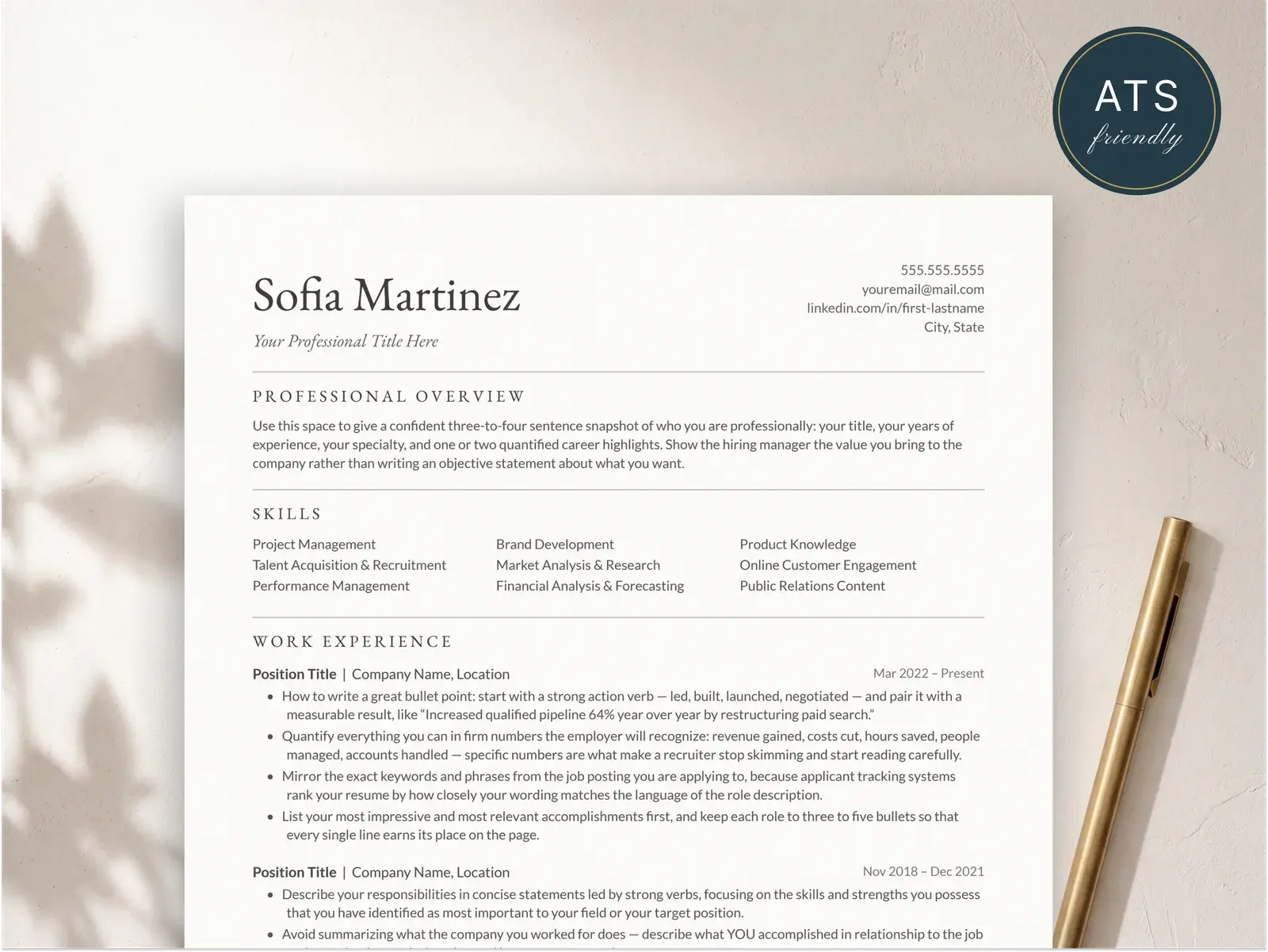
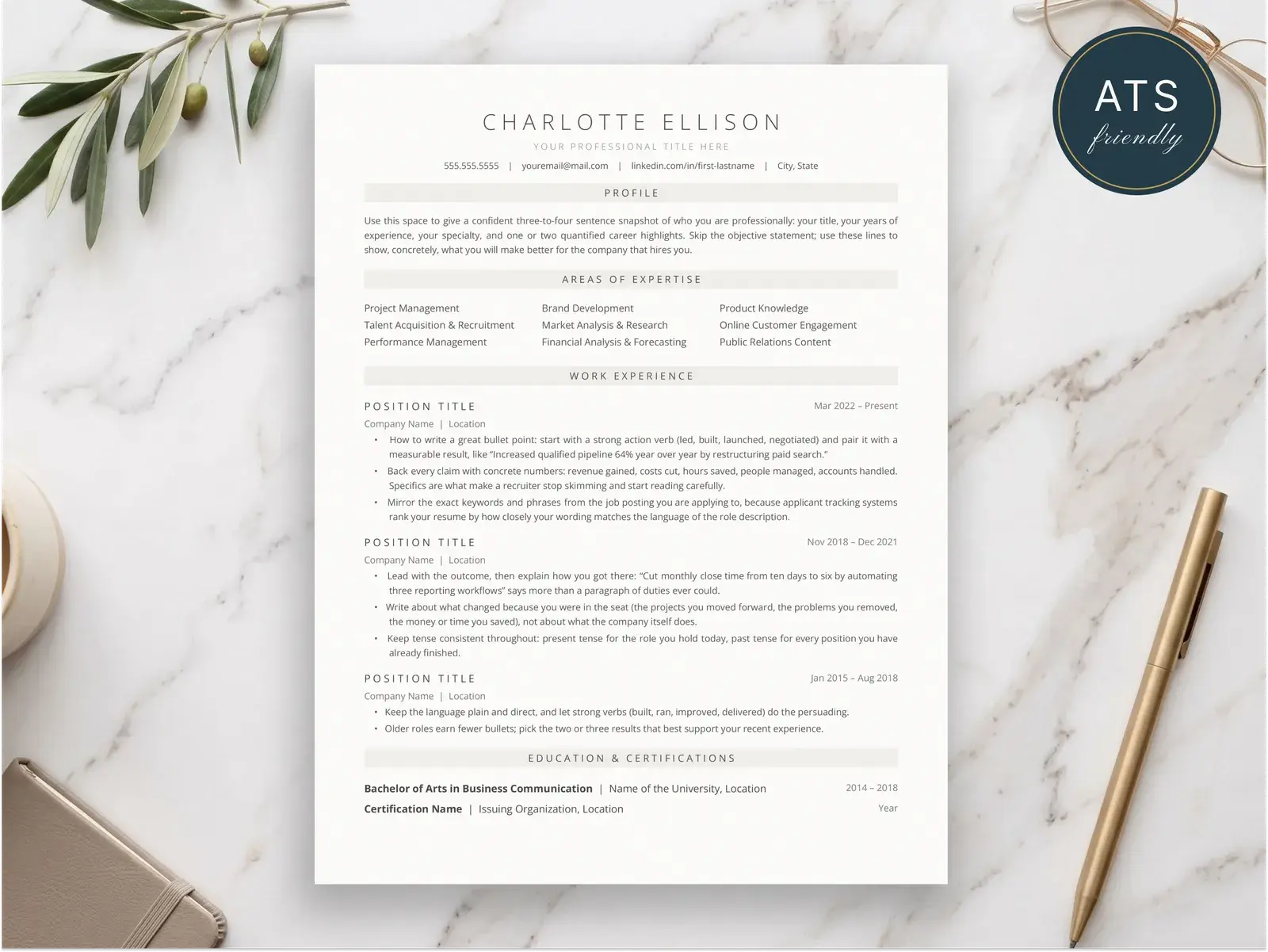
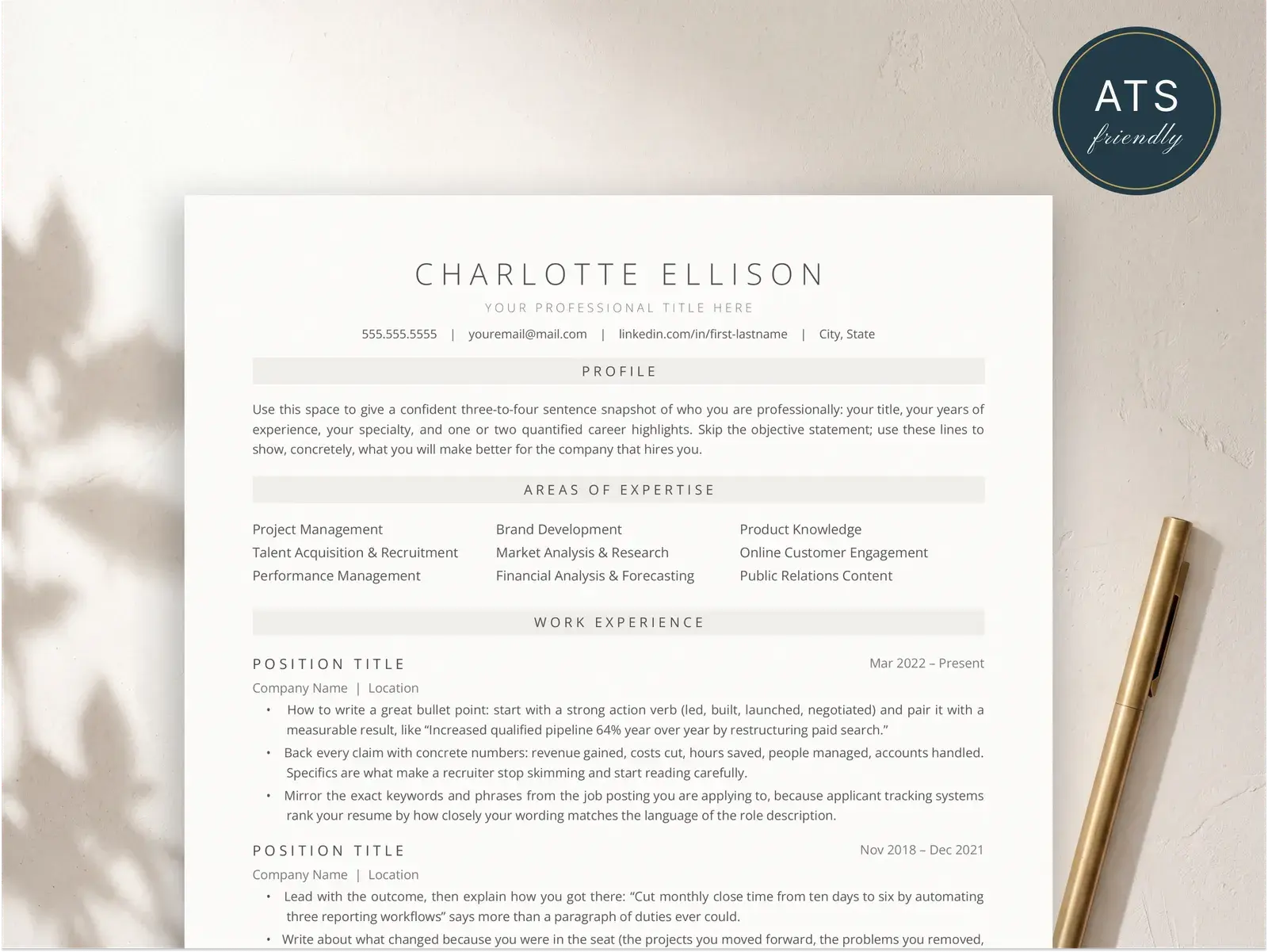
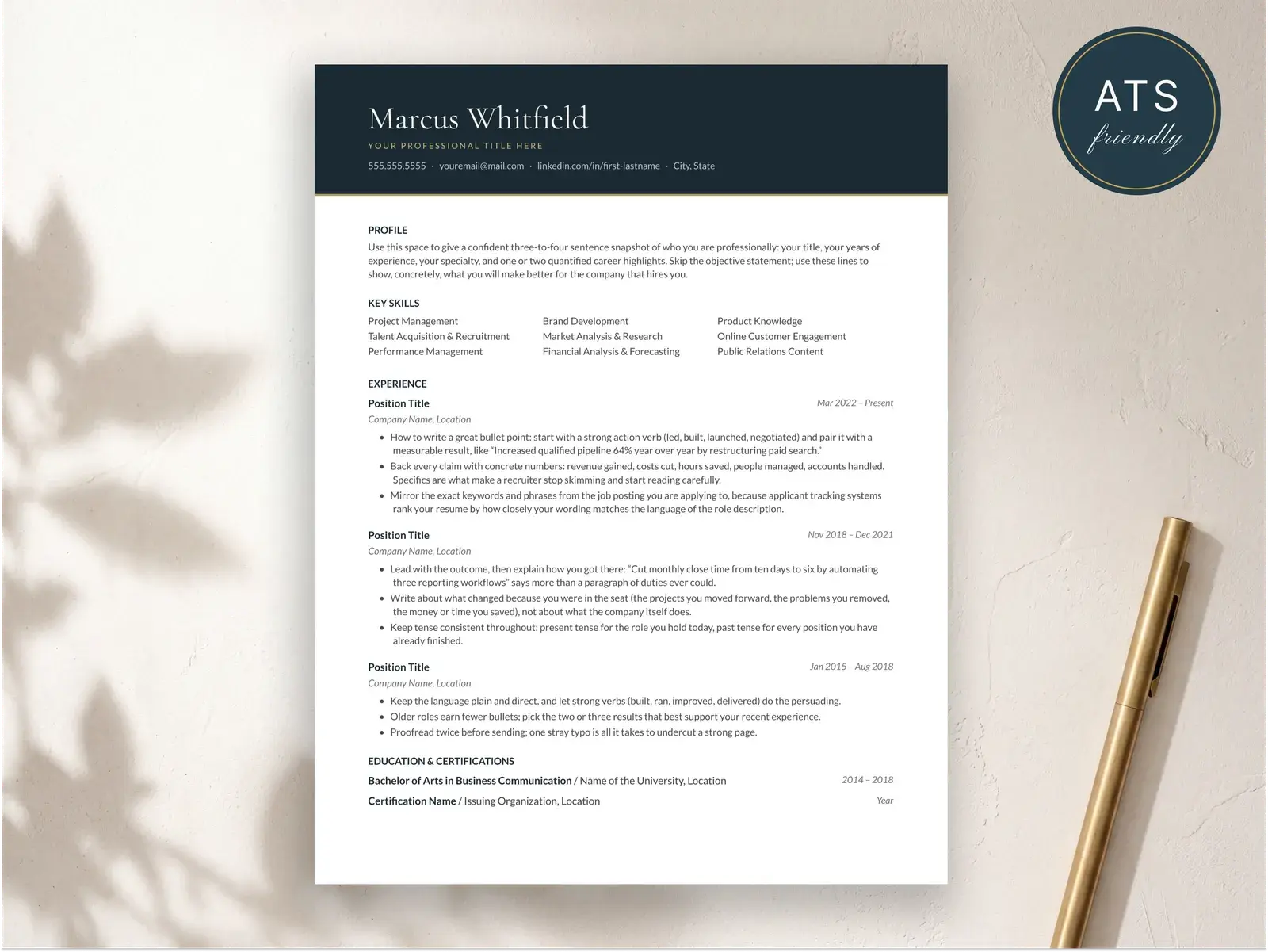
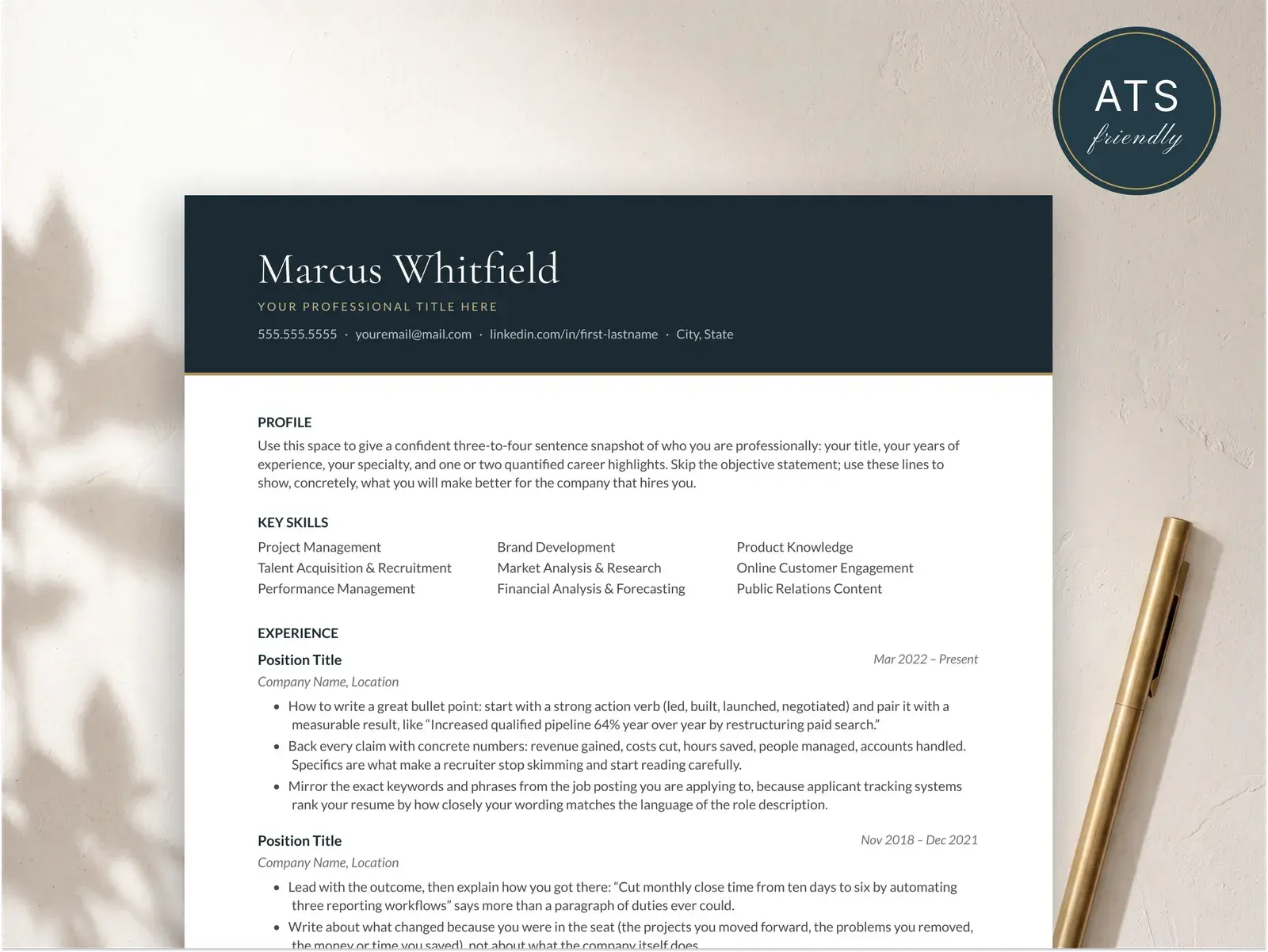
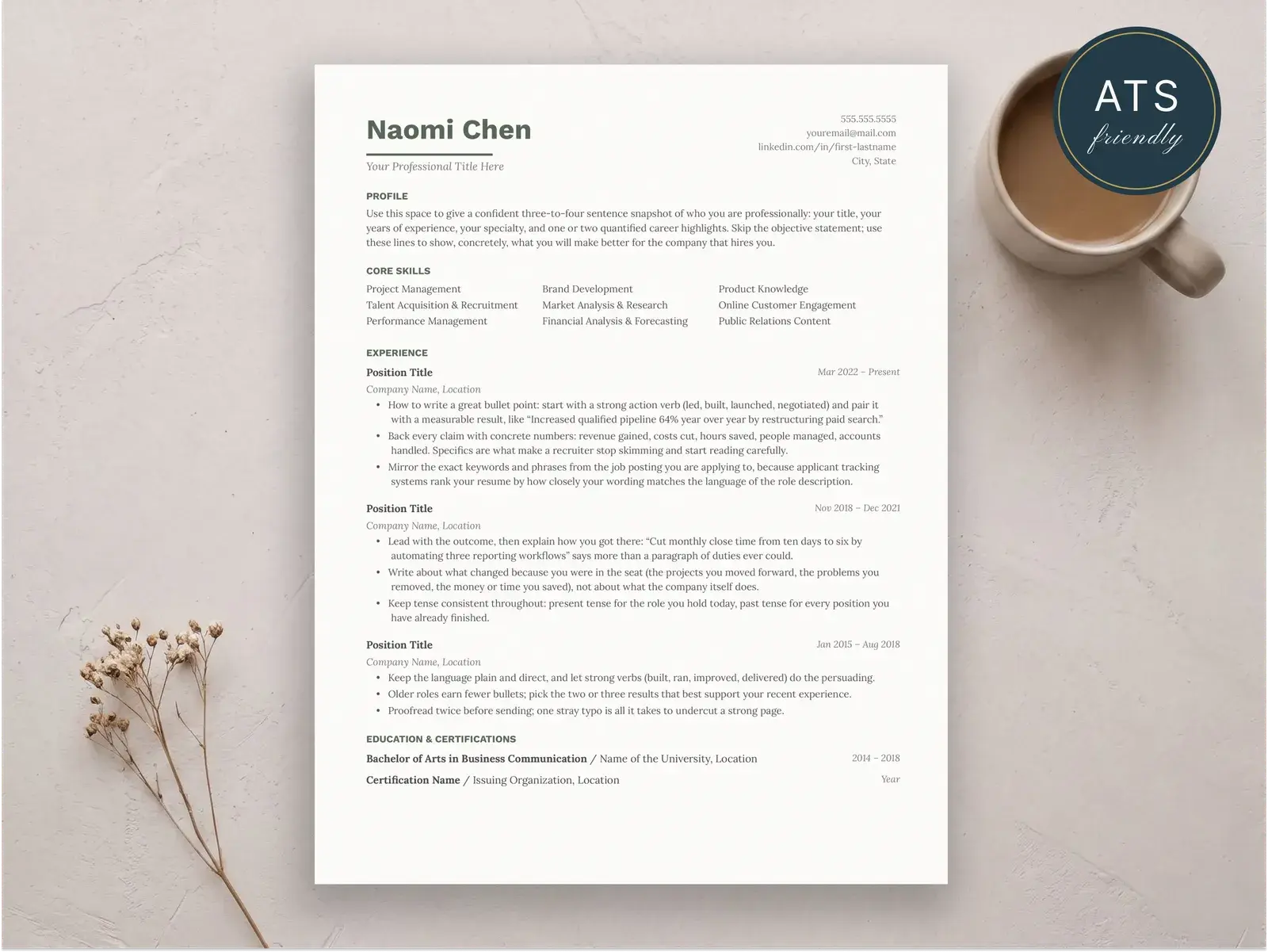
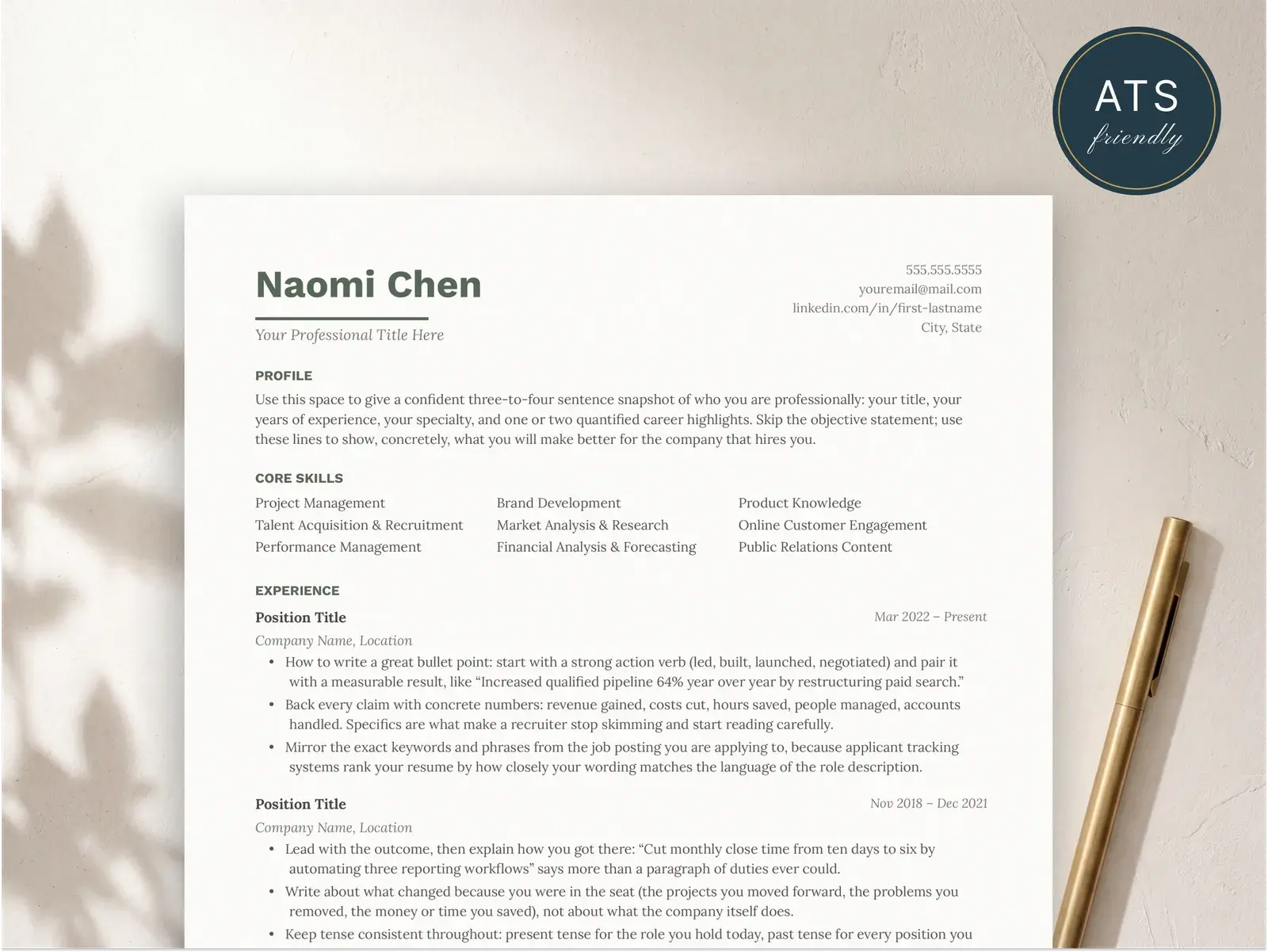
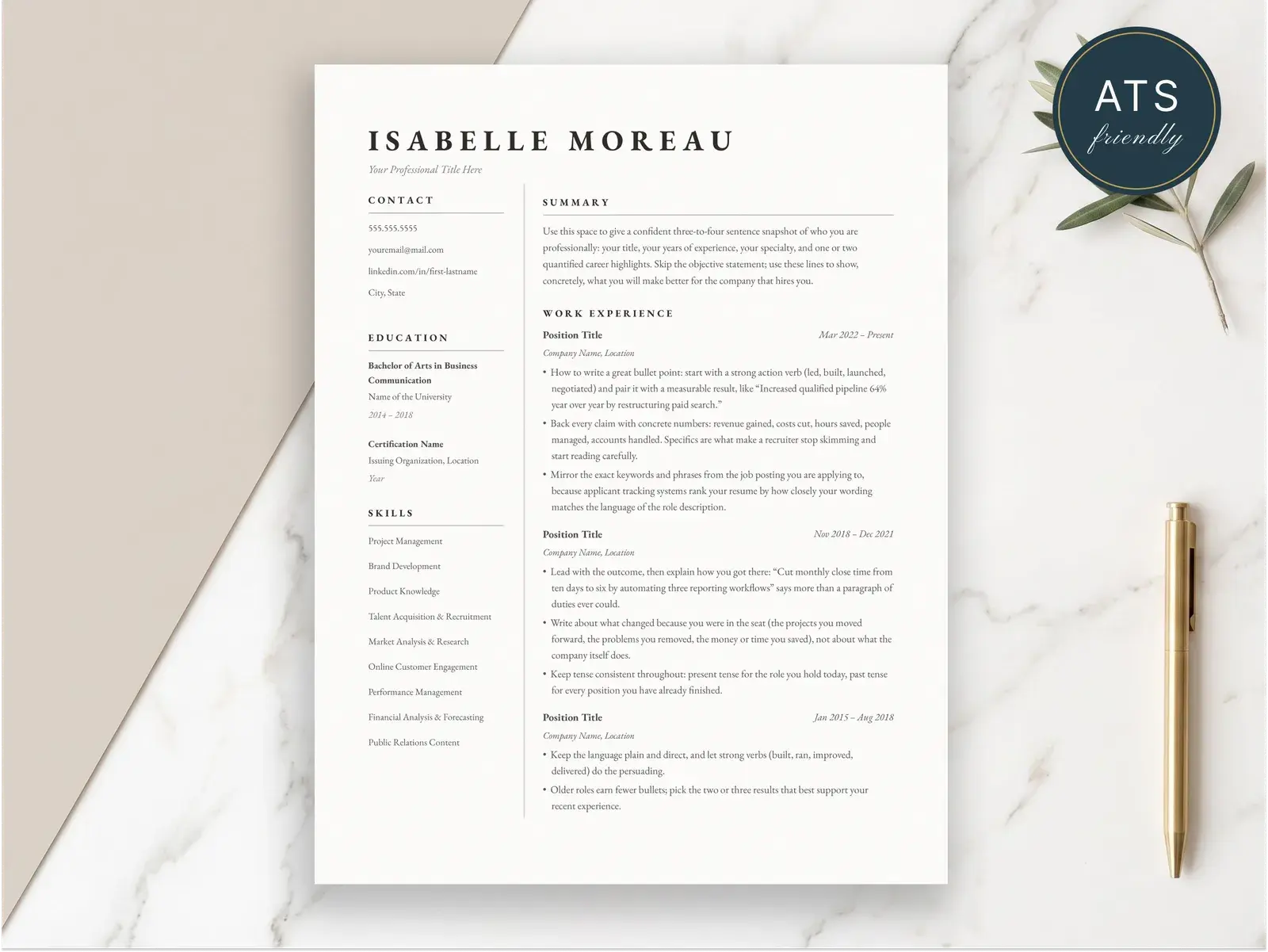
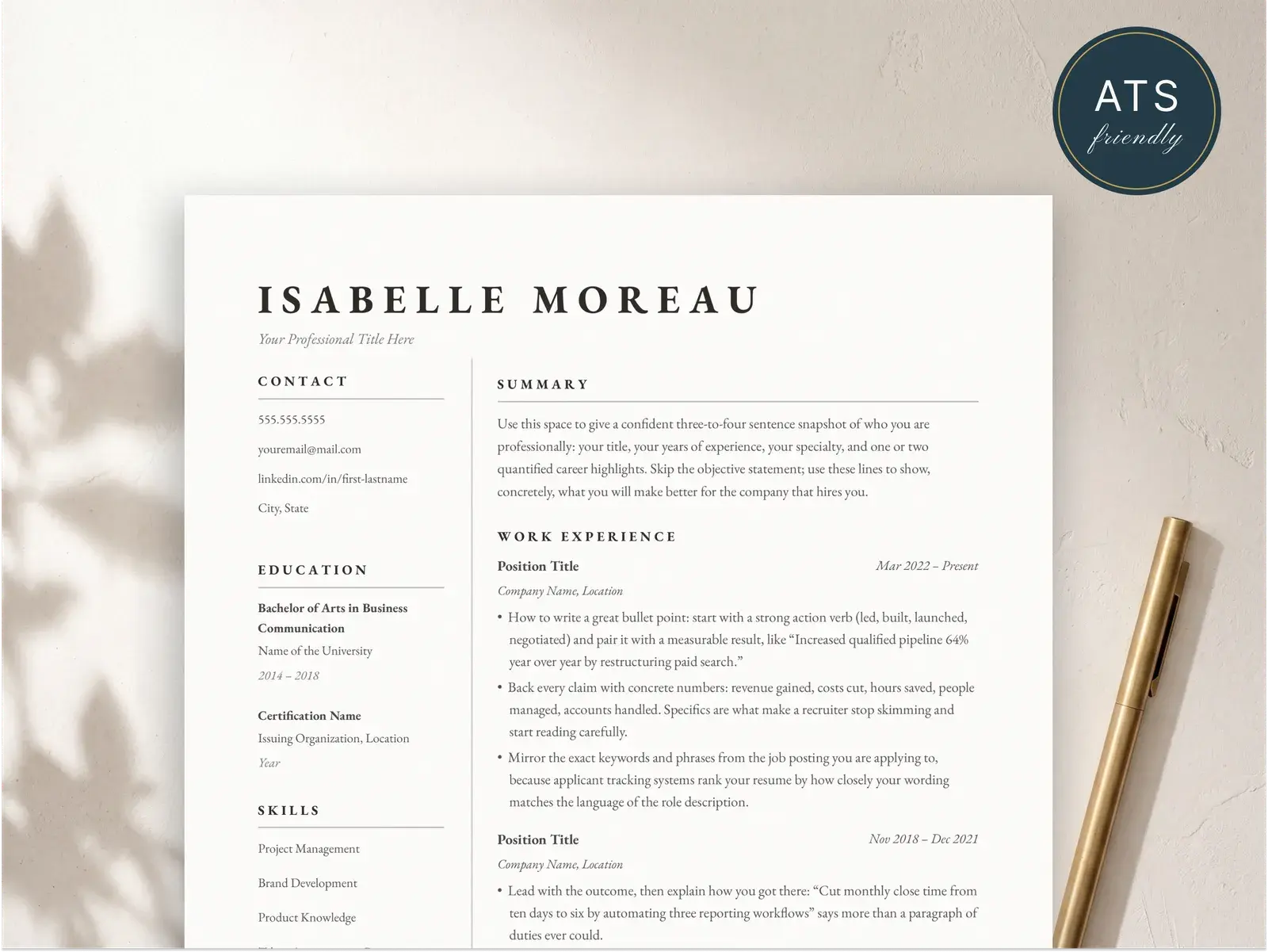
A professional summary is a two-to-four-sentence paragraph at the very top of your resume, right below your name and contact information. Its job is simple: give the reader a reason to keep going. It distills your experience level, strongest skills, and most impressive results into a compact snapshot that a hiring manager can absorb in seconds.
Unlike a cover letter, which tells a story, the summary is pure signal. No greeting, no pleasantries, no narrative arc. It’s a highlight reel — your title, your specialty, and one result that proves you’re worth the next sixty seconds of their time.
You might also see this section called a “resume profile,” “professional profile,” or “career summary.” The label matters less than the content. Use whichever heading your resume template provides and focus your energy on the words underneath it.
Professional summary vs. objective statement
An objective statement tells the employer what youwant: “Seeking a challenging role in software engineering.” A professional summary tells the employer what you offer: “Software engineer with 8 years of experience building payment systems that process $2M in daily transactions.” The difference is audience. Objectives are about you; summaries are about the value you bring to them. Hiring managers already know you want the job — you applied. What they need to know is whether you can do it. The summary answers that question immediately.
When to use a professional summary
A professional summary is most valuable when you have a clear story to tell. If you have three or more years of experience in a defined field, a summary lets you frame that experience before the reader forms their own impression from your job titles alone. It’s especially useful in these situations:
- —You’re an experienced professional. When you have 5, 10, or 20 years of work history, the summary prevents the recruiter from having to piece together your narrative from a long list of positions. You set the frame.
- —You’re changing careers. Your previous job titles won’t match the role you’re applying for. A summary bridges the gap by highlighting transferable skills and explaining the pivot in one sentence.
- —You have a standout achievement. If one result — a revenue number, a team size, a project outcome — makes your case better than anything else, the summary is where you surface it so it doesn’t get buried on page two.
When you might skip it
If you’re a recent graduate with no internships and limited work experience, a summary can feel forced. Writing “hardworking and eager to learn” doesn’t add information — it fills space. In that case, consider leading with your education section instead and letting your coursework, projects, or certifications speak for themselves. A strong one-page resume layout with tight formatting can make a light work history feel intentional rather than sparse.
How to write a professional summary in 4 steps
A good summary follows a simple formula. Each sentence has a job, and when you stack them together, the reader gets a complete picture in about five seconds. Here’s the framework:
Step 1: Lead with your experience level and title
Open with a clear statement of who you are professionally. Include your years of experience and your current or target job title. This immediately tells the reader whether your seniority level matches what they’re hiring for. Don’t hedge with vague language like “seasoned professional” — just state it plainly. “Marketing manager with 6 years of experience” is clearer and more credible than “results-driven marketing expert.”
Step 2: Add two or three key skills or specializations
Now narrow the focus. What kindof marketing manager are you? Mention the specific areas where you’re strongest — content strategy, paid acquisition, brand positioning, whatever fits the role. This is where keyword alignment with the job description matters. If the posting asks for “demand generation” and you have that experience, this is where you name it. You still have your skills section for the full list — the summary just features the headline skills.
Step 3: Include a measurable achievement
One number changes a summary from a description to proof. It doesn’t have to be revenue — it can be a percentage improvement, a team size, a project scope, or a customer count. The point is specificity. “Improved marketing efficiency” is a claim. “Reduced cost per lead by 35% over two quarters” is evidence. Choose the achievement that is most relevant to the job you’re targeting, not necessarily the most impressive one on paper.
Step 4: End with what you bring to this role
Close by connecting your background to the position. This is a single phrase that signals direction — what you’re looking to do next and how the employer benefits. It’s not an objective statement; it’s a bridge. Something like “looking to scale content operations at a high-growth SaaS company” tells the recruiter that your goals align with theirs without making the sentence about you.
Putting it all together
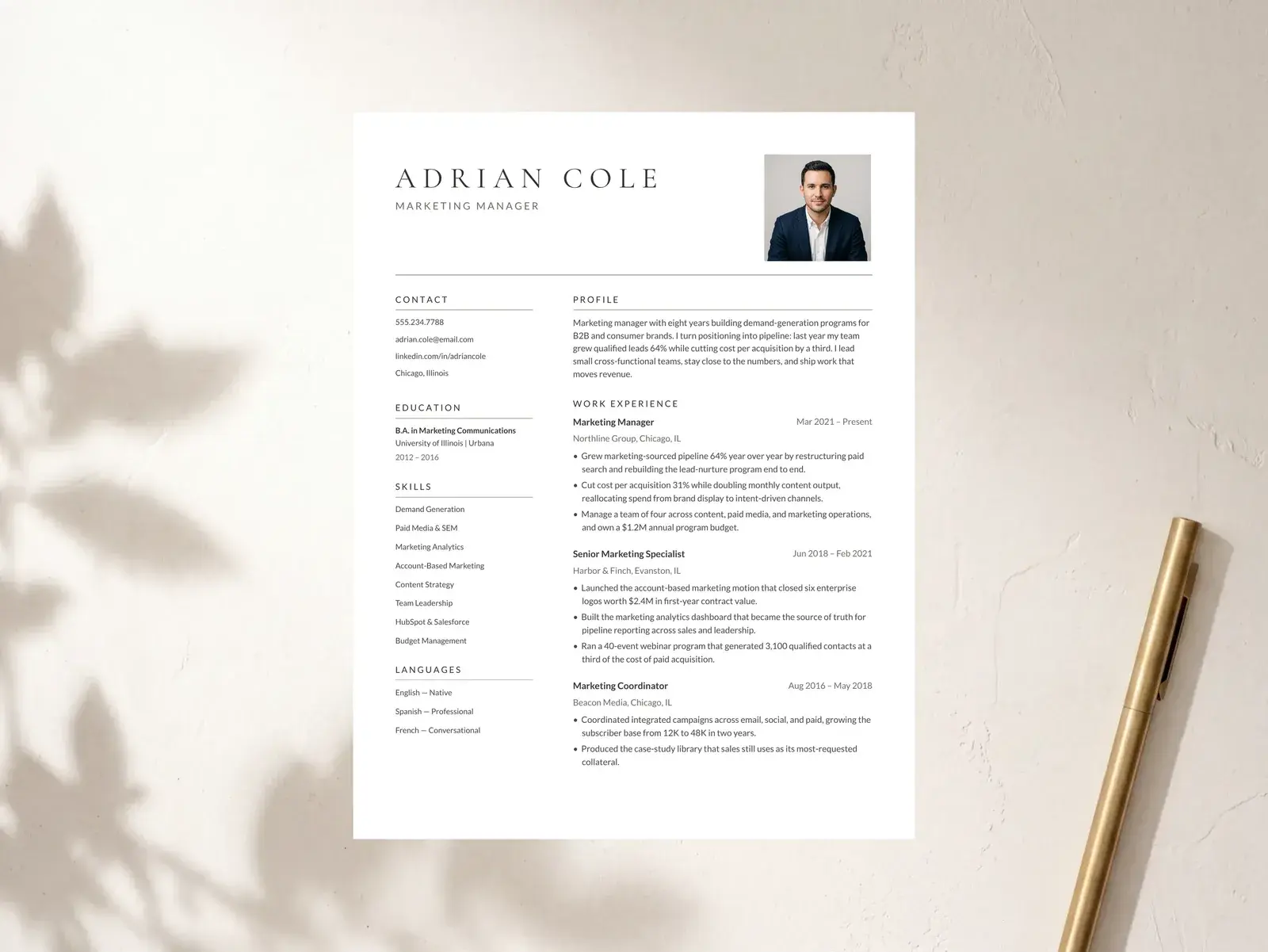
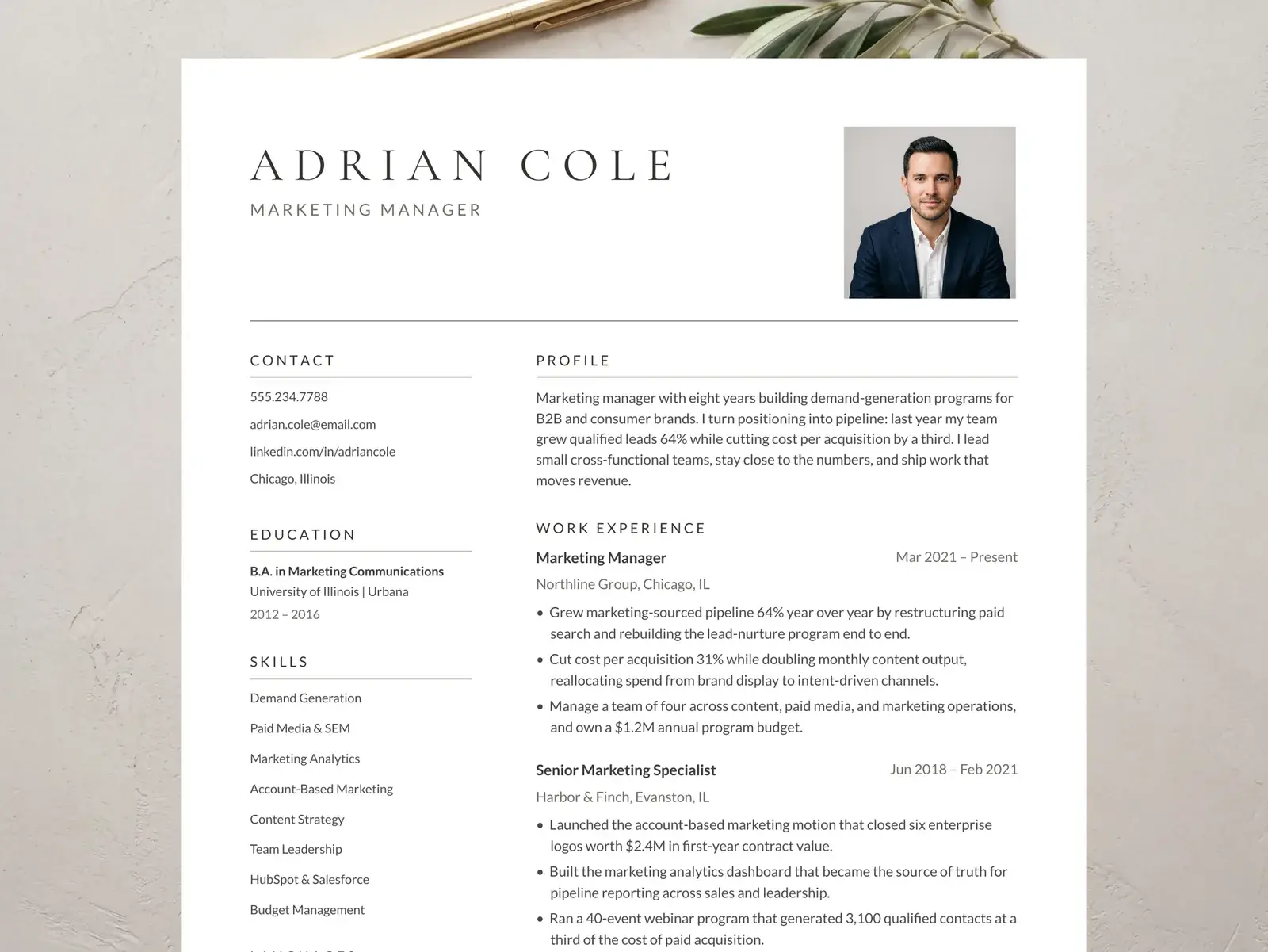
Here’s what the formula looks like in practice:
“Marketing manager with 6 years of experience specializing in content strategy and paid acquisition for B2B SaaS products. Reduced cost per qualified lead by 35% at Series B startup through a full-funnel content program and targeted LinkedIn campaigns. Looking to lead demand generation at a high-growth company scaling its go-to-market engine.”
That’s 52 words. It covers experience, specialty, proof, and direction. A recruiter reading this knows exactly who they’re looking at and whether to keep going.
Professional summary examples
Below are three resume summary examples for different experience levels. Notice how each one follows the same four-part structure but adjusts the emphasis based on what the candidate has to work with.
Senior software engineer (10 years)
“Senior software engineer with 10 years of experience designing distributed systems and payment infrastructure at scale. Led a 12-person backend team that rebuilt the transaction processing pipeline, reducing settlement time from 48 hours to under 4 hours and supporting $3.2M in daily volume. Seeking a principal engineering role at a fintech company where system reliability directly impacts customer trust.”
Why it works: Leads with seniority and a clear technical domain. The achievement is specific (team size, time reduction, dollar volume) and relevant to the target role. The closing sentence signals alignment without sounding generic.
Marketing manager (5 years)
“Marketing manager with 5 years of experience in content marketing and demand generation for B2B software companies. Built and executed a content strategy that grew organic traffic from 15K to 85K monthly visits in 18 months, generating 40% of the sales pipeline. Looking to own the full content function at a Series A or B company ready to invest in long-term organic growth.”
Why it works: Names the specific marketing channels (content, demand gen) rather than saying “all aspects of marketing.” The numbers tell a growth story — traffic trajectory and pipeline contribution — which is exactly what a startup hiring manager wants to see.
Recent graduate / entry-level
“Recent computer science graduate from the University of Michigan with internship experience in full-stack web development. Built and shipped a course registration tool used by 2,000+ students during a summer internship at the university’s IT department. Eager to contribute to a product engineering team where I can deepen my skills in React and backend API design.”
Why it works: Doesn’t pretend to have experience it doesn’t. Instead, it leads with education and a specific project with a real user count. The closing sentence names exact technologies, which helps with ATS keyword matching and shows the candidate knows what they want to learn.
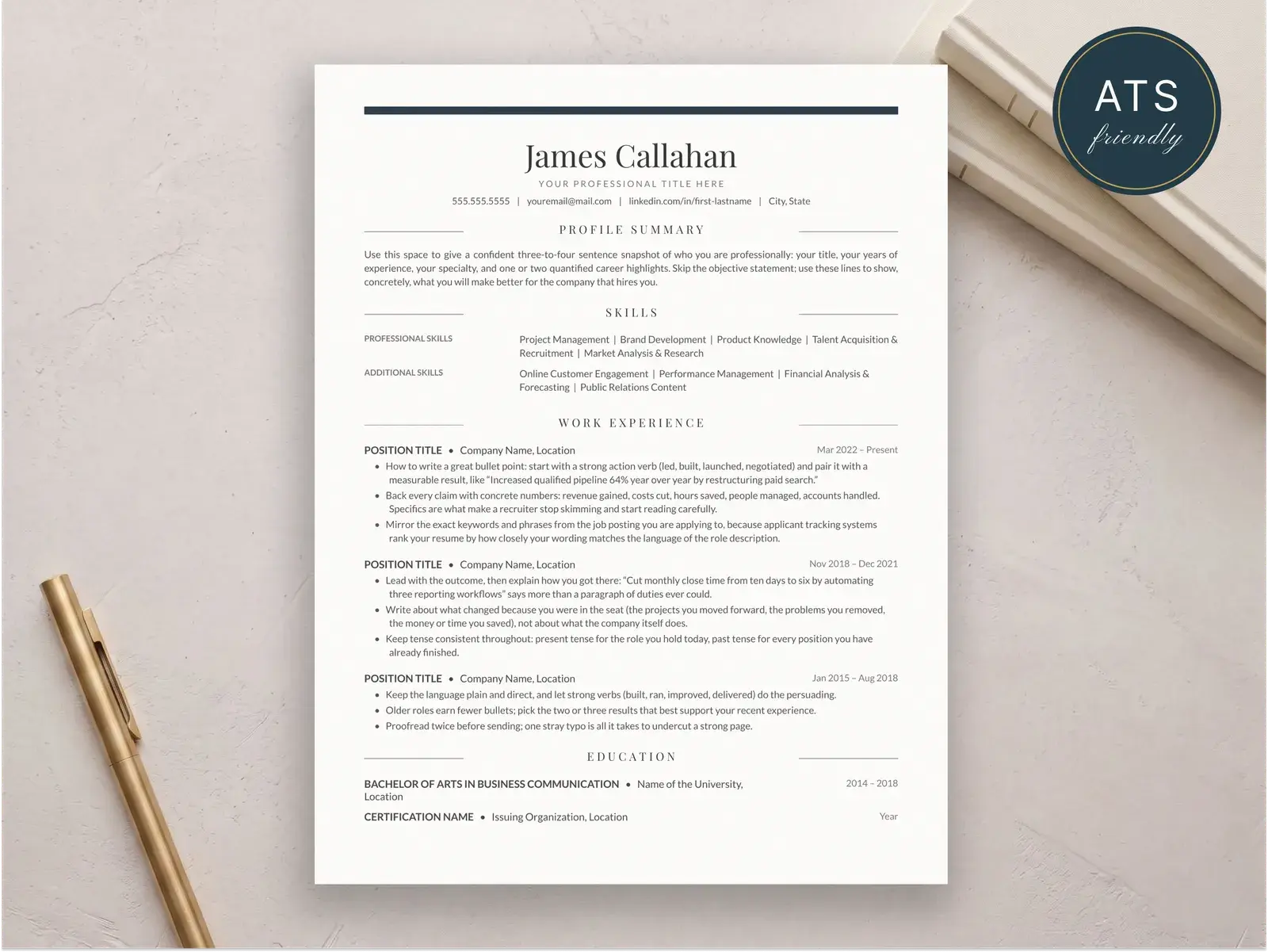
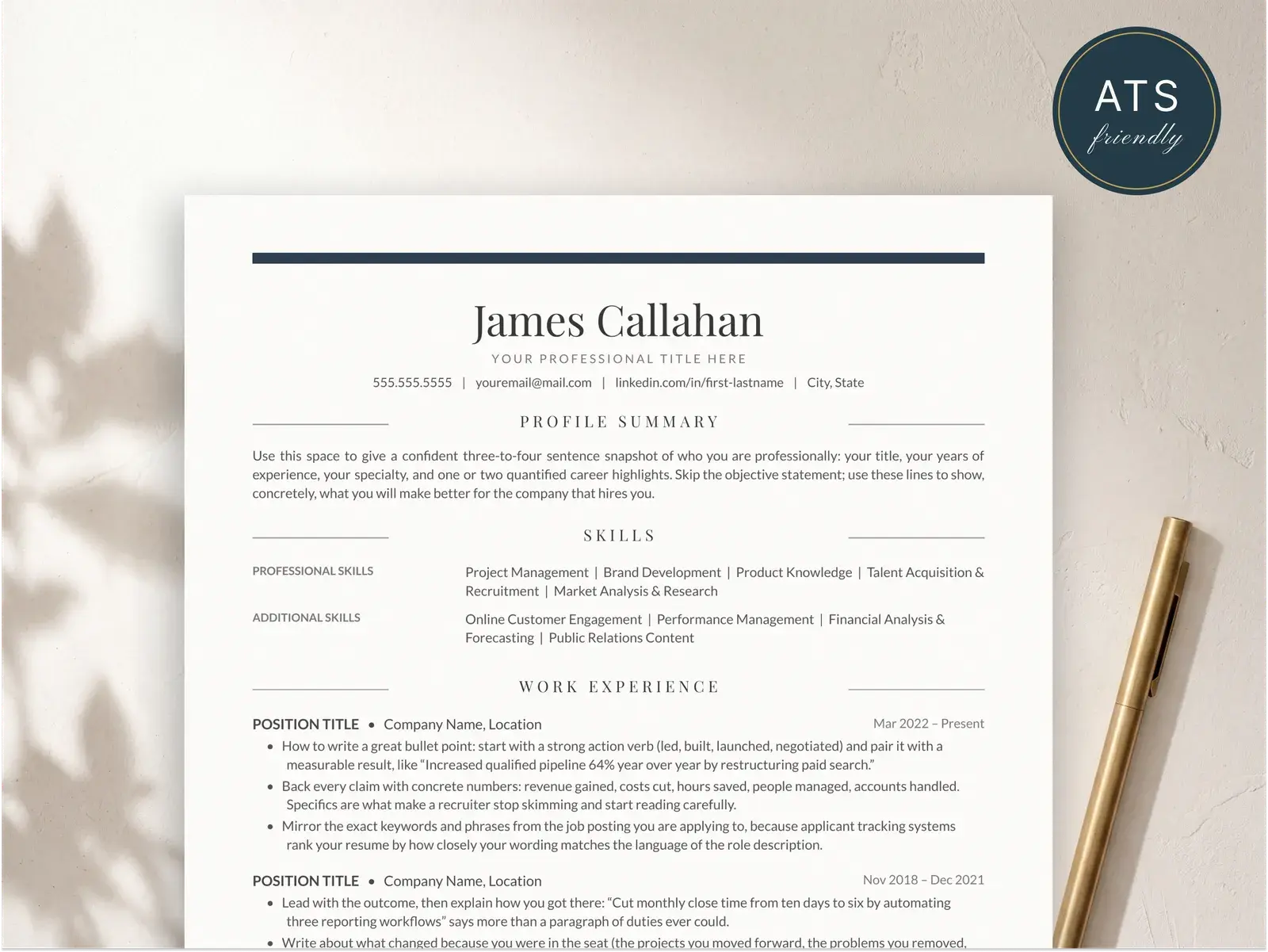
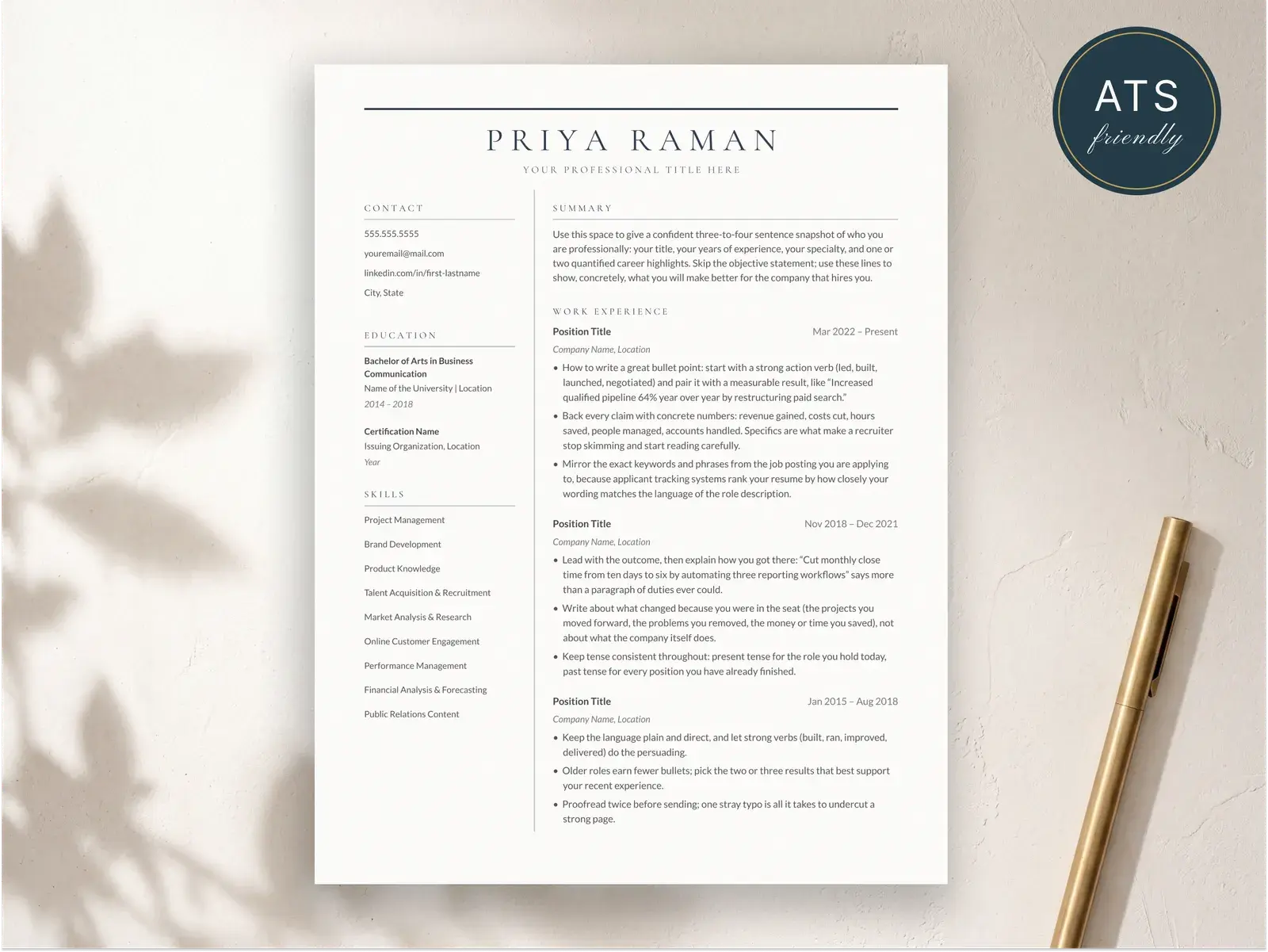
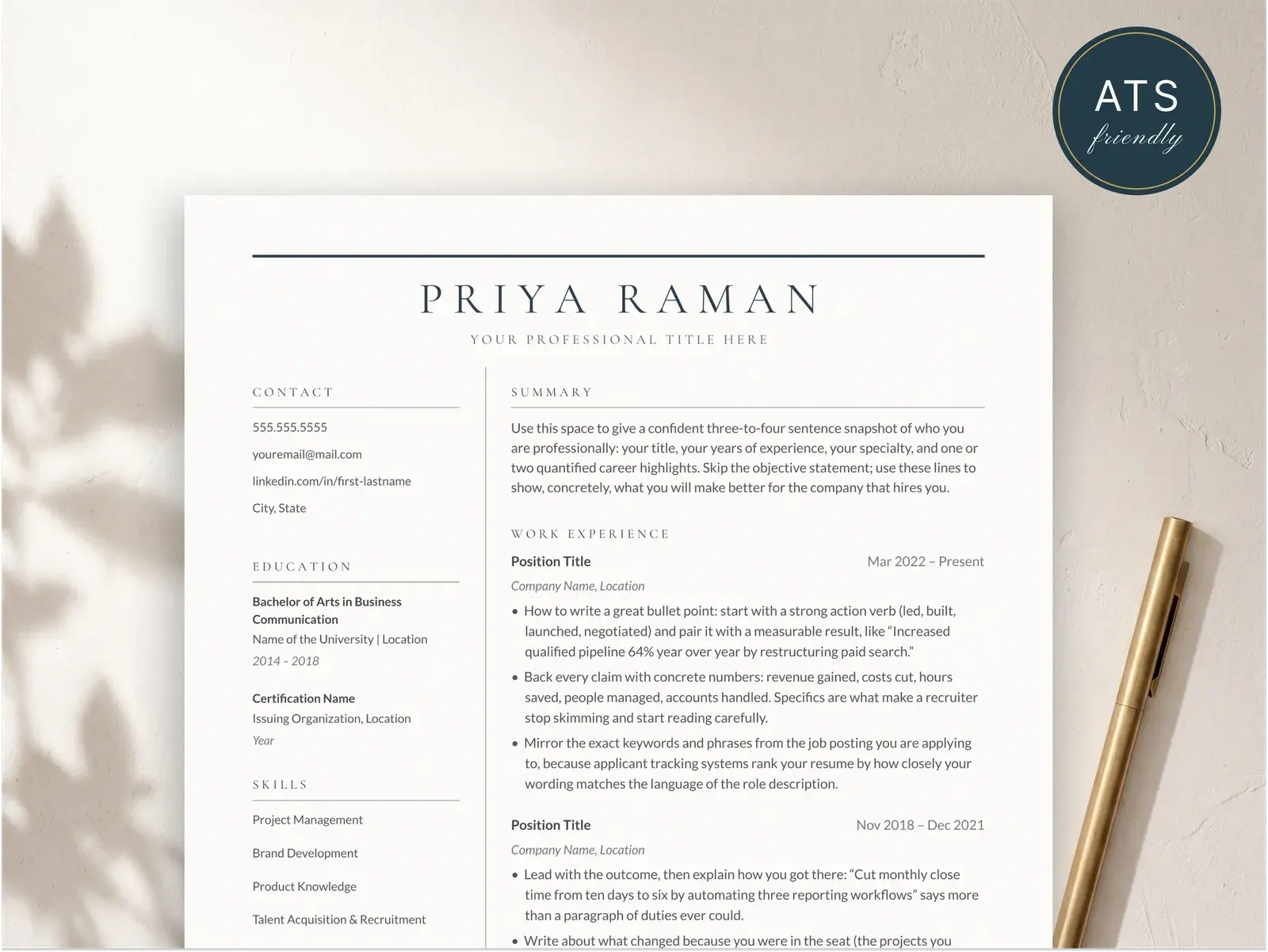
Want to see these examples in a finished layout? Pick a resume template and paste your summary directly into the editor to see how it looks in context.
Common mistakes to avoid
Most bad summaries aren’t bad because the person lacks qualifications. They’re bad because the writing falls into one of these traps:
1. Making it too long
If your summary takes up a quarter of the page, it’s not a summary — it’s a second cover letter. Keep it under 60 words. Every sentence should earn its place. If you can delete a line without losing information, delete it.
2. Being too vague
“Experienced professional with a proven track record of delivering results in fast-paced environments.” This sentence could describe anyone in any industry. It communicates nothing. Replace vague claims with specifics: name your field, your specialty, and one concrete result. If the reader can’t tell what industry you work in from your summary, it needs rewriting.
3. Writing in first person
“I am a dedicated project manager who loves solving complex problems.” Resume summaries are written in implied first person — you drop the “I.” Write “Project manager with 7 years of experience” instead of “I am a project manager with 7 years of experience.” It reads more professionally and saves you two words you can use for something more useful.
4. Buzzword overload
“Dynamic, self-motivated, results-oriented team player with excellent communication skills.” These words are so overused that recruiters filter them out mentally. They don’t prove anything. Instead of saying you have excellent communication skills, showit: “Presented quarterly business reviews to C-suite stakeholders at three Fortune 500 clients.” The action demonstrates the skill without the empty label.
5. Using the same summary for every application
Your summary should be the most customized part of your resume. If you send the same three sentences to a startup, a government agency, and a Fortune 500 company, at least two of those applications are poorly targeted. Adjust the job title, the featured achievement, and two or three keywords to match each posting. It takes less than five minutes and makes the difference between sounding like a generic applicant and a specific fit.
6. Including irrelevant information
Your summary is prime real estate — don’t waste it on details that belong elsewhere or nowhere. Hobbies, personal attributes (“punctual and reliable”), or experience from a completely unrelated field dilute the impact. Every word in your summary should help answer one question: “Can this person do this specific job?” If a detail doesn’t contribute to that answer, move it to another section or cut it entirely.