Resume templates
One-page resume templates
Everything you need on a single page — no filler, no fluff. Clean templates that make every line count so your best work gets noticed first.
See the templatesBest templates for a one-page resume
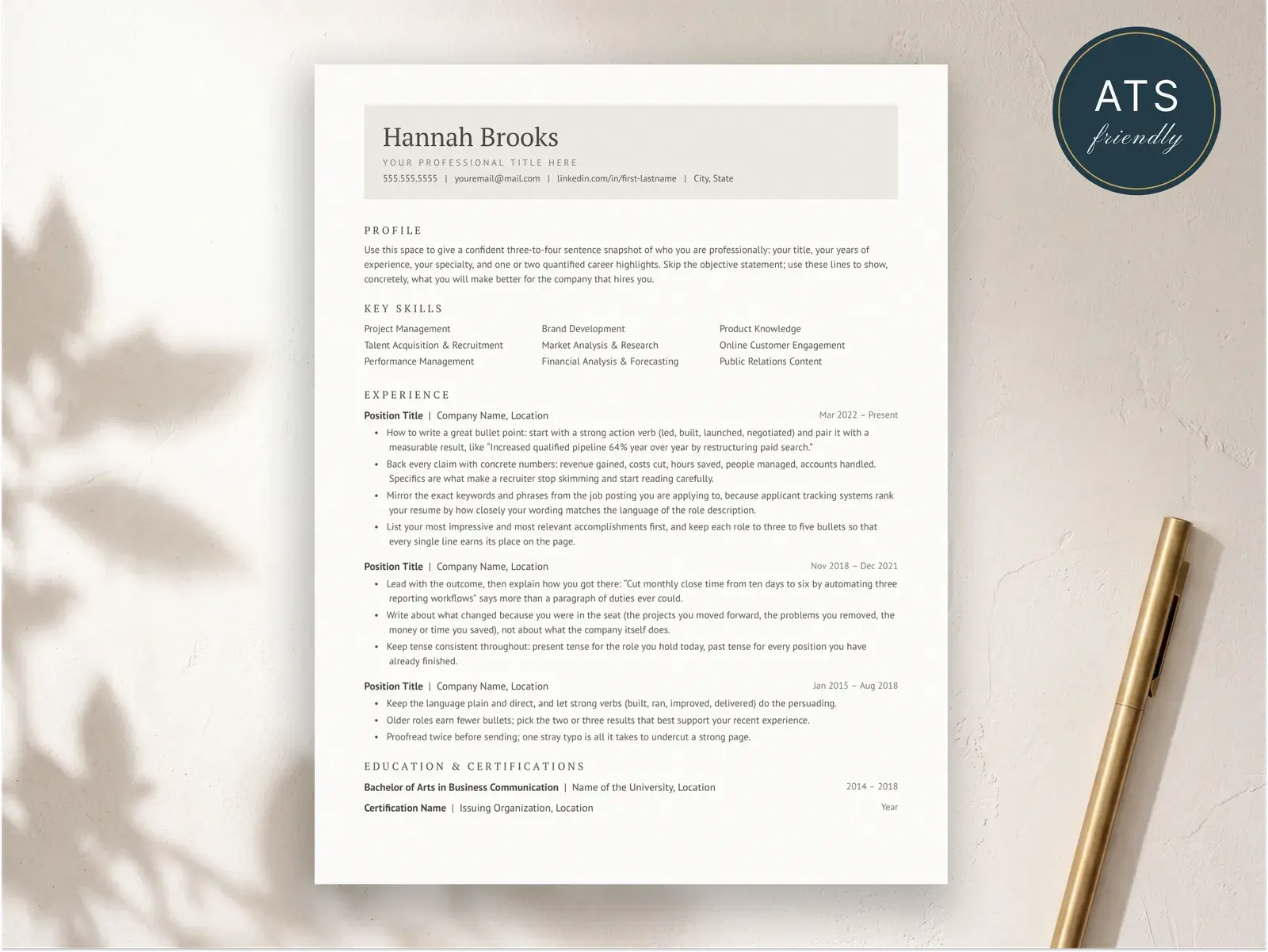
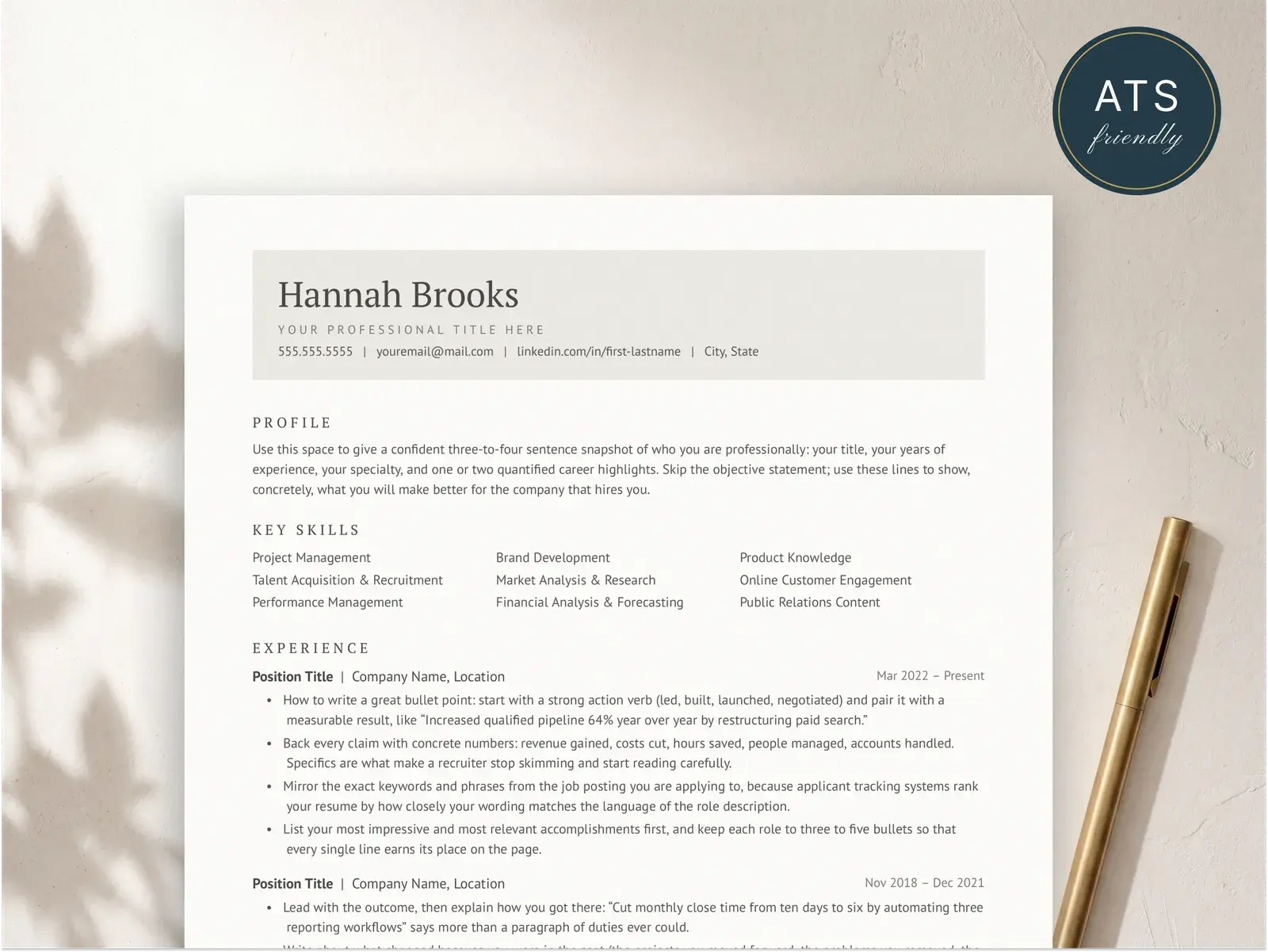
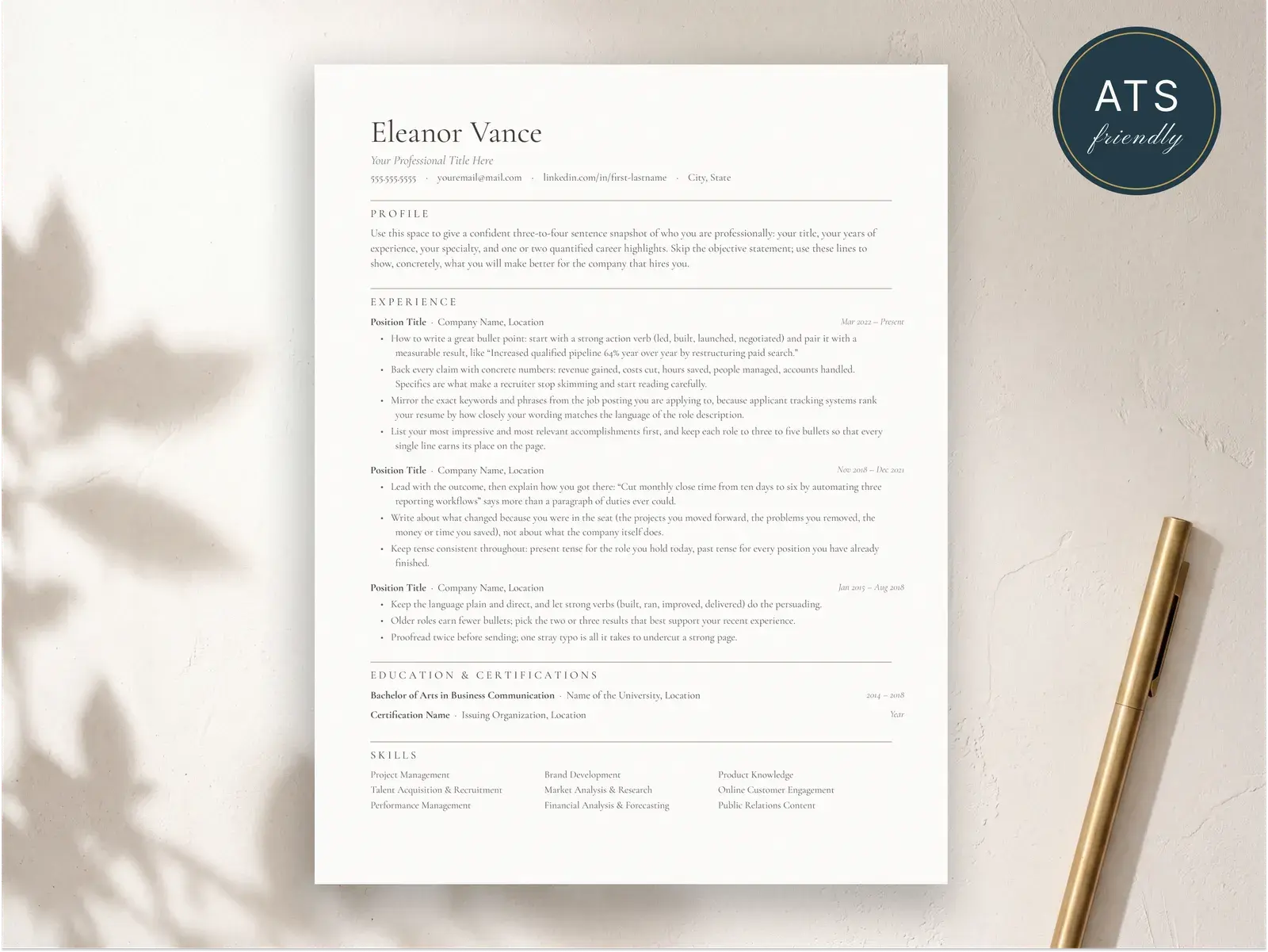
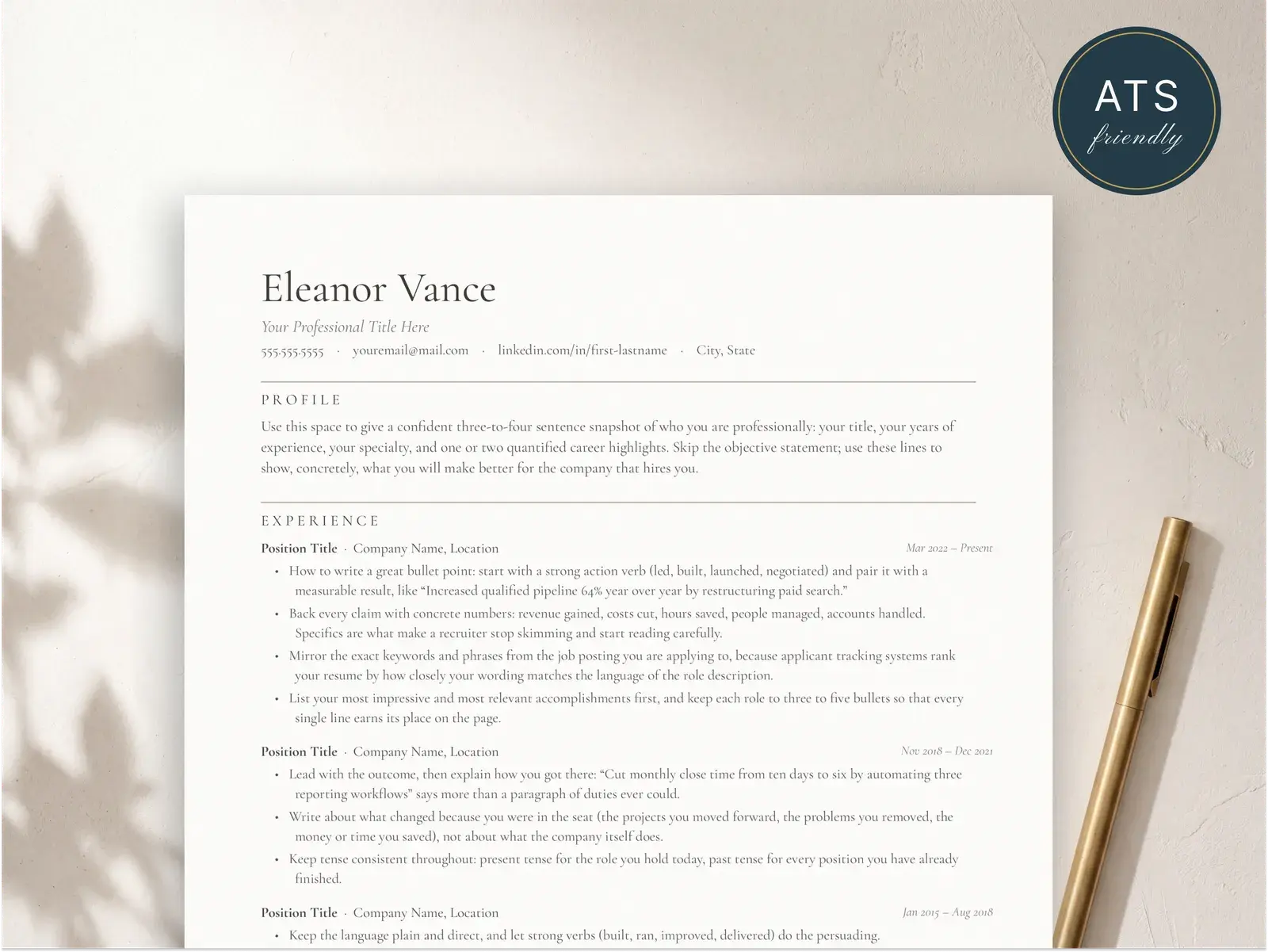
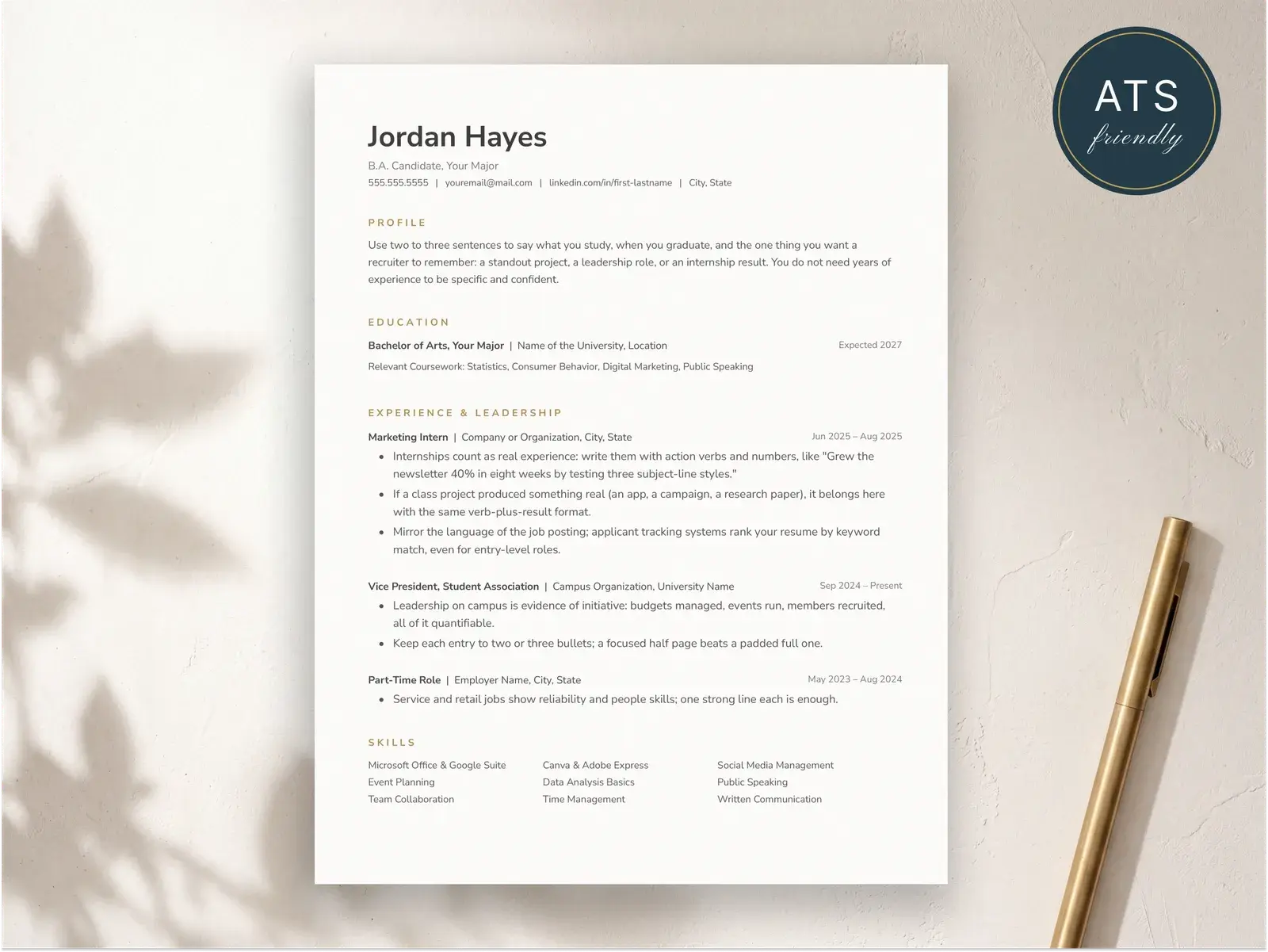
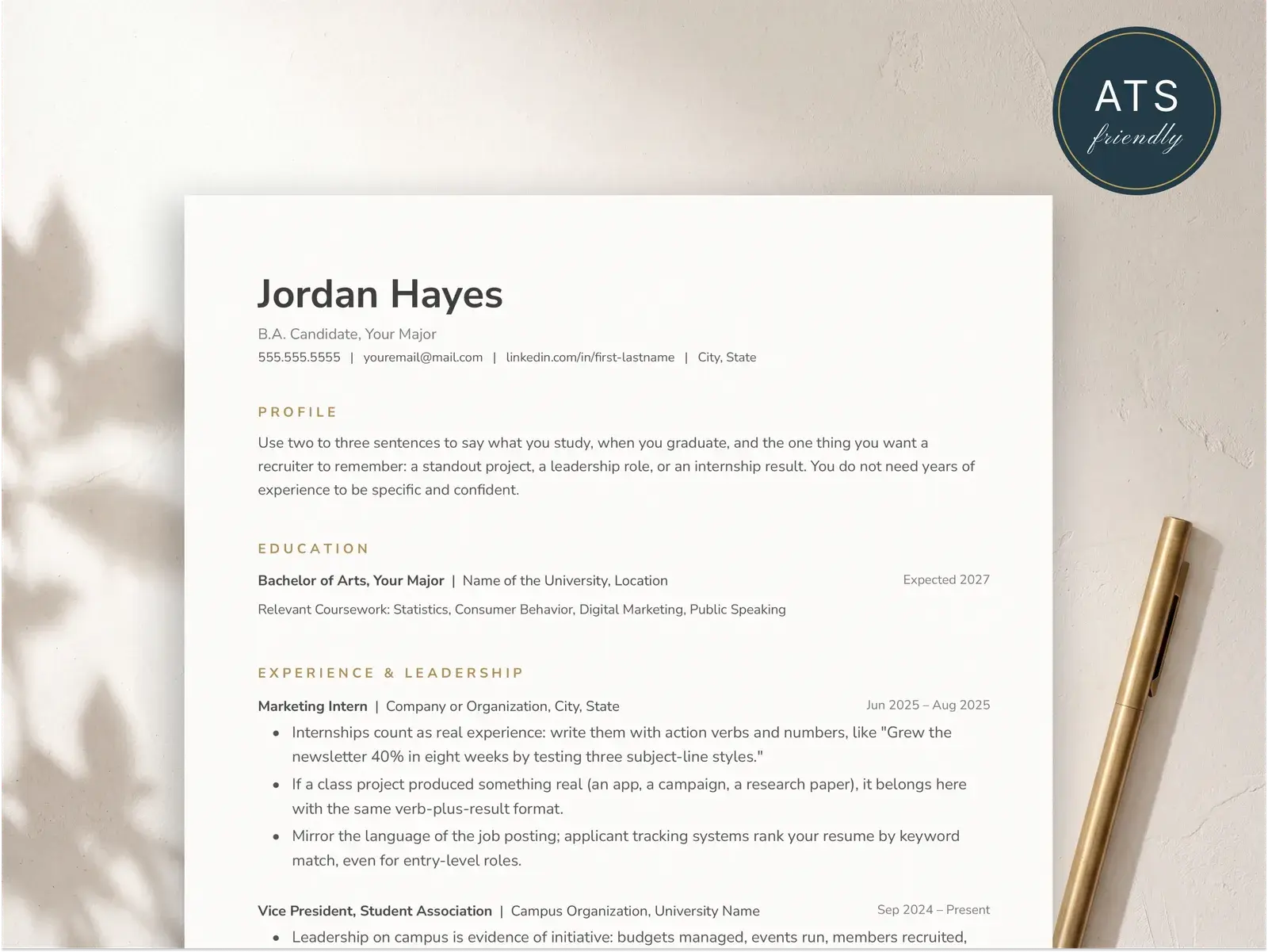
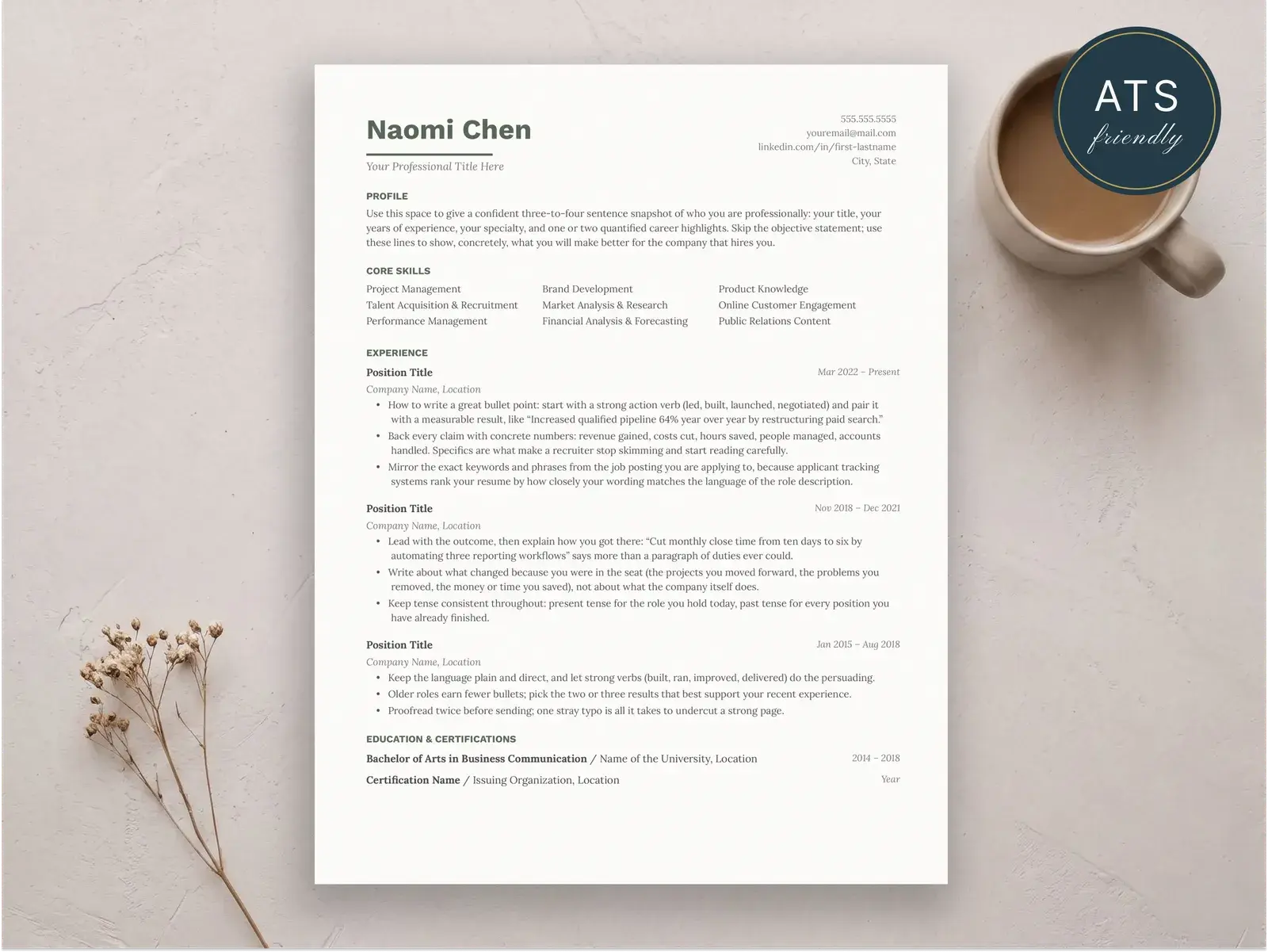
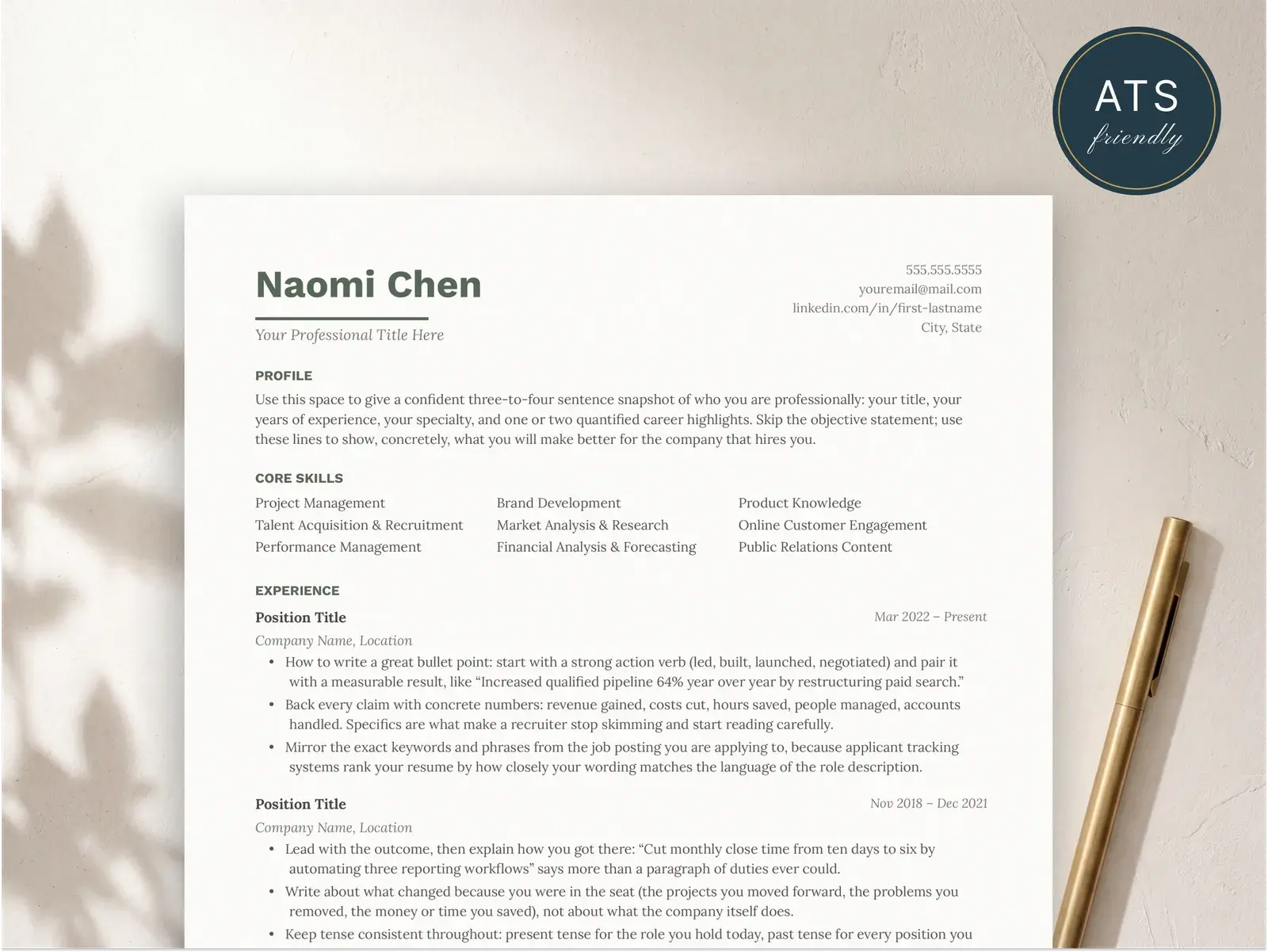
These single-column layouts use efficient spacing and clean typography to fit more content without feeling cramped. Each one is designed to look polished on a single printed page.
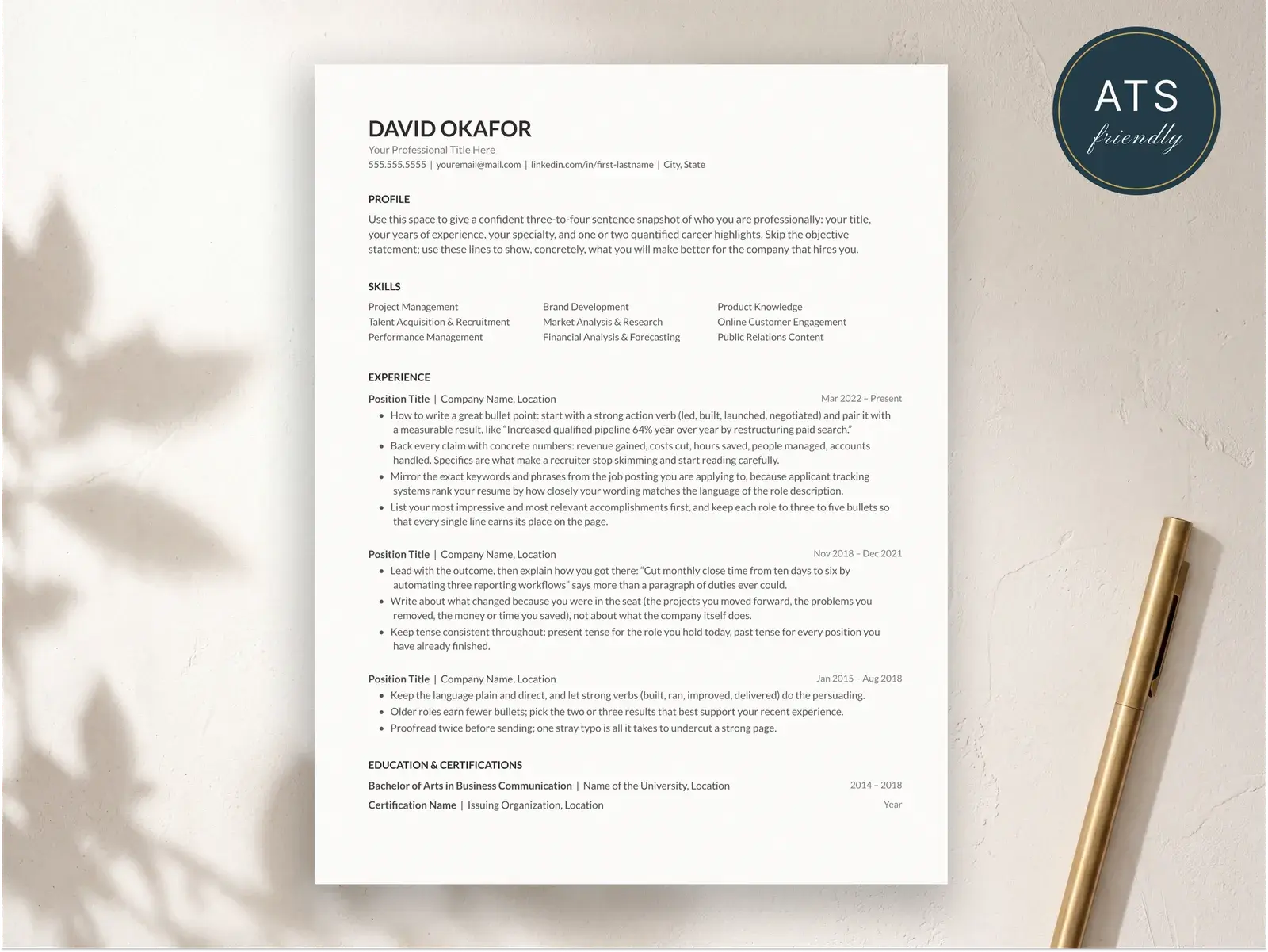
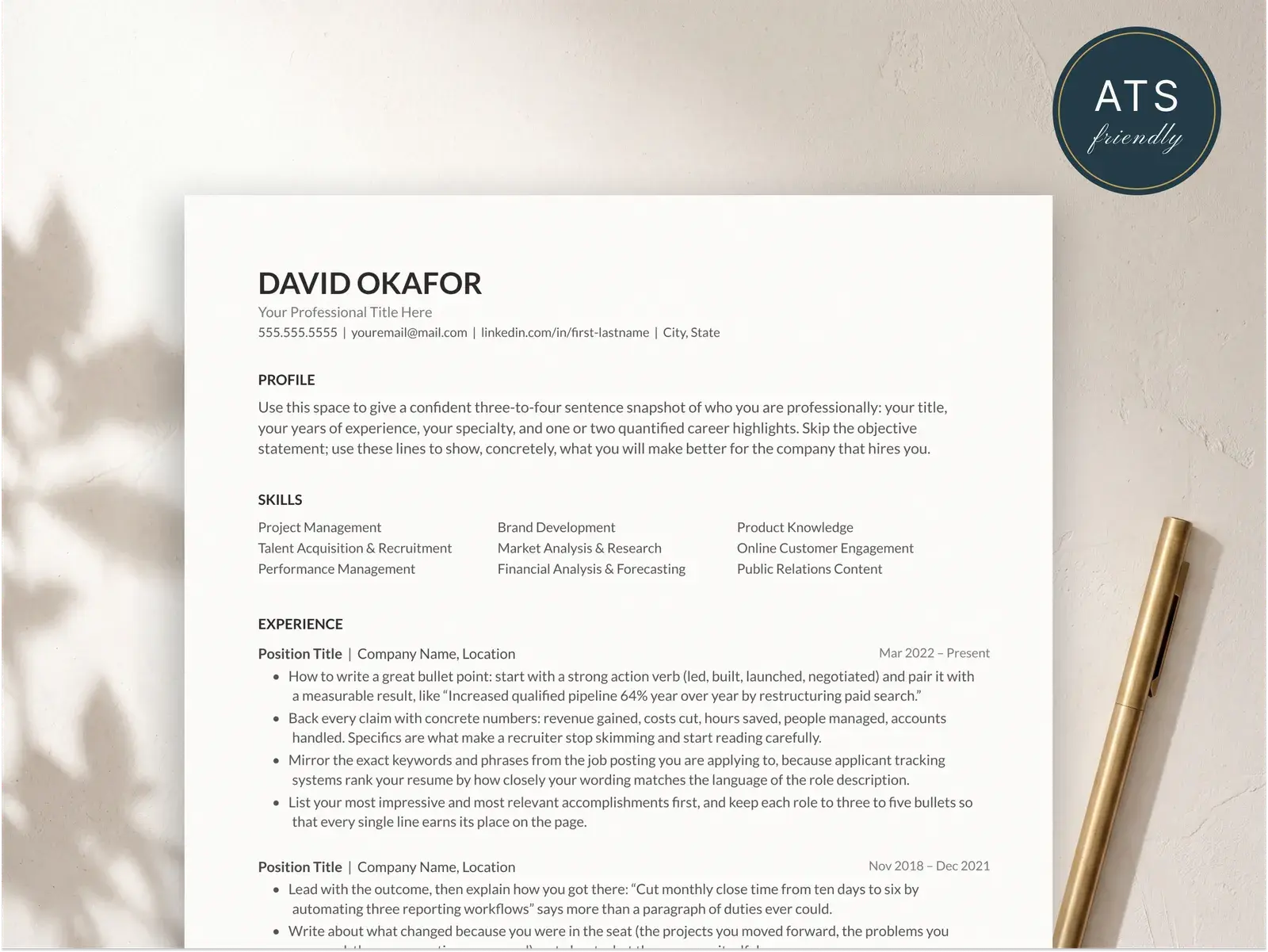
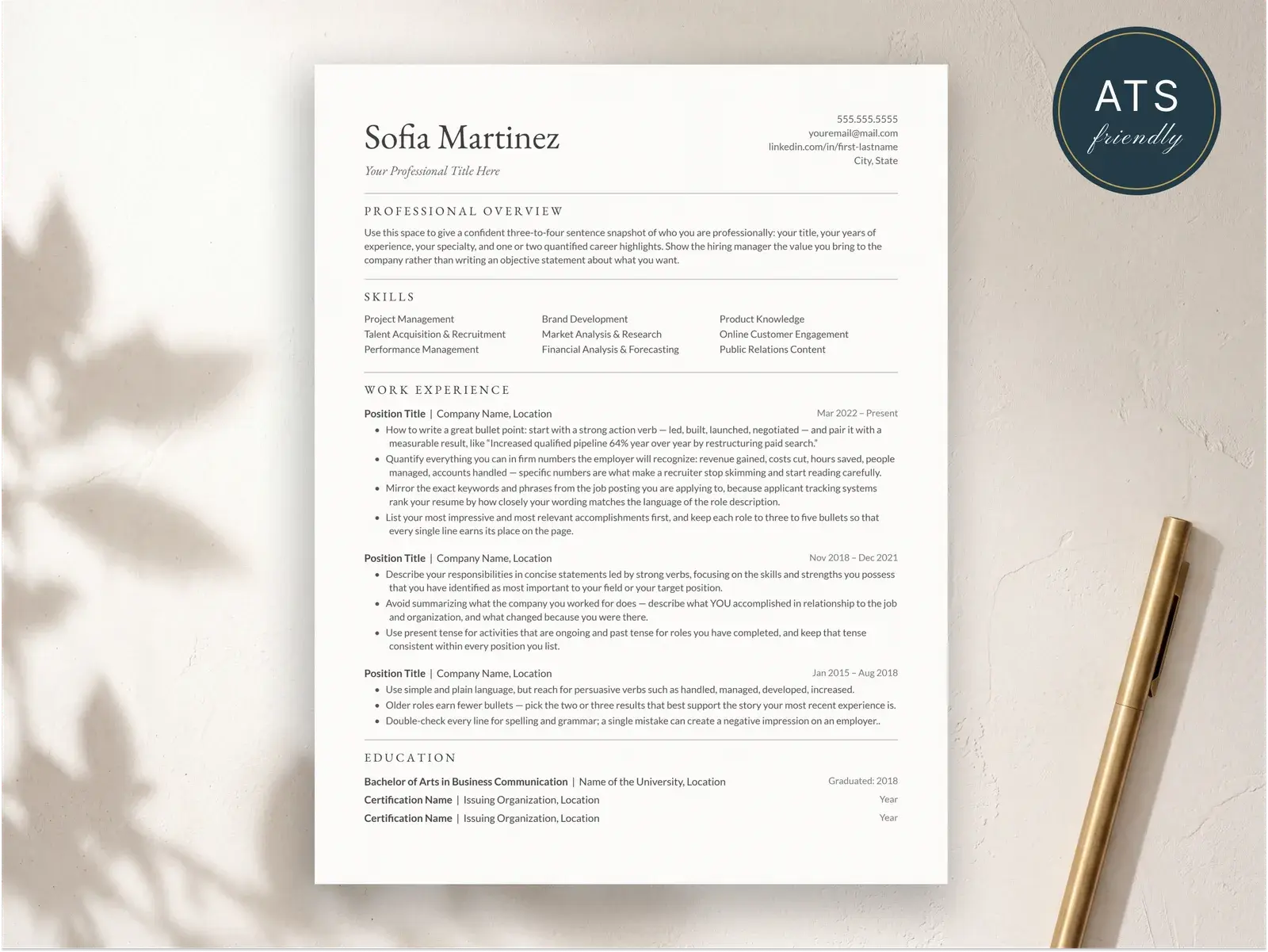
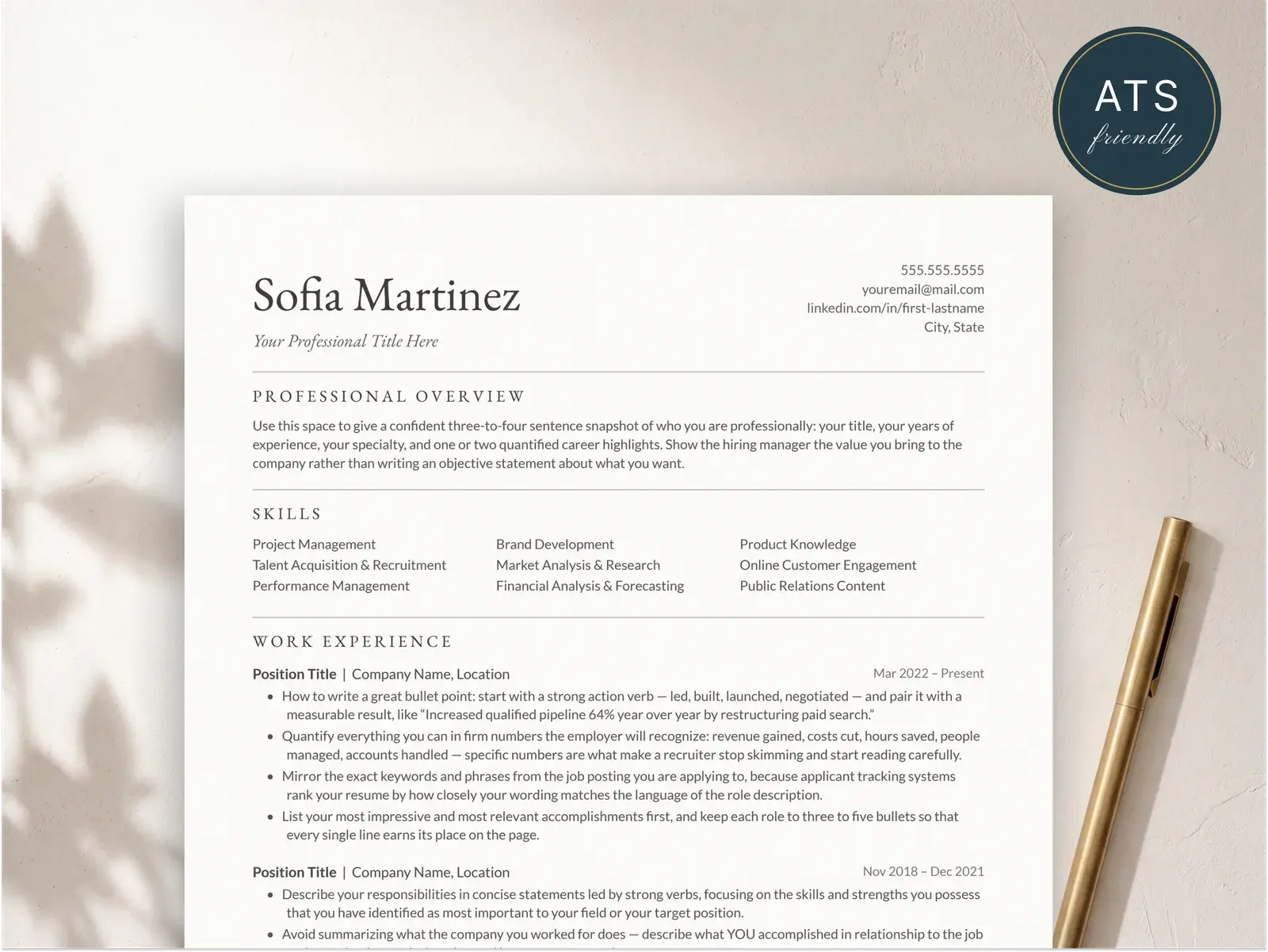
How to fit your resume on one page
Prioritize recent and relevant experience
Your most recent 2-3 roles deserve the most detail. For each one, include 3-4 bullet points that highlight measurable accomplishments rather than day-to-day duties. Older positions can be condensed to a single line with your title, company, and dates. If a role from eight years ago isn’t relevant to what you’re applying for now, it’s safe to drop it entirely. Recruiters care most about what you’ve done recently and whether it aligns with the open role — not a comprehensive employment history going back to your first internship.
Trim bullet points to one line each
Two-line bullet points are one of the biggest space killers on a resume. Challenge yourself to express each accomplishment in a single line — roughly 80 to 100 characters. Start with a strong action verb, state the result, and include one metric. For example, “Reduced customer onboarding time by 35% by redesigning the signup flow” says everything in one line. If a bullet runs long, ask which words you can cut without losing meaning. Adjectives and adverbs are usually the first to go. The discipline of one-line bullets forces clarity and makes your resume dramatically more scannable.
Use concise language everywhere
Small wording changes add up fast. Replace “was responsible for managing” with “managed.” Replace “utilized” with “used.” Cut filler phrases like “in order to,” “as well as,” and “in addition to.” Drop articles (“a,” “the”) where the meaning is still clear without them — resume language follows its own grammar. Review your summary section especially hard: if it’s longer than two lines, it’s probably restating information that already appears in your experience section. Every word on a one-page resume needs to justify its existence.
Choose a template designed for density
Not all templates use space the same way. Two-column layouts and templates with large headers or decorative elements eat into your content area. For a one-page resume, choose a single-column template with compact section headings, tight but readable line spacing, and minimal visual ornamentation. The Classic and Minimal templates above are specifically designed to maximize content density while maintaining clean readability. The right template can give you 15-20% more usable space compared to a template built for visual impact over information density.
What to cut and what to keep
When every line matters, knowing what to prioritize is just as important as knowing how to write it. Here's what belongs on a one-page resume — and what doesn't.
Keep: Quantified achievements from the last 5-7 years. These are the core of your resume and what hiring managers weigh most heavily in their decision.
Keep: A targeted skills section that mirrors the job posting. 8-12 relevant skills listed in order of proficiency signal a strong match without wasting space.
Keep: Education — degree, school, and graduation year. One line is enough unless you graduated within the last two years and have relevant coursework to highlight.
Cut: The “Objective” statement. It’s outdated and takes up 2-3 lines that are better used for a concise professional summary or dropped entirely.
Cut: “References available upon request.” Every recruiter knows this. Removing it frees up a line for content that actually differentiates you.
Cut: Generic responsibility bullets like “Managed a team” or “Handled customer inquiries.” Replace with specific results: how big was the team, what did you achieve, what improved.
Cut: Full mailing address. City and state (or “Remote”) is all a recruiter needs. Your street address adds no value and takes up precious header space.
Related guides for keeping a resume tight
Reading material that pairs with these one-page templates.
Resume examples
Ten full resumes that each fit on a single A4 page — see how content gets trimmed at every experience level.
Read moreReverse-chronological resume format
Section order, dates, and bullet rules that let a resume land in one page without feeling cramped.
Read moreResume summary examples
Eighteen summaries kept to 3–4 sentences each — the right length for a one-page resume.
Read moreFind the right template
Instant download, edit in Google Docs, Word, or Pages — and apply knowing the layout parses cleanly in hiring systems.
Browse the collectionQuestions, answered
Should my resume always be one page?
For most job seekers with fewer than 10 years of experience, a one-page resume is ideal. Recruiters spend an average of 6-7 seconds on an initial scan, and a single page forces you to present only your strongest, most relevant qualifications. However, senior professionals, academics, or those with extensive publications may benefit from a second page. The key is that every line should earn its place — if you can say it on one page without sacrificing important content, do it.
How do I fit 10+ years of experience on one page?
Focus on the last 7-10 years in detail and condense earlier roles into a brief "Earlier Experience" line with just the job title, company, and dates. Cut bullet points to 2-3 per role and prioritize accomplishments with measurable outcomes over routine responsibilities. Remove outdated skills, trim your education section to essentials (no GPA after your first job), and use a template with efficient spacing. You don't need to document every role — you need to tell a compelling story about the roles that matter most for your next job.
Is a one-page resume better for ATS?
Resume length doesn't directly affect ATS parsing — applicant tracking systems process multi-page documents just fine. However, a one-page resume forces you to include only the most relevant keywords, which can actually improve your keyword density and match rate. A focused one-page resume with targeted skills often scores higher in ATS ranking than a two-page resume padded with tangential experience. The real advantage is what happens after the ATS: a concise, well-structured resume is easier for a human recruiter to scan quickly.
What sections can I remove to save space?
Start by cutting the objective statement — a well-written summary in 1-2 lines is more effective, or skip it entirely if your recent job title speaks for itself. Remove "References available upon request" (recruiters know this). Drop the full street address and keep just your city and state. Trim hobbies and interests unless they're directly relevant to the role. If you've been working for more than 3 years, your education section can be reduced to school, degree, and graduation year — no coursework, GPA, or extracurriculars.
How do I know if my resume is too long?
Export your resume as a PDF and check if all content fits within one page without reducing font size below 10pt or margins below 0.5 inches. If you're squeezing text to fit, that's a sign you need to cut content rather than shrink formatting. Read each bullet point and ask: does this directly support my candidacy for the specific roles I'm targeting? If a bullet describes a generic responsibility that anyone in that role would have, cut it and replace it with a quantified achievement. A resume that breathes is always more effective than one that's crammed.