Resume templates
Tech resume templates
Clean, ATS-friendly layouts built for software engineers, data scientists, and product managers. Let your technical skills and impact speak clearly.
See the templatesRecommended templates for tech roles
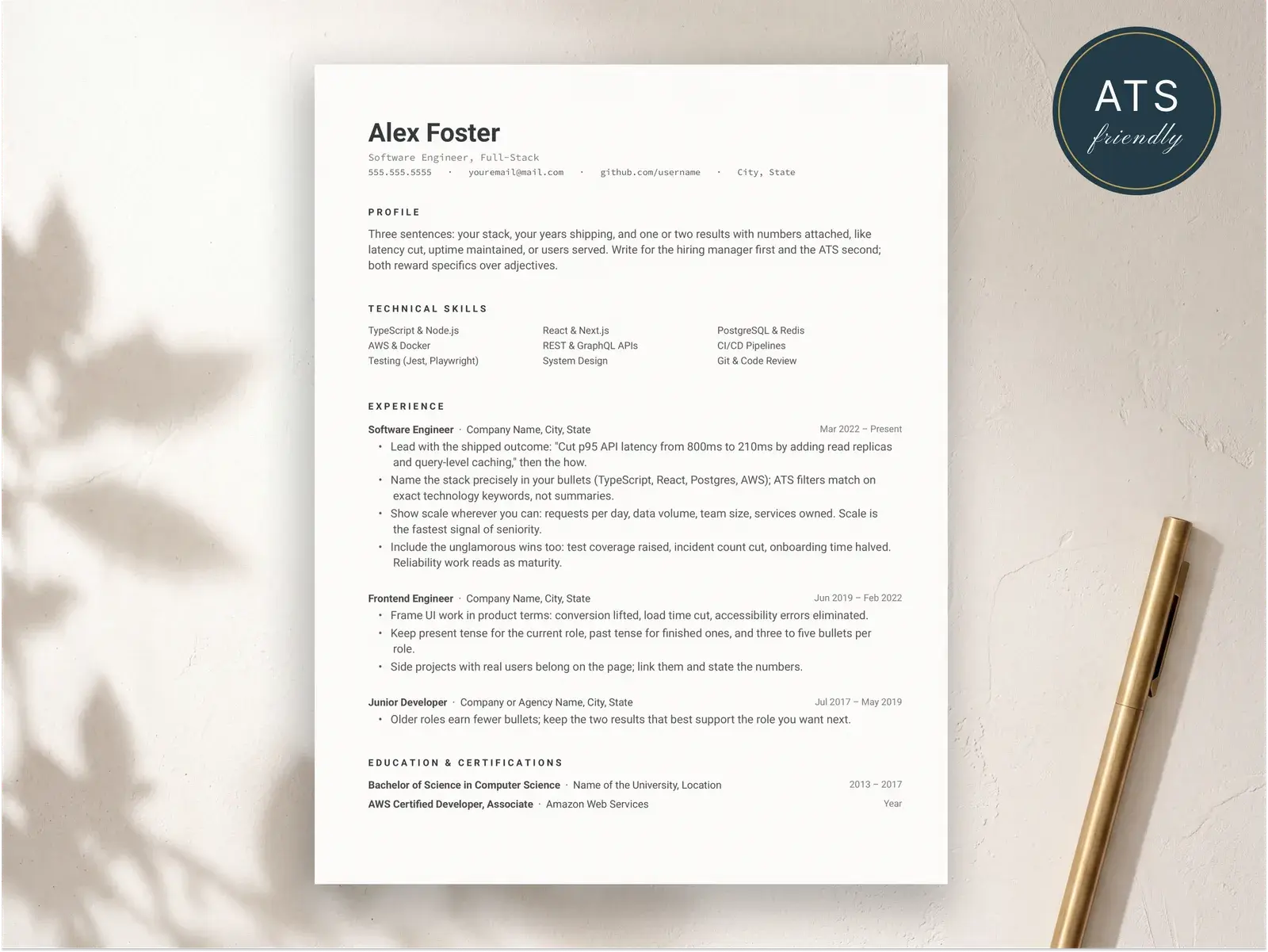
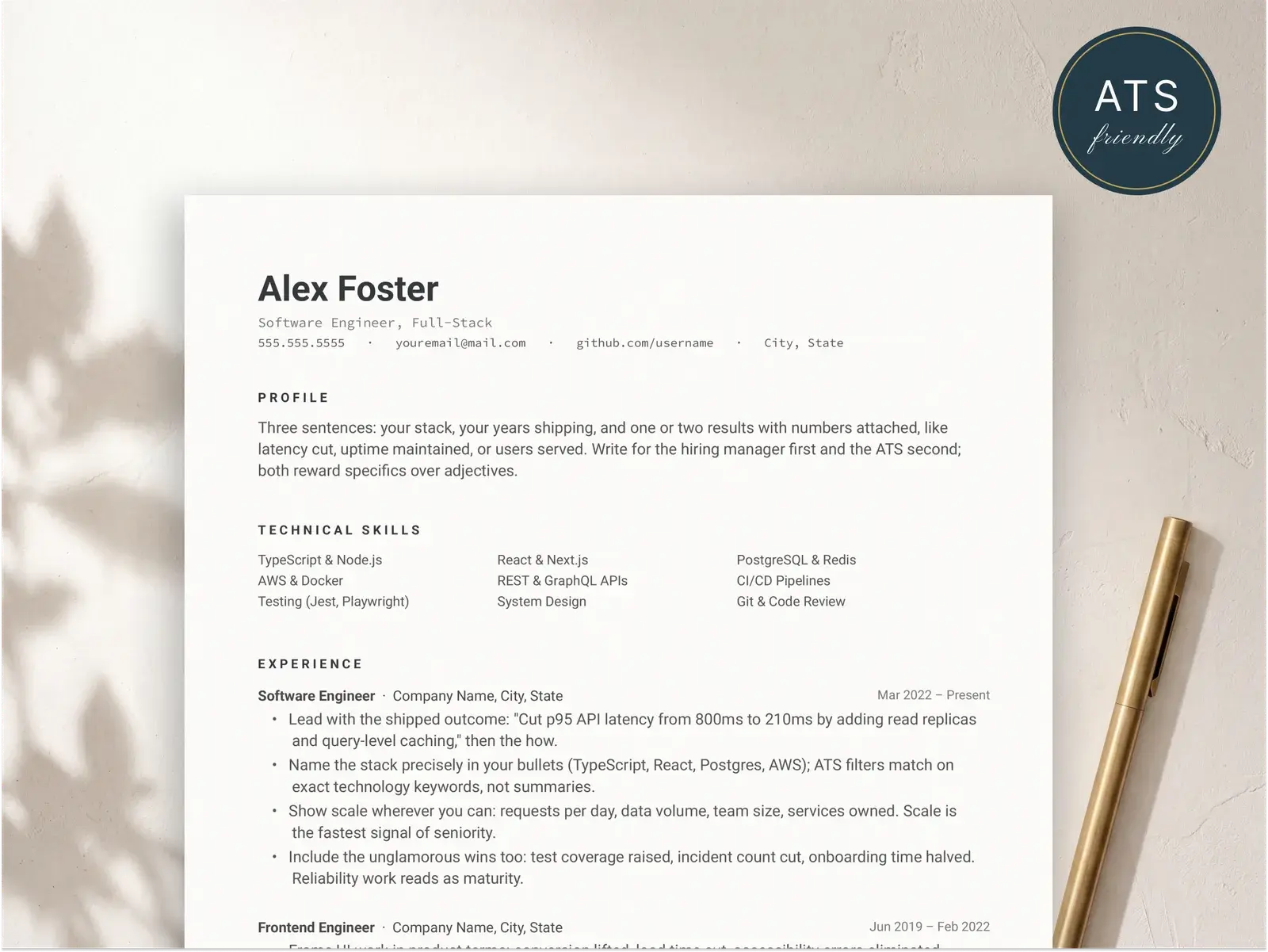
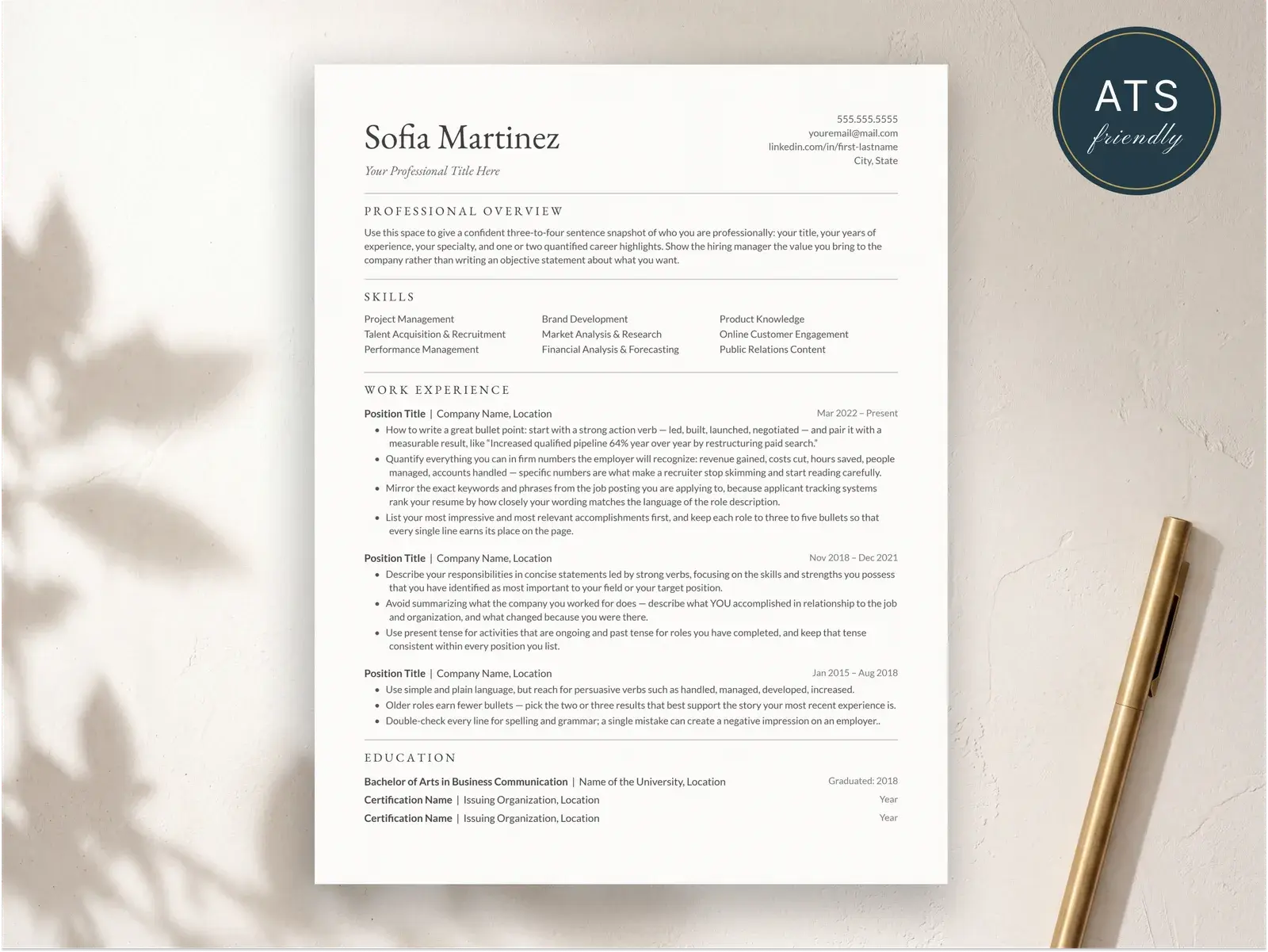
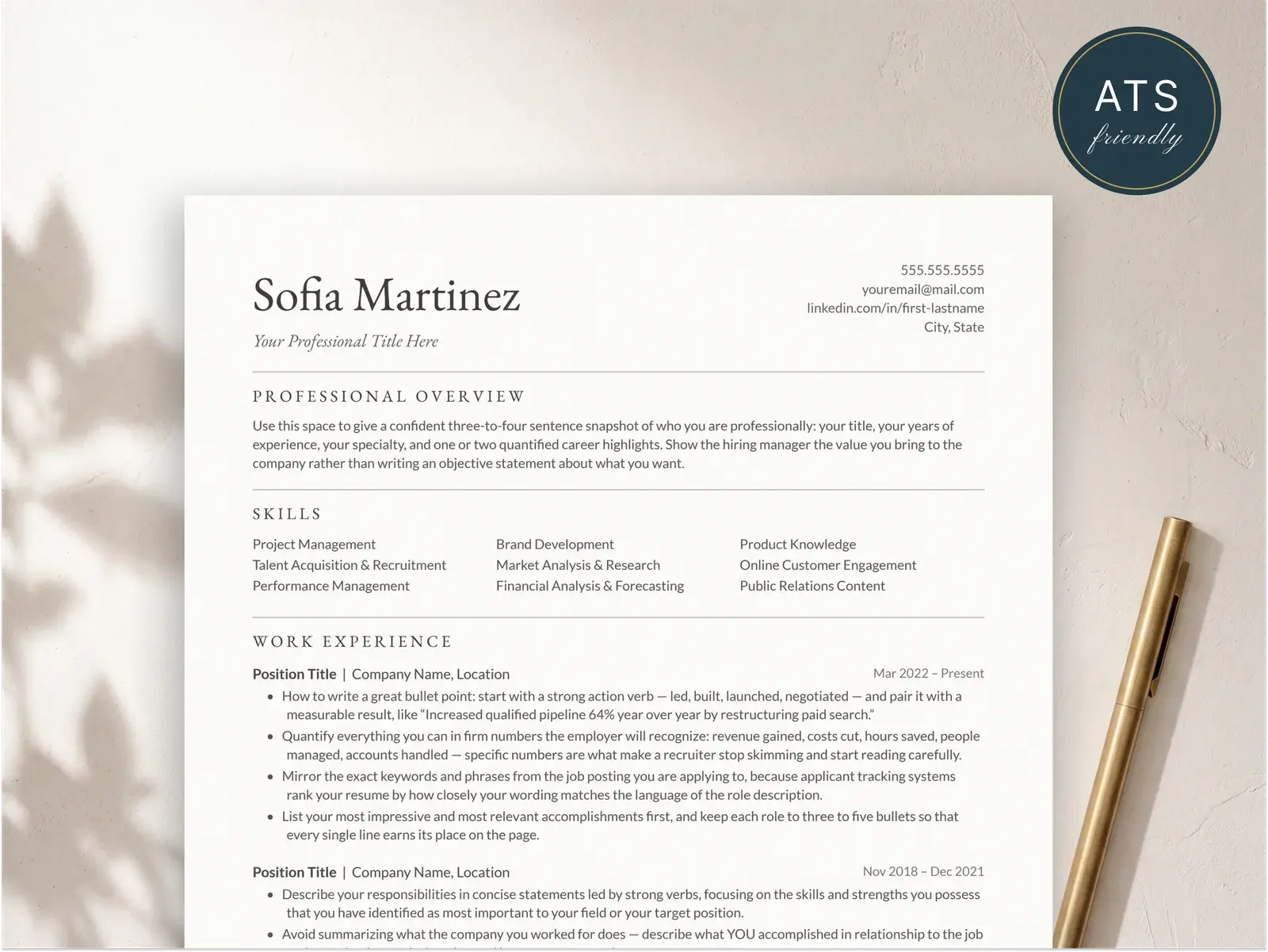
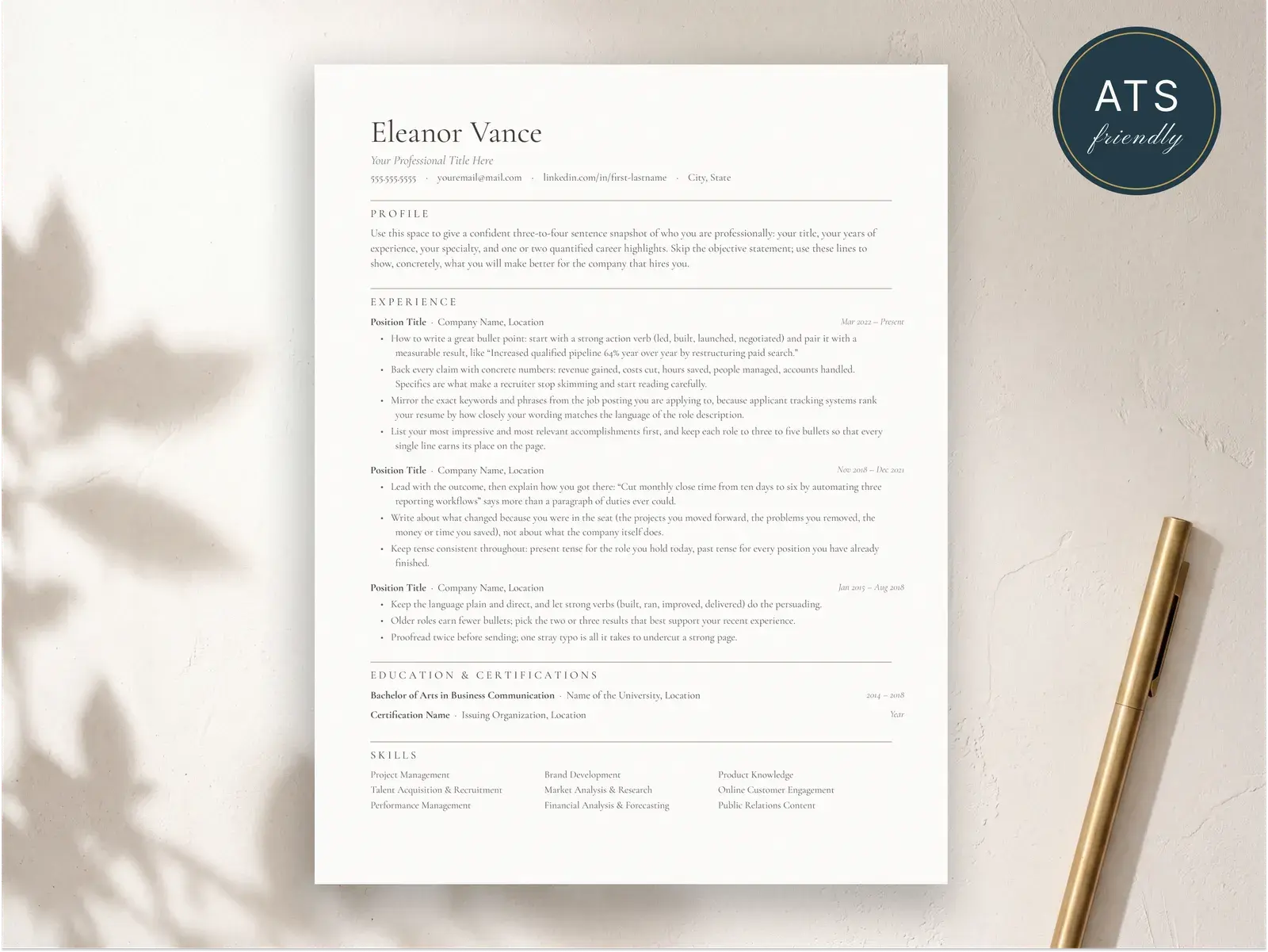
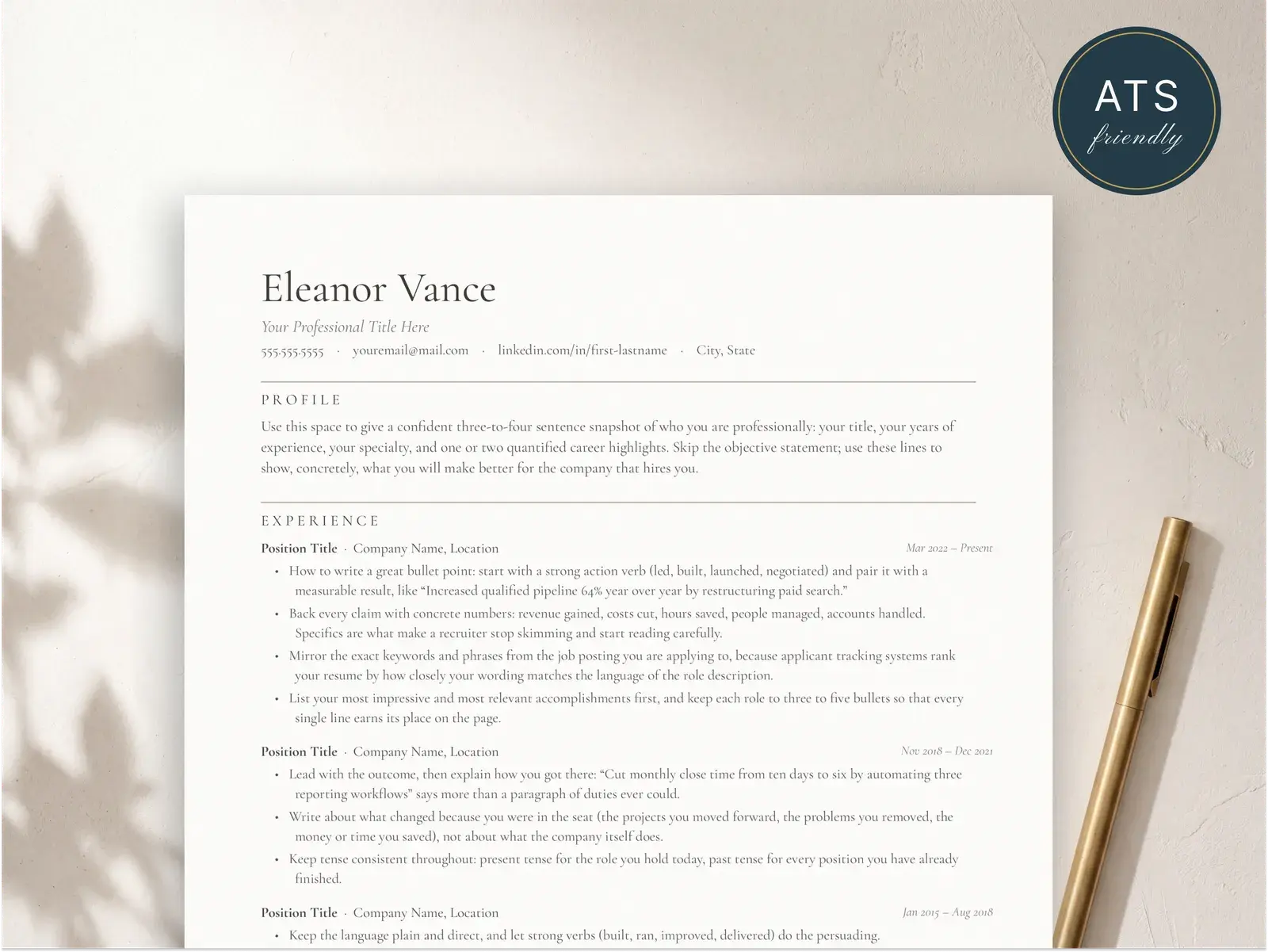
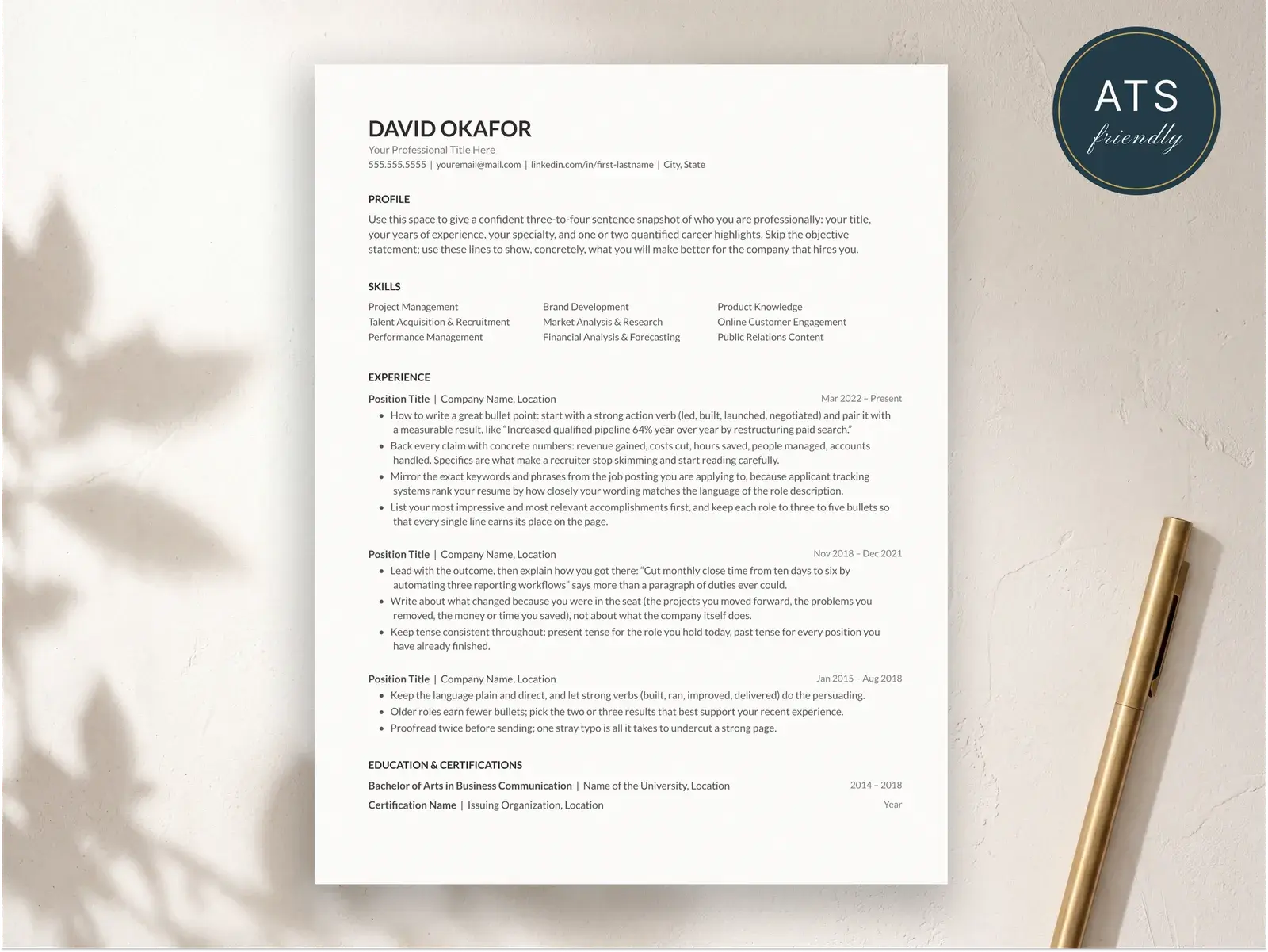
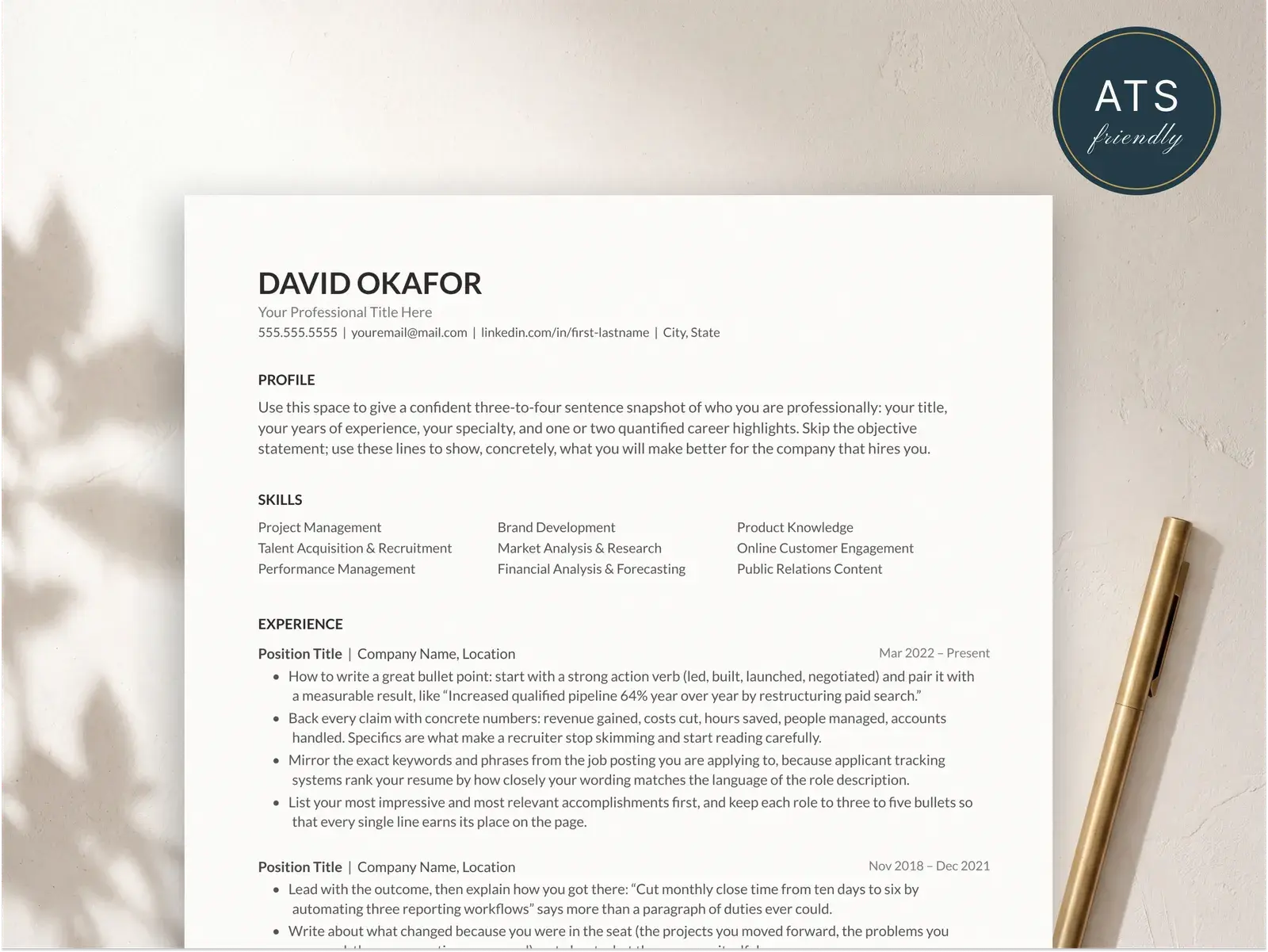
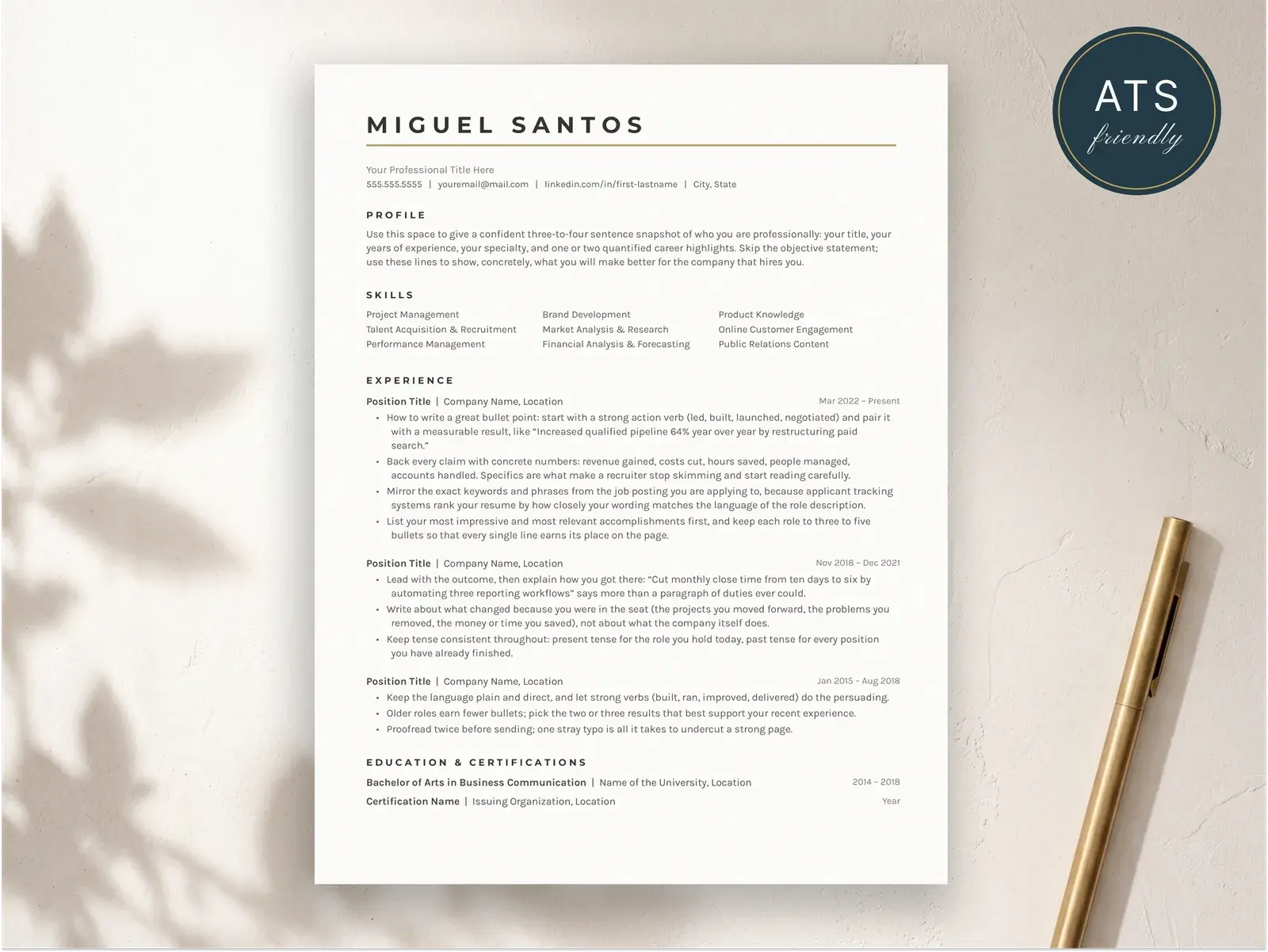
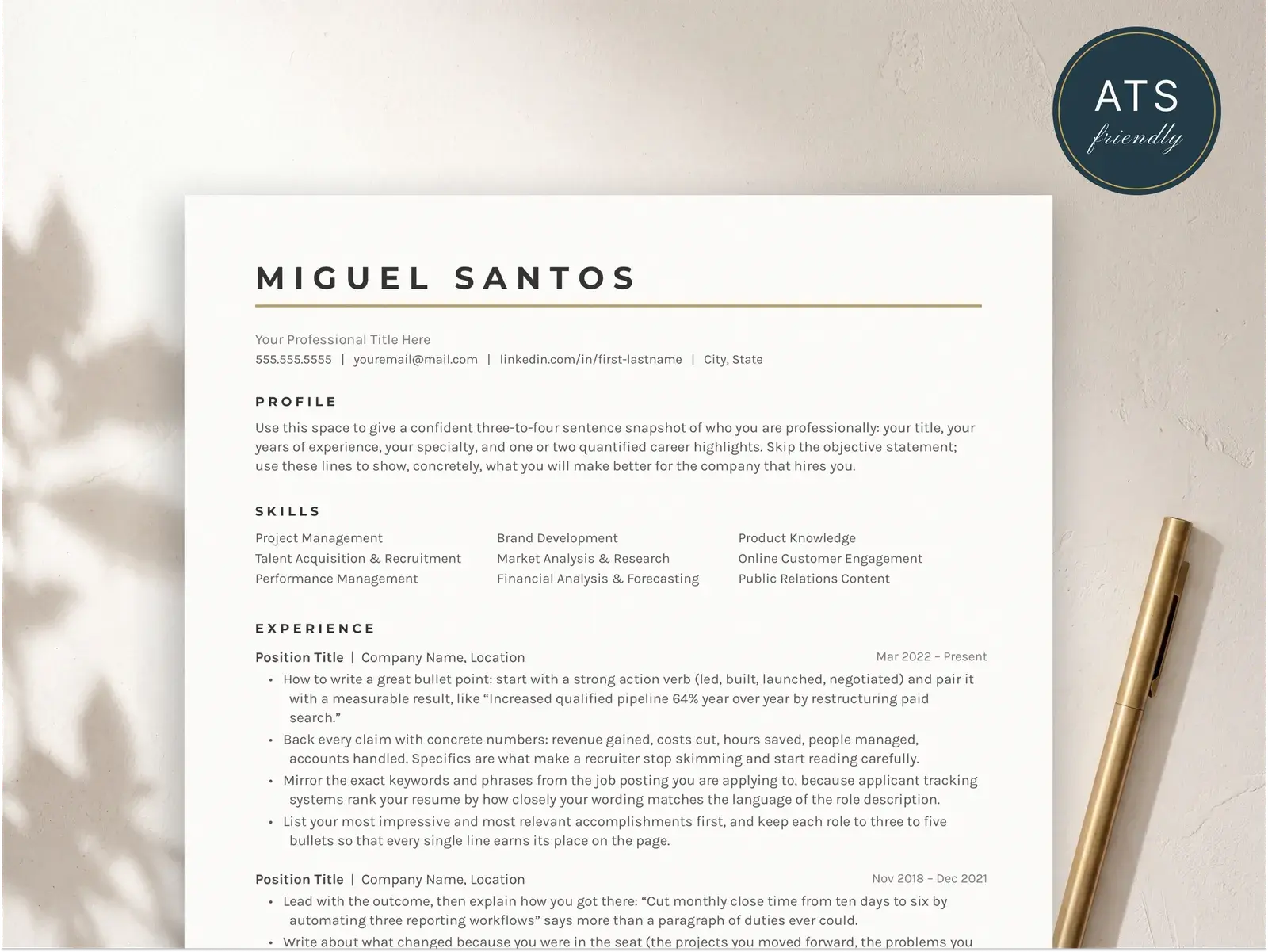
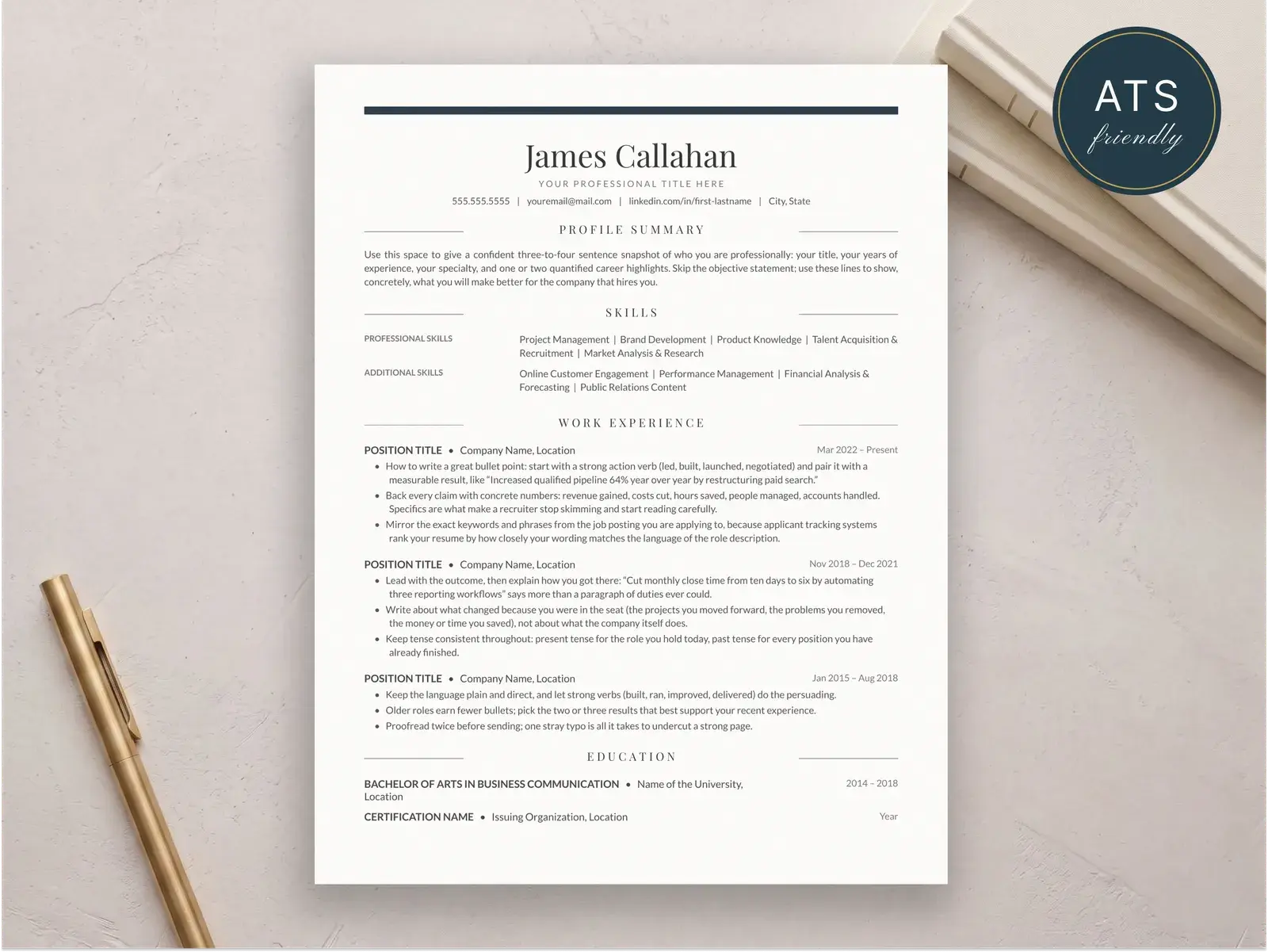
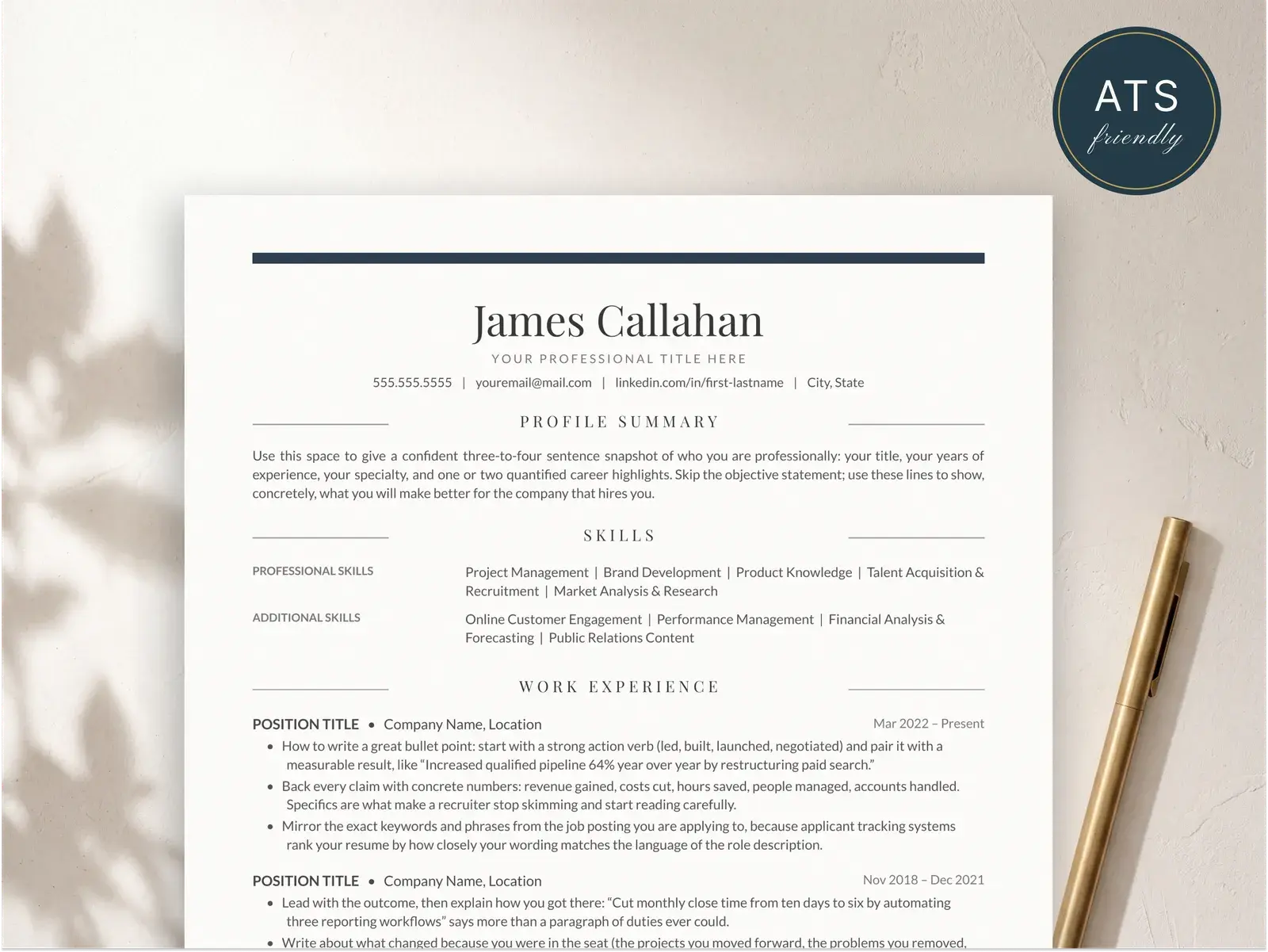
Tech recruiters scan resumes in seconds. These templates use clean hierarchy, generous whitespace, and strong section headings so your experience and skills are instantly scannable.
How to write a tech resume
Structure your skills section for both ATS and humans
The skills section is the first thing a recruiter scans on a tech resume. Group your skills into clear categories — Languages, Frameworks, Cloud & Infrastructure, Tools — so a hiring manager can match your stack to the role in seconds. Mirror the exact terminology from the job posting: if the listing says “TypeScript” don’t write “TS.” An ATS matches keywords literally, so precision matters. Keep the list focused — 12 to 18 relevant technologies is the sweet spot. Padding your list with every tool you’ve touched once in a tutorial does more harm than good because it dilutes the signal and invites questions you may not be able to answer in an interview.
Quantify your impact, not just your responsibilities
Tech resumes that list duties (“Built features using React”) blend in. The ones that get callbacks tie engineering work to business outcomes. Instead of describing what you did, describe what changed because you did it: revenue gained, latency reduced, users onboarded, costs cut. Percentages and dollar figures are powerful, but even relative comparisons (“reduced by 3x”) work if you don’t have exact numbers. The formula is simple: accomplished [X] as measured by [Y] by doing [Z]. This structure forces you to connect code to outcomes, which is exactly what a hiring manager wants to see at every level from junior to staff engineer.
Present projects like professional experience
Side projects and open-source contributions are first-class experience on a tech resume — especially for early-career engineers or career changers. Give each project a title, a brief tech-stack note, and 2-3 bullet points following the same impact-driven format as your work experience. Mention adoption metrics (downloads, stars, contributors) or the scale of the problem (data volume, concurrent users). If the project is publicly accessible, include a link — but only if the code is something you’re proud of, since reviewers will click.
Keep the layout scannable
Recruiters at large tech companies screen dozens of resumes per open role. Dense paragraphs and visual clutter cause them to move on. Use a single-column layout with clear section headings, consistent date formatting, and 3-5 bullet points per role. Front-load each bullet with the strongest verb or metric so the impact is visible even during a six-second scan. White space isn’t wasted space — it’s what makes your resume look confident and easy to read.
Example bullet points for a tech resume
Strong tech resume bullets pair an action verb with a measurable outcome. Here are examples across common tech roles.
Redesigned the payments microservice from a monolithic architecture to event-driven, reducing checkout latency by 42% and eliminating $180K/year in third-party middleware costs.
Built a real-time anomaly detection pipeline using Python and Apache Kafka, processing 2.4M events/day and surfacing fraud alerts within 15 seconds — down from a 4-hour batch delay.
Led the migration of a 140K-line React codebase from JavaScript to TypeScript, reducing production type-related bugs by 68% over 6 months and improving developer onboarding time by 30%.
Designed and shipped a product recommendation engine using collaborative filtering, increasing average order value by 17% across 3.2M monthly active users.
Implemented CI/CD pipelines with GitHub Actions and Terraform, cutting deployment time from 45 minutes to under 8 minutes and enabling 12 production releases per week.
Optimized PostgreSQL query performance for a 50M-row analytics table, reducing p95 API response time from 1.8s to 210ms through index tuning and materialized views.
Coordinated a cross-functional team of 6 engineers and 2 designers to launch a self-service analytics dashboard, reducing ad-hoc data requests to the BI team by 55%.
Related guides for software engineers
Reading material that pairs with this template.
Software engineer resume example
A full mid-level engineering resume with a clear technical skills section and outcome-oriented bullets.
Read moreResume summary examples
Eighteen summaries including backend, full-stack, and senior engineering examples.
Read moreHow to list skills on a resume
How to organize technical skills, match them to job postings, and keep your skills section ATS-friendly.
Read moreFind the right template
Instant download, edit in Google Docs, Word, or Pages — and apply knowing the layout parses cleanly in hiring systems.
Browse the collectionQuestions, answered
Should I list every programming language I know?
No. Tailor your skills section to the job description. List the languages and frameworks mentioned in the posting first, then add closely related technologies. A focused list of 10-15 relevant skills is more effective than an exhaustive inventory of 30+ that dilutes your strongest qualifications.
How do I showcase personal projects on a tech resume?
Include a Projects section below your work experience. For each project, name the technology stack, describe the problem it solves, and quantify its scope — users, requests per second, data volume, or GitHub stars. Treat it like a job entry: lead with impact, not implementation details.
Do tech companies use ATS to screen resumes?
Yes. Most mid-to-large tech companies, including FAANG, use applicant tracking systems to filter resumes before a human reviews them. Even startups that use tools like Lever or Greenhouse have keyword-based filtering. An ATS-friendly format ensures your resume reaches the hiring manager.
Should my tech resume be one page or two?
One page if you have fewer than 8 years of experience. Two pages are acceptable for senior engineers, staff-level roles, or candidates with significant open-source contributions and publications. Regardless of length, keep the first page strong — that's what gets the most attention.
How important is the summary section on a tech resume?
A summary is optional but useful for career changers or senior engineers positioning for a specific role. Keep it to 2-3 lines that state your experience level, core specialization, and one standout achievement. Skip the summary if your most recent job title already communicates your level clearly.